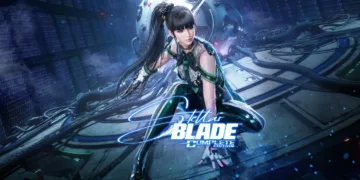





















Returning players bring a particular kind of progress to Stellar Blade Complete Edition on Switch 2: the timing learned on PS5 or PC. Knowing when to parry matters because a successful defense helps finance Eve’s next attack. Light and heavy strikes form her combos, while attacks and precisely timed blocks build Beta Energy for special abilities and guard-breaking moves. Familiarity with an enemy lets you decide when to hold that resource and when to spend it during an offensive sequence. The satisfaction comes from turning recognition into control.
Bosses give that relationship its clearest expression. Their imposing size and violent attacks initially dictate the fight; learning their patterns lets Eve interrupt that authority with increasingly confident combinations. Perfect dodges, color-coded attack cues, and Blink keep defense from collapsing into one repeated response. There is a recognizable connection to Sekiro’s emphasis on defensive timing, but Stellar Blade channels its successful reads into the spectacle of character action. Ordinary enemies preserve the danger between those encounters. A group can interrupt Eve and drain her health before her elaborate moves have much chance to impress.
That dependence on timing makes the Switch 2 conversion a consequential change. Compared with PS5, blocking and attacking can feel less immediate, asking returning players to adjust habits the original rewarded. The encounters retain their structure, but the familiar cue and the required input no longer sit quite as comfortably together. Getting accustomed to the difference can make it manageable. It still places an extra demand on players in a game already built around making the correct defensive choice under pressure.
The presentation helps explain the compromise. DLSS reconstructs the image, while frame interpolation helps the game target a displayed 60fps in handheld and docked play. Those additional images improve apparent fluidity without providing the response of a game rendering every frame at that rate. There is an option to disable frame generation, trading some visual smoothness for more direct control. For this combat system, that is a valuable option to have. A fluid animation is less useful when the block accompanying it arrives later than expected.
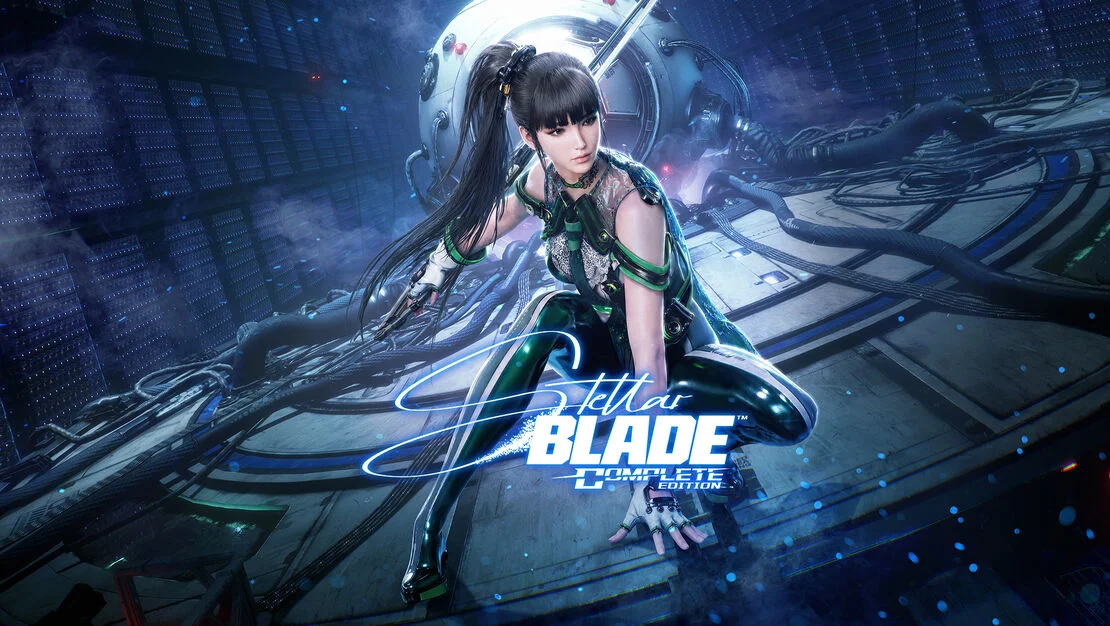
The visual reductions vary in significance. Eve’s long ponytail can lose definition or become unstable against busy effects, and faces and environmental textures look softer. Enemies in the distance animate at visibly reduced rates, an awkward sight while crossing open spaces, though it should not be confused with the whole game slowing down.
Effects-heavy battles can also produce performance dips. The distinction matters: compromised hair is an aesthetic concession, while uneven response reaches into the fighting itself. Gyro aiming, touch functions, and mouse camera control offer flexibility elsewhere, but portable access remains the substantial reason to accept these changes.

The campaign’s early routes suit that portable format reasonably well. Confined passages branch into optional encounters and traversal challenges, with doors and ladders reconnecting to checkpoints. Exploring a side route has an understandable purpose: another upgrade, an equipment benefit, another opportunity to improve Eve before the next demanding fight. Skill unlocks and increases to health or attack provide growth alongside the player’s developing technique. They give a difficult encounter another possible answer without making the learning process irrelevant.
A later move into a larger open area changes the pace. Quests, bounties, collectibles, and the needs of a nearby settlement compete for attention, replacing the early routes’ clear forward pull with decisions about detours. Equipment with passive benefits makes some of that searching useful to a preferred playstyle. The campaign also returns to focused levels, so the open map does not permanently displace its tighter structure. The weaker incentive is visual discovery: subdued tunnels, sewers, ruined offices, and desert stretches can make successive searches look too similar, even when a distant view of the devastated Earth catches the eye.
Eve’s reason for searching that world is initially straightforward. Sent from an orbital Colony to reclaim Earth from the Naytiba, she survives a disastrous landing and receives help from Adam, with Lily providing technical support. Her limited understanding of Earth gives the discoveries a personal function. Information about its inhabitants and customs fills gaps in her understanding while complicating the mission she arrived to perform. The android protagonist and ruined planet invite a NieR: Automata comparison, but the relevant test is how effectively those discoveries develop Eve’s relationship with her assignment.
Here the campaign is less assured than its combat. Artifacts and scattered records provide history, yet the volume of terminology can make understanding the setting feel like keeping up with a glossary. The plot gains urgency late, while its mysteries do uneven work sustaining the earlier stretches. Eve’s gradual education supplies a useful thread through the exposition, but finding another piece of background does not always have the immediate force of finding an upgrade. The map rewards curiosity more consistently through improvements to what she can do.
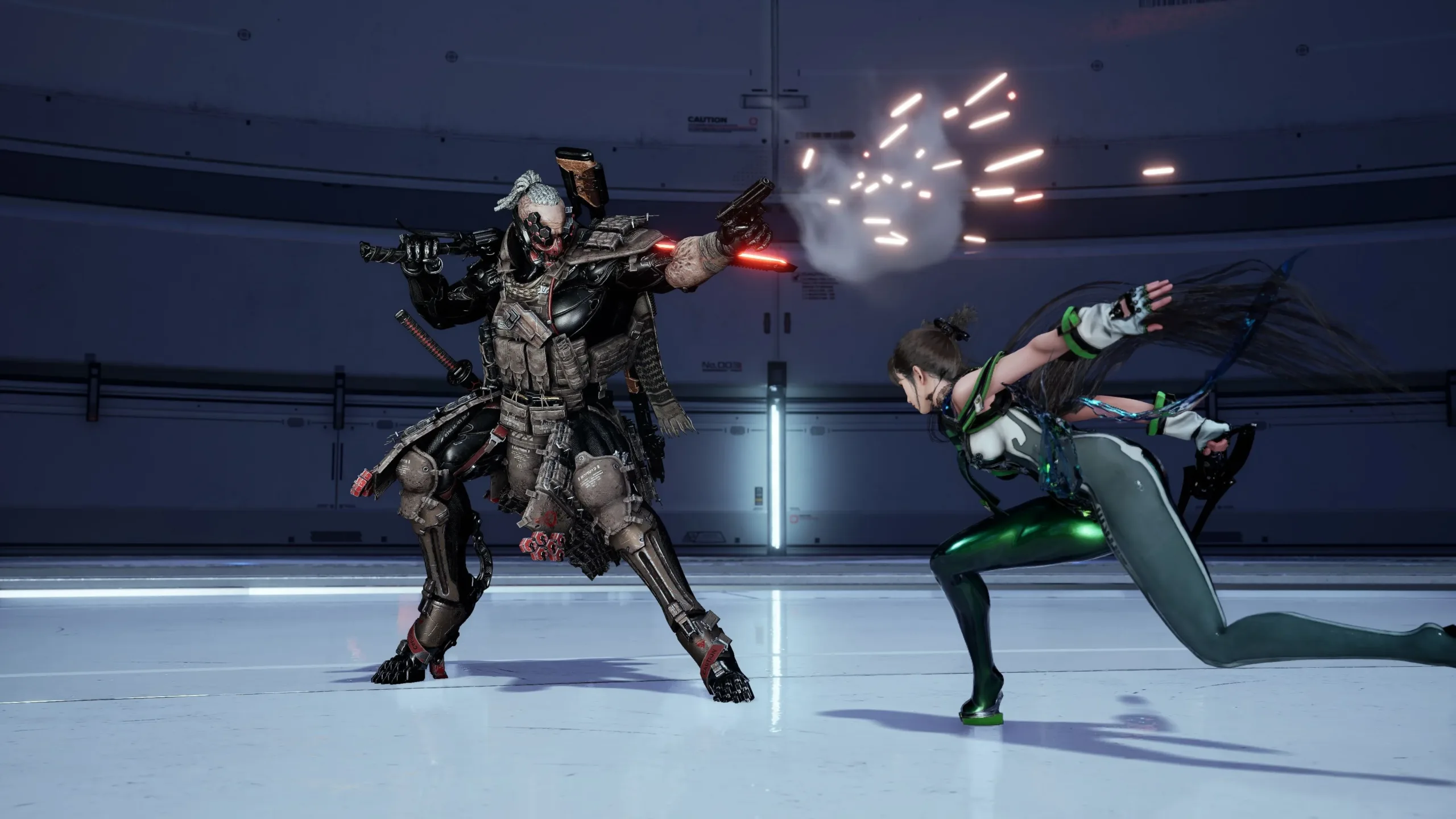
The Complete Edition adds further incentives to revisit those spaces. Its NieR: Automata collaboration sends players collecting Stellar Tears to exchange at Emil’s shop for cosmetics. The Goddess of Victory: NIKKE material includes minigames and a Scarlet boss encounter, giving its crossover appeal a direct connection to combat. These are different kinds of additions, and their value depends on which part of Stellar Blade has held your attention. Neither needs to be inflated into a substantial new narrative campaign to justify its inclusion.
Accumulated outfits and photo mode extend the game’s deliberate interest in Eve’s appearance. Four Bayonetta-inspired costumes make an appropriate connection to another character-action heroine, though they are free on PS5 and PC too. They offer existing owners a new look without establishing a Switch 2 exclusive reason to return. Newcomers receive the campaign and its accumulated extras together, and physical buyers get the game on the cartridge. For someone who already owns it elsewhere, the additional purchase chiefly buys the ability to take this version along.
Boss Challenge offers a more focused way to spend that return visit. Previously encountered bosses can be fought again with current equipment or with reduced upgrades, shifting the emphasis from campaign progress to execution. It also gives the accumulated wardrobe somewhere familiar to perform without requiring another circuit of quests and collectible routes. A returning player can select an encounter, adjust the equipment conditions, and work on the openings that were still causing trouble after the first victory.
The Review
Stellar Blade Complete Edition
Stellar Blade Complete Edition preserves the combat loop that made Eve’s original outing rewarding, with exploration feeding upgrades and bosses demanding practiced defensive timing. Switch 2 makes that experience portable, though less immediate controls and visual compromises give existing owners reasons to hesitate. The bundled collaborations offer newcomers a substantial package, while Boss Challenge gives returning players a focused reason to revisit familiar opponents. The lore-heavy storytelling remains less assured than the fighting, and extra costumes cannot settle the question of responsiveness.
PROS
- Rewarding interplay between defense and Beta abilities.
- Exploration provides useful combat upgrades.
- Boss Challenge supports focused replay.
- Both paid collaborations included.
- Full game on the physical cartridge.
CONS
- Less immediate response than on PS5.
- Visual artifacts and occasional performance dips.
- Repetitive environmental colors and locations.
- Lore-heavy exposition and uneven narrative momentum.