

















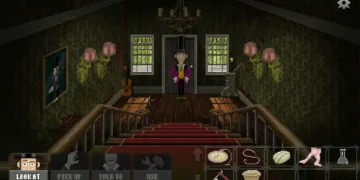
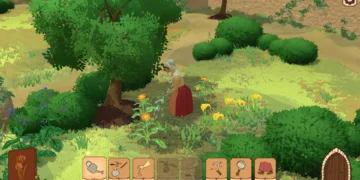






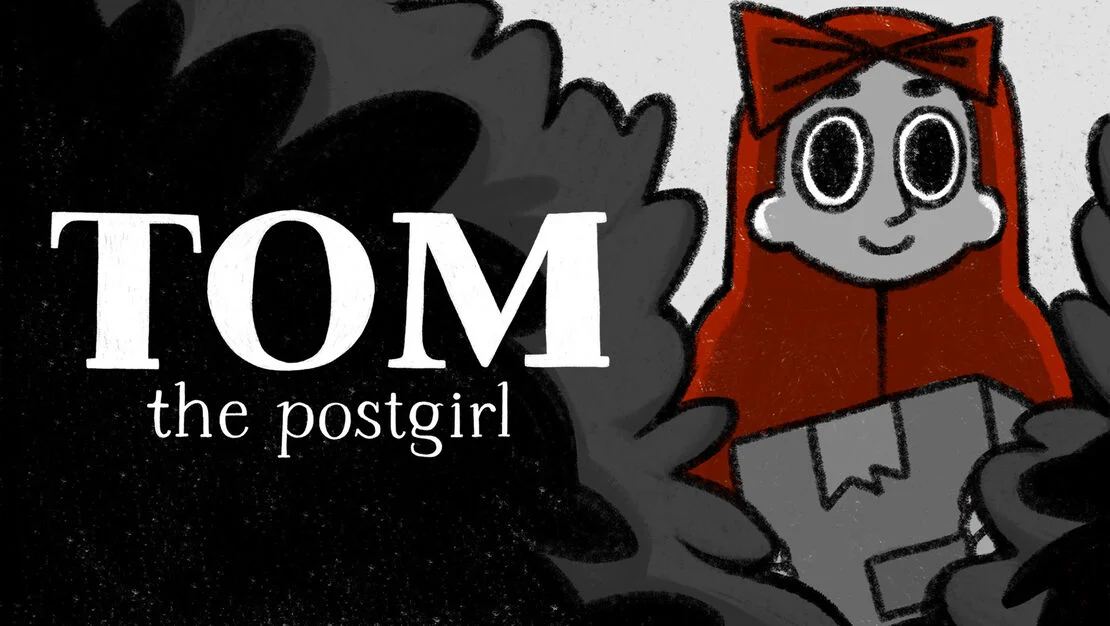

At the end of a delivery round, Tom blows a horn. Her boss brings her another batch of parcels, and she moves on to the next part of the mountain village. The arrangement is simple enough for a girl on her first day at the post office. Take a parcel from the bag, knock or ring, carry on. The horn measures a successful day’s work. It sounds just the same if Tom has spent the time between deliveries peering through windows.
A girl in a red hood carrying something to somebody’s house is a familiar figure across many versions of a European fairy tale. Little Red Riding Hood has reason to be at her grandmother’s door, and part of the story’s terror is that someone else has taken advantage of that ordinary visit.
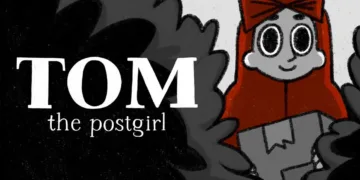
Tom the Postgirl gives its red-hooded girl a standing invitation to approach one door after another, then puts the decision to exploit it in her hands. The Swiss studio Oopsie Daisies and French publisher ARTE France bring that familiar figure into a village where the errand keeps repeating. A crack in the wall can be as interesting as the doorbell. The person who lives there has only agreed to receive a parcel.
The game is good at giving that distinction a practical cost. Looking through a window lets you see something you could have walked past. Open certain parcels and you can use what’s inside, at the expense of an encounter that delivering them intact would have allowed. The temptation is stronger because you seldom have a difficult puzzle to solve or any urgent need to acquire an object.
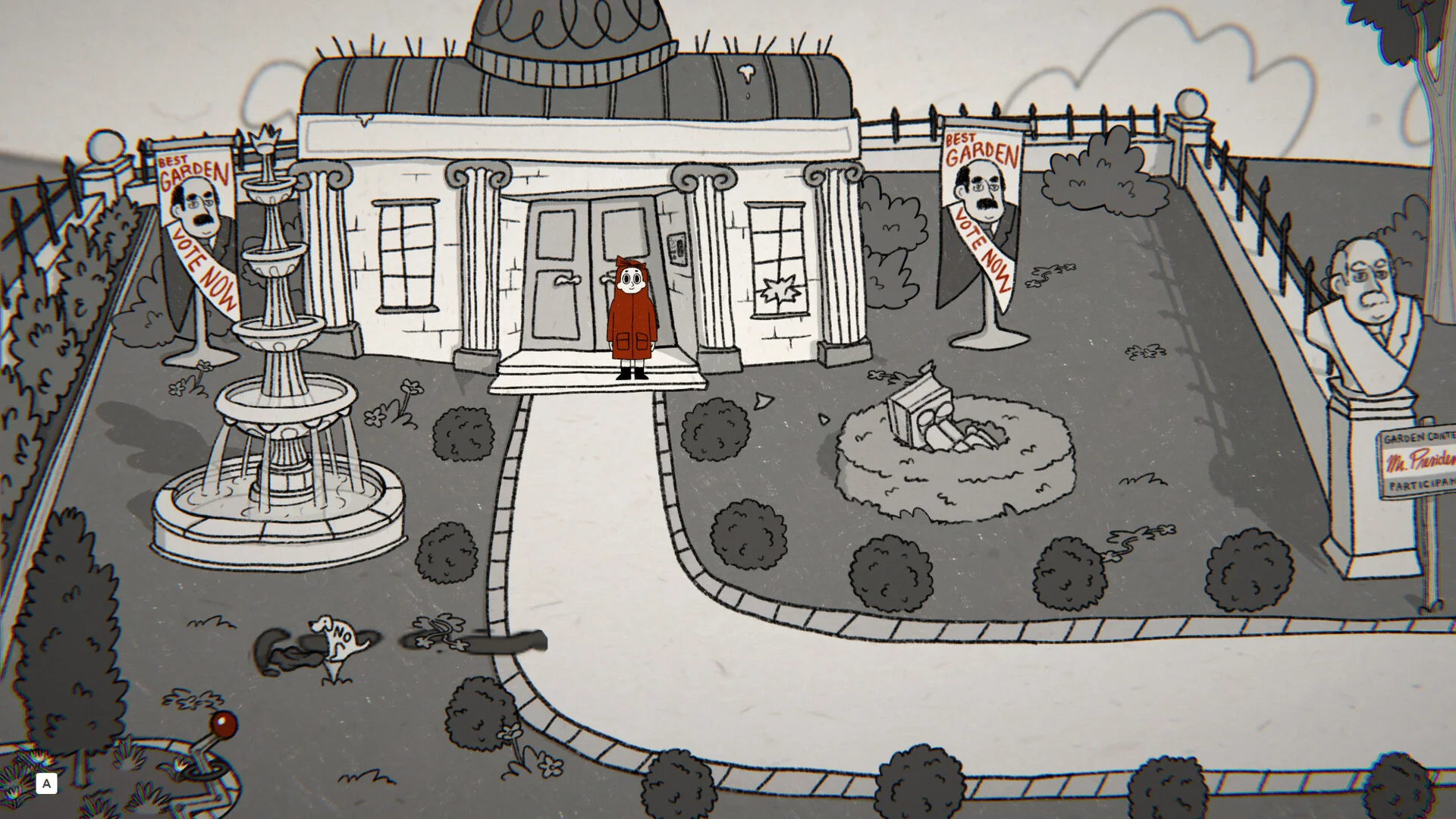
You can open somebody’s mail simply because you’ve been trusted to carry it. The optional gardening competition has a different kind of mischief. Stealing decorations gives Tom something to do with what she finds on other people’s property, and the promise of putting together a prize garden makes petty theft sound like civic participation.
The village is drawn by hand in black and white, with enough red to pick Tom out against the houses she visits. Her hood has the clarity of a picture-book illustration. Inside those houses, the game often dispenses with even the few words a picture book might use to explain a joke. The mayor makes kissing noises at his own reflection. The sound gives his private admiration a physical silliness, and his office supplies the rest of the joke.
You can recognize the vanity of a man with public standing from the way he behaves when he thinks he has no audience. That kind of comedy travels readily. It asks little knowledge of the place that produced it and a good deal of curiosity about what a dignitary does with his face when the door is shut.
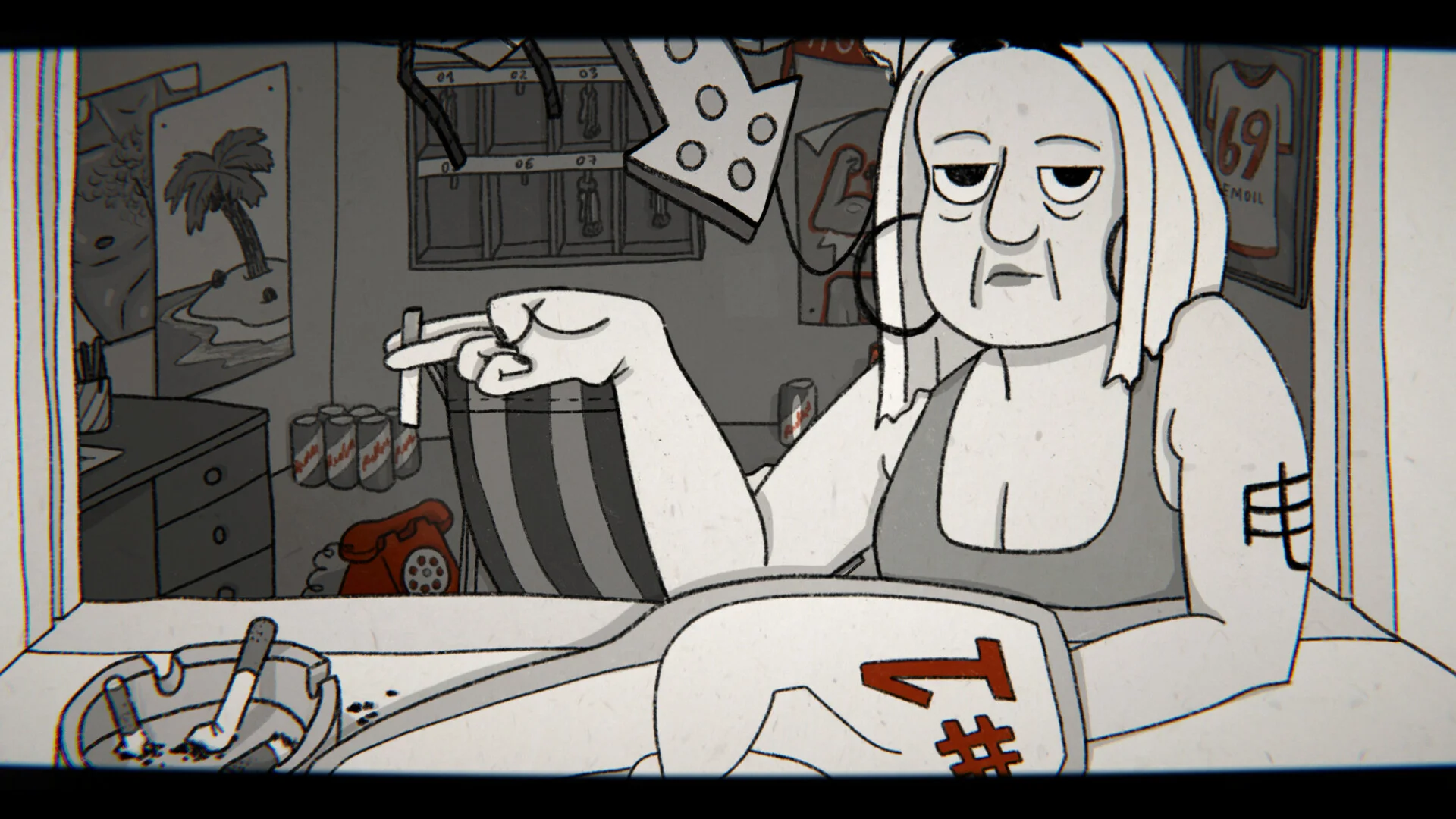
Other glimpses make that curiosity less comfortable. Seeing children fed animal food turns the same act of looking into an encounter with an adult’s misuse of care. The game leaves little time to sit with the difference between that sight and the mayor’s vanity.
A delivery can take you onward while you’re still deciding how to take what you’ve seen. That quickness is part of the appeal of the five short chapters, though it can also make a nasty incident feel like one item in a collection of oddities. Tom can interfere in a garden or make off with something from the mail. Some of the uglier scenes leave her with little to do once she has seen them.
On a first run of about two hours, there’s pleasure in how little stands between a passing curiosity and the sight that answers it. Binoculars extend the distance Tom can look, but the game rarely asks for a new kind of reasoning.
A faraway sight and a scene on the other side of the glass both depend on your willingness to pause the route and see what’s there. That simplicity suits an adventure whose surprises would lose some of their timing if every window came with a puzzle attached. It also means that once the scenes are familiar, much of the route asks for the same handful of actions.
The ending can reflect how you behaved, and an opened parcel gives you a specific reason to go back and see what delivering it might have done. The badges offer a different reason to repeat the round. Keeping to the path or leaving the flowers alone can require care, especially after a first visit spent testing what Tom can get away with. The attention that takes is narrower than the curiosity the village first inspires. With a badge in mind, you may notice a flowerbed chiefly because it tells you where to put your feet.
The Review
Tom the Postgirl
Tom the Postgirl gives Little Red Riding Hood a postal route and lets the player decide what she does with the access it affords. The fairy-tale imagery travels easily, and the mayor kissing his own reflection needs no translation. Opening someone’s mail can change what you get to see, a small consequence that makes curiosity feel like a choice. The brisk rounds sometimes hurry past the village’s nastier discoveries, and badge hunting gives familiar paths little of their original pull.
PROS
- The postal route gives the red-hooded fairy-tale figure a fresh role.
- Opening parcels can change which encounters you see.
- Expressive drawings and sound carry the comedy without dialogue.
CONS
- The brisk pace gives disturbing scenes little room to settle.
- Some discoveries offer little scope for interaction.
- Badge conditions make repeat visits feel procedural.