


























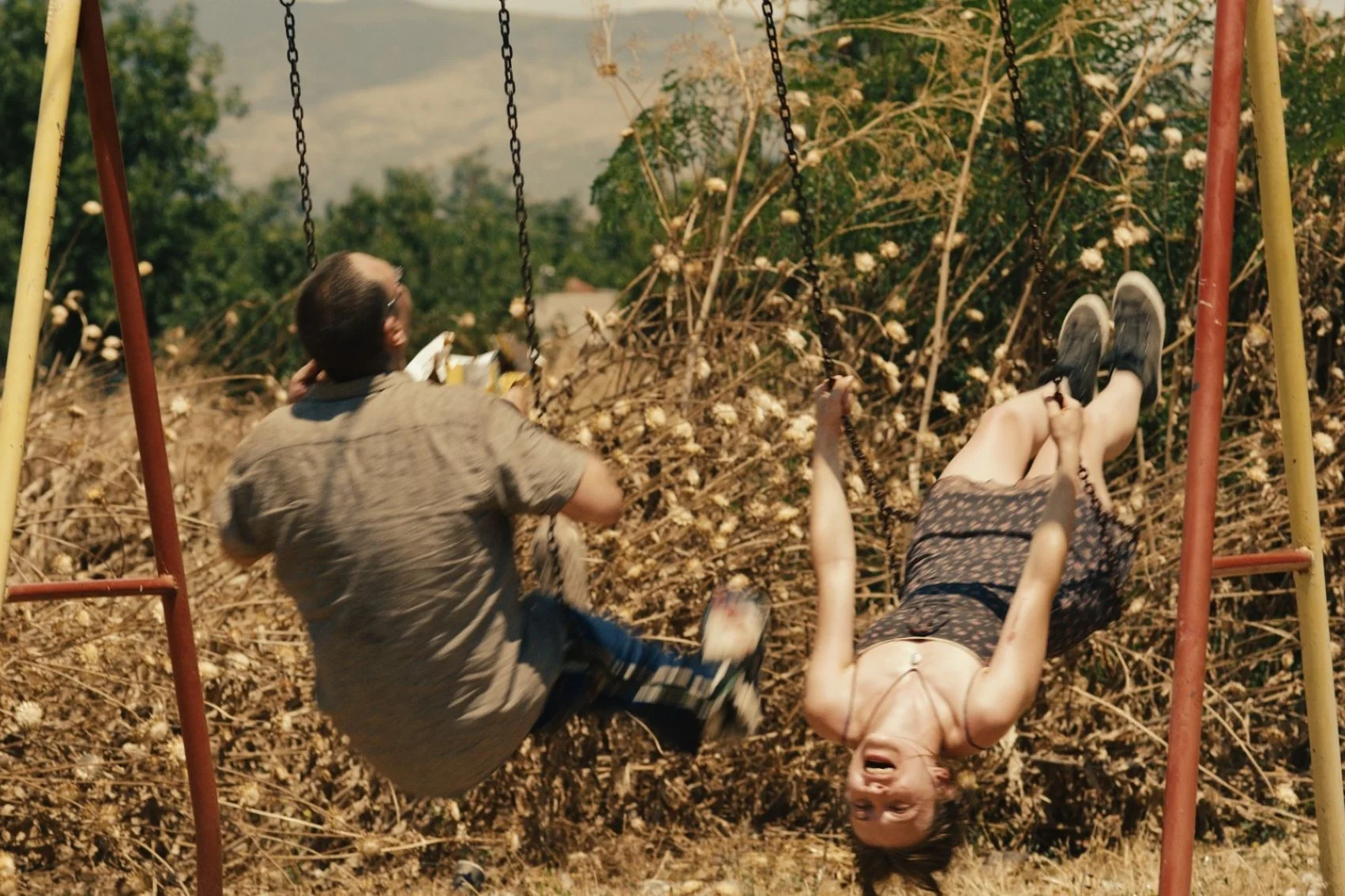

Milcho Manchevski’s “Sister Brother Manhole Cover” won the Tokyo Grand Prix on Wednesday, giving the North Macedonian director the top prize at the 39th Tokyo International Film Festival. A jury led by Australian filmmaker Rolf de Heer chose the film from a Competition field of 15 titles. The award carries a cash prize of ¥3 million, about $19,000. The festival ran from Oct. 26 to Nov. 4.
The comic allegory follows two siblings, Victor and Marina, who scrape together a living in Skopje by stealing manhole covers and copper busts from the city’s streets. It is Manchevski’s first fiction feature since “Kaymak.” The director, who won international acclaim with his 1994 debut “Before the Rain,” has said corruption and political harassment in his home country delayed the project for years.
The Special Jury Prize went to “Magic Atlas,” an animated feature by Chinese artist Sun Xun, representing Singapore. Sun spent a decade making the film, which blends animation with ink wash painting, medieval European engravings and other visual styles. The prize carries ¥500,000, about $3,160.
Lisandro Alonso took best director for “Double Freedom.” The festival frames the Argentine’s film as a companion to his 2001 debut “La Libertad.” It follows a solitary woodcutter whose life in the forest unravels when he must take in his sister after her psychiatric facility closes. Hu Ling and Narita Ryo won the acting prizes. Each of those awards, along with best artistic contribution, includes ¥300,000, or about $1,900.
The festival’s Nippon Cinema Now section, which showcases contemporary Japanese cinema, handed out prizes for the first time. Tanaka Miki’s “Silver Express” won best film and ¥500,000. Matsumura Shingo’s “Between Us” received the special jury prize and ¥300,000. Other sections also named winners, among them “Şerife Tavşan” in the Asian Future category and “Running Wild in the Sun” at the Asian Students’ Film Conference.
The results continue a run of top prizes for politically charged or socially minded cinema in Tokyo. Last year, Annemarie Jacir’s “Palestine 36,” a drama about the 1936 Palestinian uprising against British rule, took the Grand Prix. Manchevski’s win places a satire of urban decay and petty crime in that company.