



























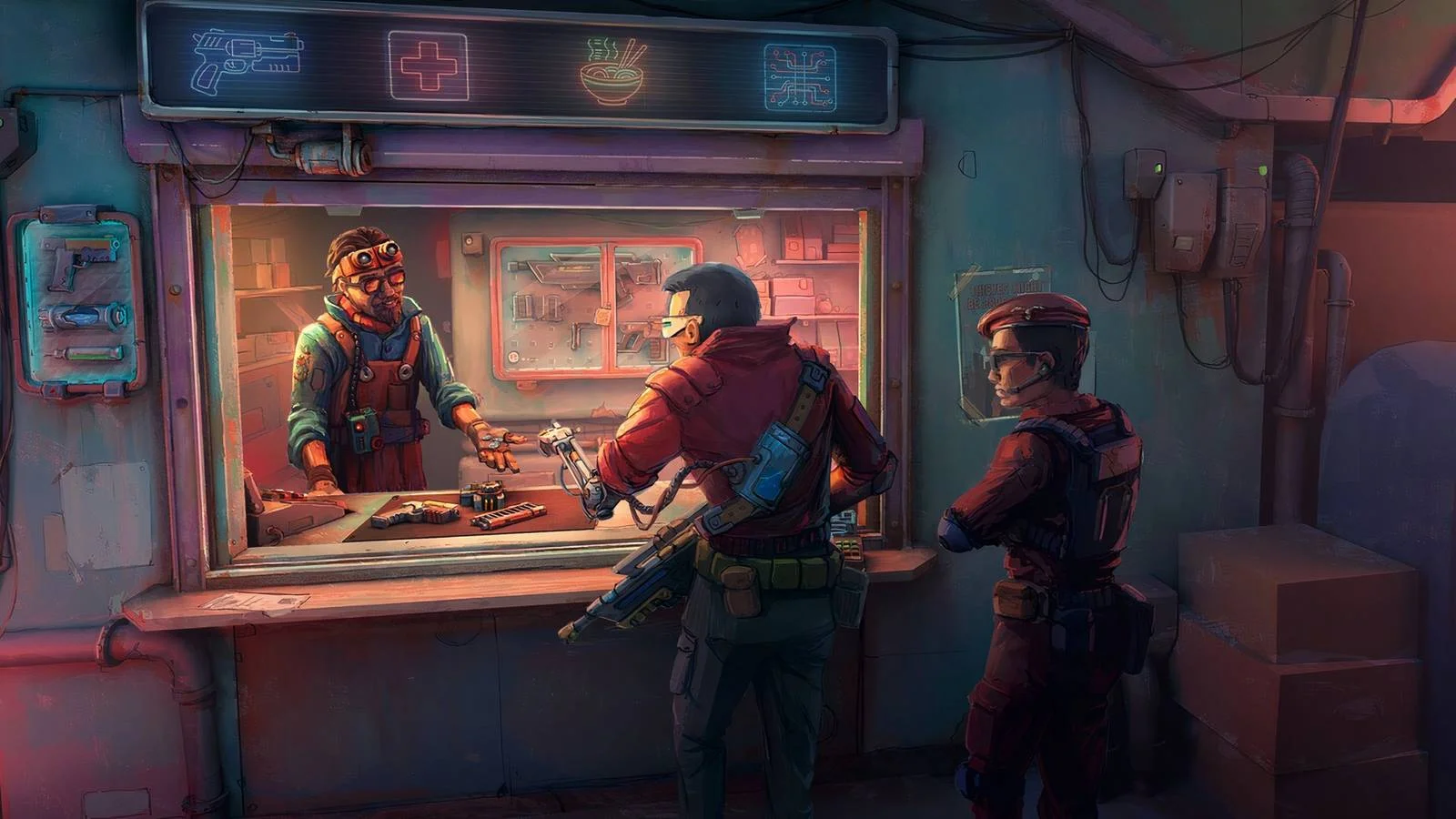

Checking weapon permits and testing water ask for different kinds of attention in Probably Stolen – Cyberpunk Shopkeeper Sim. Manuals help establish what can be traded, but identifying acceptable merchandise is only part of the transaction.
You still need to negotiate a price that leaves room for profit, account for a customer’s budget, and decide how much uncertainty you can afford. From behind a shop counter on a cyberpunk space station, the player becomes an appraiser whose mistakes remain in the inventory after the person responsible has left.
Haggling gives that inspection work a useful economic purpose. Knowing an item’s condition and legitimacy helps you judge the deal rather than simply complete a checklist. Rent then changes the calculation: recurring payments rise while the longer-term objective is to purchase the shop from the Landlord.
Refusing suspicious stock protects the business from one kind of exposure while leaving its bills untouched. Questing Goose Studio gets real tension from this relationship. Financial pressure makes caution expensive without removing the option to exercise it, and a successful transaction can feel like the reward for understanding several connected rules.
Starting specializations alter how much room you have to learn those rules. Apprentice supplies credit, household goods, food, storage space, and a Mentor’s guidance. Rock Bottom removes both starting credit and merchandise. Hydroponic Farmer supplies equipment, seeds, and farming stock, then attaches higher rent to that apparent head start.
These are useful differences because they change the immediate problem. One shopkeeper can afford to experiment; another needs something to sell; a third has an existing investment that must justify its operating costs. The choice gives financial pressure a different shape before the first day’s routine has settled.
Production extends that control beyond the goods customers happen to bring through the door. The Moisture Farm turns energy into water overnight, creating a supply whose cost you can plan around. Buying machinery, however, uses money that could cover rent or purchase stock, while running it adds another resource demand. This is satisfying management because an upgrade changes your dependence on incoming trade. Hydroponic equipment offers another route into producing inventory. These options allow you to decide where the business carries its risk.
Leaving the shop after closing offers another way to redistribute that risk. Visits to other merchants and scavenging trips provide supplies outside the counter’s usual exchanges. Travel takes place through selected locations rather than free movement around the station, keeping these excursions attached to the management structure.
Digging through discarded goods can cause injury, and outings can lead to oversleeping and missing customers the next day. Even staying home leaves a decision to make, since alarms protect against overnight break-ins. These activities work best as competing uses of limited resources: scavenging may conserve cash, but it puts health and tomorrow’s trading opportunities into the calculation.
Reputation makes the same business vulnerable to pressures that cannot be settled through pricing alone. Security, the Revolution, black-market interests, and the station’s social groups offer access, opportunities, and protection, with allegiance to one risking distrust elsewhere.
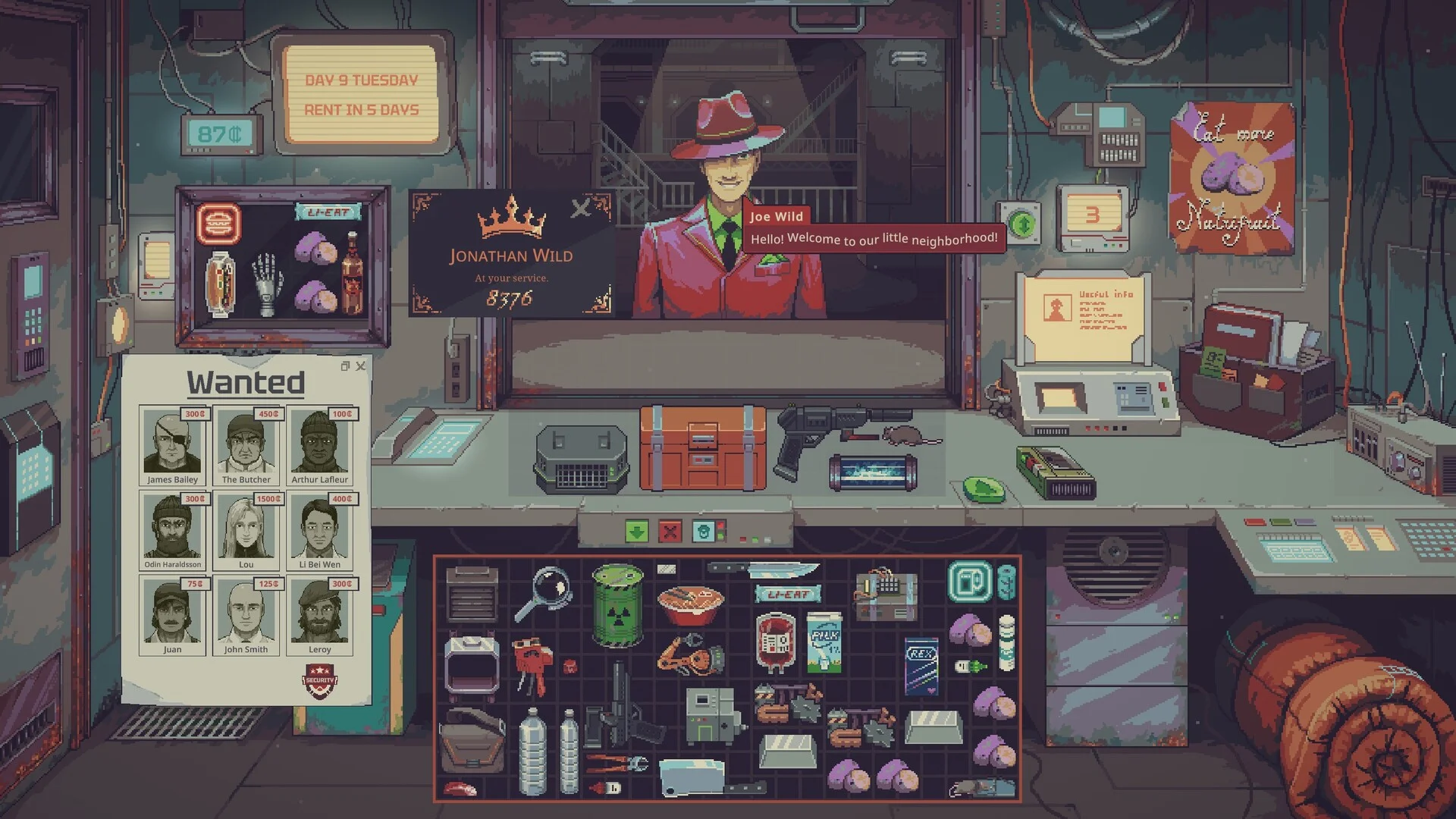
Reporting wanted visitors or helping resistance associates therefore affects the conditions under which you trade. The setting has mechanical force here. A shopkeeper’s political position develops through services performed and assistance withheld, while useful commercial relationships can become difficult loyalties. There is meaningful agency in choosing those associations, even if access and reputation changes do not, by themselves, provide a richly developed personal story.
The rogue AI and its dangerous augmented victims introduce a harsher form of customer assessment. Ordinary-looking visitors can become threats, requiring recognition and potentially a lethal response. That changes the stakes of watching the person across the counter, but the interaction remains rooted in identifying signs and applying the prescribed response.
The threat supplies tension without consistently making the customer an individual whose fate matters beyond that identification. This matters because the game places commercial suspicion and lethal suspicion within the same working routine. Its systems can make you attentive to people while giving you relatively little opportunity to know them.
Learning to manage all this is harder than the basic controls suggest. Inspection procedures compete with inventory, reputation, equipment costs, and demand information from newspapers and guides. Moving between menus and panels can make organizing those responsibilities awkward, especially while their relative importance is still unclear.
Spending badly because you misjudged an investment is an intelligible management consequence; struggling to assemble the information needed for that judgment is less rewarding. Mouse-only play, adjustable text, tooltips, and the absence of timed input help reduce control and reading demands. They give you time to think, though they cannot fully resolve the effort of finding and coordinating what you need to know.
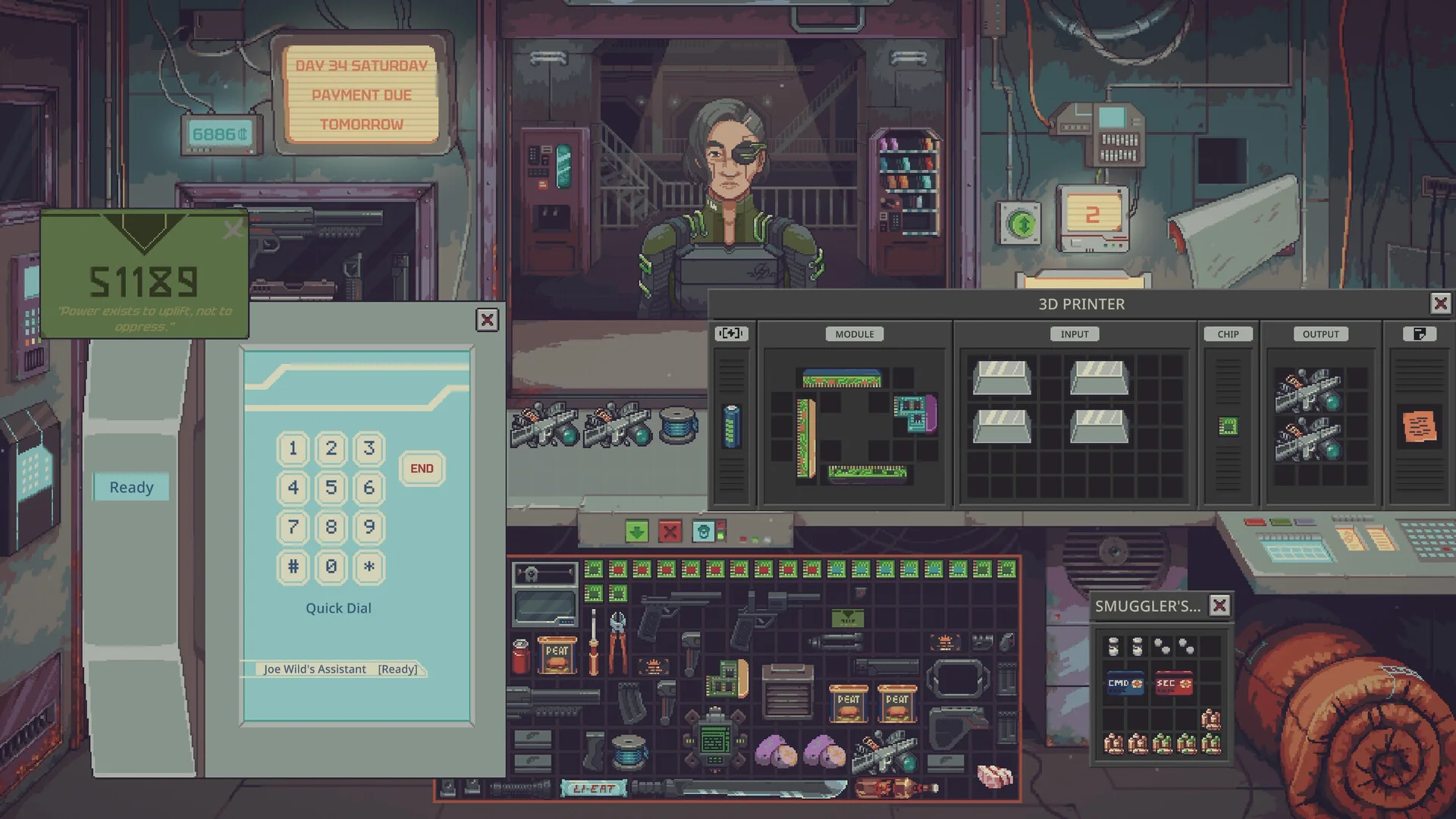
Once the rules become familiar, the difficulty shifts toward sustaining interest in their application. Buying, inspecting, negotiating, and selling remain the dominant activities across the available business approaches. Production changes where stock originates, and faction relationships change the circumstances of trading, yet neither reliably transforms the interaction waiting at the counter.
There is pleasure in becoming efficient, particularly when a previously confusing set of obligations starts to make sense. The limitation appears when efficiency stops requiring much reconsideration. Different starting resources create persuasive reasons to begin again, but the repeated work can narrow those differences as each shop settles into recognizable procedures.
Customer behavior makes that narrowing especially noticeable. Familiar goods arrive with the same small stock of phrases, while the limited cassette selection provides only modest relief from the repeated ambiance. Neon lighting and dark corners give the station a familiar cyberpunk appearance, but the visitors do relatively little to develop the world suggested by its factions.
A shopkeeping game can make recurring customers valuable: familiarity could give a transaction personal stakes alongside its financial ones. Here, recognition too often means knowing which procedure comes next. The game can make helping a faction commercially significant while struggling to make the person receiving that help memorable.
The Review
Probably Stolen - Cyberpunk Shopkeeper Sim
Probably Stolen makes appraisal, negotiation, and rising rent work together: knowing your stock matters because every mistake competes with the next bill. Production and faction relationships offer useful control over how the shop survives. Awkward information management complicates learning, though, and familiar procedures lose their tension once mastered. Repeated customer phrases leave the station’s political conflicts short of personal stakes. There is satisfying business management here, but limited reason to keep serving the same transactions after finding a workable routine.
PROS
- Inspection and negotiation carry meaningful financial stakes.
- Specializations create distinct starting pressures.
- Production and faction ties expand business choices.
CONS
- Awkward menus complicate information management.
- Familiar trading procedures become repetitive.
- Repeated customer dialogue limits personal investment.