








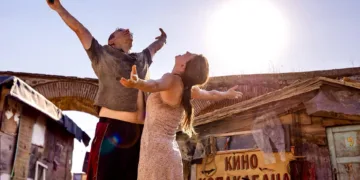

















In the Super 8 footage preserved by Jimmy Buffett’s band and crew, the future celebrity still belongs to a group. The informal photographs and hand-built stages collected in John H. Cunningham’s Occupational Hazard: The First Coral Reefers give the surrounding musicians a physical presence that the later Margaritaville image can obscure. They occupy the same historical space as the man whose name would eventually identify the whole enterprise. Cunningham’s archival selection makes that shared space consequential: we can see a musical identity taking shape before it becomes somebody’s property.
Roger Bartlett’s recollections give those images their necessary uncertainty. An early touring partner, Bartlett remembers an operation modest enough that reaching the next engagement mattered considerably. Such testimony resists the retrospective habit of treating every shabby beginning as a disguised business plan.
Key West supplied a gathering place for musicians, artists, and people with limited enthusiasm for conventional employment; nobody required it to supply an empire. The footage’s value lies partly in preserving circumstances that success would later make difficult to imagine. Buffett and his collaborators still had possibilities, rather than a legacy to maintain.
Cunningham follows that collective identity into the music, where the claim for shared credit becomes specific. Michael Utley’s memories and producer Norbert Putnam’s account of advocating for the band’s involvement establish the personnel behind a supposedly effortless sound.
Discussion of Changes in Latitudes, Changes in Attitudes, Caribbean instrumentation, and the developing mixture of country, folk, and rock gives “Margaritaville” a history of musical decisions. A familiar recording becomes something people had to work out together. This is where the documentary most effectively corrects the distortion produced by a single famous name: its witnesses can explain what they helped make.
The band’s looseness introduces a useful complication. Technical polish was sometimes in short supply, yet Buffett defended musicians whose collective character contributed to the appeal. Cunningham allows that defense to register without making disorder a sufficient artistic principle.
There is a difference between an ensemble sounding comfortably informal and its members becoming unable to sustain the work. The early material leaves room for both possibilities. Buffett’s loyalty also matters later, when personnel changes threaten to reduce the story to a familiar account of an ambitious singer discarding his friends.
For a substantial stretch, however, trouble remains enjoyable company. Drinking, drugs, altercations, and punishing travel return as stories told by people who have acquired an amused perspective on their younger selves. The past has had time to improve its comic timing.
Jeff Bridges’s relaxed, intermittent narration suits this atmosphere without taking possession of it; the participants retain room to establish their own rhythms and affections. The resulting ease is persuasive. It also shapes our response to disclosures that might sound considerably less entertaining without the warmth of the person remembering them.
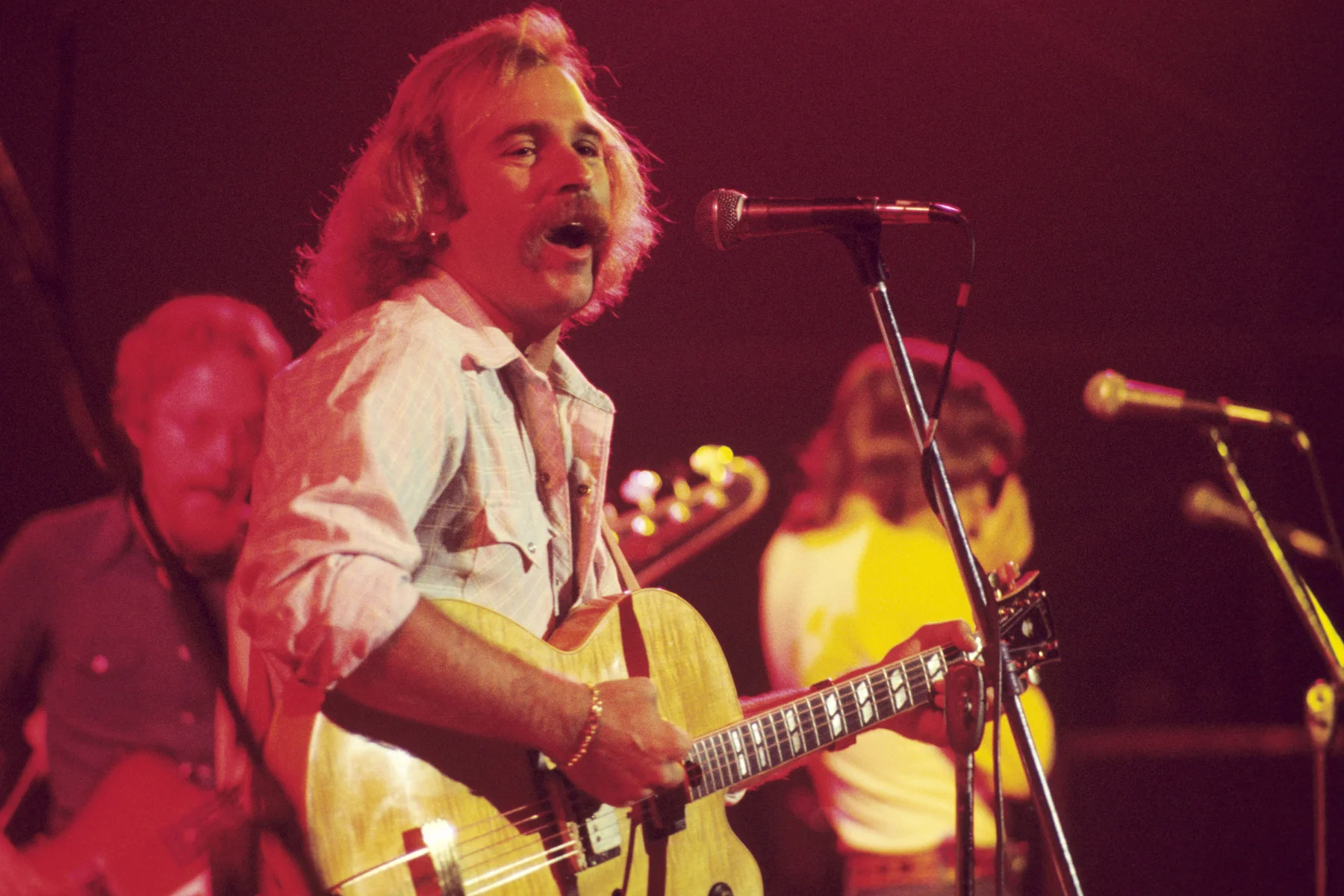
Deborah McColl changes the weight of that hospitality. The former backing singer recalls serious drug use and the loss of herself within the touring culture, then speaks from a later life that includes work as a psychotherapist. Her account gives departure a purpose the communal anecdotes cannot quite contain.
Leaving offered a chance to recover the capacity to choose how to live. Cunningham does not need an accusatory narrator to make that distinction intelligible. McColl’s perspective supplies its own resistance to the idea that surviving an experience makes it harmless, or that remembering it fondly settles its meaning.
Her specificity also exposes a limitation in the surrounding interview material. Across 92 minutes, repeated accounts of excess sometimes establish the early Reefers’ reputation while leaving the individual telling the story less distinct. Bartlett’s modest road memories and McColl’s account of leaving reveal different relationships to the same collective life.
Another recollection of reckless behavior can merely confirm what we already understand. The issue is the allocation of attention: Cunningham occasionally spends time renewing the group’s legend that could have helped us understand a particular person’s attachment to it.
That distinction becomes sharper as Josh Leo’s involvement and the transition toward another group of musicians bring employment into the foreground. The freedom associated with Buffett’s music depended on schedules, dependable performances, and people remaining capable of doing their jobs.
Dismissals can wound friendships; tolerating instability can expose colleagues to a different kind of harm. Cunningham gives enough context to make Buffett’s determination to protect his career understandable. Earlier accounts of his support for the musicians prevent the transition from reading simply as a betrayal arranged in retrospect.
Yet this is also where the film’s affectionate method encounters its limit. It acknowledges the pain of the original group’s dissolution without allowing disagreement the sustained attention given to the pleasures of belonging. The imbalance matters because the documentary has already established how much these musicians contributed.
Their replacement raises questions about the obligations created by that contribution, and those questions receive less development than the shared history preceding them. Buffett appears through historical material rather than a new retrospective interview, which restricts direct examination of his thinking. His absence cannot explain every choice about how long to remain with the people who experienced the changes.
The early ensemble images acquire a different significance once continued membership depends on professional reliability. They record real collaboration, yet they cannot establish what any participant was owed indefinitely. Nor does the practical case for changing musicians resolve the personal consequences of doing so. Their contribution survives in the sound, even after making that sound no longer guarantees them a job.
Occupational Hazard: The First Coral Reefers explores the formative 1970s and early 1980s history of Jimmy Buffett’s original touring band. Narrated by Jeff Bridges, the documentary relies on rare archival material and first-hand anecdotes from band members to trace the wild origins of the iconic musical empire.
Where to Watch Occupational Hazard: The First Coral Reefers (2026) Online




Full Credits
Title: Occupational Hazard: The First Coral Reefers
Distributor: Gateway Film Center / Independent Release
Release date: 2026 (Festival and Theatrical Screenings)
Running time: 1 hour 34 minutes (94 minutes)
Director: John H. Cunningham
Producers and Executive Producers: John H. Cunningham, Ted E. Haynes
Cast: Jeff Bridges, Jimmy Buffett, Bob Liberman, Brent Taylor, Chris Robinson, David Wegman, Deborah McColl, Greg “Fingers” Taylor
Director of Photography (Cinematographer): Troy Jackson
Editors: Richard Lowe
The Review
Occupational Hazard The First Coral Reefers
Cunningham’s archive gives the early Coral Reefers back their place beside Buffett, while the recording recollections establish what they contributed. Deborah McColl’s testimony cuts through the pleasures of remembered excess with necessary clarity. The film becomes less searching when friendship turns into a question of continued employment: it acknowledges the wounds, then hesitates to examine them. An absorbing musical history, with affection that earns trust and occasionally limits scrutiny.
PROS
- Archival images restore the band’s collective identity.
- Recording accounts give shared musical credit substance.
- Deborah McColl’s testimony makes the personal cost tangible.
- Bridges’s restrained narration leaves room for participants.
CONS
- Repeated partying anecdotes blur some individual personalities.
- Personnel conflicts receive limited sustained examination.