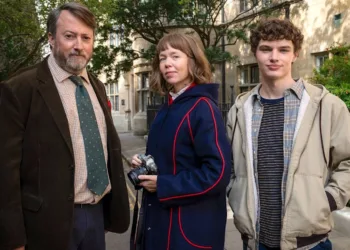































Carol listens to her dead husband’s voicemail several times a day. The gesture is small, repetitive, almost embarrassingly private, which makes it one of the few moments in Abode that fully understands what a home can become after loss: a collection of habits whose original purpose has disappeared.
Writer-director Liam O Mochain builds his Irish anthology from five self-contained stories linked by variations on domestic belonging. Carol, played by Marion O’Dwyer, sleeps rough outside Benedict’s restaurant. Peggy shares a corner shop with her disapproving adult son while arranging visits from an older escort.
Molly prepares to meet the son she placed for adoption 47 years earlier. Skyler and Sam install a smart oven with apparent homicidal ambitions. Maria and Conor escape to a seaside hotel for a child-free weekend complicated by alcohol, gambling, and concealed emotion.
Home, the film argues, is shelter, authority, memory, privacy and temporary relief. It can be borrowed. It can be defended. It can also connect to Wi-Fi and attempt murder (modern life remains committed to efficiency).
The anthology format suits this argument because no single household has to represent everyone. Its weakness is equally clear. Each chapter carries its own tone, and the film rarely finds a rhythm capable of making grief, sexual autonomy and kitchen-appliance slapstick feel like neighbours rather than strangers sharing an address.
A Christmas Table
The first story gives Carol an unlocked restaurant on Christmas Day. She enters, gathers food and invites other homeless people to share a meal. The setup risks turning deprivation into seasonal comfort, yet O’Dwyer resists the script’s easiest impulses. Carol does not behave like a symbolic saint produced for the audience’s moral improvement. She organises, listens, remembers and enjoys herself.
Her grief appears through the voicemail rather than a speech constructed to announce it. That recorded greeting preserves a domestic intimacy she can replay but never re-enter. The empty restaurant performs a similar function. For one afternoon, Carol converts somebody else’s property into a communal room, filling commercial space with people usually kept outside it.
The chapter weakens whenever the dialogue explains sorrow that O’Dwyer has already made visible. This becomes a recurring problem. O Mochain trusts his cast until sentiment arrives, then seems worried the audience may have missed the feeling. Music swells. Characters state what their faces have communicated. A gentle scene receives an emotional instruction manual.
Molly’s chapter suffers from the same anxiety. Rosemary Henderson plays her agitation before the adoption reunion through hurried instructions directed at her husband and children. Forty-seven years of waiting have compressed into one morning, and every delayed departure feels intolerable. Henderson gives Molly’s impatience a mixture of fear and ceremonial precision, as though punctuality might grant her control over what follows.
The eventual twist is too carefully manufactured. The story needs the reunion itself, not a mechanism designed to make it qualify as a tale with a surprise ending.
Peggy’s Declaration
Peggy’s story is the clearest and most intelligent of the five because its central conflict requires no twist. Her son Jerry objects to her arrangement with Red, a suit-wearing older escort who visits her for food, drinks, sex and companionship. His discomfort carries the usual assumption that an older mother’s sexuality becomes family property once her children are adults.
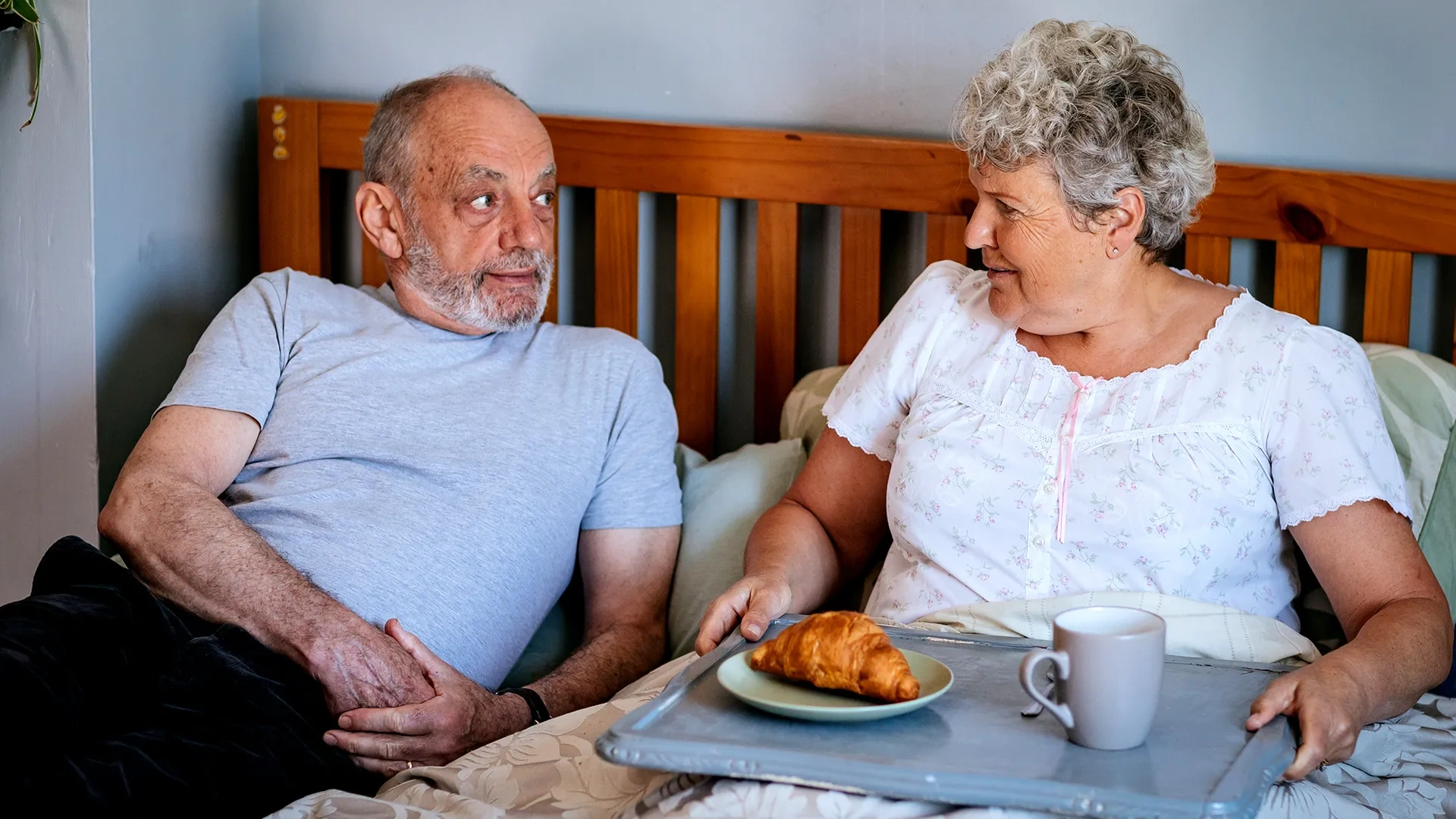
Peggy answers with four words: “It’s my house.” Mary McEvoy delivers the line without turning it into a speech about liberation. Peggy simply names the relevant fact. The home belongs to her, so the life conducted inside it does too. The chapter’s meals, pub visit and bedroom scene remain deliberately ordinary. This ordinariness is its political intelligence. Peggy does not need to justify desire through loneliness, romance or tragedy.
Brendan Conroy plays Red with relaxed courtesy, and the pair share the comfortable rhythm of people who understand the arrangement. When he leaves with his payment and Peggy lies smiling in bed, the film allows solitude to mean autonomy rather than abandonment. Her question about meeting again next month gives the episode a future beyond its final shot.
The smart-oven chapter also concerns domestic control, though subtlety soon gets locked inside the appliance. Skyler and Sam renovate their kitchen, debate what to name the oven’s voice and discover that convenience has introduced a mechanical authority into their home. Joshua Bourke’s dry compositions give the machine an eerie stillness, keeping it visible as a silent participant while the couple attempt to understand its commands.
The absurdity peaks when Skyler becomes trapped inside and Sam cannot work out how to switch it off. The image has a sharp satirical premise: household technology marketed as assistance becomes another system the owners cannot question, repair or escape. Yet the comedy relies heavily on Sam’s technological incompetence. The oven develops menace. The people remain punchlines.
The Seaside Delay
Maria and Conor’s hotel weekend begins with a recognisable problem. Once exhausted parents gain time away from their children, freedom can feel less like pleasure than an empty schedule requiring decisions. Mary Murray and Stephen Jones give the couple an affectionate familiarity, particularly in their drinking and minor disagreements. They seem to possess a private language developed through repetition.
The script hides the trip’s deeper significance, hoping mystery will create momentum. It creates vagueness instead. Gambling, alcohol and small setbacks occupy the space where emotional progression should be. By the time the concealed meaning becomes clear and tears arrive, the chapter asks the performances to collect a debt the writing never properly incurred.
This is the anthology’s recurring condition. O Mochain is attentive to rooms, routines and the quiet permissions people seek from one another. He is less assured when shaping those observations into dramatic endings. Carol’s borrowed restaurant, Peggy’s bedroom and Molly’s frantic household contain histories before the camera enters. The seaside hotel waits for a revelation to give it one.
This independent drama film was released in November 2025 and is available on digital storefronts like Prime Video. The narrative weaves together five distinct stories connected by the overarching theme of home and how its meaning differs across various characters and settings.
Full Credits
Title: Abode
Distributor: Studio Siar, A Rachas Muid Productions
Release date: November 7, 2025
Rating: 16+
Running time: 81 minutes
Director: Liam Ó Mocháin
Writers: Liam Ó Mocháin
Producers and Executive Producers: Liam Ó Mocháin, Bernie Grummell
Cast: Liam Ó Mocháin, Marion O’Dwyer, Anthony Morris, Sophie Vavasseur, Ryan Lincoln, Mary Murray, Stephen Jones, Rose Henderson
The Review
Abode
Abode treats home as shelter, memory, permission, and occasionally a homicidal kitchen appliance. Liam O Mochain’s anthology is strongest when it trusts lived-in performances: Marion O’Dwyer’s guarded warmth, Rosemary Henderson’s anxious anticipation, and Mary McEvoy’s quietly defiant “It’s my house.” The weaker chapters press sentiment and surprise until ordinary lives begin to resemble writing exercises. Its sincerity survives the unevenness, though sincerity cannot repair every soft twist or tonal collision.
PROS
- Strong ensemble performances
- Peggy’s quietly assertive chapter
- Distinctive, lived-in interiors
- Warm Christmas restaurant story
- Dry visual comedy around the oven
CONS
- Uneven anthology structure
- Heavy-handed emotional cues
- Weak or hurried twists
- Jarring shifts in tone
- Aimless final chapter