




















Mischa Richter gives Summer Tour the rhythm of a Grateful Dead jam, then forgets that a documentary still needs movement. His camera follows Jerry and Annie across the United States during Dead & Company’s 2023 farewell tour, recording their drives, campsites, swims, dances, and temporary homes with an easy affection. The images are tactile and inviting. The structure keeps circling the same chorus.
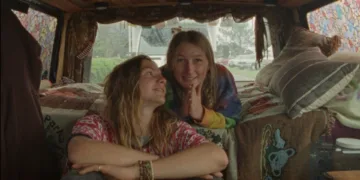
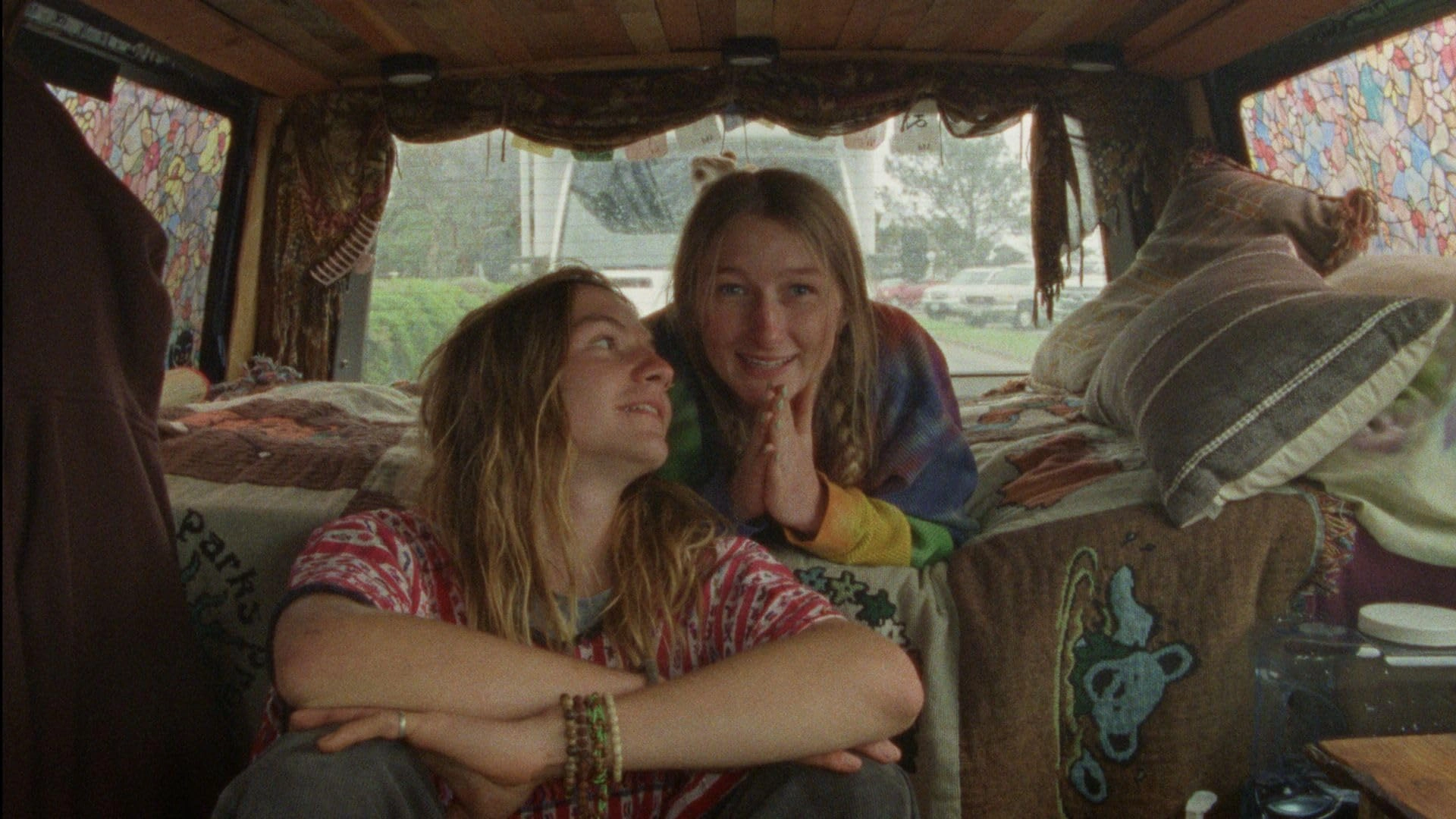
Jerry and Annie travel in a van decorated with plants, macramé, and the handmade clutter of a life designed to look spontaneous. They attend concerts, sell goods around Shakedown Street, take psychedelics, and swim naked in wooded watering holes. Richter rarely treats them as oddities. They are gentle, photogenic, and so unfailingly kind that another traveller initially suspects they cannot be genuine.
That suspicion gives the film a promising opening pressure. Are Jerry and Annie performing an inherited idea of freedom, or have they built a life that genuinely suits them? Summer Tour raises the question through their clothes, routines, and carefully arranged van. It never develops it into a sustained line of inquiry.
Nice People, Limited Access
Jerry’s visit to his family home offers the clearest chance to place his drifting existence against something firmer. His father is a police officer, and his family has a military history stretching back generations. Jerry arrives with long hair, a guitar, and none of the hostility such a setup might suggest. He loves his parents. They love him. The scene resists the easy story of a young rebel rejecting conservative roots.
It also exposes how little Richter wants to probe. Jerry’s freedom exists beside the security of a large family home and relatives with conventional careers, yet the film does not ask how that support shapes his choices. Annie comes from Santa Cruz, and her mother has her own history with Deadhead culture. She briefly mentions a darker side to the scene. Richter lets the remark pass.
The restraint keeps the film warm, but warmth can become evasive. Jerry and Annie explain why the music matters, why psychedelics appeal to them, and why the travelling community feels necessary. Their answers stay close to familiar words such as happiness, connection, and freedom. Richter records the language without testing it against money, work, conflict, or whatever happens after the tour ends. The couple remain likable. They never become fully legible.
The Jam Becomes the Structure
Richter and editor Jay Rabinowitz shape the film through dissolves, soft 16 mm photography, animated maps, and a dense Grateful Dead soundtrack. Sunsets melt into campsites. Forest swims give way to highway footage. A conversation ends, and another crowd begins to sway or spin.
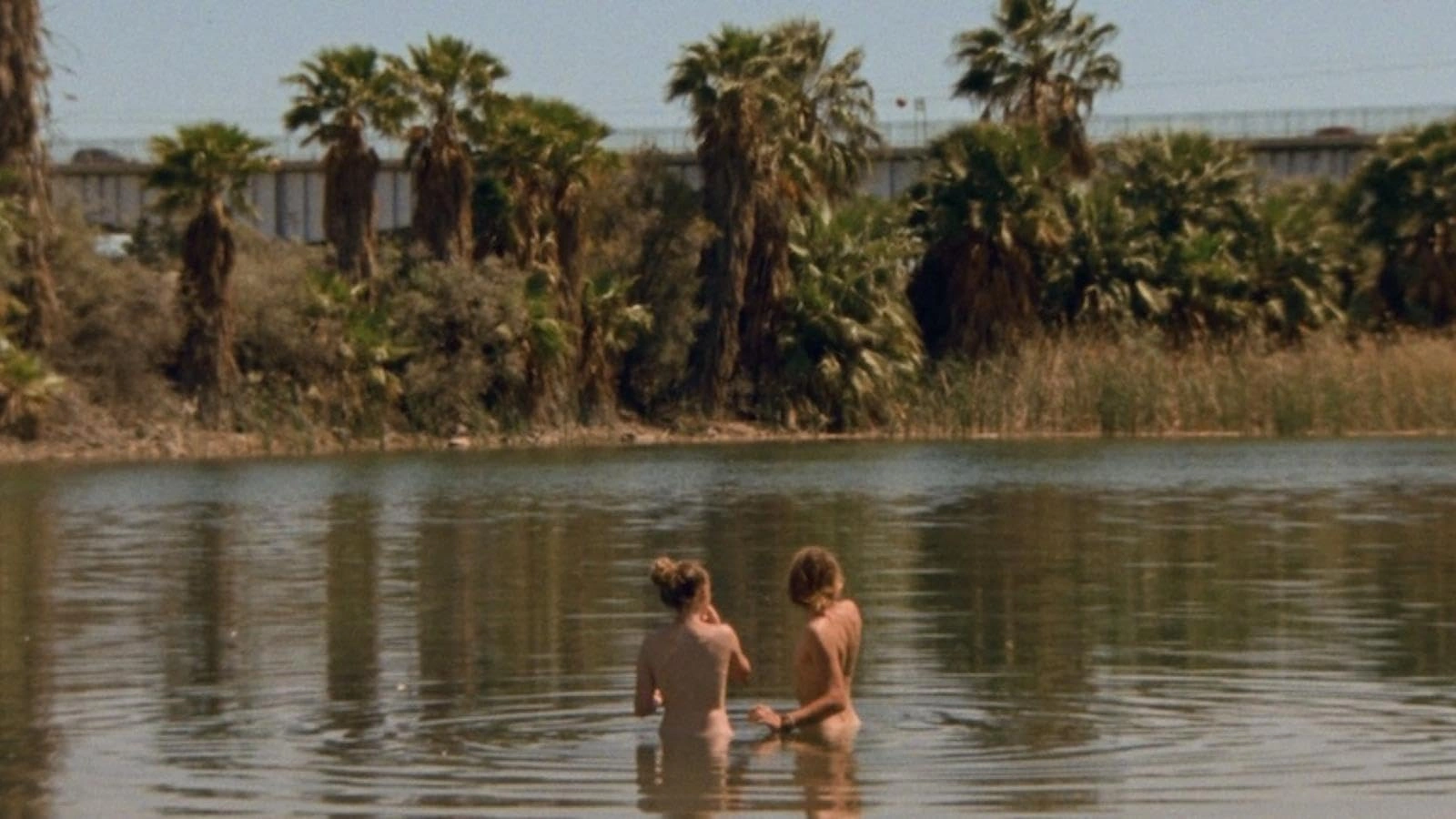
The method suits the subject for a while. Annie describes spinning at concerts as a route into a near-mystical state, and the editing briefly captures the bodily release she means. The camera watches dancers rather than reducing them to background spectacle. Their repetition becomes ritual.
Then the documentary repeats the ritual until it loses dramatic value. Jerry and Annie drive, park, dance, talk, and drive again. The animated map supplies geography, but geography is not progression. Jerry busking outside the House of Blues in Boston gives one stop a little texture, yet most cities blur together.
The strangest absence is the band. Dead music fills the soundtrack, but sustained performance footage is scarce. The choice redirects attention toward the followers, which makes sense, yet the film never replaces the missing concert material with a stronger human story.
One fan provides the kind of story the rest of the film needs. After the 2020 tour was cancelled, he drove to the empty venues anyway and played the music himself. His private recreation turns fandom into ritual, grief, and stubborn devotion. Richter catches the idea, then moves on.
Trouble at the Edges
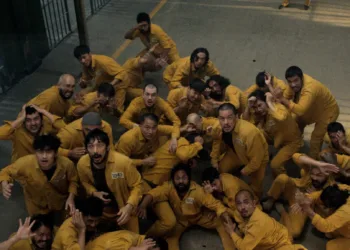
Conflict appears in fragments. One follower explains how he sneaks into venues by slowly walking backward past security. Another traveller uses crutches after misjudging a fence during an attempted entry. Later, police arrest and beat him.
These incidents should alter the film’s shape. They reveal the practical risks behind the smiles and spinning, along with a tension between the group’s claims of freedom and the systems surrounding concert access. Instead, they function as brief disruptions before the relaxed rhythm resumes.
Shakedown Street receives similar treatment. The temporary marketplace, filled with handmade clothes, food, crafts, and improvised businesses, could support a sharper examination of how the travelling economy works. Who earns enough to continue? Who has savings? Who depends on family? The film observes transactions without tracing consequences.
Richter does succeed in correcting one stale image of Deadhead culture. This is not a gathering populated solely by aging fans preserving their youth. Many of the travellers are young, curious, and deeply invested in music created before they were born. Jerry and Annie show how a subculture renews itself through costume, movement, shared language, and repeated pilgrimage. The film gives that inheritance attractive surfaces and sincere faces. It stops before asking what the inheritance costs.
This documentary film opened in theaters on July 23, 2026, following a festival run that included the Telluride Film Festival. The story follows a magnetic young couple traveling across America for Dead & Company’s 2023 farewell tour, capturing the communal spirit and bond shared by fans.
Full Credits
Title: Summer Tour
Distributor: Utopia
Release date: July 23, 2026
Running time: 82 minutes
Director: Mischa Richter
Writers: Mischa Richter
Producers and Executive Producers: Chloë Sevigny, Mickey Liddell, Pete Shilaimon, Evelina Kirgan, Lizzie Nastro
Cast: Jerry, Annie
Director of Photography (Cinematographer): Hayden Mason
The Review
Summer Tour
Summer Tour finds genuine warmth in Jerry, Annie, and the young Deadheads building a roaming community around inherited music. Mischa Richter’s soft 16 mm photography and relaxed editing capture the appeal of their freedom, but the documentary confuses repetition with structure. Glimpses of gate-crashing, police violence, class privilege, and the movement’s darker side appear, then disappear before they can complicate the mood. The film follows the tour faithfully. It never discovers a destination.
PROS
- Warm, sincere central couple
- Beautiful 16 mm photography
- Immersive Grateful Dead soundtrack
- Affectionate portrait of young Deadheads
CONS
- Little dramatic progression
- Repetitive dancing and travel montages
- Avoids questions of class and privilege
- Darker elements remain unexplored