


























Kristin Harila sells her flat to finance an expedition that still depends on permissions, weather windows, and somebody agreeing to pay the remaining bills. These are useful obstacles for a documentary: specific, consequential, and capable of stopping the project before anyone reaches a mountain.
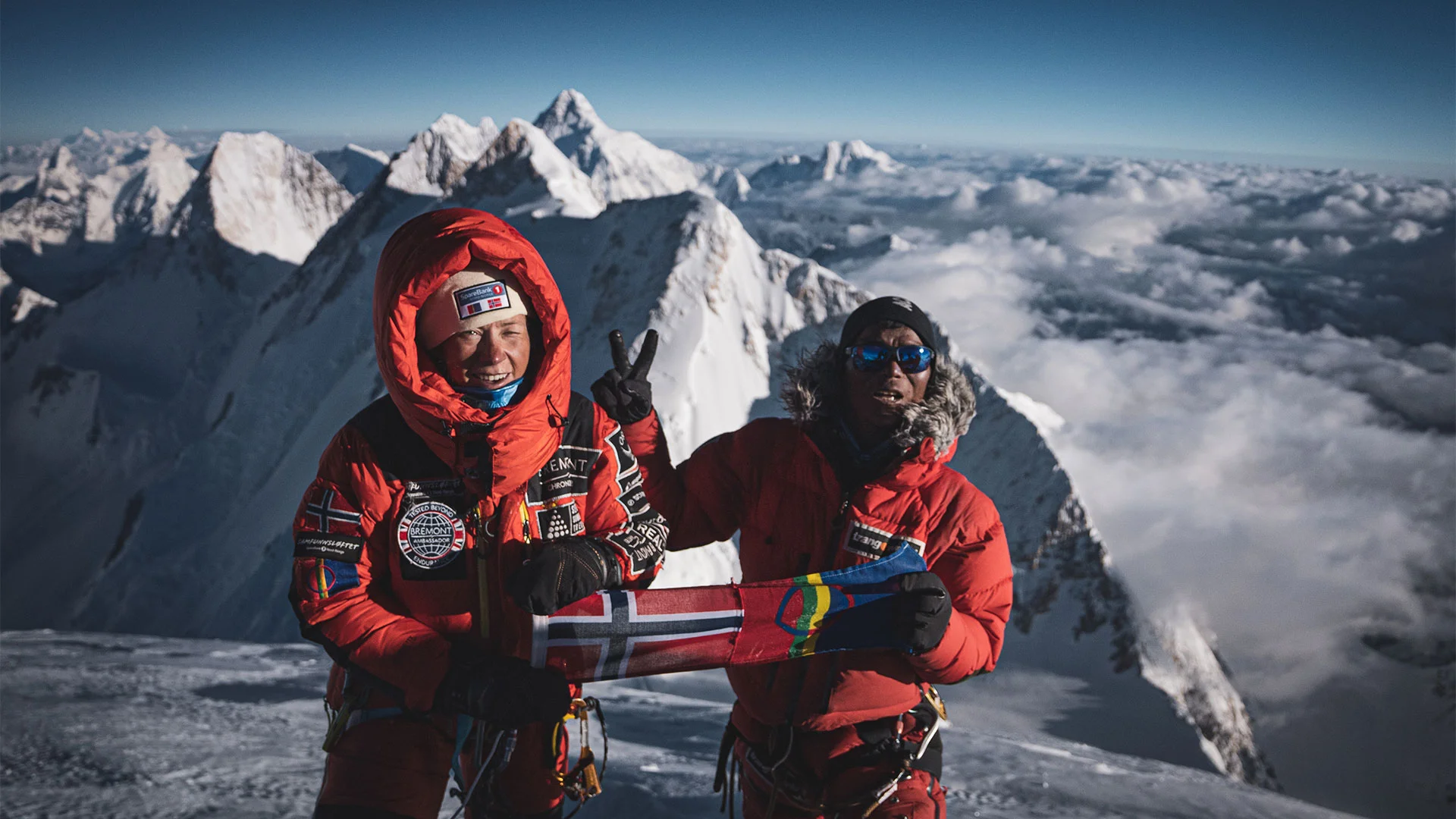
Even Sigstad’s Savage Mountain makes the organization of her 2023 attempt to climb the world’s fourteen peaks above 8,000 metres remarkably absorbing. Seven Summit Treks eventually covers costs when her money runs out. Behind the record she and Tenjen “Lama” Sherpa complete in 92 days sits an operation whose difficulties cannot be overcome by physical determination.
Once the climbing is underway, however, the film becomes less consistent about explaining what stands between the team and its next objective. Several peaks pass in abbreviated sequences, preserving the expedition’s momentum while reducing our understanding of its changing demands.
Getting permission to climb can seem a better-developed obstacle than the climb itself. Equal coverage of all fourteen mountains would be unnecessary, but the compression sometimes leaves a gap between seeing that another summit has been reached and understanding what reaching it has cost this particular team.
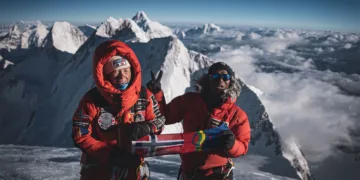
The footage can communicate that cost with considerable force. Harila climbing through food poisoning, repeatedly vomiting into the snow, gives endurance a bodily specificity that the record’s statistics cannot supply. Images of huge snow cornices and punishing weather establish danger without needing a manufactured cliffhanger.
The camera operators’ presence on these slopes also permits an intimacy that distant landscape photography could never provide. Yet the strongest individual passages do not entirely solve the cumulative problem. Exhaustion registers vividly within an episode, then the film’s rapid progress makes it harder to assess what carries into the next ascent.
That preference for forward movement also affects Harila’s introduction. Her background in competitive cross-country skiing and her earlier employment at a furniture company establish a life before this ambition, but the transition into extreme mountaineering happens quickly. Later childhood material, including her relationship with an energetic father, helps explain her self-reliance.
It supplies a plausible history for determination without quite explaining why this record became the necessary use of it. Selling a home makes the scale of commitment unmistakable; the decision behind that commitment remains less developed. Harila is understandable as a person before her project becomes equally understandable as a choice.
The partnership with Lama gives that project a firmer emotional basis. Harila wants the same Sherpa alongside her throughout so that he can share the record, and their time together in transit and at camp allows a friendship to emerge across a language barrier. Those encounters give continuity to an expedition that the mountain sequences sometimes fragment.

Lama, a father of two, becomes someone whose continued presence matters, rather than another name attached to the logistics. Harila’s wish to demonstrate women’s physical capabilities gives the attempt a public purpose; the relationship supplies a reason to remain invested when the growing summit count begins to feel repetitive.
K2 changes the film’s task. During the final ascent, Pakistani porter Muhammad Hassan is found hanging upside down from a rope, partially exposed in dangerous conditions. Attempts to help him fail, and he is dead by the climbers’ descent. Completing the record can no longer provide the documentary with a sufficient destination. The subsequent criticism of Harila demands an account of conduct, responsibility, and the limits of rescue. Sigstad moves from explaining how an expedition succeeds to presenting material through which viewers are asked to assess a disputed event.
The incident footage and Harila’s explanations make a substantial contribution. They convey physical conditions that a description of climbers continuing toward a summit can leave horribly abstract. Her account gives practical reasons to doubt the assumption that a successful rescue was available to anyone willing to attempt it.
A documentary following her has every reason to include that testimony. The difficulty is the weight placed upon it. Understanding the constraints she describes does not establish a complete reconstruction, and the film’s closeness to her makes its sympathetic interpretation easier to absorb than its evidentiary limits.
Hassan remains insufficiently explained within that account. His employment by another expedition company is unclear, while his preparation and the circumstances that brought him into danger receive too little development. These are consequential gaps because responsibility becomes difficult to assess without understanding the arrangement under which he was working.
The film gives us considerable access to what the event does to Harila and much less understanding of the man whose death precipitates that response. Recognizing this imbalance requires no assumption that she could have saved him. It requires the documentary to distinguish its account of her experience from an adequate explanation of his.
The aftermath complicates the picture further. Harila initially says nothing publicly about the death; later reporting brings criticism, vicious online abuse, departing sponsors, and substantial debt. Her bewilderment at being singled out among the many climbers on K2 is understandable. Still, rescue decisions, public communication, and targeted harassment remain separate subjects.
The ugliness of the abuse does not answer legitimate questions, just as those questions cannot excuse the abuse. Sigstad is effective at showing how quickly a celebrated achievement becomes a personal crisis, but the emphasis on Harila’s suffering leaves less space to examine the unresolved circumstances behind it.
Later grief gives the earlier friendship a different dramatic importance, shifting attention from defending the record toward questioning the work that records generate. Here the financing material acquires a significance beyond practical problem-solving.
Sponsors need an exceptional achievement to support; an expedition company can keep a project alive; a successful guide gains a reputation that leads to further dangerous employment. Harila’s wish to share recognition with Lama remains meaningful within this arrangement. The film’s later questioning of record chasing also leaves a practical difficulty unresolved: Lama’s reputation offers access to precisely the work whose risks have become so painful for her to contemplate.
Savage Mountain premiered on Sky Documentaries on September 4, 2026. Directed by Even Sigstad, the gripping documentary follows Norwegian mountaineer Kristin Harila’s record-breaking quest to summit the world’s fourteen highest peaks, while exploring the intense controversies and ethical reckonings surrounding her final ascent on K2.
Full Credits
Title: Savage Mountain
Distributor: Sky Documentaries
Release date: September 4, 2026
Running time: 1 hour 30 minutes (90 minutes)
Director: Even Sigstad
Producers and Executive Producers: Vesna Cudic, P.G. Morgan, Marina Zenovich, Siobhan Sinnerton, Hayley Reynolds, Helen Swindells
Cast: Kristin Harila, Tenjen Lama Sherpa, Matias Myklebust, Manish Maharjan, Gabriel Tarso, Sandro Gromen Hayes, Espen Saur
Director of Photography (Cinematographer): Filip Christensen
Editors: Peter Norrey, Charles Griffin Gibson, Christoffer Heie
Composer: Alexandra Hamilton-Ayres
The Review
Savage Mountain
Savage Mountain gives its record attempt a solid human foundation through expedition logistics, punishing climbing footage, and Harila’s friendship with Lama. Its structure is less assured: abbreviated ascents weaken the sense of cumulative effort, while the K2 aftermath receives an emotionally persuasive account that leaves Hassan’s circumstances underexplained. Sigstad makes Harila’s distress understandable, but the film needs greater clarity about the event it asks us to judge.
PROS
- Absorbing treatment of expedition financing and logistics.
- Mountain footage makes physical strain tangible.
- Harila and Lama’s friendship gives the expedition continuity.
- Later developments question the work that records generate.
CONS
- Compressed ascents obscure cumulative difficulty.
- Harila’s decision to pursue this record remains underdeveloped.
- Hassan’s circumstances receive insufficient explanation.