

















Ryo Honda tells Ami Enomoto that resentment over a university crush helped produce his first successful erotic manga. It is a risky admission to make on a date, especially for someone already worried about how he comes across. Ami has disappointments of her own to disclose, including the artistic ambitions she lost confidence in pursuing. You might brace for the conversation to collapse under all this embarrassment. Instead, they keep finding reasons to continue it. An outing to an idol film becomes a visit to an izakaya and a walk in the park. I wanted them to keep talking long before I wanted them to kiss.
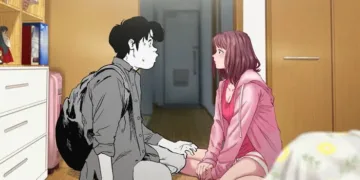
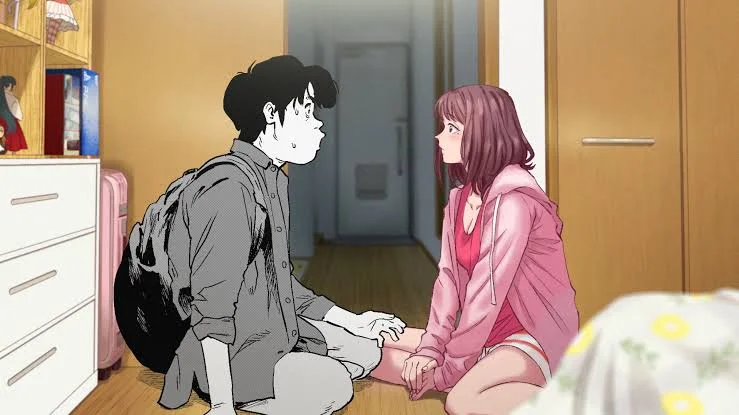
Masanao Kawajiri’s Cherry_and_Virgin_Review.md lets that growing ease alter the room around them. Ryo’s sketchy monochrome figure and manga screen tones initially occupy a different visual environment from Ami’s stylized, colored appearance.
Sitting together does not immediately place them in the same world. As the conversation develops, those treatments begin to mingle, and when Ami touches Ryo’s hand, color appears at the contact point. The pleasure comes from watching a small physical gesture catch up with the closeness their conversation has already created. The film gives us time to feel the distance before letting someone cross it.
Ryo, voiced and performed by Takashi Okado, is 32 and makes his living drawing sexual fantasies. Ami, played by Yaeko Kiyose, is 28, works outside professional manga, and draws Boys’ Love material. Both arrive at their dating-app match without previous romantic or sexual relationships.
Their creative interests give them plenty to discuss, but shared loneliness would be a thin basis for this much investment. What makes their company enjoyable is the attention they pay each other’s tastes and drawing practices. The jazz accompaniment helps sustain the conversational flow, then gives quieter passages a little privacy. Listening becomes an activity we can enjoy alongside them.
Ami’s flashbacks make that attention especially welcome. Her younger self appears in a simplified drawing style beside a more technically detailed artist who belittles her work. The comparison hurts before anyone needs to explain it: one person seems equipped to occupy the picture confidently, while the other looks vulnerable to being dismissed. Her mother’s criticism compounds the humiliation.
These changes in drawing style let us feel how artistic judgment gets tangled up with personal worth. Ami has continued making art, yet the prospect of claiming a professional identity has become frightening. Her pleasure in drawing survives alongside that fear, which keeps her from becoming a case history of damaged confidence.
The film also understands how borrowed images can help people express feelings they struggle to articulate directly. Ryo’s father appears through a design recalling Gendo Ikari from Neon Genesis Evangelion, giving Ryo’s perception of paternal distance a recognizable form.
Elsewhere, friends offer comfort through Mamoru Oshii quotations. Familiarity adds a laugh or an extra association, but the relationships remain readable without a viewing syllabus. You can recognize someone reaching for a favorite work because their own words feel inadequate. For people whose tastes have often been a reason to retreat, that shared vocabulary provides a tentative way back into company.
Ryo is harder to feel comfortable with once his insecurity starts feeding misogynistic explanations of women. Kawajiri allows that discomfort to interrupt the courtship’s sweetness. The bitterness behind his successful manga already complicates our sympathy; his susceptibility to incel rhetoric makes it necessary to ask what he expects a relationship to repair.
His recognition of those tendencies matters because the film has made spending time with him appealing. I could want him to find affection and still recoil from the assumptions he brings to it. Treating women as supporting figures in his private drama threatens the very curiosity that made his first conversation with Ami feel promising.
That corrective arc sometimes gives Ryo greater dramatic weight than Ami. Her flashbacks grant vivid access to artistic shame, while his recognition of harmful attitudes supplies a stronger engine for change in the relationship. I occasionally wanted to stay with her response rather than move with his self-examination.
This is a limitation of emphasis, and it is felt precisely because her recollections are so expressive. The image of the less accomplished drawing beside the confident artist establishes an emotional perspective worth carrying further into the present, where she is taking risks of her own by letting Ryo know her.
The comedy keeps those risks from becoming solemn exercises in personal improvement. A recurring “Safe Sex Incident” returns through live-action inserts and resurfaces during a prolonged embarrassment for Ryo. Its recurrence lets anticipation join the joke: we have time to dread another exposure on his behalf.
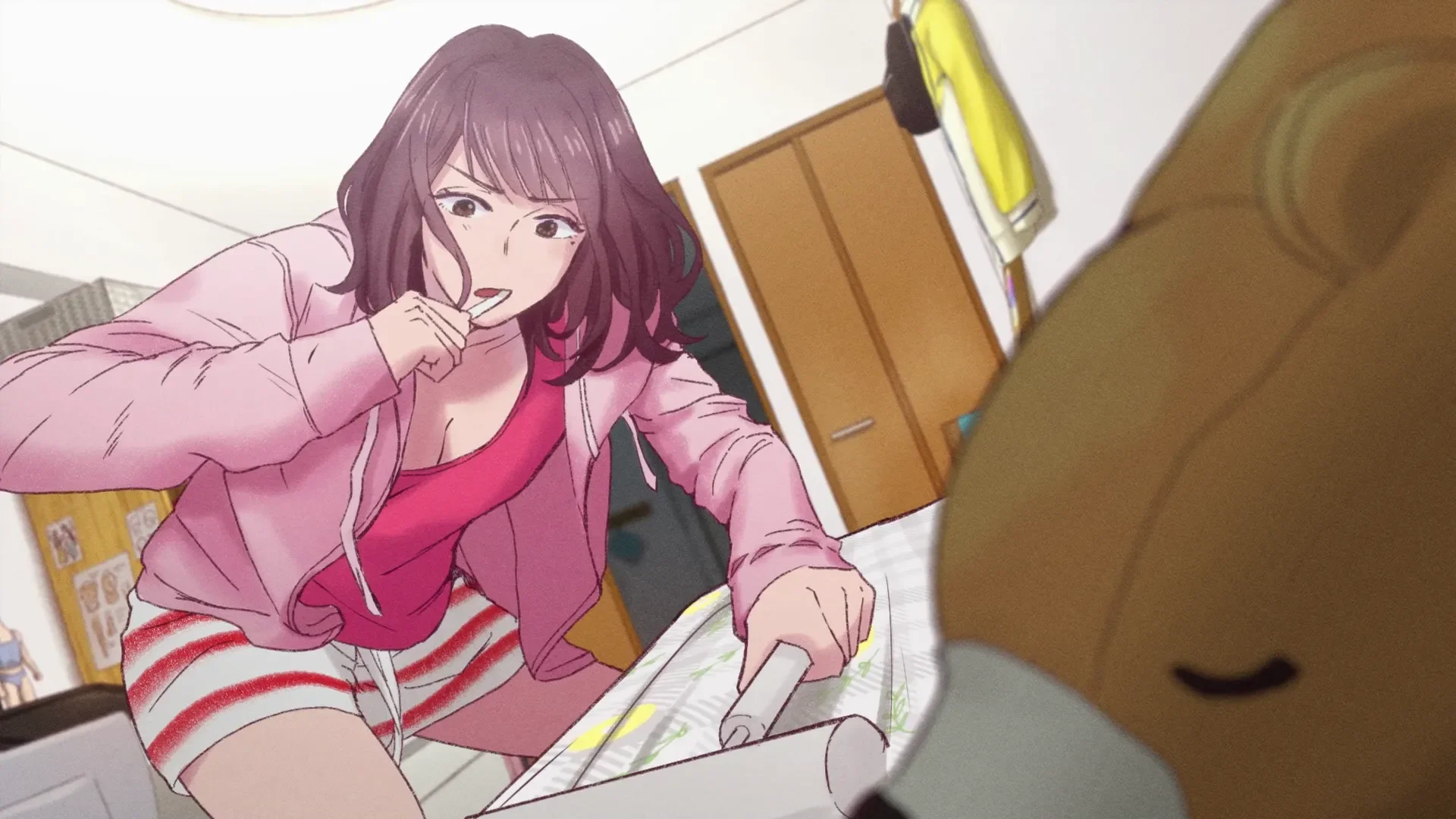
Brief appearances by the flesh-and-blood performers also puncture the protection that drawn figures seem to offer. Alongside rotoscoped movement based on footage performed by the cast, these interruptions make the awkwardness feel attached to actual bodies. The film can laugh at Ryo without allowing the audience to settle at a safe, superior distance from him.
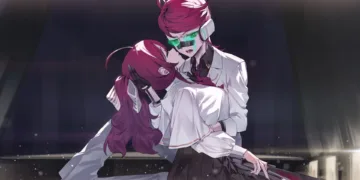
When the couple kiss, their drawing styles exchange, developing the earlier touch into a fuller experience of being affected by someone else. Their sexual encounter pushes representation toward idealized romantic and erotic selves. These are people whose imaginations have had years of practice while their bodies have had very little, and the animation lets excitement and uncertainty coexist. Fantasy belongs in their intimacy because it belongs to them. The scene’s tenderness comes from allowing those imagined selves into a shared encounter, with all the vulnerability that involves for two people accustomed to keeping desire under their own control.
Sex does not settle the relationship. The later conflict tests what happens when an artist treats lived experience as material, bringing a different anxiety into a romance that has already passed its expected milestone. Earlier, Ryo’s admission about the origins of his successful manga could be received as an embarrassing confidence.
Once another person shares his life, the use he makes of experience carries obligations that disclosure alone cannot satisfy. Ami can listen sympathetically to how he became the person sitting across from her. Being close to him also gives her a stake in the stories he chooses to make next.
Cherry and Virgin premiered at the Fantasia International Film Festival on July 18, 2026, ahead of its wider theatrical release. Directed by Masanao Kawajiri, the rotoscoped animated romantic comedy follows two socially awkward and inexperienced creators in their thirties who connect through a dating app and navigate an uneasy, honest romance.
Full Credits
Title: Cherry and Virgin
Distributor: Toei Video
Release date: July 18, 2026 (Fantasia International Film Festival) / 2027 (Theatrical)
Running time: 1 hour 26 minutes (86 minutes)
Director: Masanao Kawajiri
Writers: Masanao Kawajiri
Producers and Executive Producers: Toei Video
Cast: Takashi Ōkado, Yaeko Kiyose, Risa Hinami
Editors: Masanao Kawajiri
The Review
Cherry and Virgin
Cherry and Virgin earns affection through the small relief of being heard. Its shifting animation makes tentative contact feel momentous, while the comedy lets us laugh at Ryo’s embarrassment without abandoning him. The romance stays honest by asking what these people owe each other after desire becomes mutual. Ryo’s self-correction sometimes crowds Ami’s perspective, leaving me wanting further room for her present-day responses. Still, the tenderness feels earned through listening, risk, and the uncomfortable work of changing how you see someone.
PROS
- Changing art styles make growing intimacy tangible.
- Candid conversations give the attraction a convincing foundation.
- Comic embarrassment preserves sympathy for the characters.
- Later conflict tests the responsibilities affection brings.
CONS
- Ryo’s corrective arc receives disproportionate dramatic weight.
- Ami’s present-day responses deserve the attention her flashbacks invite.