

















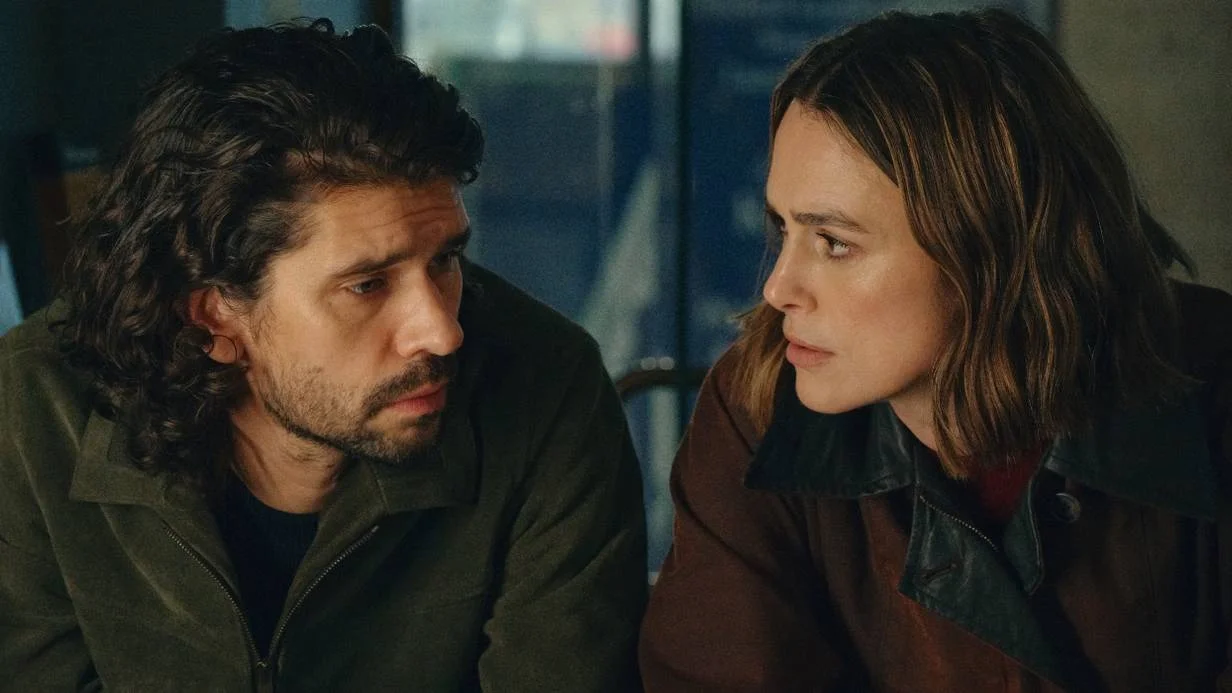

Marriage counselling gives Helen Webb an unusually difficult assignment: she must sound honest without becoming informative. Sitting beside Wallace, she can acknowledge the pressures on their relationship while concealing the profession responsible for many of them.
Black Doves’ second season finds a productive cruelty in this arrangement. Her husband is entitled to an explanation that the scene’s comedy depends on his never receiving. Keira Knightley makes Helen’s concern for the marriage credible, which complicates the deception rather than cancelling it. She has developed real feelings inside a household established for the extraction of secrets.
At a political dinner, Helen slips away to break into a safe and shoot her way through a hotel room, then returns to her place. Knightley’s social composure supplies the continuity between these activities. The polished wife and the operative share an ability to manage what other people notice. There is sharp comedy here about the decorative expectations attached to a politician’s spouse, whose apparent agreeableness can conceal practically any activity. The joke also depends on considerable freedom from ordinary domestic demands. Paid childcare helps make Helen’s excursions possible; this particular fantasy of female competence comes with staff.
Wallace’s promotion to prime minister places the family in Downing Street, increasing the value of Helen’s access and the potential cost of discovery. Her employer, the private intelligence outfit Black Doves, sells information without the consoling language of national service. When her handler Reed is abducted, however, Helen responds with a loyalty that exceeds the practical need to recover a colleague.
Sarah Lancashire’s established severity makes this attachment interesting: Reed has exercised power over Helen, and her vulnerability does not erase that history. Babou Ceesay’s imposing Conteh, attempting to take over as handler, makes the institutional response clear. The organization can replace the person Helen wants to retrieve.
Sam Young encounters another form of professional captivity. Arrested after a killing, he receives an offer from Patrick, played with quiet menace by Sam Riley: release in exchange for further murders. The photographs of his targets arrive in embossed envelopes, a grotesquely tasteful way to organize coercion.
Some targets are former Black Doves, bringing his imposed work into dangerous proximity to Helen’s loyalties. The absence of patriotism gives these transactions a bracing clarity. Nobody needs to pretend that a public good will justify the assignment. Patrick simply acquires the power to determine whose life Sam must end next.
Ben Whishaw gives that power a visible human cost. Sam’s exhausted sadness makes each new obligation feel like an extension of work he can no longer bear and continues performing. After a particularly difficult hit, Lenny recognizes his distress; Patrick treats his remaining capacity to suffer as evidence that he has a soul. The exchange is chilling because sensitivity remains perfectly compatible with usefulness to an employer. Sam can be damaged and employable at once. Whishaw earns sympathy for the damage without supplying an account of what it repairs for anyone he has killed.
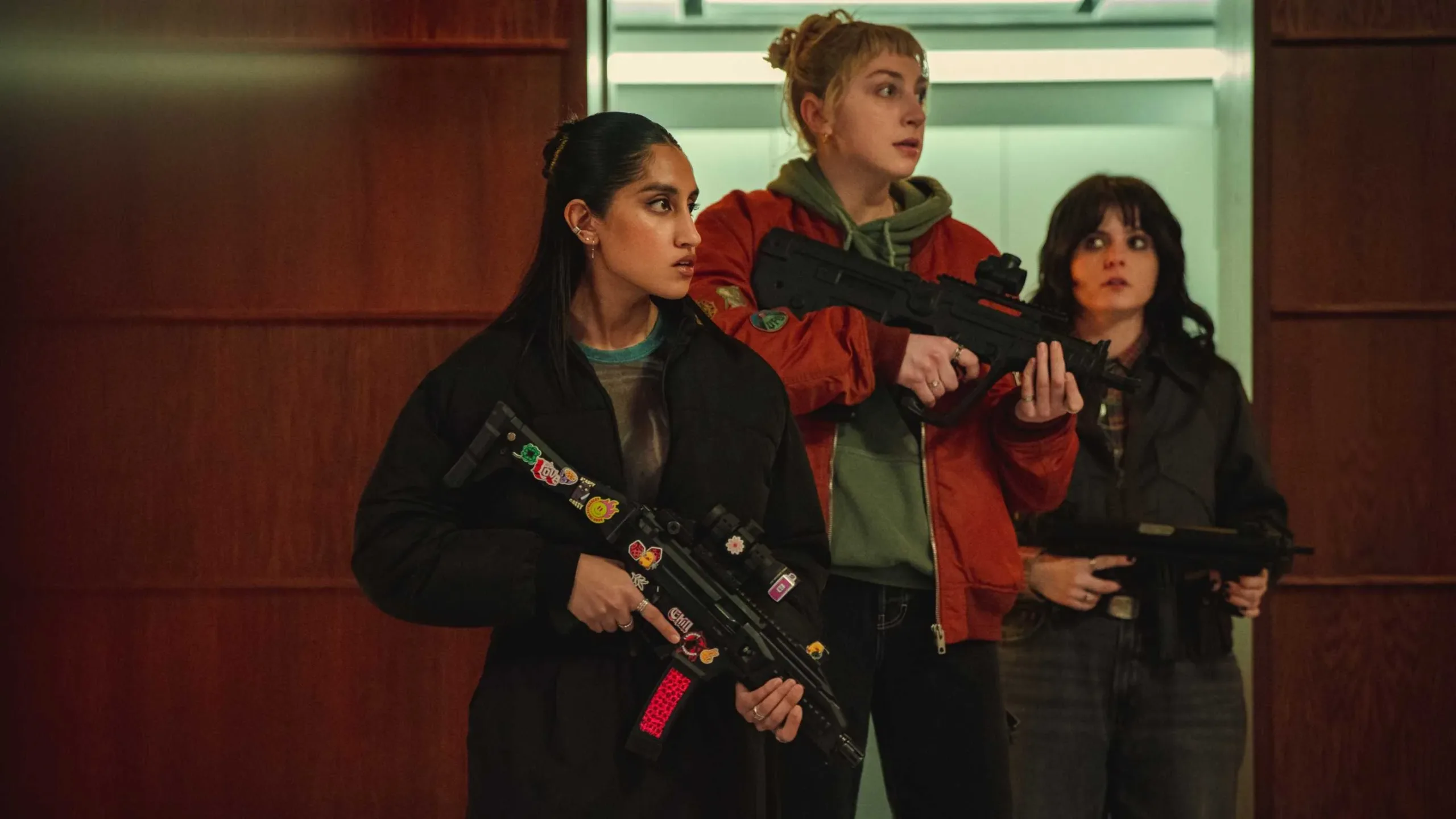
His friendship with Helen offers a less transactional attachment, sustained through the familiarity of people who can irritate each other without putting the relationship in doubt. Joe Barton’s writing gives that familiarity room to be ordinary. Before an armed mission, the group quarrels over music: Williams and Eleanor want party tracks, Sam favors melancholy, and Helen reaches for Olly Murs or early Beatles. The disagreement gives these operatives recognizable social habits beyond their competence with weapons. Helen’s ability to manufacture an identity does not help her produce an impressive answer about her listening tastes.
The younger assassins’ growing romantic awkwardness works through a similar disparity between professional ease and personal uncertainty. Ella Lily Hyland and Gabrielle Creevy preserve Williams and Eleanor’s abrasive humor while allowing their feelings to become harder to handle than explosives.
Ambika Mod’s Laila brings a different comic precision. Tossing bar snacks into an irritating man’s drink establishes her accuracy through an act of petty annoyance, letting skill and temperament emerge together. These details make the ensemble enjoyable company. They also explain how readily the series persuades an audience to regard its murderers as people having an unusually difficult working week.
The permissions granted to Helen become harder to ignore as her public position grows. MI5 officer Jim Perryman’s investigation into her inconsistent history supplies a credible pressure on the marriage, yet her conspicuous missions operate under much looser rules. Laila’s amusement at Helen’s hat-and-sunglasses disguise acknowledges the absurdity without resolving it. The problem is dramatic rather than procedural: public recognition should change the risks Helen takes, especially now that she lives at Number 10. When anonymity remains available on demand, her position creates fewer practical restrictions than its prominence promises.
The action shares this unevenness. A gallery and a country house offer distinct spaces for the mayhem, while conversations continuing around gunfire and casually thrown grenades maintain the season’s comic fluency. That ease is pleasurable until it starts making survival feel routine.
Emotional exposure carries a sharper threat than another room of armed opponents. Across six episodes, revelations and cliffhangers keep the pursuit moving briskly, but the gunfights can leave the characters’ circumstances feeling strangely untouched. The counseling room asks something of Helen that another exchange of bullets often does not.
Reed’s history attempts to give the conspiracy a different kind of weight. Extended passages set in late-1980s East Berlin, with Lauren Moakes playing her younger incarnation, move the handler out of the secure position from which she usually directs other people. Moakes gives that earlier self a presence sufficient to make the past feel inhabited, while Lancashire’s authority acquires the suggestion of an accumulated history. There is value in allowing someone who normally issues instructions to become the subject of an explanation. Helen’s urgency about rescuing her gains texture from the distance between Reed’s institutional role and her individual vulnerability.
The flashbacks are less persuasive when they must provide the emotional force behind the season’s larger disclosures. Explaining how the present attack emerged is a different task from making every historical attachment matter. The earlier relationships receive concentrated attention, but they lack the casually accumulated friction that gives Helen and Sam’s bond its credibility. Moakes can establish a recognizable person; performance alone cannot supply the full weight of relationships introduced alongside their consequences. By placing so much emotional preparation inside the disclosure itself, the season leaves little time to live with Reed’s earlier attachments before asking us to feel their damage.
Black Doves Season 2 premiered globally on Netflix on November 5, 2026. Created by Joe Barton, the high-stakes British spy thriller follows an undercover agent passing politician secrets to a shadowy organization who must navigate renewed danger alongside an assassin bodyguard following a wave of deadly conspiracies.
Where to Watch Black Doves Season 2 Online


Full Credits
Title: Black Doves Season 2
Distributor: Netflix
Release date: November 5, 2026
Rating: TV-MA
Running time: 52–56 minutes per episode
Director: Julian Farino, Kieron Hawkes
Writers: Joe Barton, Emer Kenny
Producers and Executive Producers: Joe Barton, Jane Featherstone, Chris Fry, Keira Knightley, Callum Devrell-Cameron, Nick Brown
Cast: Keira Knightley, Ben Whishaw, Sarah Lancashire, Andrew Buchan, Ambika Mod, Neve Campbell, Sam Riley, Babou Ceesay
Director of Photography (Cinematographer): Giulio Biccari, Mark Patten, Ben Wheeler, Gary Shaw
Editors: Josh Cunliffe, Pia Di Ciaula, Elen Pierce Lewis
Composer: Martin Phipps, Ian Arber
The Review
Black Doves Season 2
Black Doves Season 2 finds its sharpest drama in affection that employers can exploit and marriages cannot safely contain. Knightley and Whishaw make deception and remorse emotionally credible, while the ensemble’s petty disagreements give its killers an inviting familiarity. That pleasure carries a cost: Helen’s public visibility scarcely restricts her, and routine survival drains the gunfights of danger. Reed’s history expands the conspiracy without fully earning its emotional demands. The relationships sustain an entertaining season whose machinery too often protects people from the consequences it promises.
PROS
- Knightley makes Helen’s affection and deception credible.
- Whishaw gives coerced violence a visible emotional cost.
- Ensemble humor builds convincing familiarity.
- Revelations and cliffhangers sustain momentum.
CONS
- Helen’s public visibility imposes few practical restrictions.
- Routine survival weakens action suspense.
- Reed’s flashbacks compress essential emotional groundwork.