





















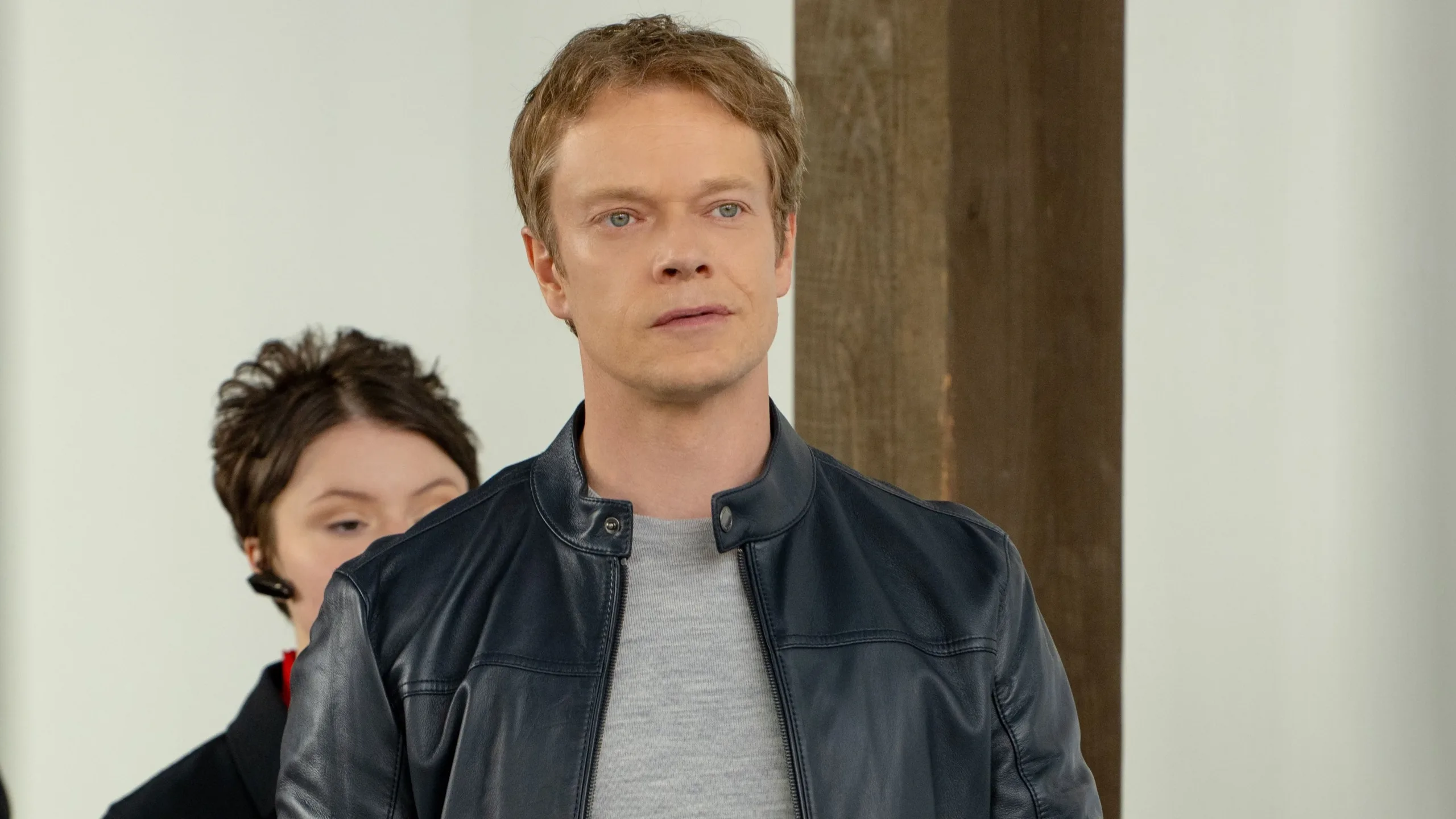
The destruction of Dennison has left the Institute recruiting a different kind of talent. Nolan Reeves (Alfie Allen), a technology billionaire, arrives with AI research intended to reproduce the psychic capabilities the organization has been extracting from captive children. Jeff Fahey’s Director sees an opportunity to rebuild. For The Institute’s second season, this is a useful change of subject: an abusive facility has fallen, yet the system behind it can still find money, personnel, and a fresh account of its own necessity.
Nolan’s project changes the children’s position within that system. Their powers have made them valuable enough to kidnap, imprison, and exhaust; technological replication raises the possibility that the organization could stop depending on them. Nothing about that ambition guarantees their freedom. The purpose of the research belongs to the people commissioning it. By introducing AI through an investor interested in the program’s capabilities, the series makes a familiar technological promise look appropriately conditional. The children have good reason to distinguish being released from being rendered unnecessary.
Benjamin Cavell’s continuation, with Jack Bender returning, has reached beyond the ending of Stephen King’s 2019 novel. Several months after their escape, Luke Ellis (Joe Freeman), Kalisha Benson (Simone Miller), Nicky Wilholm, and George Iles remain threatened by the wider organization. Former police officers Tim Jamieson (Ben Barnes) and Wendy Gullickson (Hannah Galway) have become their protective family.
The decision to keep telling this story carries a particular responsibility: extending the danger must reveal something that escape alone could not. Luke’s eventual attempt to undermine the Institute from inside gives that extension a substantive purpose, placing resistance uncomfortably close to administration.
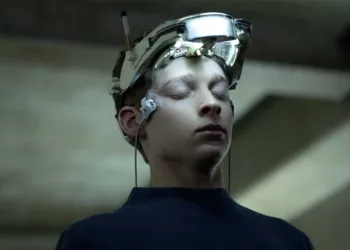
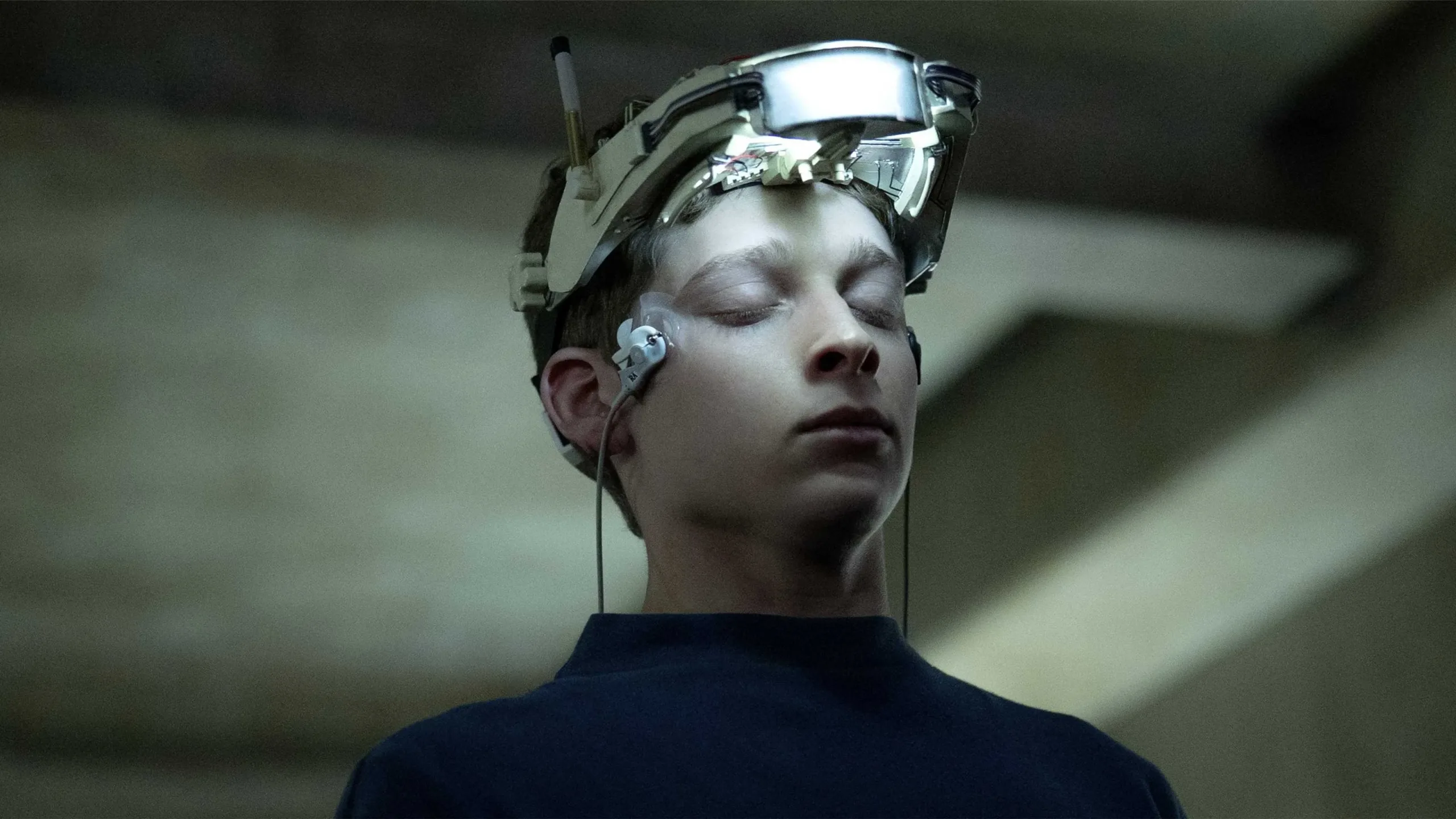
The Sanctuary supplies the season’s strongest means of testing that proximity. Here, adult precognitives occupy high-tech loungers while searching possible futures for catastrophic events. Their forecasts underpin the “sparkler nights,” during which the children’s combined powers are used to assassinate selected targets remotely.
Giving the predictions a physical workplace brings the program’s grand claims into an organizational setting. Someone has to interpret what the precognitives perceive, decide which danger demands action, and assign the children their part. The equipment makes this process look established. It cannot make every decision within it inevitable.
Showing projected catastrophes also gives the leadership’s arguments weight they could not acquire through speeches alone. The danger becomes something the viewer can contemplate, which makes the children’s uneasy cooperation harder to dismiss as a contrivance. Yet the distance between a frightening forecast and an authorized killing remains enormous.
Evidence that disaster could occur does not establish that a particular assassination is the only response, or that children can be forced to carry it out. The season’s ethical tension is strongest when the threat feels credible enough to make refusal costly without making coercion acceptable.
Fahey helps that argument through the Director’s managerial certainty. His conviction that he is protecting humanity coexists with an ordinary capacity for tenderness toward his grandchildren. When his granddaughter finds a toy horse, he lets her keep it, recognizing a small desire that requires no calculation about the future of the species. The exchange makes his selective protection legible.
He can care for a child and administer the exploitation of children without experiencing those activities as incompatible. Mary-Louise Parker’s Sigsby, seeking a route back into the organization after losing her position, extends this portrait of institutional attachment. Losing authority has not dissolved her belief in the cause that supplied it.
Moving these administrators into the foreground makes the series richer, though it also changes whose experience gets to organize the drama. Schemes, appointments, and rival ambitions offer an efficient supply of television plots. The children risk becoming the people who react to management’s latest decision.
Kalisha’s expanded role pushes against that tendency. Miller gives her anger room alongside vulnerability and empathy, allowing her resistance to register as a position she holds rather than a feeling Luke must soothe. Her importance lies in her continuing stake in what happens to people subjected to the program, including when cooperation begins to look practical.
Luke’s compromises could sustain an equally strong examination of how leadership changes a survivor. Too often, however, the writing uses his decisions to trigger the same sequence: his friends feel betrayed, anger briefly divides them, and forgiveness restores the group. Repeated reconciliation limits the consequences of disagreements the season asks us to take seriously.
Freeman can carry Luke’s determination, but the relationships around him keep returning to a condition in which he can make another divisive choice. The romantic triangle involving Luke, Kalisha, and Nicky adds little to their convincing attachment; it gives their proximity another complication without developing the conflicts already pressing upon them.
Tim and Wendy offer a competing model of adult responsibility through their efforts to keep the teenagers safe. Tim’s work with George to expose the organization gives that protective role a practical direction, connecting an adult’s experience with a young survivor’s participation.
Still, the outside investigation struggles to remain as consequential as the negotiations within the Institute. The imbalance matters because exposure and protection should provide alternatives to bargaining with the leadership. When those activities lose dramatic weight, the institution’s internal disputes increasingly determine the available story, even for the people trying to escape its influence.
Across eight episodes, there is enough pursuit, relocation, and shifting allegiance to keep the plot active. Activity sometimes conceals repetition. A central mystery takes too long to reach an answer that becomes foreseeable well before the characters arrive there, leaving their investigation behind the audience’s understanding.
Other turns retain their capacity to surprise, so predictability is uneven rather than fatal. The expanded settings, including desert and snowy mountain locations, also suggest a larger operation without giving its international reach much lived detail. The season develops an administrative hierarchy with greater precision than it develops a global network.
Its major cliffhanger leaves the arrangement of people and power open to further change. That continuation now carries an obligation beyond finding another threat for the escaped children to survive. Bringing them into cooperation with the organization has introduced work they never volunteered to perform: assessing its claims, disputing its methods, and deciding what their abilities should be used for.
Their freedom has become entangled with responsibility for a system adults built around their captivity. As the series keeps that system available for future stories, the children are being asked to participate in decisions about its continued existence while still living with what it has done to them.
The Institute Season 2 premieres on MGM+ on November 8, 2026. Adapted from Stephen King’s hit novel by showrunner Benjamin Cavell and executive producer Jack Bender, the horror-sci-fi thriller series follows abducted telepathic and telekinetic teenagers forced into sinister government experimentation who must band together to escape their captors and dismantle the shadowy organization.
Where to Watch The Institute Season 2 Online








Full Credits
Title: The Institute Season 2
Distributor: MGM+
Release date: November 8, 2026
Rating: TV-MA
Running time: 54–59 minutes per episode
Director: Jack Bender, Brad Turner, Jeff Renfroe
Writers: Benjamin Cavell, Sam Sheridan, Ed Redlich, Sophie Owens-Bender, Eric Dickinson, Leanne Koch, Stephen King (novel)
Producers and Executive Producers: Jack Bender, Benjamin Cavell, Gary Barber, Sam Sheridan, Shane Elrod, Ed Redlich, Stephen King
Cast: Ben Barnes, Mary-Louise Parker, Joe Freeman, Simone Miller, Fionn Laird, Hannah Galway, Julian Richings, Robert Joy, Martin Roach
The Review
The Institute Season 2
Season 2 earns its continuation by asking who gets to turn a prediction into a death sentence. Nolan’s AI project and the Sanctuary deepen the Institute’s machinery of control, while Simone Miller gives Kalisha convictions that survive the pressure to cooperate. Repeated betrayals and easy forgiveness weaken that moral friction, and the central mystery trails the audience. This is an absorbing expansion whose institutional arguments develop further than several of its relationships.
PROS
- Credible threats sharpen the ethics of coerced prevention.
- Nolan’s AI ambitions give institutional exploitation a contemporary angle.
- Simone Miller preserves Kalisha’s independent convictions.
- The Director’s family affection exposes his selective protection.
CONS
- Repeated betrayals and quick forgiveness limit lasting consequences.
- The central mystery lags behind the audience.
- The romantic triangle adds little to the teenagers’ bond.
- The outside investigation loses weight beside internal negotiations.