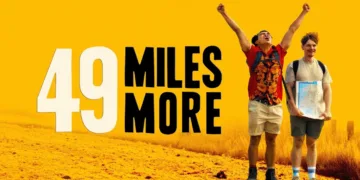





















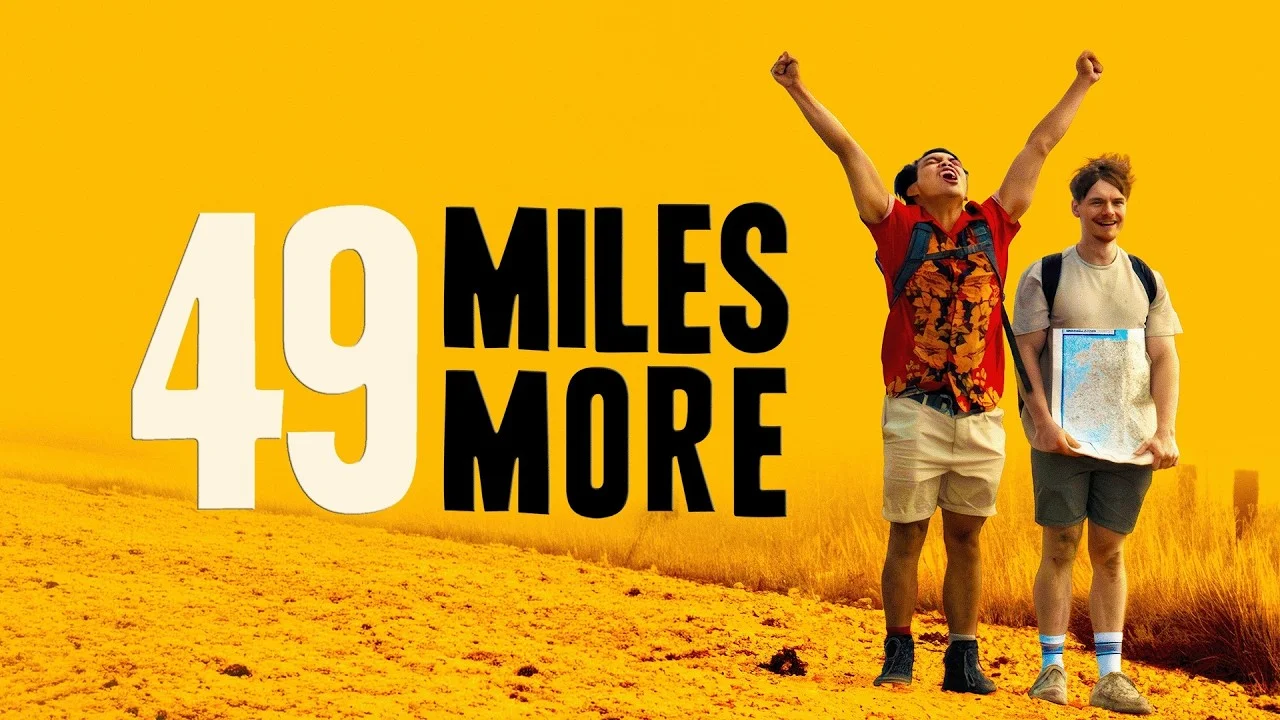

Max’s manager responds to his disappointing insurance sales by threatening to restrict his holiday. It is an economical introduction to a life in which failure at work can reach into the hours supposedly belonging to the worker. Reece Henderson gives Max the weary displeasure of someone who has accepted responsibility without receiving much satisfaction in return. Oliver Cox’s 49 Miles More grants that unhappiness a mundane, recognizable setting: a job that requires him to demonstrate his worth through figures he is already failing to meet.
His friends have another responsibility waiting. A round of “bagsy” determines who must collect Doug for their annual gathering in Orford, Suffolk, and Max loses. The arrangement turns companionship into a chore to be allocated. Gregory Fung’s Doug makes the reluctance understandable, talking incessantly and treating the day as an invitation to drink and improvise. Yet the game also establishes how easily an established friendship can settle into unequal roles. Doug is the person to be managed; Max is the person expected to manage him. Their affection has acquired an administrative procedure.
A flat tyre interrupts the drive with 49 miles remaining, and Doug proposes walking. His solution exchanges a manageable inconvenience for an expedition through the countryside, complete with getting lost and spending a night in the woods. Doug has already begun drinking at ten in the morning; his enthusiasm requires no practical endorsement. Cox finds a productive ambiguity in his company. For a man exhausted by sales targets, someone willing to explain how he would fight a whale offers a certain relief. Spending the day dealing with that person’s decisions is another matter. Max’s exasperation has reasonable grounds, and Henderson keeps those grounds visible without making his character merely censorious.
The comedy is liveliest when the world proves capable of matching Doug’s absurdity. A driver offers to take the pair a short distance, which turns out to mean about ten metres. The bicycle she lends them is a child’s tricycle. Each offer briefly promises assistance before its scale becomes apparent. These encounters loosen the division between the sensible man and his ridiculous companion: practical language itself becomes unreliable, and Doug no longer has sole responsibility for making the day unmanageable. The jokes have a modest, pleasing precision. They also give Henderson and Fung something to react to together, releasing Max from the repetitive task of objecting to his friend.
That repetition does become wearing elsewhere. The berry-eating episode stretches its digestive consequences beyond their comic usefulness, continuing to solicit amusement from a situation that has stopped developing. At roughly 80 minutes, the film has little need for such persistence. The difficulty is the narrowness of the response being requested: another indignity, another reason for Max to look appalled. Broad bodily comedy can expose the limits of dignity with considerable force, but here it mostly delays the next exchange. The friendship becomes less interesting whenever its two participants are reduced to a source of trouble and an audience for it.
Henderson and Fung do better work within the familiar friction of conversation. Henderson allows enjoyment to return to Max without suggesting that his dissatisfaction was an elaborate pose. The pleasure Doug can still draw from him belongs to the same person who resents the inconvenience. Fung, meanwhile, keeps Doug’s foolishness intact as his insecurity becomes legible. He avoids the tidy dramatic bargain in which an exhausting comic character earns sympathy by suddenly becoming quiet and wise. Their conversational ease suggests years of acquaintance, including the particular tolerance that lets irritation pass without making every disagreement a threat to the relationship.
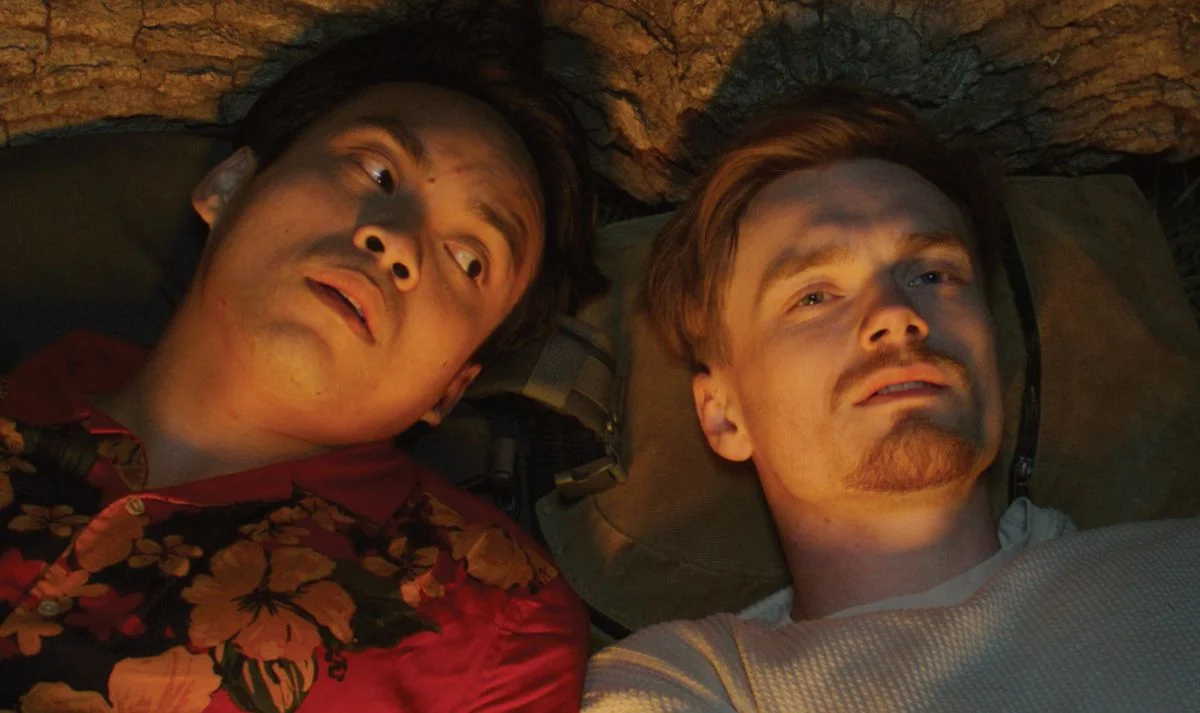
The long, still takes in the woods give this tolerance room to become attention. Max speaks about his career disappointment; Doug acknowledges his own fecklessness. These admissions disturb the hierarchy established by their behavior. Max’s relative competence has left him unhappy, while Doug’s apparent freedom contains an awareness of his shortcomings. Neither has much cause to instruct the other in successful adulthood. Cox lets the actors occupy that awkward equality without converting their exchanges into lessons in emotional literacy. Their humor remains available to them, carrying some of the embarrassment of speaking plainly to someone who already knows their favorite evasions.
The countryside matters because it provides time for such exchanges. Walking imposes prolonged company, away from the routines through which the men usually understand themselves. Its value is specific and limited: Max can describe his working life to someone whose knowledge of him predates the sales record. Doug can be heard beyond the role of nuisance. The setting permits a temporary change in what counts as useful between them. Listening has a purpose here that cannot be measured by how efficiently either man reaches Orford. Cox’s patience with their conversations earns a duration that the prolonged berry gag cannot.
On the Suffolk foreshore, a late change in the audience’s understanding draws the film toward grief and separation. Cox returns to earlier material, allowing its significance to shift, while Henderson and Fung resist the temptation to make every emotion emphatic. The effect has preparation in Max’s account of disappointment and Doug’s admission of inadequacy: both have already allowed the other access to something their assigned roles concealed. The callbacks deepen the attachment without making the preceding comedy uniformly successful. They also place a different pressure on Max’s irritation. His frustration can remain justified while existing beside feelings he has found harder to express.
49 Miles More released on UK digital VOD platforms including Apple TV and Amazon on August 17, 2026, through Reel2Reel Films. Directed by Oliver Cox, this British buddy comedy-drama follows an unlucky insurance salesman and his carefree best friend who get stranded when their car breaks down, embarking on an unexpected 49-mile foot trek to their university reunion that tests their long-standing friendship.
Where to Watch 49 Miles More (2026) Online






Full Credits
Title: 49 Miles More
Distributor: Reel2Reel Films, 49 to Midnight Films
Release date: August 17, 2026
Running time: 1 hour 20 minutes (80 minutes)
Director: Oliver Cox
Writers: Oliver Cox
Producers and Executive Producers: Oliver Cox, 49 to Midnight Films
Cast: Reece Henderson, Gregory Fung, Jeffrey Harmer, Jun Noh, Ka-Yee Chan
The Review
49 Miles More
49 Miles More finds its strongest comedy and feeling in the gap between being dependable and being content. Henderson and Fung give a familiar friendship enough friction to make its tenderness credible, while Cox’s patient woodland conversations question the idea that adulthood can be measured by competence alone. The extended berry gag and recurring troublemaker/straight-man routine wear thin. Its late emotional shift earns its force through affection already present, preserving the awkward coexistence of love and irritation.
PROS
- Henderson and Fung sustain affection alongside believable irritation.
- Absurd encounters bring precise, understated laughs.
- Woodland conversations expose the limits of conventional adult success.
- Restrained performances and callbacks give the late shift emotional weight.
CONS
- The extended digestive gag stalls the comedy.
- Repeated troublemaker/straight-man exchanges restrict the friendship’s range.