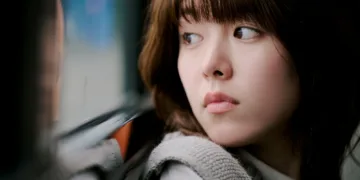


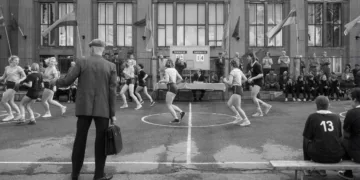









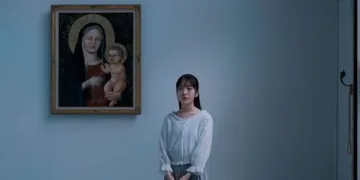



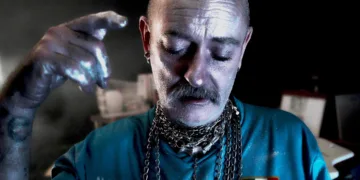





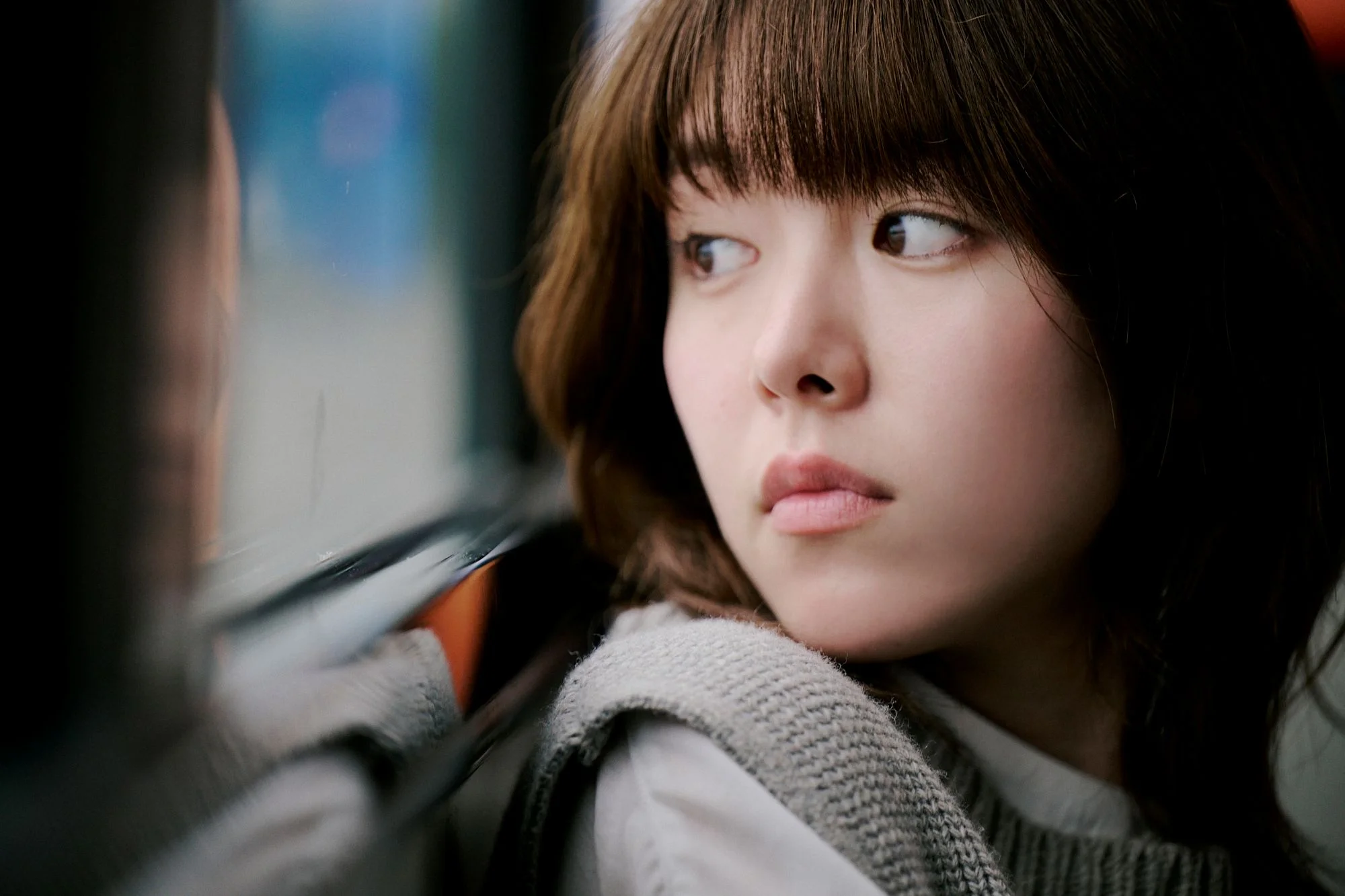

Nanako and Ji-hyun meet while helping an elderly woman who falls ill on a Tokyo bus. Akira Yamamoto films the emergency from a distance, letting us watch the two medical students respond to someone else’s need before introducing the needs they will have of each other. It is an unassuming basis for the friendship in The Intertwining. They have something to do together before they have much to say, and their shared training gives the encounter a familiarity that the extraordinary discoveries ahead will struggle to preserve.
Yamamoto keeps giving conversations extra time. His long takes, shots that continue without cutting, leave the pauses between words available for inspection. We become attentive to the difficulty of answering, especially once an honest answer could hurt someone. Erika Karata and Jiyoung work sensitively within that space, allowing the women’s responses to remain unsettled rather than packaging every feeling for immediate recognition. I appreciate how the filmmaking makes listening an active part of the drama. A conversation can become uncomfortable without anyone raising their voice or the camera moving closer to tell us what matters.
The screenplay, adapted by Sumire Suzuki from Shiho Tanimura’s novel, gives that discretion an enormous task. Nanako grew up in Japan; Ji-hyun was raised in South Korea and has come to Tokyo to study. Their parents received fertility treatment at the same clinic, where an error meant each couple received the other’s embryo. The women have been brought up by each other’s biological parents. It is a premise with enough emotional force to sustain several kinds of movie, and Yamamoto concentrates on the awkward business of deciding what this knowledge permits anyone to do.
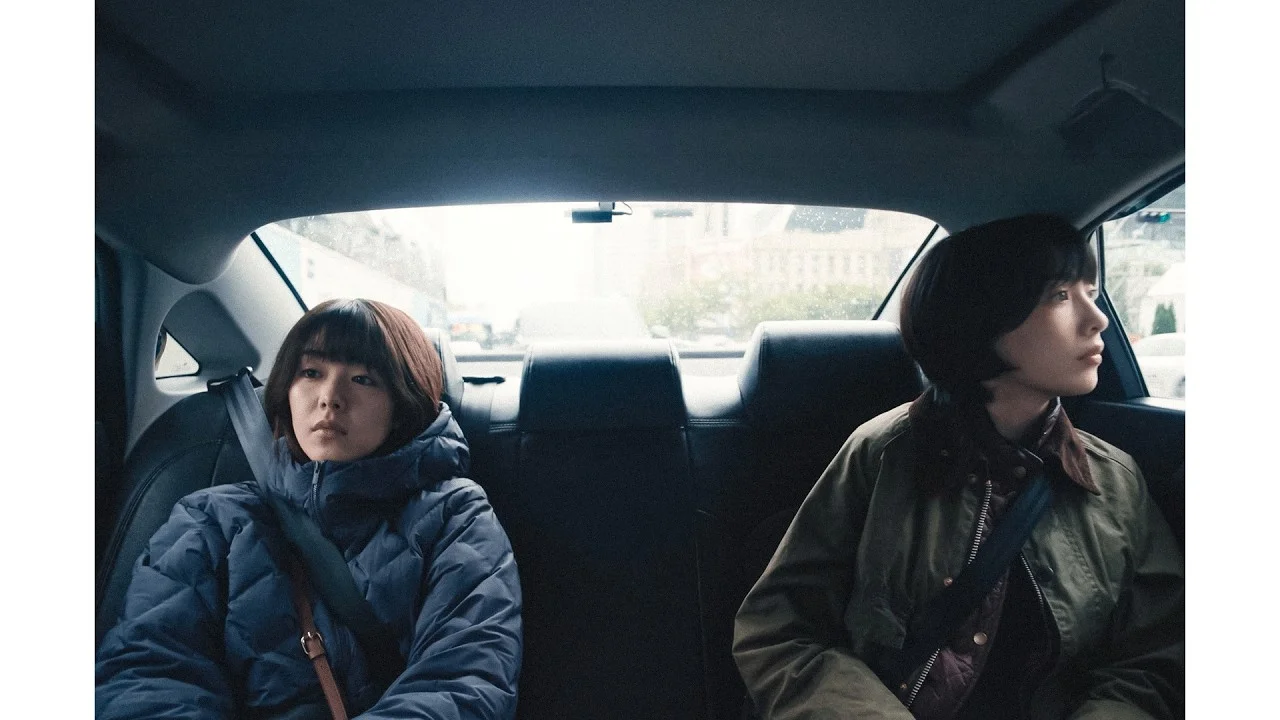
Getting to the discovery is considerably less delicate. The chance meeting, shared studies, classroom material about DNA, and matching clinic histories gather with conspicuous efficiency. Each new connection helps the audience assemble an explanation that the film takes its time confirming. The medical error itself is perfectly usable dramatic material. The difficulty is that so many helpful circumstances surround it that the women’s lives begin to feel arranged for the revelation. Once the connection is apparent, waiting for confirmation produces little suspense. Their choices offer a stronger reason to keep watching than the next piece of biological evidence.
Those choices become interesting because the discovery offers Nanako something Ji-hyun does not need. Nanako has felt alienated within her household, so the news brings a disturbing kind of relief. It supplies an explanation for a feeling she already had, even if genetics cannot actually explain years of emotional distance. Ji-hyun loves the parents who raised her. What gives Nanako permission to imagine another family threatens Ji-hyun’s sense of security within her own. Karata and Jiyoung sustain the discomfort of that imbalance: supporting a friend does not mean wanting the future that friend now has reason to seek.
Nanako’s father makes the danger of treating ancestry as destiny painfully explicit. Confronting the clinic, he directs his anger toward the Korean identity of the embryo implanted in his wife. His response turns a medical wrong into an ethnic affront, making his daughter’s distress secondary to his own prejudice. Ji-hyun’s family history gives that outburst a wider reach without requiring a lecture. Her parents left Tokyo after experiencing discrimination, and she has encountered prejudice herself in Japan. Learning about her biological parentage cannot revise those experiences. The people who mistreated her were responding to an identity they believed they recognized.
Ji-hyun’s search for Takeru, her childhood friend and first love, offers another way of thinking about the past. She has come to Japan with an attachment that exists independently of Nanako and the clinic. Yamamoto gives remembered experience a lovely visual expression when a courtyard where children are playing shifts into night and Ji-hyun’s memory. The setting becomes a passage between times, allowing us to feel how an ordinary place can hold someone’s private history. That expressive connection earns the subplot some space. Its recurring demands on the narrative are harder to justify when the friendship between the women still needs attention.
The visit to Ji-hyun’s family in South Korea exposes a similar imbalance between an appealing idea and its dramatic development. Their seaside restaurant and welcoming manner make Nanako’s attraction to this household easy to understand. Yet the contrast with her own rigid family becomes too reassuring. A warm reception is a beginning; it tells us little about the demands of building a relationship with an adult daughter whose childhood happened elsewhere. The film gives this possible home considerable emotional appeal while leaving the emerging bond between Nanako and her biological mother less persuasive than the promise surrounding it.
Ji-hyun’s reluctance to tell her parents is where that promise becomes difficult for the friendship. She wants to protect an existing relationship, while Nanako wants acknowledgment from the people she has only recently learned are her biological family. The film has found a conflict that affection alone cannot settle. I wanted it to spend longer on how the women understand each other’s claims. Their early connection is plausible, and the performances keep their separate anxieties legible, but the story sometimes treats the significance of their shared discovery as a substitute for developing their relationship. Nanako’s access to a family has become entangled with Ji-hyun’s control over disclosure.
The later passages in Korea have time to pursue that difficulty, yet the solitary walks and extended reflection increasingly repeat distress without making the women’s next actions clearer. This changes the effect of Yamamoto’s patient style. During a strained conversation, waiting lets us consider what speaking might cost; across successive stretches of introspection, the cost is already apparent. We need to understand how either woman intends to act upon it. Ji-hyun’s wish to preserve her family leaves Nanako waiting for recognition, and the film is less precise about the negotiation between them than it is about the pain that makes negotiation necessary.
The Intertwining premiered in competition at the 39th Tokyo International Film Festival on October 29, 2026. Directed by Akira Yamamoto and adapted from Shiho Tanimura’s novel, the Japanese-Korean identity drama follows two young women who discover that their fates were switched at birth due to an embryo mix-up at a fertility clinic, sending them on a journey to confront family expectations and define their own sense of self.
Full Credits
Title: The Intertwining (Japanese: 過怠, Katai)
Distributor: Tokyo International Film Festival / “THE INTERTWINING” Production Committee
Release date: October 29, 2026 (Tokyo International Film Festival)
Running time: 2 hours 11 minutes (131 minutes)
Director: Akira Yamamoto
Writers: Sumire Suzuki (screenplay), Shiho Tanimura (based on the novel by)
Producers and Executive Producers: Yun Min-young
Cast: Erika Karata, Kang Ji-young, Hyeon Jun, Park So-hee, Kaho Minami
The Review
The Intertwining
The Intertwining gives a sensational premise a sensitive treatment, with Karata and Jiyoung making the women’s conflicting attachments easy to feel. Yamamoto’s unbroken shots let hesitation become drama, particularly when honesty threatens an existing family bond. I wanted that same attention applied to the friendship itself. Convenient plotting, an overly reassuring contrast between households, and a prolonged final stretch leave several promising conflicts insufficiently developed. Its best conversations hold us; its extended reflection sometimes leaves us waiting for the next decision.
PROS
- Sensitive, restrained lead performances.
- Held shots turn conversational pauses into tension.
- Different family attachments give the identity crisis emotional depth.
- An expressive transition from the courtyard into memory.
CONS
- Convenient connections make the central revelation predictable.
- The friendship receives too little development.
- The contrast between households feels overly reassuring.
- Extended reflection slows the final stretch without clarifying decisions.