



















One trip through the Item World can turn N.A. from a capable mercenary into a boss-deleting error in the difficulty curve. That outcome fits Disgaea’s fixation on broken builds and absurd numbers, yet it exposes the central weakness of Disgaea Mayhem: its inherited progression systems are far deeper than the action game supporting them.
This spin-off trades the series’ turn-based maps for real-time battles inspired by Musou games. N.A., a mercenary who works for the right price, is hired by Princess Tichelle to suppress a rebellion in the Netherworld of Super Duper. Her former retainers have also taken her precious flan, giving every conflict, betrayal, and motivational speech the same dessert-shaped foundation.
The premise has the intended Disgaea foolishness, and N.A.’s irritation gives the player a useful ally whenever another character starts discussing flan like a sacred political resource. The pairing recalls Fuji and Pirilika from Disgaea 7, with the same gruff professional placed beside an aggressively cheerful noble. Here, their relationship receives little room to change. Supporting characters arrive for a few voiced exchanges, deliver another variation on the central joke, then disappear.
Power Without Resistance
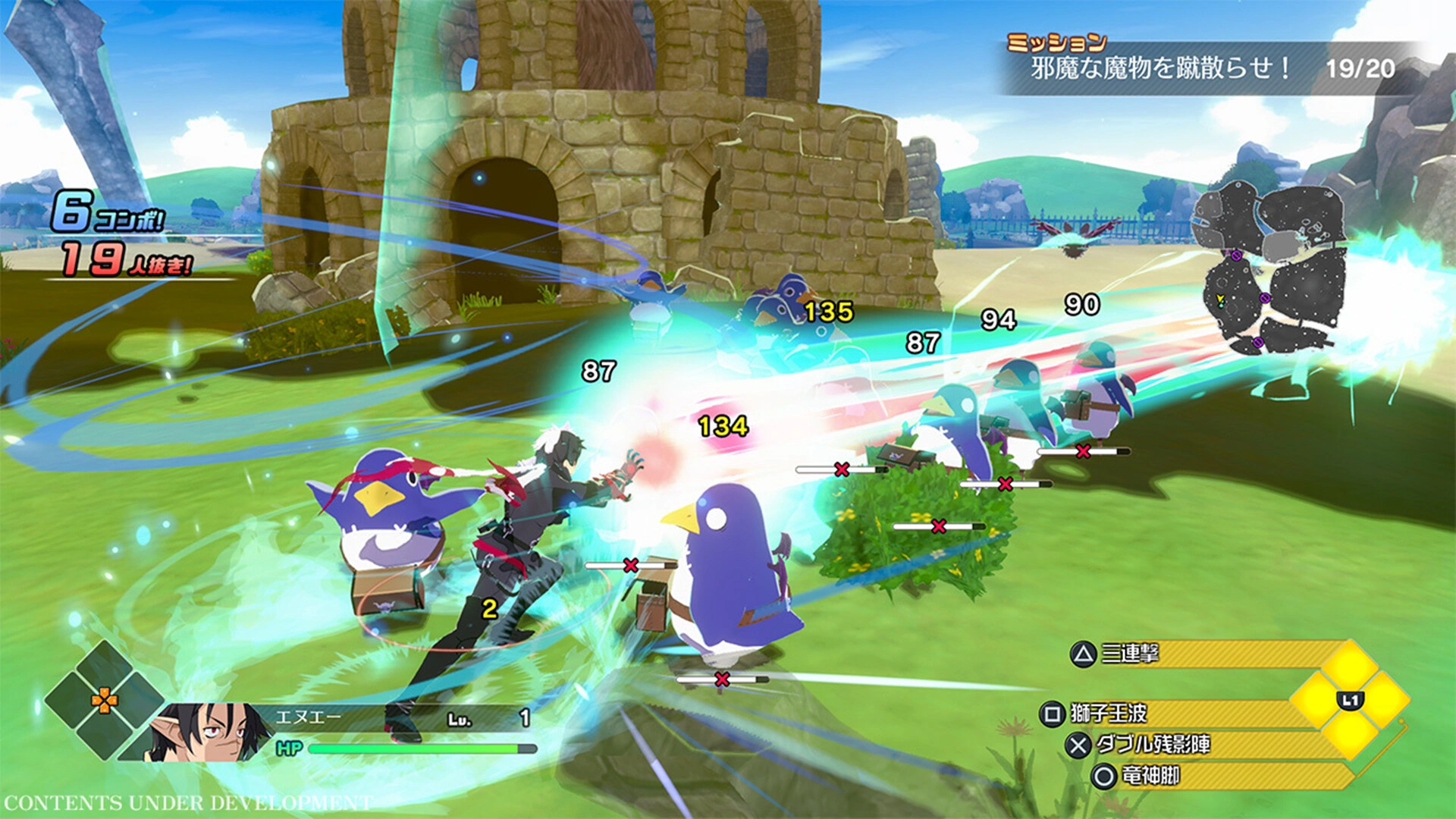
Direct control suits the series better than the genre shift might suggest. Disgaea has always sold the fantasy of erasing enemies with attacks carrying ridiculous damage values. Sweeping a spear through a crowd or firing a gun across half the battlefield translates that fantasy into immediate movement.
Each weapon class changes N.A.’s basic strings, attack range, and skills. Fists produce quick jabs and spinning kicks. Spears cut wide arcs around him. Axes favor slower, heavier blows, while staves and guns create distance. Light and heavy attacks can be chained together, and N.A. can jump, dash, block, dodge, counter, and equip special moves.
Those options describe a richer combat system than the missions require. Most stages ask N.A. to defeat a small wave, run into the newly opened section, defeat another wave, then step into a marked area for a boss fight. Enemies gather around him with limited aggression, so defense becomes optional. Wide area skills clear groups before positioning or crowd control matters.
Bosses suffer most from this imbalance. A short Item World session can raise N.A. dozens of levels and strengthen his weapon enough to erase health bars before attack patterns become visible. The Cheat Shop lets players increase enemy strength, but its sliders cannot repair encounters built around passive targets and repeated waves.
Deep Systems, Small Battles
The surrounding progression structure is unmistakably Disgaea. Bills passed through the Dark Assembly unlock facilities and perks. The Cheat Shop adjusts experience gain, rewards, enemy power, and other parameters. Chara World provides stat upgrades through a board game-style activity. Weapons and armor can be entered through the Item World, where each floor adds enemy waves and randomized cards offering healing, buffs, or mystery-room effects.
These systems remain flexible and easy to manipulate. Sacrificing money or item acquisition for a large experience bonus can send N.A.’s level climbing at an absurd pace. Reincarnation, equipment rarity, Innocents, and stat farming provide several routes toward the same goal: creating a character too strong for the content in front of him.
Battle Buddies supply the clearest attempt to connect that progression with combat. Defeated monsters can join N.A. as computer-controlled companions, and each can use Magichange to become a temporary weapon. The transformation grants a distinct moveset and ends with a large combined finisher.
The animations carry the exaggerated personality expected from Disgaea, but the Buddy cannot be directly controlled or swapped into as a second playable fighter. A system that could have widened combat instead becomes another cooldown attached to N.A.
A Campaign Too Thin for Its Systems
The main story lasts roughly five to seven hours, partly because individual missions can end within minutes. Its seven chapters reuse a small group of enclosed environments with different decorative themes. Large spaces rarely contain collectibles, alternate routes, environmental hazards, or tactical features. They function as corridors between enemy spawn points.
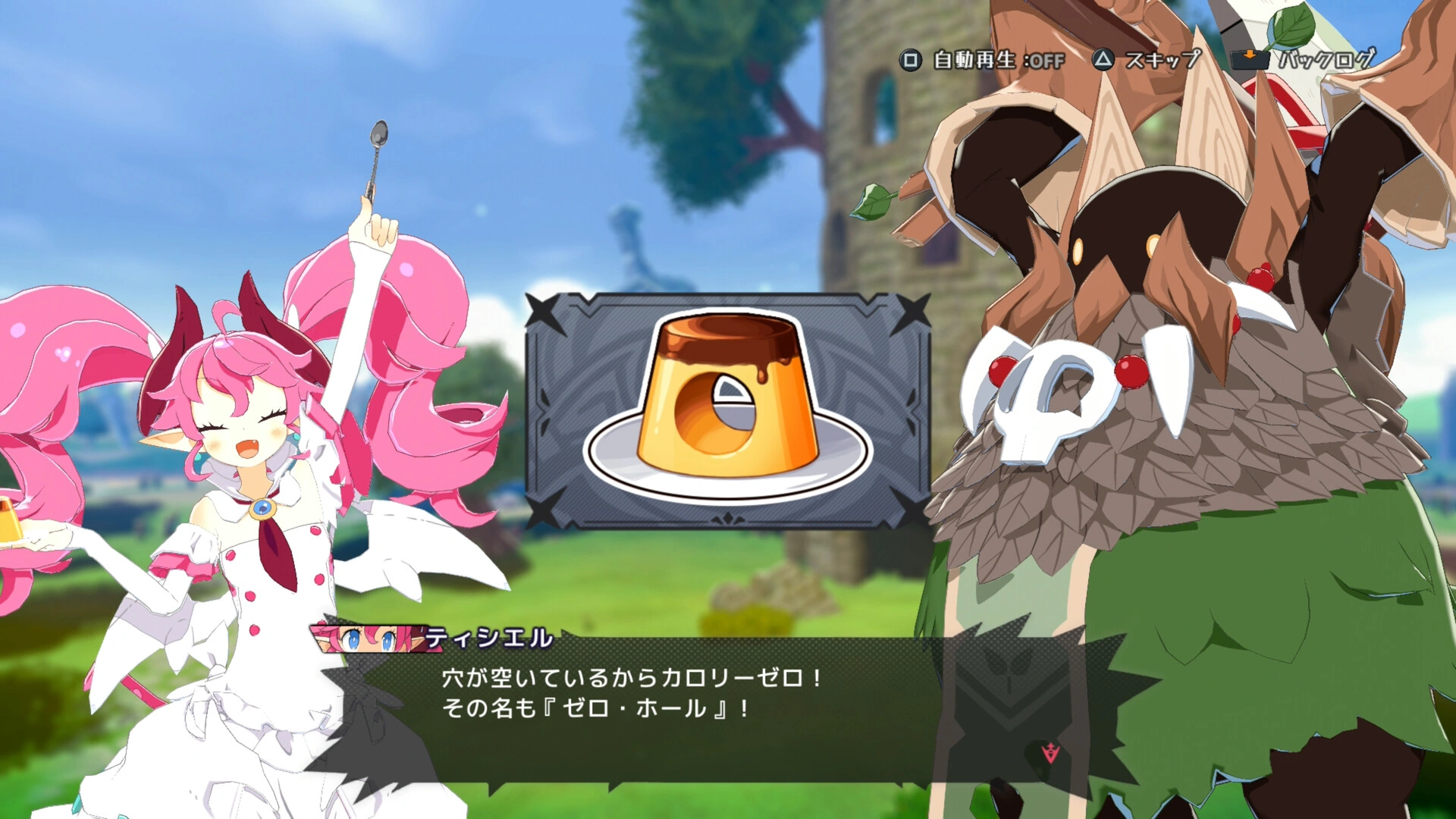
Character models and Ultimate attacks fare better. Familiar monsters are recreated with clean, colorful designs, and special moves deliver the visual excess the flat arenas lack. Menu navigation is fast, which matters in a game that constantly asks the player to change equipment, enter facilities, sort items, and restart missions. Attack sound effects have less impact; strikes dealing millions of damage often land with the force of ordinary hits.
Post-game stages raise their level requirements sharply, but the answer remains another Item World run with boosted experience. Reaching level 1000 can happen long before the game provides an enemy that demands such power. The system keeps offering new ways to strengthen N.A., while the mission list keeps asking him to clear another nearly identical room.
The Review
Disgaea Mayhem
Disgaea Mayhem transfers the Item World, Dark Assembly, Cheat Shop, Battle Buddies, and absurd stat growth into a responsive action RPG, then gives those systems too little resistance to work against. N.A.’s weapon classes and Magichange attacks create brief bursts of experimentation, yet repetitive wave missions, passive enemies, one playable character, and rapid overlevelling flatten the combat loop. The framework has promise. This campaign lacks the encounter design, roster, and endgame needed to support it.
PROS
- Responsive real-time combat
- Flexible weapon classes
- Faithful Disgaea progression systems
- Flashy Magichange finishers
- Fast, convenient menus
CONS
- Repetitive wave-based missions
- Easily broken difficulty curve
- Only one playable character
- Sparse environments
- Thin story and endgame