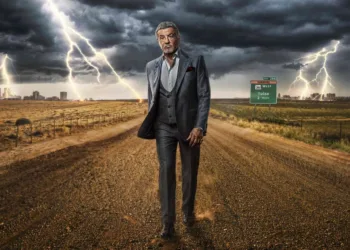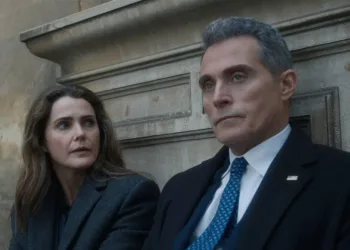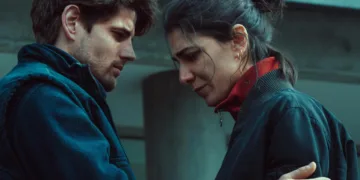





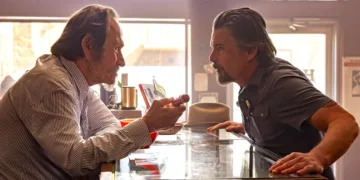






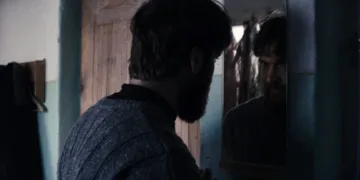









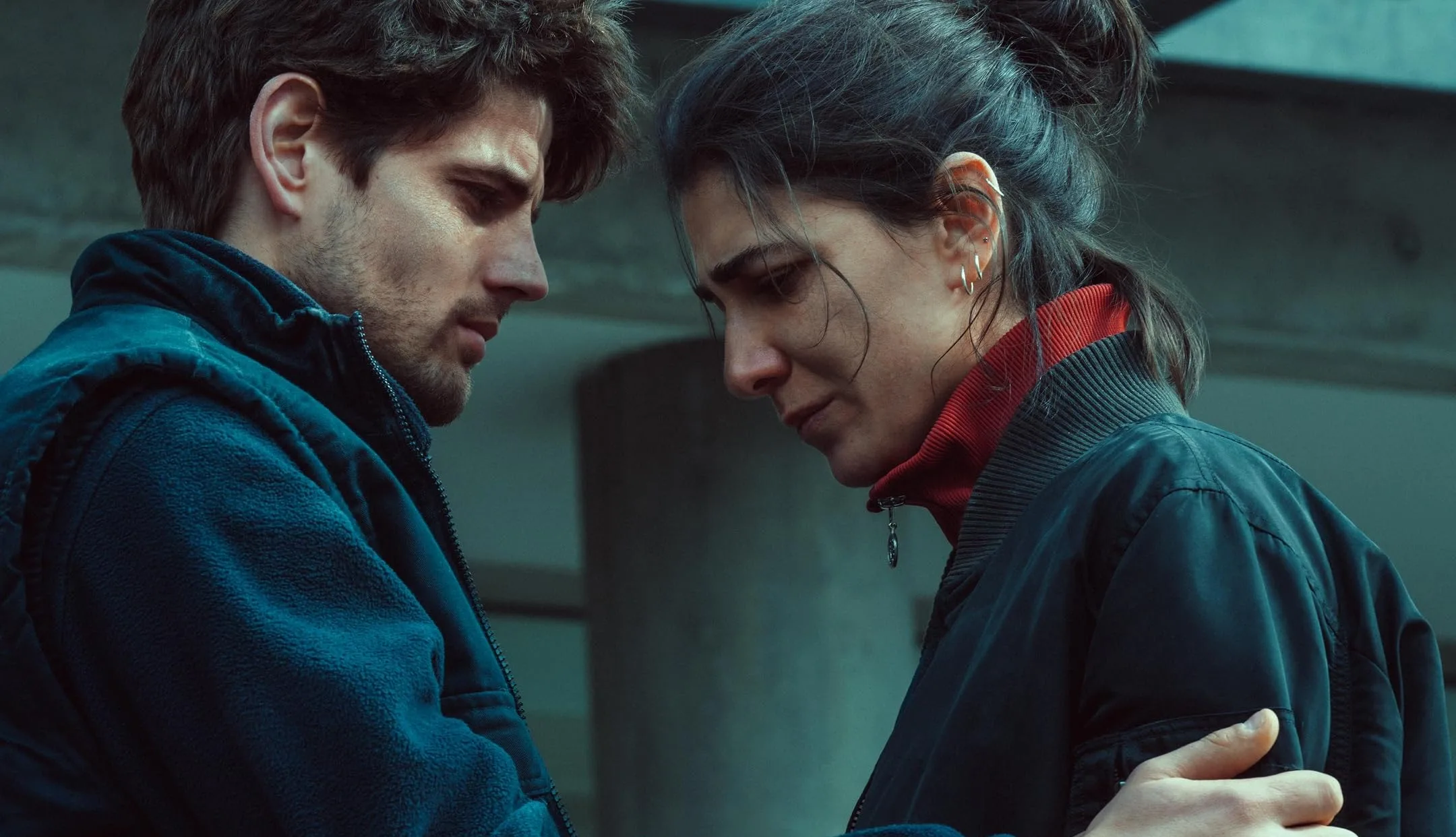

Roger Gual keeps placing suspicion behind doors. Lucía dies in a locked bathroom with a wine glass nearby. Martín seals himself inside an attic study. Ruth returns from Berlin and finds the family home divided into rooms she cannot enter and explanations she cannot trust. The architecture does half the accusing before anyone speaks.
The official account says Lucía drank, slipped in the shower, struck her head, and died. Ruth remembers a mother who rarely drank and disliked locked doors. She also carries the guilt of missing several calls from Lucía shortly before the death. That guilt changes the texture of every clue. The blood in the autopsy photographs looks excessive. Martín’s decision to erase Lucía’s phone seems obscene. His fixation on Alejandro, a missing local boy, reads like either moral panic or calculated distraction.
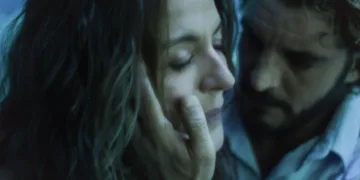
Juana Jiménez’s cinematography keeps the interiors cool and withholding. Doorframes split Ruth and Martín into separate visual compartments, while the gray Asturian landscape gives the town a deceptive calm. This is noir without the city, replacing wet pavement and neon with hills, lake water, and an old house that appears to remember every argument.
Parallel Delusions
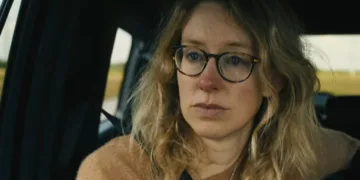
Ruth’s investigation begins with procedural discipline. She studies records, questions Civil Guard officers, searches for CCTV footage, and tries to gain access to Martín’s attic. Stéphanie Magnin gives these scenes a clipped urgency. Ruth moves through conversations as if every person has withheld one decisive fact.
Her father has built a larger and less testable system. Martín believes Certyx, a pharmaceutical company, abducted Alejandro, experimented on him, and buried the evidence through tunnels and an underwater site. José Coronado delivers these claims with such hard, wounded conviction that Martín never becomes a comic crank. His anger has weight. So does his loneliness.
The film’s sharpest idea emerges from the resemblance between them. Martín links institutions, illnesses, disappearances, and hidden spaces into one design. Ruth links a wine glass, deleted data, evasive behavior, and old resentment into another. Each regards the other as irrational. Each treats uncertainty as proof.
A confrontation where Ruth pushes Martín to test parts of his theory exposes the emotional shelter inside his beliefs. Verification would threaten the story that gives his retirement shape. Ruth faces the same danger. Solving Lucía’s death has become a way to turn missed calls and family distance into an enemy she can pursue.
Faces Under Suspicion
Coronado understands that menace becomes stronger when it shares space with frailty. Martín can dominate a room through volume, then shrink inside the same frame when Lucía’s absence breaks through his rhetoric. His rants about Certyx are frightening because he speaks like a former officer presenting evidence, not a man improvising fantasy. Training has survived. Judgment has corroded.

Magnin works through pressure rather than transformation. Ruth’s grief appears in the force she applies to every exchange, especially with Arón, her former lover and a Certyx employee. When he accuses her of treating people as instruments for the case, the scene briefly opens a life beyond the mystery. Ruth has returned to town seeking truth, yet she speaks to its residents as locked containers.
Carlos Montero and Darío Madrona give both actors less history than they need. Ruth and Martín refer to years of estrangement, Lucía’s sadness, and Ruth’s departure for Berlin, but the film supplies few concrete memories. Their hostility has dramatic heat without enough sediment beneath it. A call from Ruth’s employer lands strangely because her Berlin existence has barely registered. She seems to have stepped out of one dim room and into another.
Shadows Without Payoff
Gual repeatedly composes scenes as if violence is one cut away. Ruth drinks tea while the editing encourages suspicion. She searches Martín’s property while offscreen spaces seem occupied. A closed door, a pause in conversation, or a glance toward the lake briefly gathers menace. Then the danger dissolves. Once is misdirection. Repetition becomes a rhythm of retreat.
The film’s visual control survives this structural weakness. Quiet roads and sparse interiors maintain a muted dread, and the camera often holds Ruth at the edge of the frame, leaving empty space beside her for the threat she has imagined. Martín receives tighter compositions, his face crowded by walls and doorways. Ruth sees patterns everywhere; Martín lives inside one.
What the script avoids is the harsher implication carried by those images. Online radicalization, institutional mistrust, aging, and grief appear as connected pressures, yet the dialogue keeps returning to the mechanics of the mystery. The social world that formed Martín’s paranoia remains mostly outside the frame.
The final scene restores some danger by showing that disproving a claim does not dissolve the need that produced it. A belief can lose its evidence and retain its shadow. The camera understands this before the screenplay does.
The Truthers is a Spanish psychological thriller film that premiered globally on Netflix on July 24, 2026. The story follows a woman returning to her hometown after her mother passes away, leading her to question whether her estranged father is responsible for the tragedy.
Where to Watch The Truthers (2026) Online


Full Credits
Title: The Truthers
Distributor: Netflix
Release date: July 24, 2026
Rating: TV-MA
Running time: 1 hour 46 minutes
Director: Roger Gual
Writers: Carlos Montero, Darío Madrona
Producers and Executive Producers: Carlos Montero, Darío Madrona, Diego Betancor
Cast: José Coronado, Stéphanie Magnin, Fanny Gautier, Alberto Olmo, Israel Ruiz, Olaya López
Director of Photography (Cinematographer): Juana Jiménez
Composer: Nico Casal
The Review
The Truthers
The Truthers frames paranoia through locked doors, cold interiors, and a lakeside landscape that seems to conceal evidence in every shadow. José Coronado gives Martín enough volatility and wounded conviction to keep guilt visually plausible, while Stéphanie Magnin turns Ruth’s investigation into an act of grief disguised as reason. Yet the script repeatedly manufactures menace, then withdraws it before tension can mature. Its final image understands that belief survives facts, though the preceding mystery lacks the precision needed to make that insight sting.
PROS
- José Coronado’s layered performance
- Controlled, wintry cinematography
- Strong father-daughter parallel
- Effective final scene
CONS
- Repetitive misdirection
- Thin family history
- Underdeveloped social themes
- Repeated anticlimactic payoffs