

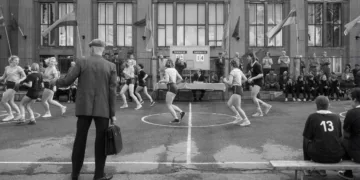




















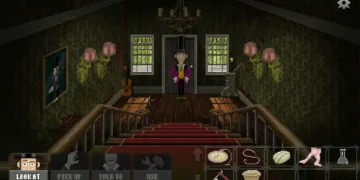


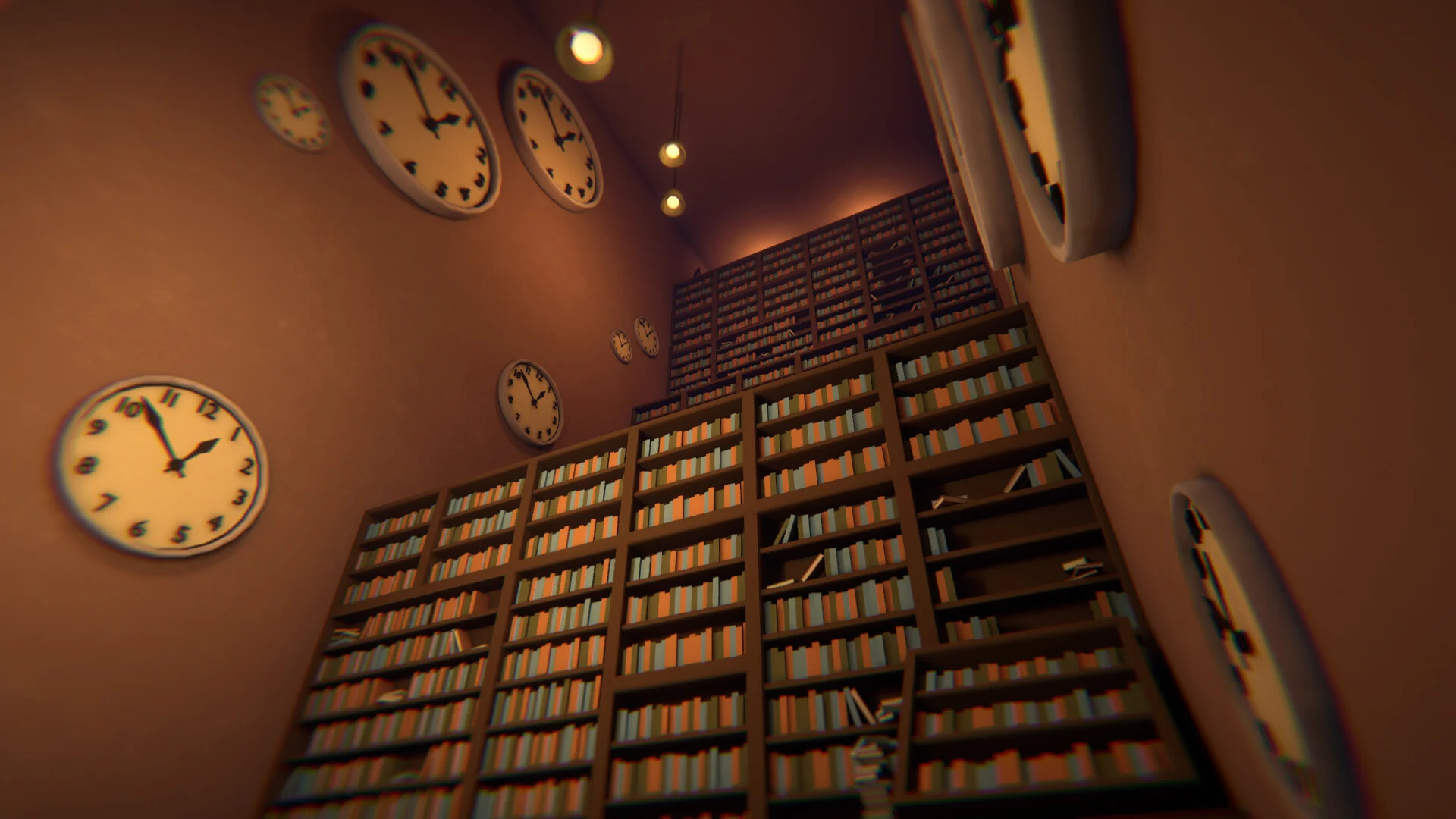

The gymnasium’s dodgeball course gets larger and more complicated as Alan moves through it. In one hall, possible routes are spread across two versions of the room, accessible by pressing a button to blink. Time To Wake Up gives the player a useful problem here: inspect the available space, switch its state, and decide how to cross. The school setting acquires its hostility through those actions. Getting through a familiar childhood environment requires checking what it might become when Alan closes his eyes.
Other platforming sequences develop that relationship between observation and movement. Blinking resets rotating platforms to a horizontal position, so the change must be coordinated with a jump. The same input that opens a route now determines when it becomes usable. This is a modest extension of the rules, yet it matters. The player has to act on an understanding of both states instead of treating the second one as an automatic solution. Carrying essential objects between versions adds another practical connection between spaces that initially appear separate.
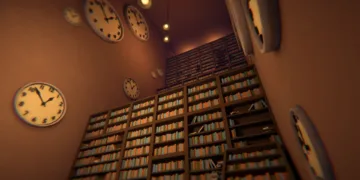
Alan’s circumstances give these transformations their emotional direction. He lives alone, relies on pills, and remains caught in memories of bullying and a painful childhood. His dreamlike exploration takes him through school spaces associated with those experiences, including classrooms, a library, and the gym. Across roughly two to three hours, this first-person adventure asks the player to move through environments Alan cannot leave behind psychologically. Its linear structure keeps attention on those memories, while blinking supplies the small decisions needed to progress through them.
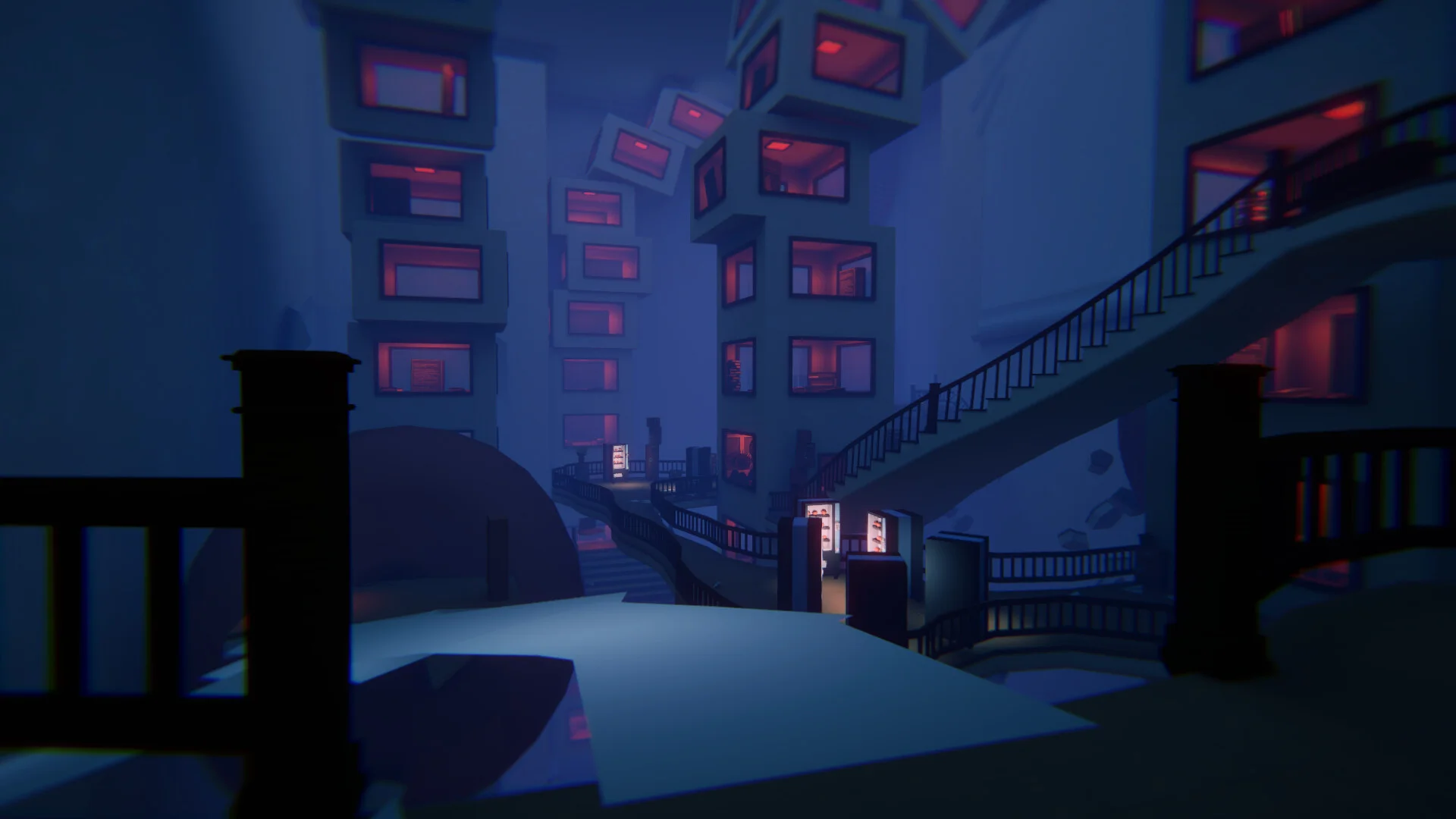
The visual changes also affect how those decisions feel. A gloomy school foyer becomes bright and welcoming. An apartment piled with rubbish has a clean counterpart. Switching between them makes perceived safety unstable: the reassuring version remains available, though reaching it does not erase the other one. Toys become hazards, and children’s laughter makes their threat harder to separate from the school setting. These details give the environmental states a purpose beyond marking an open or blocked passage. Alan’s surroundings keep offering incompatible accounts of the same place.
That design becomes less effective when the player learns a solution faster than the game lets them finish applying it. A flooded bathroom initially requires working out which areas can be reached in each state. Swimming, inspecting the layout, and changing versions create a reasonable spatial puzzle. Once that layout becomes familiar, however, progress settles into moving a short distance, blinking, and repeating the sequence. The environment continues demanding input without asking for much further judgment. The following puzzle uses a similar pattern, extending the fatigue beyond a single location.
The cost is emotional as well as mechanical. Water and confinement can make the bathroom feel oppressive, but repeated switching gradually redirects attention toward the remaining traversal steps. The player starts managing the procedure. This weakens the setting’s ability to hold attention as a disturbing memory, even though its imagery still fits Alan’s state of mind. The gym provides a useful comparison within the game itself: its expanding obstacles and routes change the problem, while the bathroom spends too long servicing one the player has already understood.
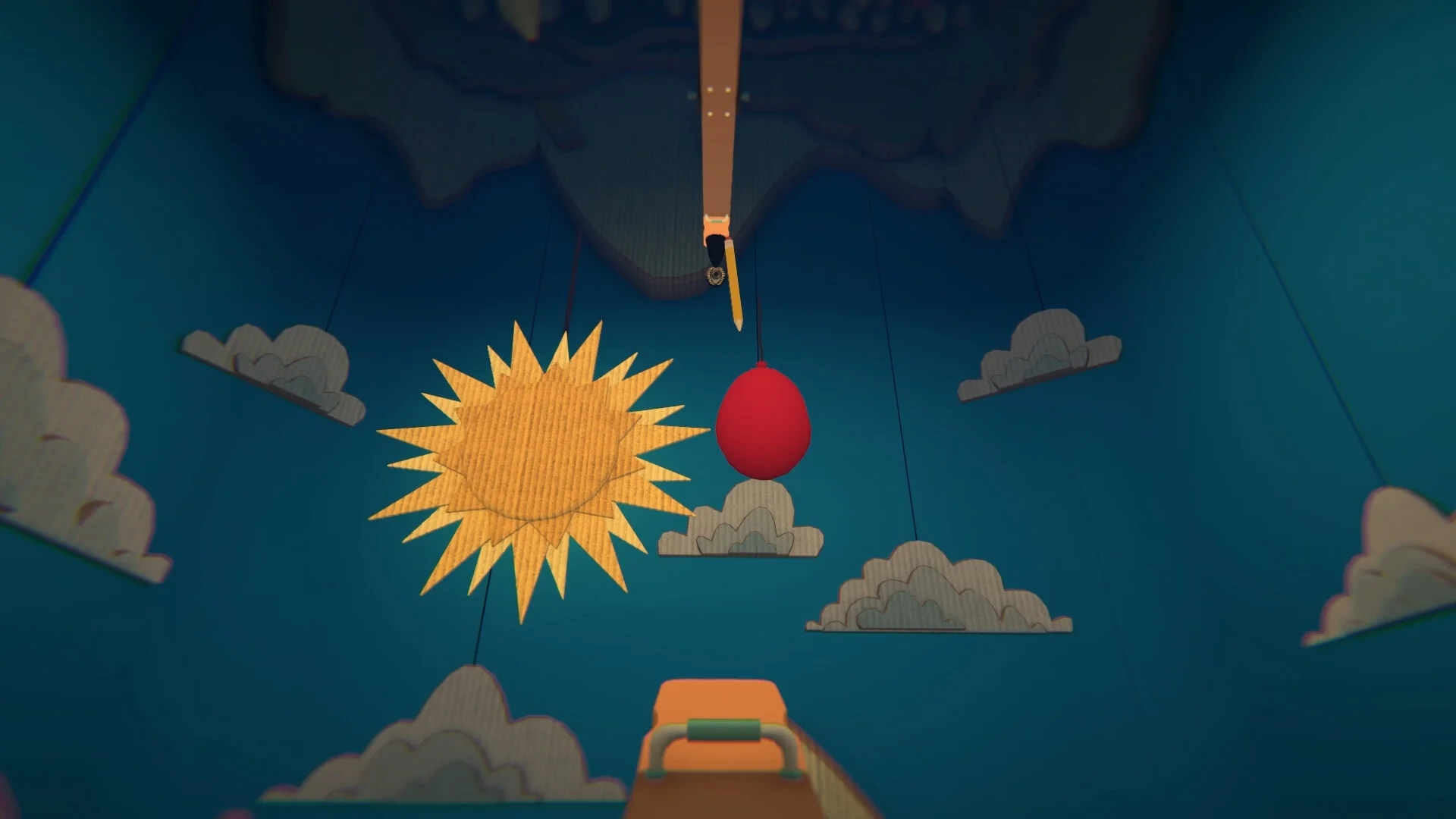
Easy puzzles suit this kind of adventure. A quick environmental change can keep a memory moving, and straightforward platforming can provide welcome activity between passages of dialogue. The cyberspace and chat-room environments benefit from that change of setting and movement. Difficulty is a poor measure of their value. The better test is what each application of blinking contributes: a fresh spatial relationship, a timing requirement, or a different understanding of the place. Too many stretches use it simply to clear another obstruction along the prescribed path.
The central interaction also needs a smooth response. On PS5, occasional frame-rate drops and jitter during world changes can interrupt the transition, though that does not establish a pervasive performance problem. The concern is specific to the action the game asks players to repeat throughout the experience. A blink should make the new state readable immediately. Stutter inserts an unwanted pause into that exchange, separate from the deliberate timing demanded by the rotating platforms or the repetition built into the bathroom.
Tom gives some of those repeated actions a more personal response. An author figure connected to Alan’s inner life, he guides and comments on the experience, including sarcastic remarks when Alan makes a mistake. Those reactions give the voice performance a concrete task: acknowledge what the player has just done and make the solitary exploration feel accompanied. His company matters because Alan’s withdrawal is already established through his apartment and his resistance to contact. A neighbour’s invitation slipped under the door offers a small, ordinary possibility outside that inward world.
The writing is less precise about the beliefs that make this inward company so influential. The book Hell Is Other People shapes Alan’s alienation and his interest in writing, while its author becomes important to the psychological conflict. Yet the book’s actual ideas remain thinly explained.
Bullying, strained family relationships, and unsupportive adults provide understandable pressures, but they leave a gap in the account of how reading becomes a means of retreat and then an influence Alan needs to confront. The game makes that influence carry substantial narrative weight without giving the player enough of its substance to examine. Which beliefs offered Alan comfort, encouraged him to push people away, or made Tom’s guidance difficult to relinquish remains insufficiently developed.
The Review
Time To Wake Up
Time To Wake Up makes its strongest arguments through interaction. Blinking turns school spaces into problems of timing and route selection, giving Alan’s distress a physical form. Repeated traversal weakens that connection, particularly in the flooded bathroom, while the writing leaves the book shaping his withdrawal insufficiently explained. This brief adventure offers effective moments of playable unease, but its central mechanic develops unevenly and its psychological story needs greater precision.
PROS
- Blinking supports thoughtful route planning and timed platforming.
- Environmental transformations make childhood memories feel unstable and threatening.
- Tom’s sarcastic responses give player mistakes a personal reaction.
CONS
- Prolonged switching sequences repeat solutions already understood.
- The influential book’s ideas receive insufficient explanation.
- Occasional PS5 stutter interrupts world transitions.