






























Assigning a Greater Craymel to Keele or Meredy changes the spells available to the party in Tales of Eternia Remastered. Each caster has a Craymel Cage, and distributing elemental beings such as Efreet and Undine between them produces different combinations through the Fringe command.
The catch is that every combination cannot remain available simultaneously. Acquiring another Craymel gives you a reason to reconsider both casters’ capabilities, rather than simply equip the newest spell. The interesting work happens in deciding which possibilities to leave unavailable for the setup you want.
Those decisions feed into battles where direct control usually rests with a different party member. Reid’s weapon attacks and Farah’s martial arts put them on the front line, while Keele and Meredy supply magic under AI control. You can switch characters and issue commands, but concentrating on a fighter makes the division of responsibility clear: manage your own positioning and attack chains while depending on the support you configured beforehand. Eternia asks you to understand a party even when your hands are occupied with one member. Its frustrations begin when that dependence becomes difficult to trust.
Gathering Craymels also connects character development to the adventure’s fiction. Reid and Farah encounter Meredy after her craft crashes near their village, and her unfamiliar language gives them an immediate problem to solve. Their search for answers expands toward the worlds of Inferia and Celestia and the catastrophic Grand Fall.
It is a familiar escalation from local disturbance to enormous stakes, but the elemental beings acquired along the way have a practical presence in the party’s development. Progress through the story changes the tools available for its battles. The narrative itself follows a largely fixed path; the meaningful customization happens in preparing the people travelling it.
The Linear Motion Battle System places everyone on a single horizontal plane, where normal attacks, blocking, and special techniques called Artes form the basic vocabulary. Directional attacks give that vocabulary useful distinctions. An upward strike can catch a flying enemy and create an opening to continue a combo, rewarding attention to the target rather than indiscriminate attacking.
Repeatedly using basic Artes contributes to unlocking higher-tier techniques, which can then enter longer chains. Familiarity with a small repertoire gradually supplies the means to expand it. Reid’s slashes and thrusts and Farah’s quicker punches and kicks offer different rhythms within the same restricted space.
Artes consume TP, so the cost of a fight carries into the next encounter. Spending freely can clear enemies quickly while leaving the party poorly supplied during a long dungeon. Commands that restrict allies’ TP use make conservation an active responsibility, although repeatedly policing expenditure can become tiresome.
Harder bosses give preparation a wider purpose: formations, elemental protection, status-related equipment, and meals that improve stats can all matter before the first attack. There is satisfaction in arriving with an appropriate setup, particularly once ordinary encounters have taught you which habits are expensive.
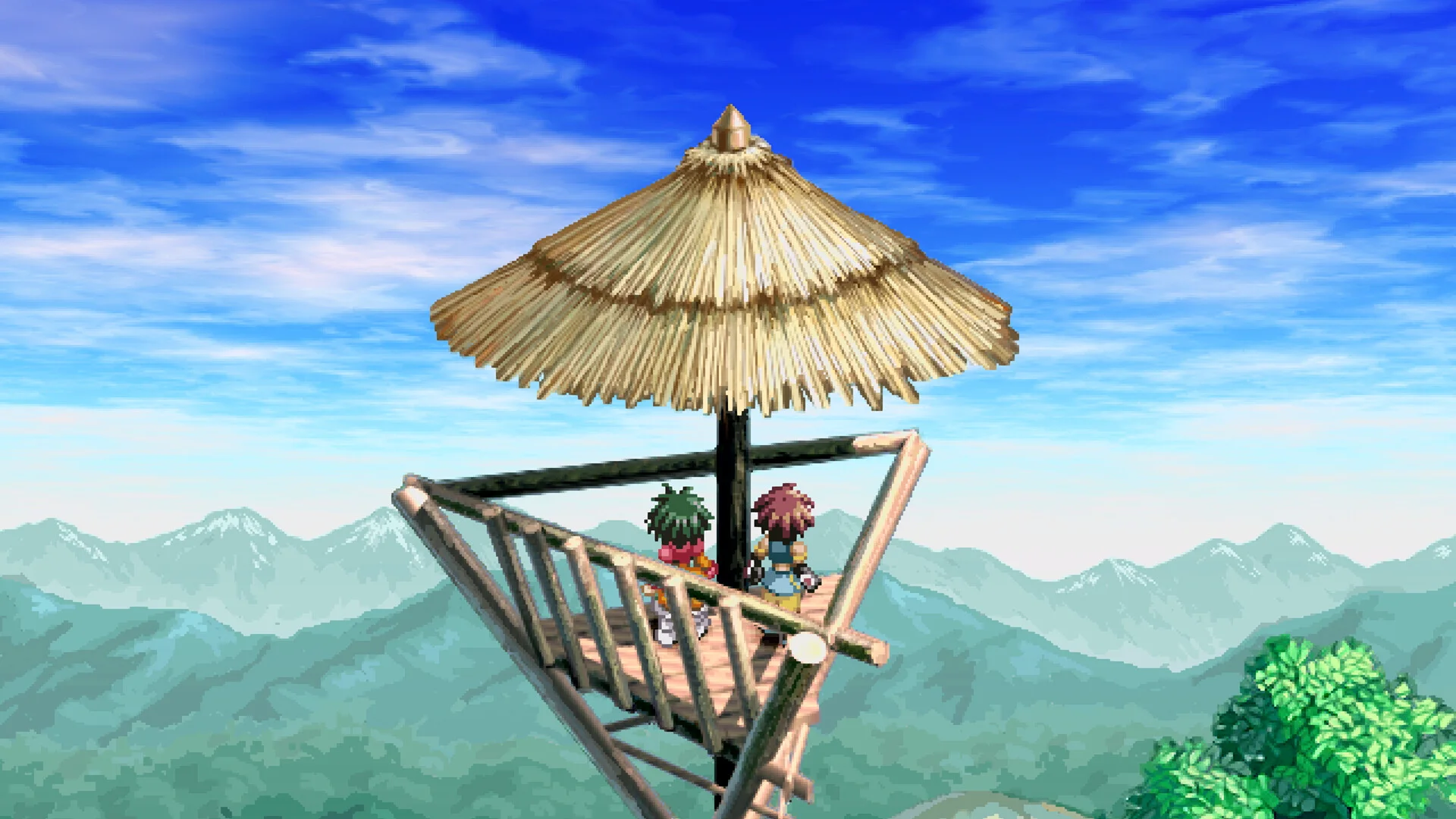
That preparation deserves dependable execution, and Eternia cannot always provide it. A caster can walk into danger despite instructions to maintain distance, exposing a fragile party member whose contribution depends on staying out of the crush. Crowded sprites make it difficult to identify positions, while attacks originating outside the visible area restrict the information available for a response.
Getting trapped in repeated hits compounds the problem. These failures deserve a different judgment from running out of TP after spending recklessly. Resource depletion follows a comprehensible decision; an ally abandoning safe positioning weakens the instructions you were given to manage them. Increasing the difficulty makes those lapses costlier without making them easier to control.
The remaster gives players useful authority over how frequently they must engage with that combat. Random encounters have regular, low, and disabled settings, and the middle option matters. It preserves opportunities to practise and develop the party while reducing interruptions during travel.
Experience and Gald multipliers, reaching fourfold gains, can ease repetitive preparation without requiring another extended stretch of fighting. These settings let players adjust the relationship between exploration and growth. They cannot clarify a crowded battlefield or persuade a caster to stay safely behind the fighters.
Objective markers address a separate source of friction, identifying main destinations, side activities, and time-sensitive content. They reduce the need to guess which conversation or location will move things forward, especially during repeated trips between places.
Local movement remains less accommodating. Detailed backgrounds can obscure an exit or make an interactive area ambiguous, so knowing your destination does not guarantee a clear route through the room. Dungeon branches still offer useful equipment and a reason to investigate. Disabling encounters while retracing an area can preserve that search without demanding another round of familiar fights.
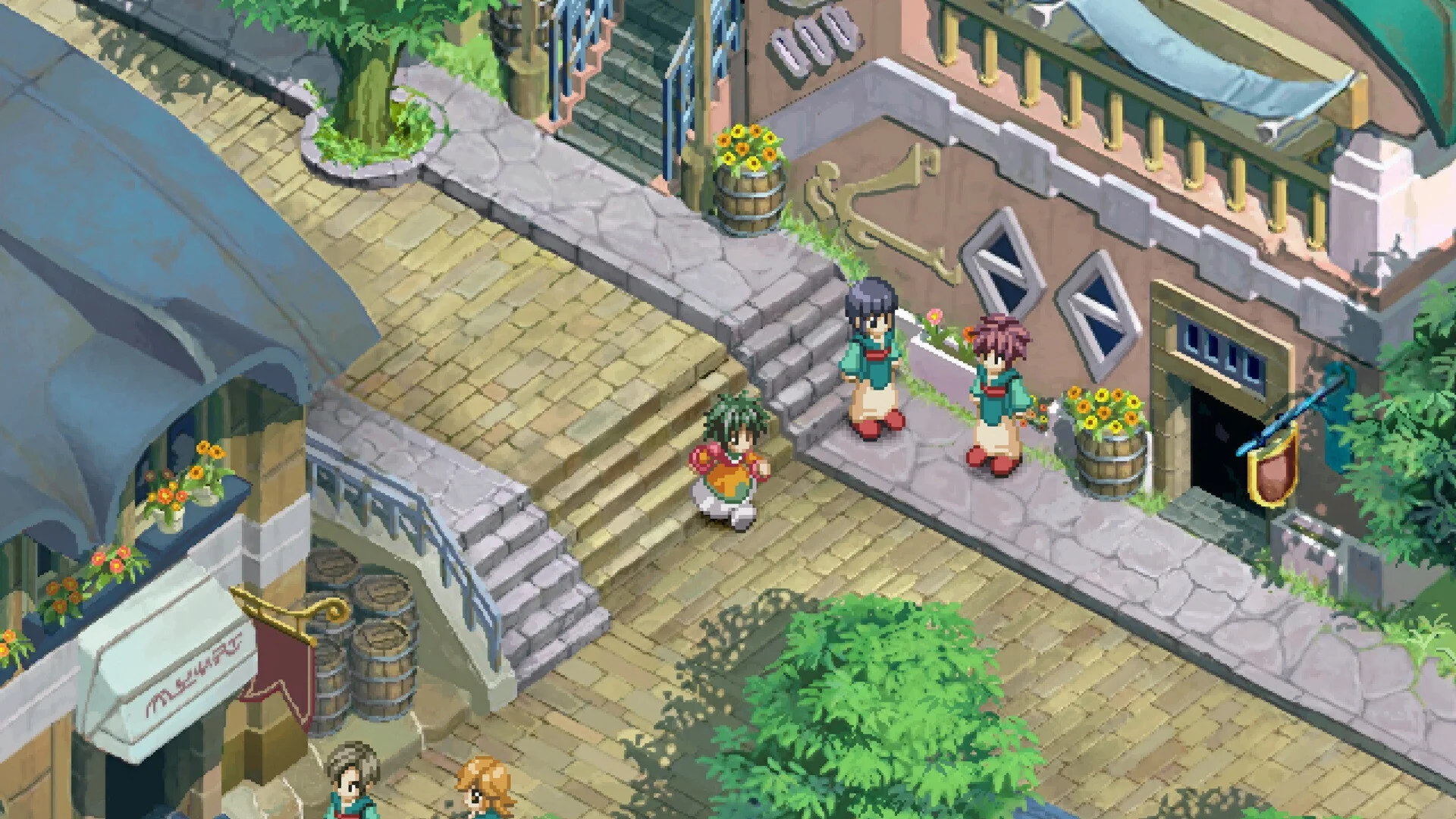
Time saved on those routes is welcome because the party benefits from attention outside combat. Farah’s immediate decision to investigate Meredy’s arrival, despite Reid’s objections, establishes the friction that keeps their relationship lively. His preference for a quiet routine survives his willingness to accompany her, giving his reluctance a basis beyond habitual complaining. Keele’s scholarly priorities create another point of disagreement, especially against Reid’s practical outlook. Their different responses to the same trouble keep the cast from feeling like four interchangeable expressions of heroic enthusiasm.
Restored skits give those differences room beyond the main plot’s escalating emergencies. Optional camp conversations make stopping to listen part of how the group becomes familiar, and their voiced presentation gives these exchanges proper attention within the remaster.
The revised English script and available Japanese voices widen access to the dialogue, but the placement of characterization still matters. Following objective markers efficiently will move the adventure along; developing an attachment to the party asks for pauses that the critical path does not require. The encounter controls help by reducing the interruptions surrounding those pauses.
The visual options show similar care for player preference, though unevenly applied. Original and remastered settings offer a choice between visible pixels and smoothed backgrounds, while clearer fonts, menus, and dialogue boxes make information easier to read. The animated sequences are less flexible. Their heavy smoothing and widescreen treatment remain even when the original gameplay presentation is selected. Players can reject the processing on a town background, then reach a cutscene and find that the same choice is no longer available.
The Review
Tales of Eternia Remastered
Craymel allocation and use-based Arte progression give Tales of Eternia Remastered satisfying decisions to make, while restored conversations reward time spent with its quarrelsome party. Adjustable encounters and rewards reduce repetition without dismantling those strengths. Unreliable allies and crowded battles still weaken the connection between careful preparation and successful execution. This is a thoughtful update of an RPG whose tactical ideas remain rewarding, even when its battlefield struggles to support them.
PROS
- Craymel allocation creates meaningful spell trade-offs.
- Arte progression rewards practice and experimentation.
- Restored skits develop the party’s relationships.
- Adjustable encounters and rewards ease repetitive travel.
CONS
- Ally AI can undermine positioning instructions.
- Crowded battles and offscreen attacks hinder readable responses.
- Ambiguous exits complicate dungeon exploration.
- Cutscene smoothing persists with original visuals selected.







