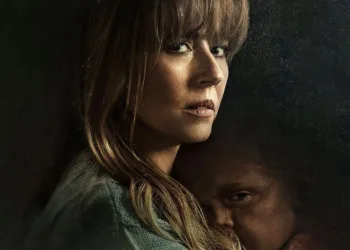















Maria’s refuge has a broken refrigerator, thin walls, and a child who cannot stay still. The house belongs to aunt Lucille, yet every window feels borrowed and every sound risks discovery. Maria has fled her violent husband, Jason, with their son Dai, reaching woodland in the hope that distance might resemble safety.
Cruel Hands, the feature debut of director Al Kalyk, understands the fragile difference between those two things. Safety is a condition. Distance is only geography.
The film runs roughly 76 minutes, reducing its story to a spreading bushfire, a restless boy, and a man moving steadily closer. Flashbacks reveal that Maria has tried to leave before. Jason survives each attempt by controlling the story around it, presenting himself as the wounded father while carrying violence behind his calm voice. Maria hides the truth from Dai to protect him. Jason hides it to protect himself. The boy already knows.
What the Child Keeps
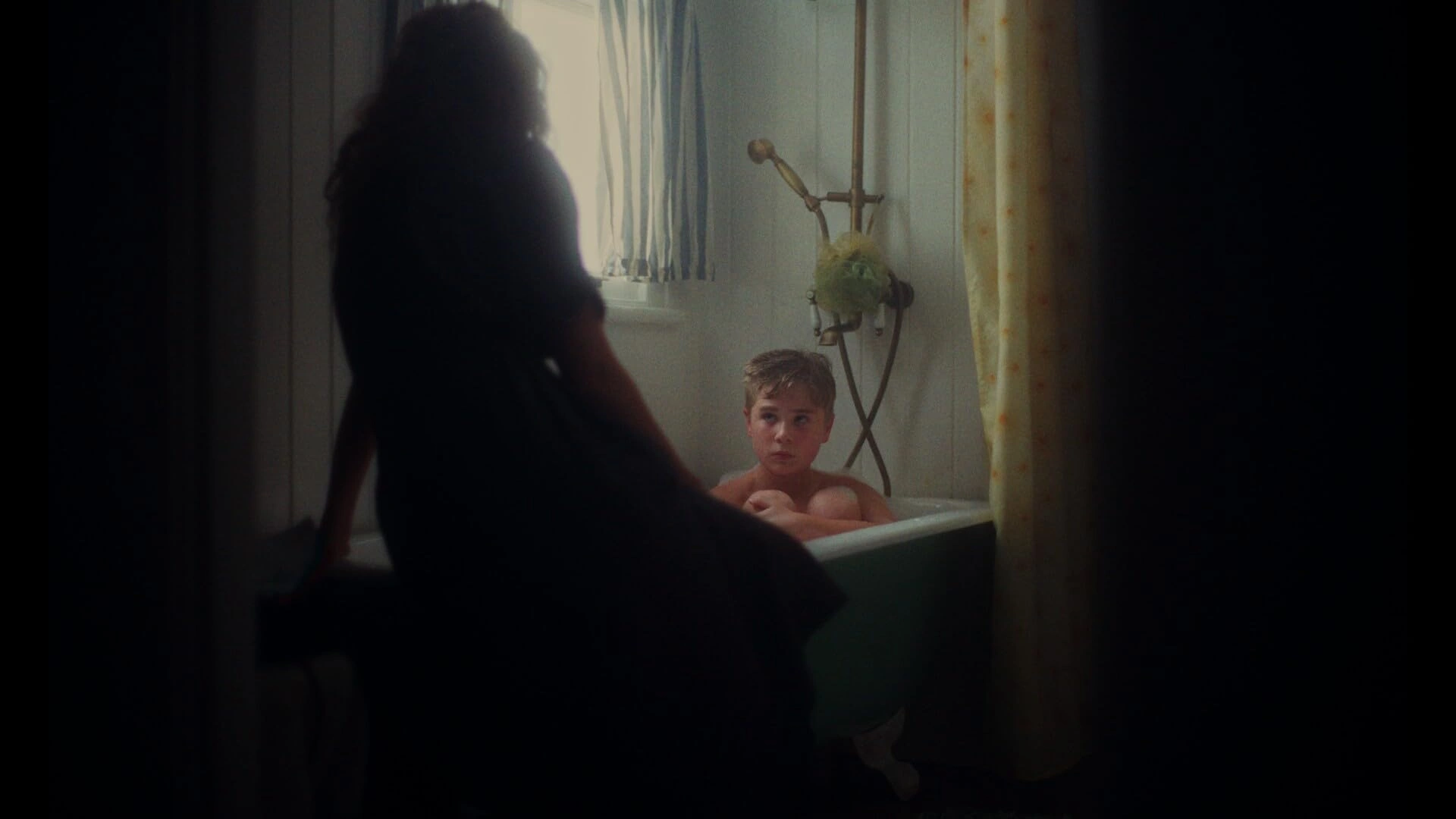
Dai’s disobedience could have been used as a cheap engine for suspense. He wanders, complains, resists instructions, and treats the isolated house as a punishment devised by an anxious mother. Kalyk and co-writer Matthew Kalyk give those actions a sadder weight. Dai has absorbed the logic of the household he escaped.
Diesel La Torraca plays him with the unsettled rhythm of a child who has learned that love and fear can occupy the same room. His frustration is ordinary, yet it carries the residue of Jason’s behavior. He pushes against Maria because pushing has become one of the languages available to him. When she discovers his disturbing drawings, the shock is not that he witnessed the abuse. It is that the violence has already started arranging the furniture inside his mind.
Mavournee Hazel lets Maria’s response collapse almost soundlessly. She has spent so long measuring doors, roads, food, and possible witnesses that Dai’s interior life has remained partly hidden from her. Her terror shifts in that moment. Jason may find them, the fire may reach them, the supplies may spoil. None of those threats answers the question on the page in front of her: what has already happened to her son?
Her attempts to protect him grow harsher as the film tightens. Two older boys torment Dai, and Maria responds with the instincts of someone who has lived too long under threat. Jason’s violence spreads through people who may never meet him. It moves by imitation, fear, and necessity. Harm has found a way to travel.
Grain, Ash, Silence
Kalyk shoots on 16mm, giving the woods a bruised texture. Green leaves, pale walls, and dry earth shimmer beneath grain that makes every image feel remembered after a disaster. The setting could belong to a gentle rural drama, yet the air never settles. A half-open refrigerator reveals food beginning to fail. Ash drifts from the sky without ceremony. Roads empty as evacuation draws people elsewhere.
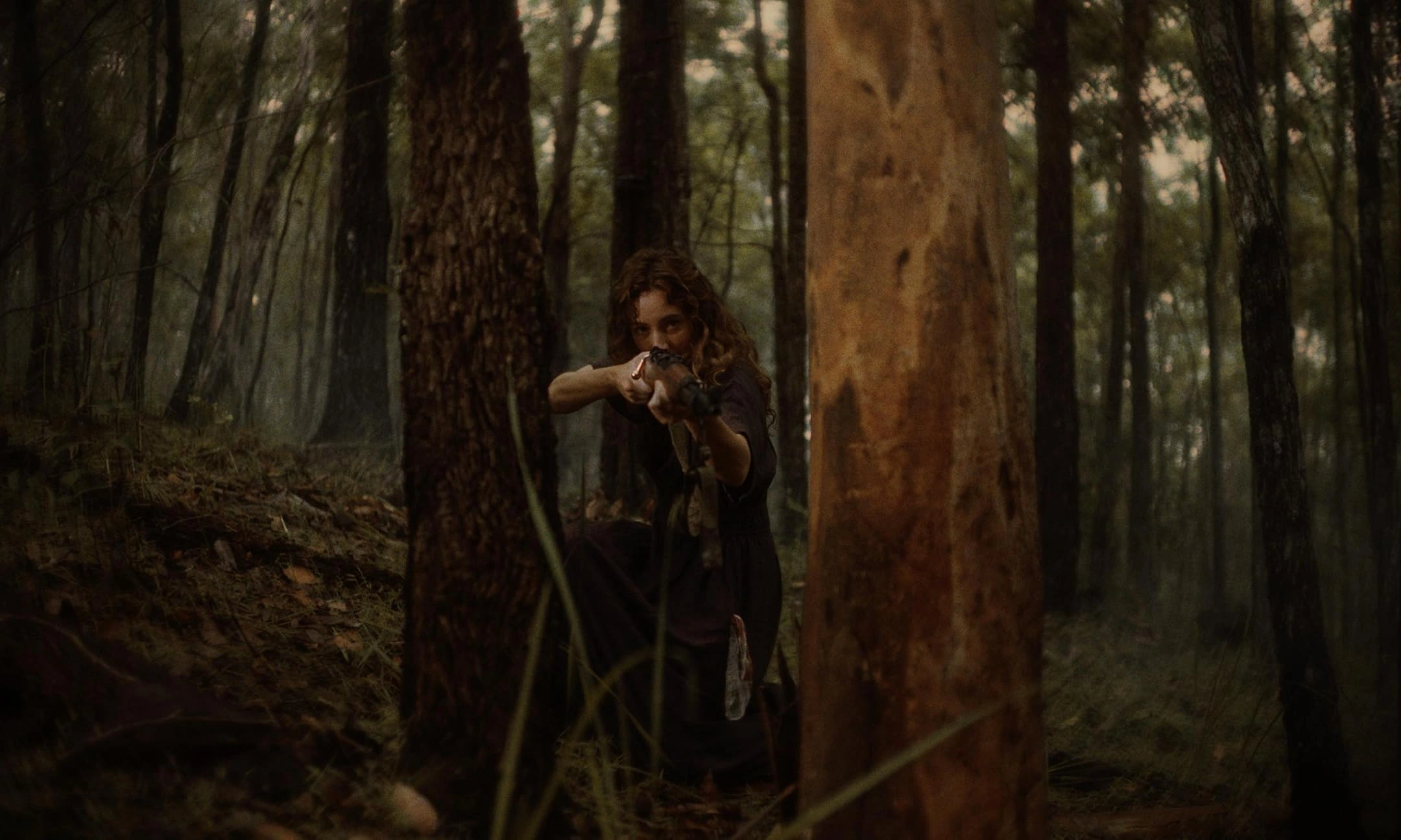
The period details refuse a stable decade. Cars and buildings look old, cellphones remain present, and the result resembles a nightmare that has misplaced its calendar. The bushfire strengthens that dislocation. It is first an atmosphere, then a boundary, then a physical force. Maria is hiding from one danger inside another.
Hazel carries this pressure in her body. Early scenes hold her in guarded control, each instruction to Dai delivered with the strain of someone trying to sound ordinary. As food disappears and exposure becomes harder to avoid, her movements sharpen. She does not transform into an action heroine. She becomes an animal denied every clean exit.
Josh McConville gives Jason a quieter form of terror. He does not need to announce what he is. The lie he tells Dai’s teacher during a phone call lands with greater force than an outburst because it shows how easily he can make possession sound paternal. When intimidation fails, violence arrives. When violence pauses, the calm voice returns. His third-act monologue follows the same pattern, wrapping domination in the vocabulary of family.
The Fireline
Jason’s search cuts through the city while Maria’s isolation deepens in the forest. He questions people connected to her earlier escape, performing concern until resistance awakens the brutality beneath it. Each encounter narrows the distance. The film’s tension comes from that shrinking space, from the certainty that concealment cannot last.
The screenplay adds teenagers, police officers, failing supplies, and the advancing fire to an already compressed structure. Some choices strain credibility. The officers arrive with banter that briefly loosens the film’s grip, and their place in the final movement can feel arranged by the needs of the plot. Several tragedies depend on characters ignoring options that appear plainly available.
Practical judgment has a limited place inside Maria’s fear. Abuse has trained her to see institutions as uncertain, strangers as risks, and every delay as a possible betrayal. The film does not excuse each decision. It locates the panic inside them.
By the final confrontation, flames have turned the forest into a corridor with no safe direction. Jason speaks as if the family still belongs to him. Maria answers from the exhausted edge of survival. Dai remains between them, carrying a history he never chose and may not know how to set down. The fire consumes trees. His father’s lessons are harder to burn.
Cruel Hands is a thriller movie released on July 24, 2026, distributed by Dark Sky Films. You can watch the film in select theaters. The story follows a mother and her son hiding in an abandoned farmhouse while fleeing an abusive husband amid dangerous bushfires.
Where to Watch Cruel Hands (2026) Online






Full Credits
Title: Cruel Hands
Distributor: Dark Sky Films
Release date: July 24, 2026
Rating: Unrated
Running time: 1 hour 36 minutes
Director: Al Kalyk
Writers: Al Kalyk, Matthew Kalyk
Producers and Executive Producers: Al Kalyk, Ashley McLeod
Cast: Mavournee Hazel, Diesel La Torraca, Josh McConville, Harry Greenwood, Geneviève Lemon, Ana Benham, Max Cattana, Gerard Colins
Director of Photography (Cinematographer): Charlie Cole
Editors: Philip Horn, Tucker Morrison
Composer: Alvidrez
The Review
Cruel Hands
Cruel Hands finds its terror in what violence leaves behind. Al Kalyk’s grainy images turn the forest into a place where refuge and burial seem separated by a few burning trees, while Mavournee Hazel gives Maria’s fear a raw, physical shape. Some supporting threats crowd the brief runtime, and a few choices strain credibility, yet the film never loses sight of Dai, the child carrying his father’s cruelty into an uncertain future. The flames may pass. The damage will remain.
PROS
- Haunting 16mm cinematography
- Mavournee Hazel’s desperate performance
- Josh McConville’s restrained menace
- Sensitive depiction of childhood trauma
- Powerful bushfire setting
CONS
- Convenient police involvement
- Several questionable character decisions
- Supporting threats feel crowded
- Brief runtime limits development