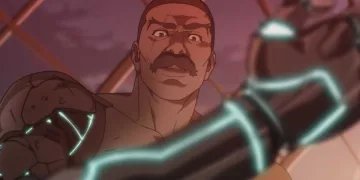



























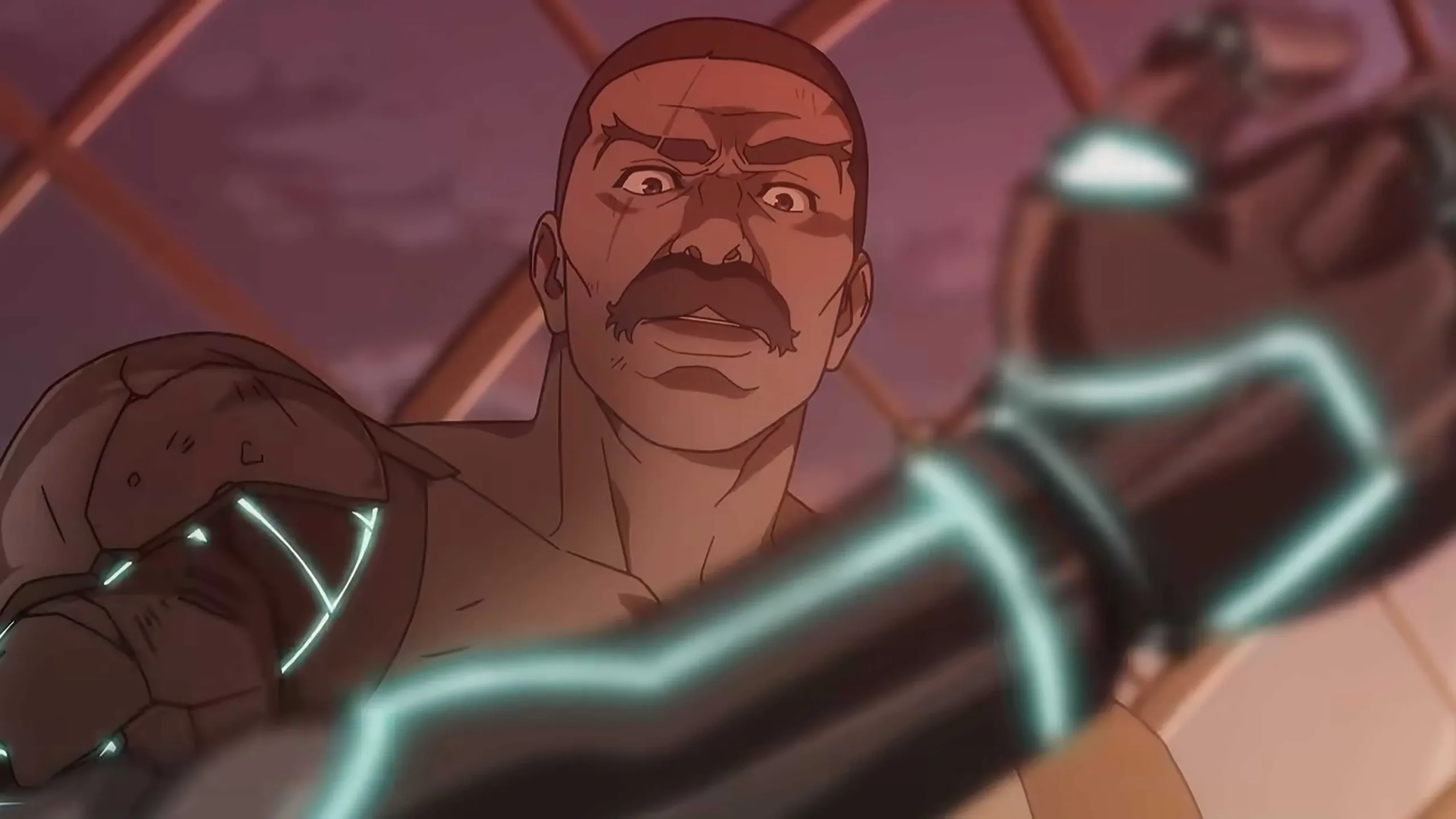

The Army offers Bass Reeves a federal marshal’s badge with a selling point that would go unspoken in most Westerns. He’ll be paid the same as a white marshal. Black fugitives fetch half the bounty of white ones in Bass X Machina, so Reeves already knows what the law can do with a pay scale. He wants to retire from bounty hunting, and his wife Glory is expecting their third child. The offer could change life in that household. First, the Army needs him to bring back a missing scientist.
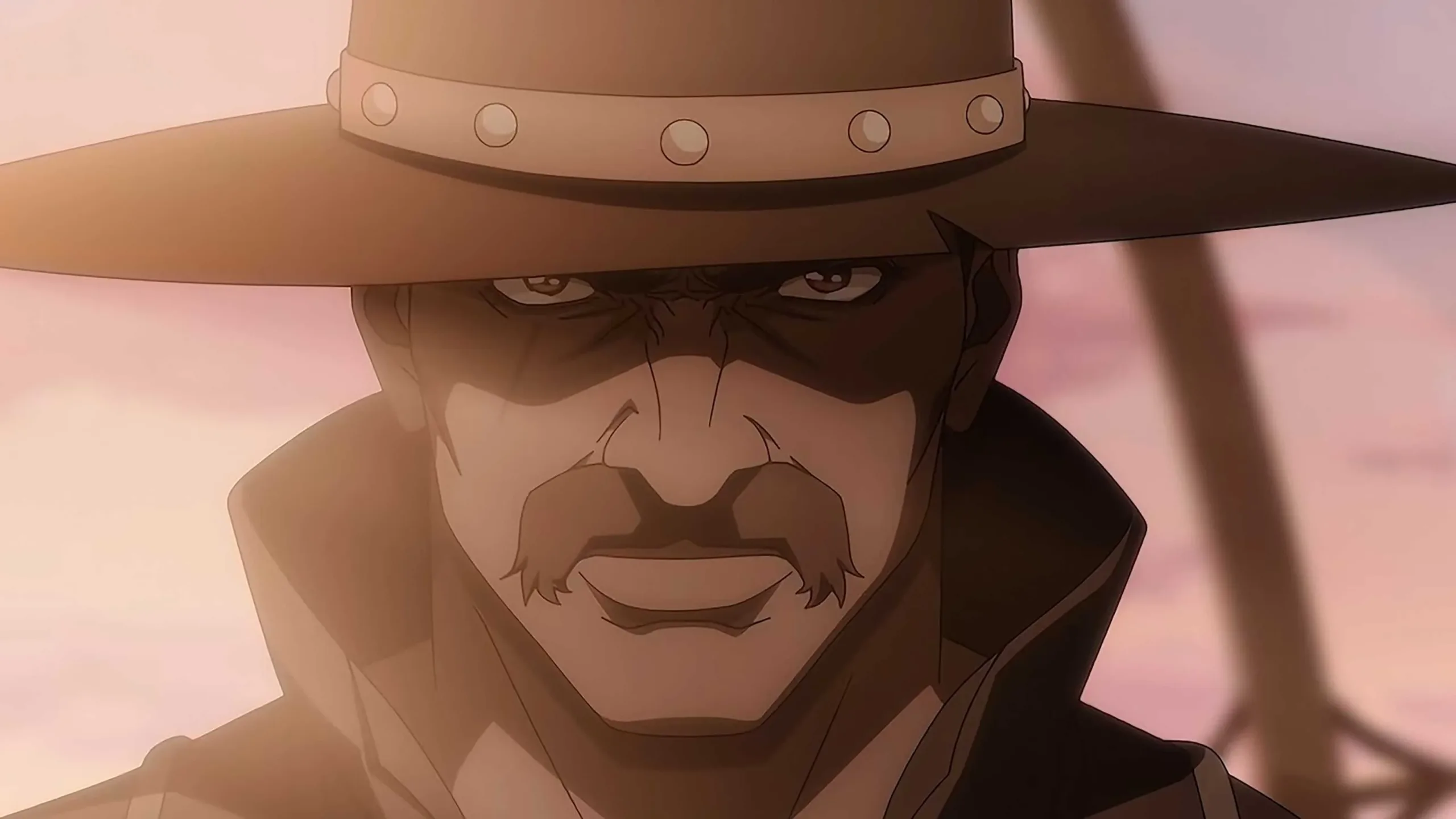
LeSean Thomas’s six-episode animated Western borrows the name of a formerly enslaved man who became one of the first Black deputy U.S. marshals west of the Mississippi. Its fictional Reeves has a mechanical arm and the practiced indifference of someone who kills for a living. In the opening shootout, a man cries out that Reeves has taken his brothers away.
“You’re back with ’em now,” Brian Tyree Henry replies flatly, before Reeves shoots him. The line could play as a gunslinger’s boast. Henry delivers it with the finality of a transaction. The badge would give Reeves a new relationship to the law, and the Army has every reason to value the habits he would bring to the job.
The series gives that bargain its sharpest test aboard a midseason monorail. The machinery belongs to an imagined future, but the railway still sorts its passengers into segregated cars. Thomas and the writers give the episode room to slow down around questions of revenge and survival that the opening gunfight could dispatch with a bullet.
Following the law carries a different risk for the people it has already sorted into the wrong car. The show gets considerable mileage out of making segregation a practical arrangement. Someone has decided where passengers may sit, and the train can run perfectly while carrying out that decision.
Ahni, a lightning wielder with ties to Reeves’s past, regards his refusal to join her violent campaign as a betrayal. Glory worries about what anger could make of the man she married. Her appeal carries particular weight after Henry has shown how little anger Reeves needs to kill.
Ahni’s demand concerns what people owe one another when the law offers unequal protection. Glory has to consider who will come home after the violence and what kind of life he’ll be able to share with her. The series lets both women put something at stake beyond the question of which side Reeves will take.
Reeves’s arm makes the costs of this world’s inventiveness unusually intimate. He acquired it through a wartime experiment conducted by the Confederate general Rivenbark. When Reeves says the arm he once had was stolen, the mechanical replacement acquires a history that its usefulness in a fight can never settle. Etta, a Native inventor who rigs her hideout with electrified fruit trees, gets to name her own work.
She calls it science. The distinction matters in a Western, a genre that has often treated Indigenous knowledge as a mystery for outsiders to encounter. Etta understands how her defenses work, has a reason for building them, and gives a young engineer someone to learn from.
That engineer is Dana Starr, the missing scientist’s niece, who insists on joining Reeves in the Badlands. Studio Mir gives the partnership an economical introduction by sending them out together, Reeves on horseback and Dana keeping pace on a homemade motorized scooter.
Dana’s inventions sometimes fail, which gives Tati Gabrielle’s eagerness a welcome comic edge and keeps the girl’s intelligence from becoming a convenient answer to every obstacle. Reeves has plenty to teach her about staying alive. With each occasion for him to rely on her, the familiar pairing of a gunfighter and a young ward makes room for expertise he never had to cultivate on his own.
The season is less patient with a late change in allegiance. The train episode can afford to dwell on disagreements because the rules of the railway give each position an immediate consequence. Near the end, a character makes a choice that alters the stakes for everyone around them, and the plot moves faster than the audience can reckon with it. The reveal has to do work that an earlier scene with this character could have done, giving some sense of what might make an old allegiance untenable.
Bass X Machina premiered on Netflix on November 3, 2026. Created by LeSean Thomas, the steampunk animated series set in an alternate Wild West follows a legendary lawman forced to wield futuristic weaponry to protect his family and home from supernatural threats and rogue machines.
Where to Watch Bass X Machina Online


Full Credits
Title: Bass X Machina
Distributor: Netflix
Release date: November 3, 2026
Rating: TV-MA
Running time: 30 minutes per episode
Director: LeSean Thomas
Writers: LeSean Thomas
Producers and Executive Producers: LeSean Thomas, Brian Tyree Henry, Jennifer Wiley-Moxley, Chad Handley
Cast: Brian Tyree Henry, Janelle Monáe, Tati Gabrielle, Cree Summer, Chaske Spencer, Currie Graham, Starletta DuPois
- Composer: Flying Lotus
The Review
Bass X Machina
In Bass X Machina, a marshal’s badge comes with the promise of equal pay, and a futuristic railway still tells passengers where they can sit. The series is sharpest when it makes those arrangements matter to the people living under them. Brian Tyree Henry’s dry delivery gives Reeves’s violence the chill of routine, while Dana and Etta make invention feel like a form of practical knowledge. A late change in allegiance needs more room, especially after the train episode shows how much the series can do when it gives a difficult choice time to develop.
PROS
- The marshal’s offer gives the politics of equal pay personal stakes.
- The segregated monorail makes the cost of obeying the law concrete.
- Henry’s restrained delivery makes Reeves’s violence unsettling.
- Etta and Dana give technical ingenuity a place in the Western.
CONS
- A late change in allegiance gets too little preparation.
- The action moves on before the consequences of that choice can register.