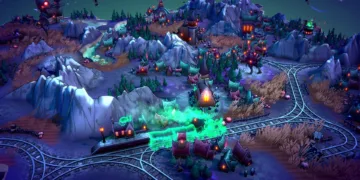























Dorfromantik players already know how to read much of Fangtopia’s landscape. Forest edges invite further woodland, settlements want room to spread, and a hexagon divided between two terrain types needs a little consideration before it goes down.
Absolutely Games gives these familiar decisions a Halloween setting, with a castle as the starting point for a growing monster kingdom. The immediate pleasure comes from finding a position where one piece serves several purposes: extending a forest, preserving space beside a field, and keeping the next useful connection available.
That open space becomes valuable once landmarks enter the picture. Reaching score thresholds supplies special pieces with requirements for the terrain around them. A volcano, for example, needs a nearby field and surrounding mountains. Completing the arrangement rewards additional tiles, extending a run that would otherwise finish when the stack runs dry. A placement that earns points immediately can also occupy ground needed for a later objective. Fangtopia gives you unlimited time to think through that trade, while keeping the supply of opportunities finite.
The visible next tile provides enough information to make preparation worthwhile without revealing the entire stack. Mixed-terrain pieces are particularly useful here, since rotating one can help develop separate areas at once. There is satisfaction in making an awkward combination productive, and the limited stack gives that satisfaction some weight. You can build for appearance, chase a better score, or concentrate on replenishing your pieces, though those aims will sometimes compete. The absence of a timer leaves room to consider each option without removing the consequences of your choice.
Monster habitats put an appealing purpose behind the same spatial thinking. Portals offer prospective inhabitants, with werewolves requiring woodland and yetis favoring mountains. Preparing the appropriate terrain unlocks the creature and its accompanying pieces.
Compared with the straightforward business of joining matching edges, these requests give a growing area an identifiable destination. You are making room for something that will occupy it. The creatures remain closely tied to placement objectives, so anyone expecting to manage their needs or develop relationships between residents should adjust those expectations.
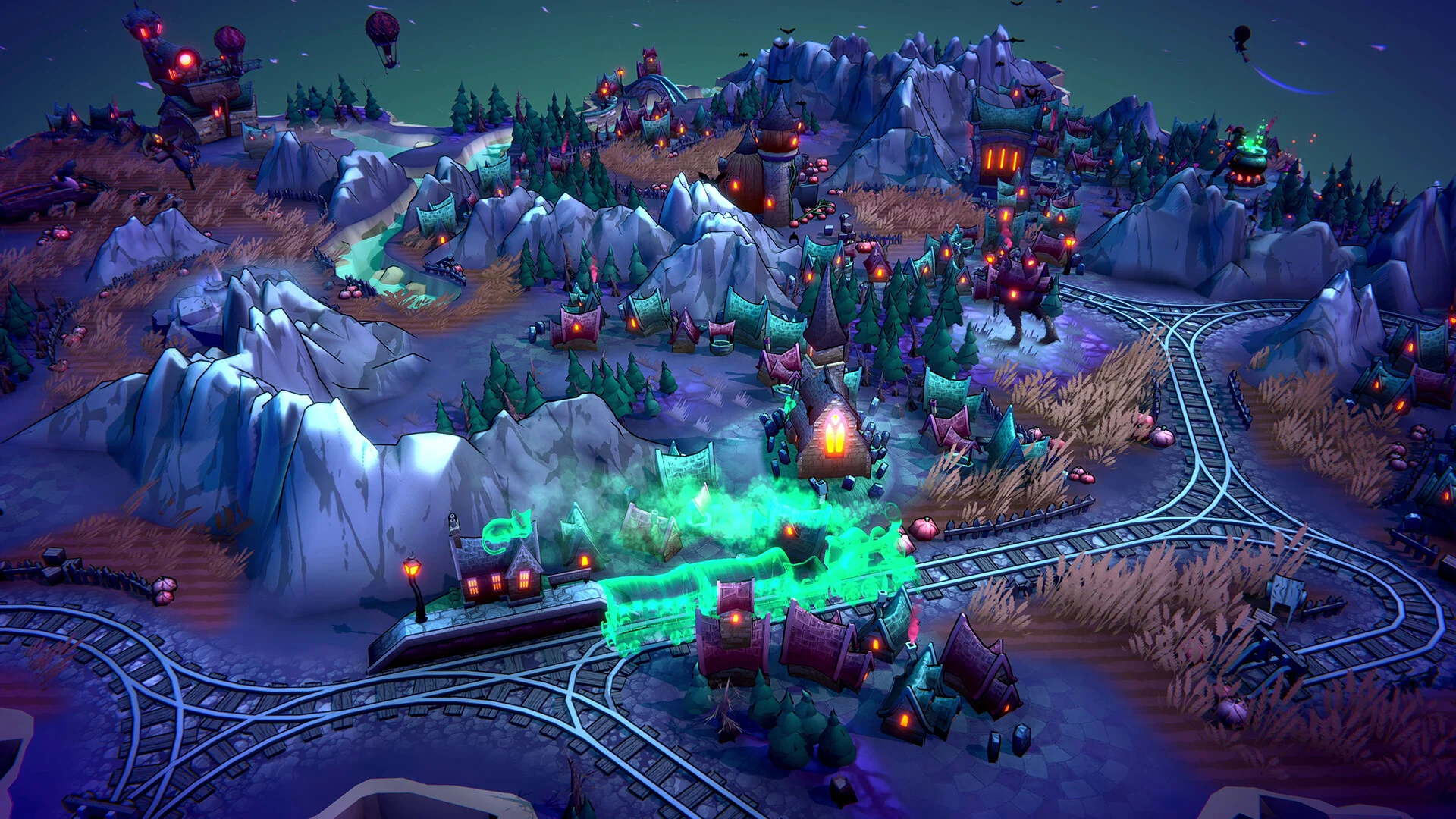
Their arrival does make a difference to the landscape, though. A werewolf moves within its patch and occasionally howls, leaving an audible reminder of a completed objective. Ghost trains give railway lines activity, while the settlements glow through windows and torches against the darker woods. These details suit the scale of the game. The monsters behave like small animated residents of a model village, and their presence gives you a reason to inspect areas after the scoring opportunity has passed.
The way neighboring pieces adapt to one another helps sustain that attention. Separate tiles become continuous terrain, and adjoining river pieces can produce waterfalls. This is an effective companion to the matching rules: the game rewards a successful connection with a visible change to the model.
Fangtopia’s distinction within this familiar genre lies partly in the enjoyment of seeing those connections take shape. Silent Mode supports that quieter interest by muting the music and leaving placement sounds, creaking, crackling, and creature noises exposed. The occasional howl becomes part of the place you have assembled.
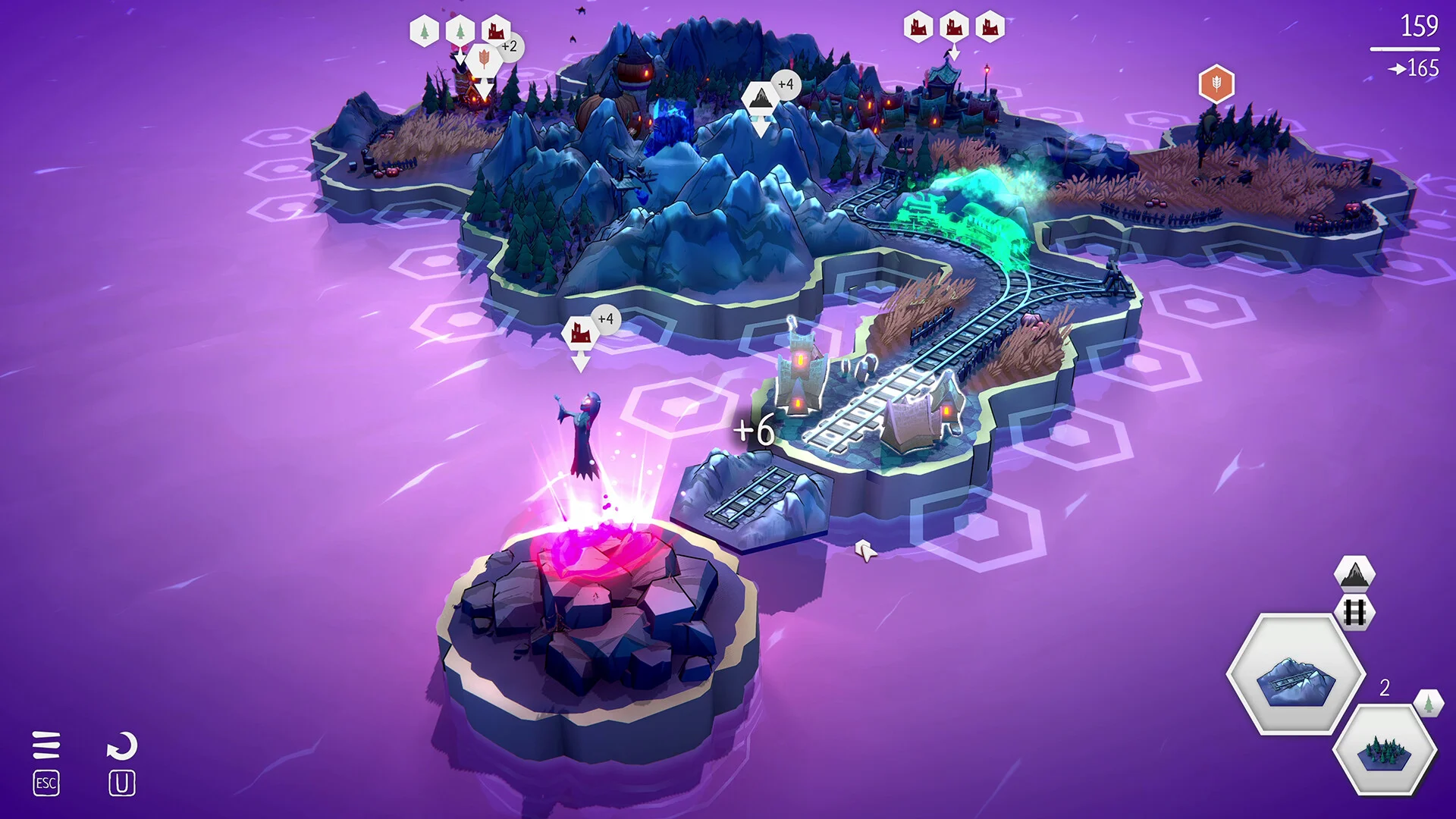
The three modes make smaller changes to the puzzle than their separate identities might suggest. Standard Fangtopia supplies the basic placement loop, while Ghoulish adds rivers and lets you exchange the current piece with the next one. That swap is a useful adjustment.
You can postpone an awkward tile and use its neighbor to prepare a better position, giving the two-piece preview a practical role beyond warning you about what comes next. Rivers add further terrain to accommodate, so Ghoulish offers a tangible change in planning rather than a purely cosmetic variation.
Island mode shifts attention toward railway requirements that open access to additional islands. It gives track placement a particular objective, but the central activity remains arranging terrain, collecting points, and earning pieces to continue. Each variant changes part of the task without substantially replacing its reward cycle. The distinction matters for returning tile-puzzle players: there are different arrangements to work through, yet the modes provide a fairly narrow expansion of the decisions established by the standard game.
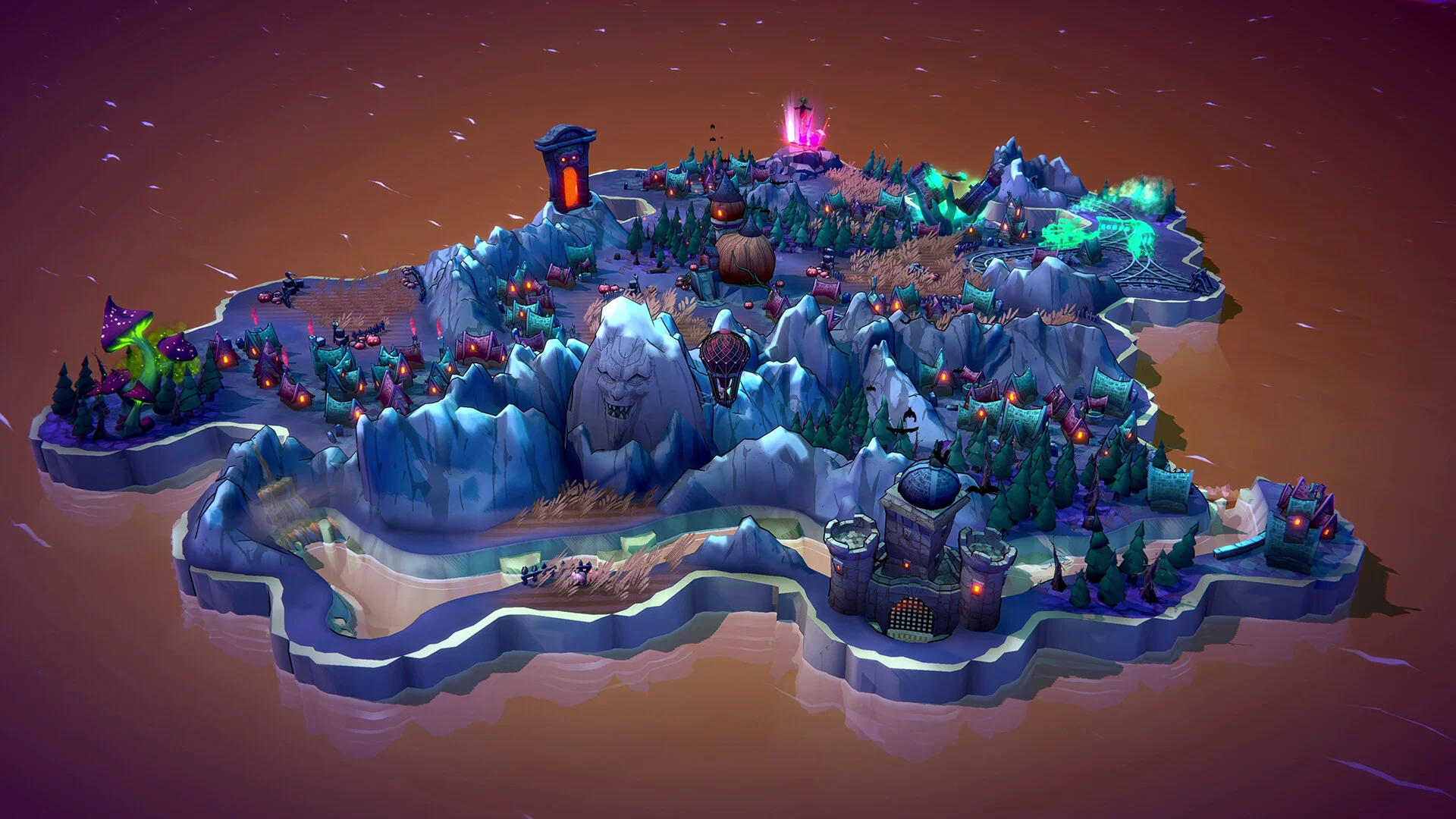
That narrowness becomes easier to feel when familiar creatures recur. An inhabitant with an easily satisfied requirement can appear repeatedly within a run, reducing the sense of discovery attached to preparing its habitat. The woodland still presents a placement problem, but the resident waiting for it becomes predictable.
Fangtopia is most engaging when an objective makes you reconsider the space available. Repeating an already familiar request supplies another reason to continue building without necessarily giving you a fresh way to think about the board. Leaderboards give score-focused players something persistent to pursue, and improving placement efficiency is a reasonable motive for another attempt.
The sticker book offers a different reason to return. It records unlock requirements and lets you inspect collected models away from the demands of the board, alongside cosmetic rewards such as kingdom-tile and water-color changes. Some unlocked pieces provide further scoring opportunities, but the album also makes room for collecting as its own pleasure. During a run, attention falls on a piece’s edges and the space around it. Viewed on its own, the same model can hold attention through the small details that efficient placement encourages you to overlook.
The Review
Fangtopia
Fangtopia gives Dorfromantik’s familiar terrain matching an appealing Halloween identity, with monster habitats that make careful placement feel purposeful. Animated residents, merging landscapes, and detailed models reward attention beyond the score counter. Ghoulish mode’s tile swapping adds useful flexibility, though the three modes offer modest mechanical variety and recurring creatures lose their novelty. It suits players happy to refine familiar placement decisions while building a miniature monster kingdom.
PROS
- Thoughtful placement under a limited tile supply.
- Monster habitats give terrain building clear objectives.
- Detailed landscapes with lively animation and sound.
- Useful tile swapping in Ghoulish mode.
CONS
- Limited mechanical differences between modes.
- Recurring creatures weaken the pleasure of discovery.