






















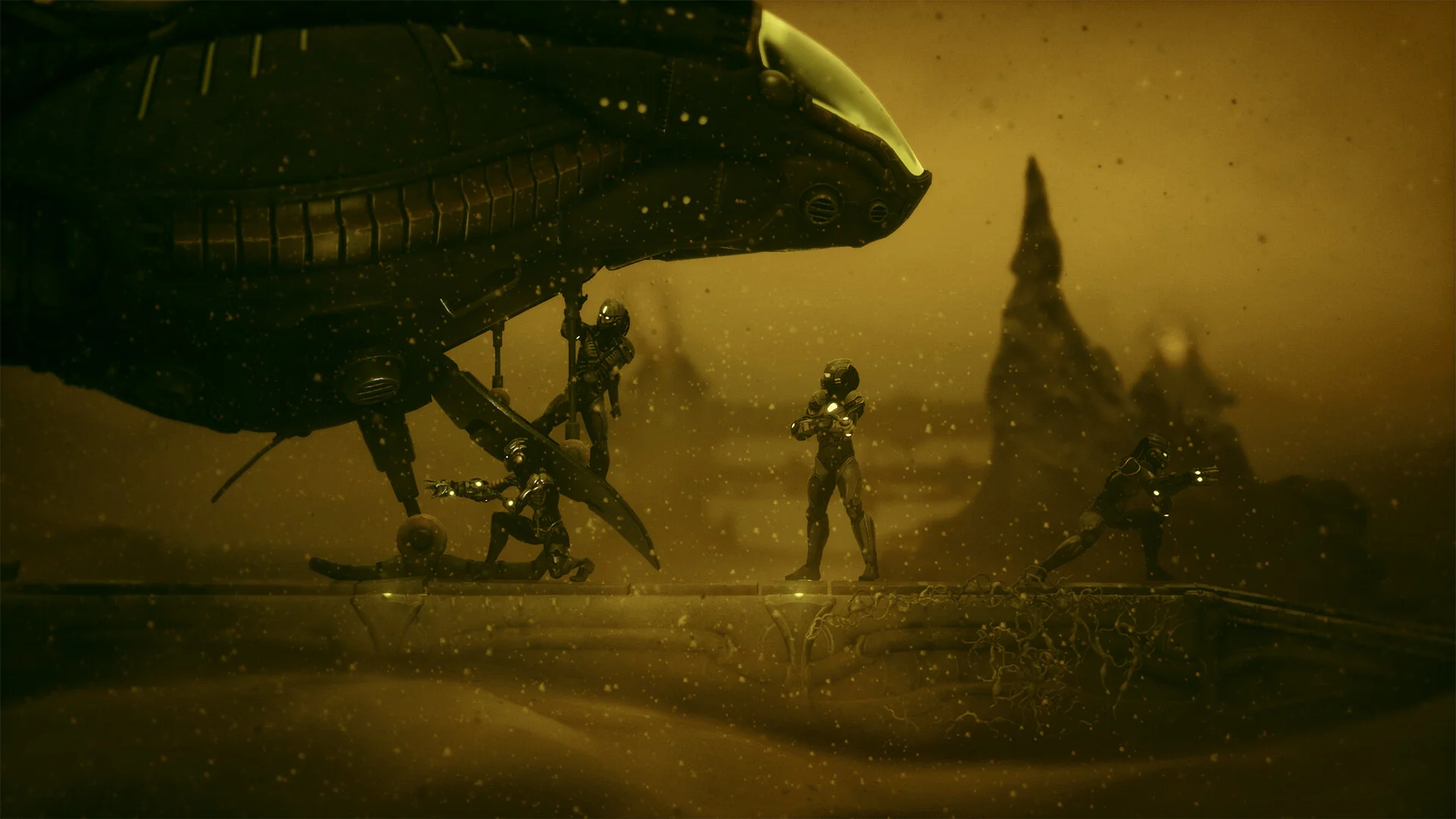

You can discover a room in Moadra long before you can get inside it. Send the scanner drone through a wall and it reveals space that your own body cannot yet reach. The immediate temptation is to work out a route, remember the obstacle, and keep looking for whatever might let you return. Gloomsoft’s science-fiction Metroidvania gives curiosity a useful head start on movement. A place can become part of your plans while you are still separated from it by solid rock.
The drone also examines the bodies of Neerans from the expedition you have come to find. That gives the habit of scanning a different weight. Lieutenant Moadra Meras is exploring Protea VI after contact with a research team has been lost, and the same tool that identifies a creature’s weakness records evidence of what happened to her people. Looking closely serves survival and remembrance. Optional entries let you linger over that history, while brief conversations leave room to return to the search without sitting through a long explanation.
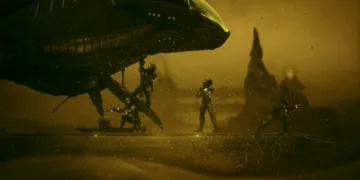
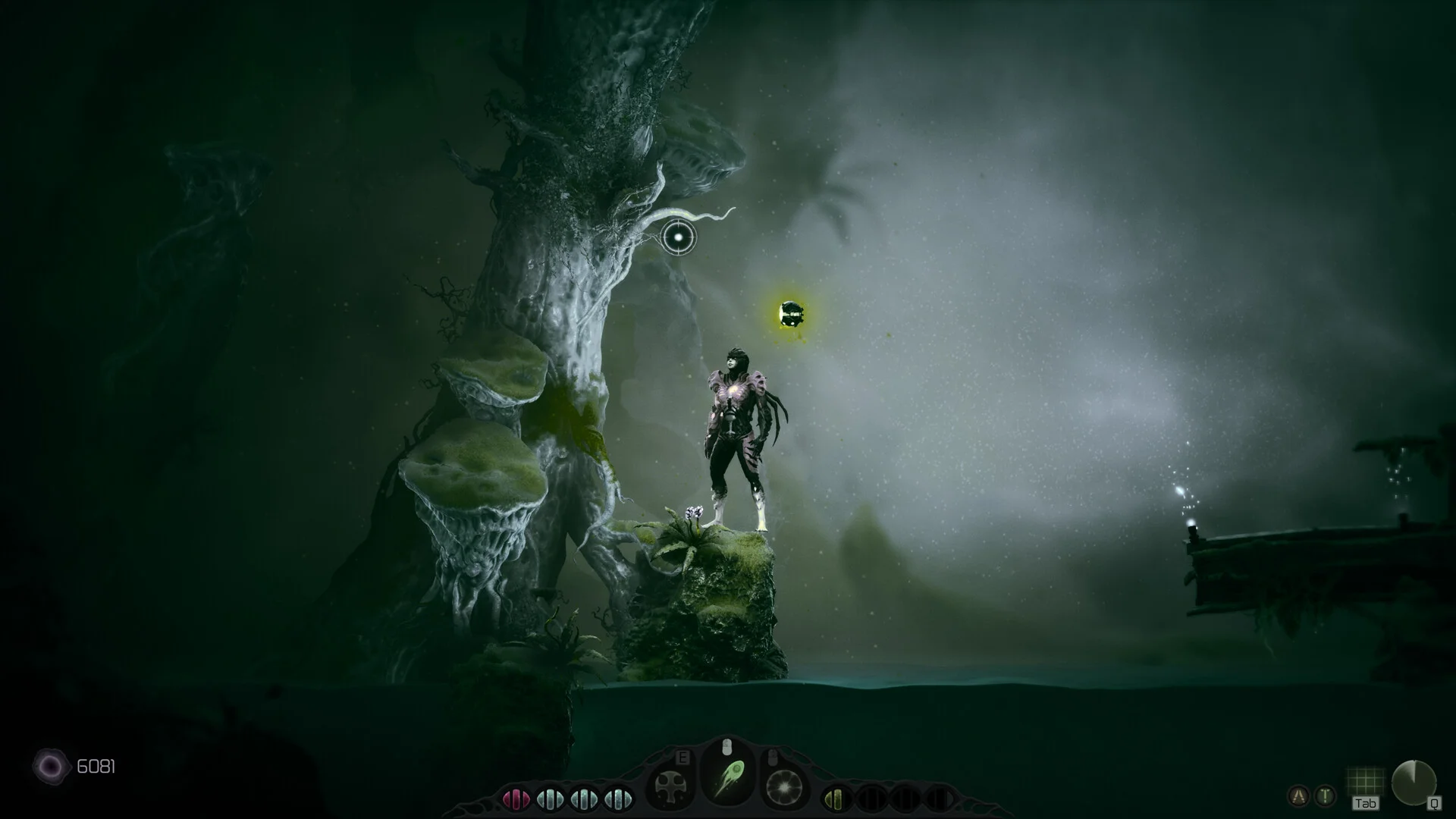
Protea VI makes that lingering uncomfortable. Insect clicks, machinery, and distant howls occupy the space a constant musical score might otherwise fill. Small rooms, fog, and muted greens and burgundies make the surroundings feel dense with things you have yet to understand. The guttural fictional-language voices belong comfortably in this environment, too. Familiar humanoid behavior comes through unfamiliar sounds. The arm cannon and ability-gated passages clearly recall Super Metroid, but scanning gives this descent its own rhythm: stop, investigate, learn something useful, then move while listening for trouble.
The most unsettling discovery concerns the body doing the exploring. Princess Amari tears off Moadra’s arm during their early confrontation, and Doctor Atael saves her using organic technology from the planet. Her replacement limb restores her ability to fight, beginning a transformation that becomes visible as further capabilities arrive. Wings give expanded aerial movement a physical presence. There is an effective discomfort in eagerly accepting the usefulness of these changes while investigating their origins. The player’s appetite for another upgrade keeps aligning with a process whose implications remain uncertain.
That appetite has plenty to feed it. Fast movement and free aiming make combat feel expansive, while lock-on lets you give more attention to getting out of danger. Weapon upgrades can be reassigned without penalty, encouraging a change of approach when a particular encounter becomes frustrating. The wall-piercing lance, for example, allows you to attack creatures through intervening terrain, changing how threatening a familiar stretch can feel. These are good reasons to champion Gloomsoft’s debut: bodily evolution keeps producing new ways to inhabit an already strange place.
The difficulty curve does not always support that growing confidence gracefully. Early armored enemies shrug off ordinary shots, demanding stronger attacks when ability energy is scarce. Running short can make a creature feel like an obstacle you lack permission to remove, especially when retreat means covering familiar ground again. Later, an energy-recharging upgrade makes protective armor easier to sustain, reducing the urgency of managing that resource. Relief is welcome after the opening struggle, but the swing can drain tension from encounters. The body becomes capable faster than some enemies become interesting to fight.
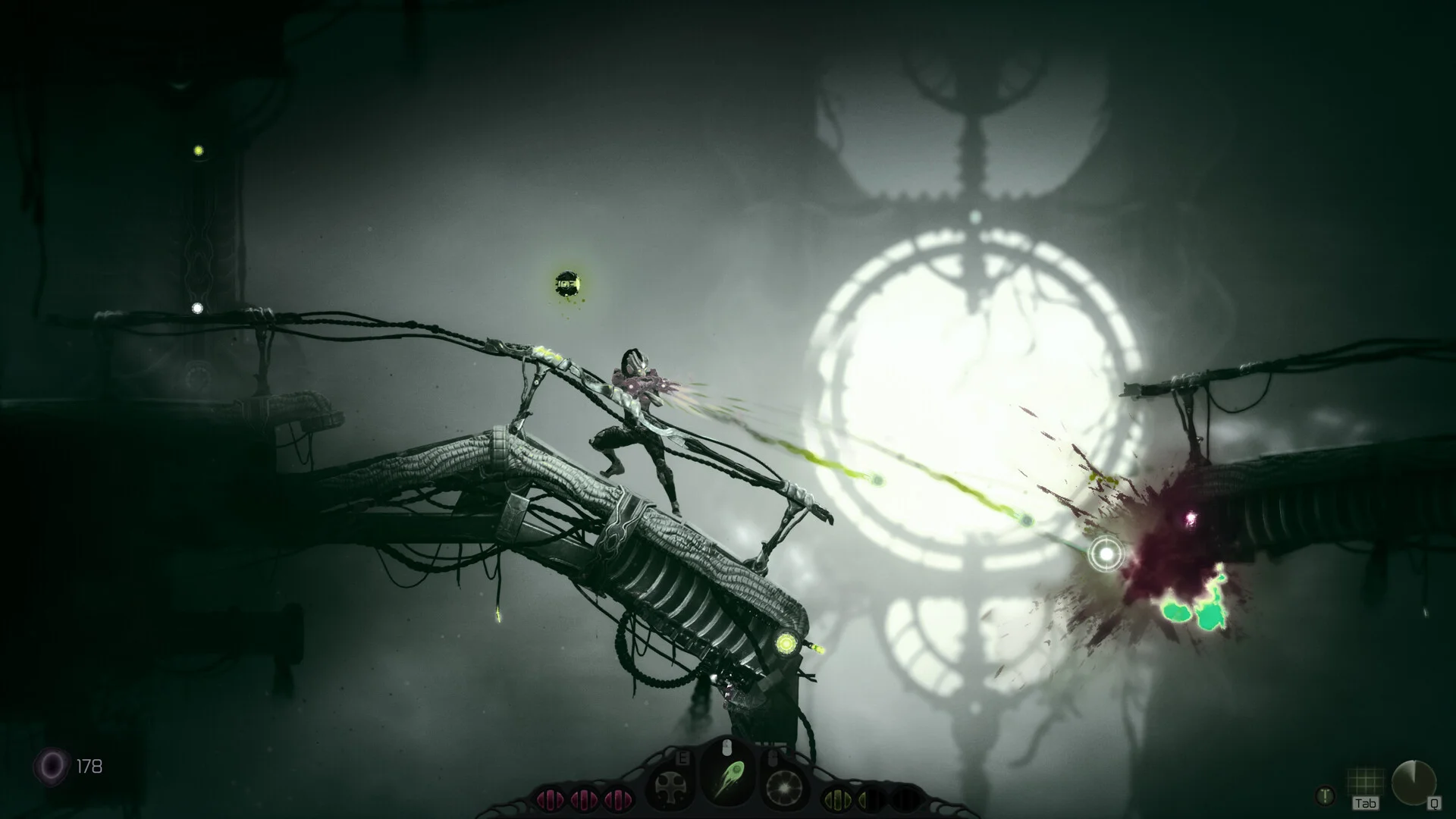
Bosses give that capability a stronger purpose. Ulgoro’s oval arena combines thorn-covered ground with an aquatic section full of traps, forcing you to keep moving away from a colossal creature while accounting for its shots and the terrain. The pleasure comes from having several demands resolve into one immediate task. Aim, find space, avoid the next hazard, keep going. Lock-on helps preserve that concentration by freeing some attention for movement. During these encounters, the planet’s hostility takes a clear shape, and surviving it can feel exhilarating rather than merely costly.
The audiovisual treatment sometimes crowds out that clarity. Darkened screen edges restrict visibility, particles and projectiles fill the available space, and incoming damage brings red flashes. Near death, a loud heartbeat competes with the surrounding sound. Each element communicates pressure, yet their accumulation can make it harder to judge the next action. The quieter environmental audio invites careful listening; the low-health effects can overwhelm it precisely when careful attention matters most. Boss difficulty varies, but sensory congestion adds a kind of strain that learning an attack pattern cannot fully resolve.
Exploration has a related problem with the information it provides. One required route passes through a narrow tunnel revealed by the scanner, in a room that also contains an exit apparently awaiting a later ability. That arrangement can encourage a perfectly reasonable decision to leave and return with an upgrade. Missing the small passage then sends the search outward across the map. Discovering a hidden room usually creates anticipation. Discovering that an overlooked hidden passage was the only way forward can leave the intervening exploration feeling wasted.
The map accurately records rooms and points of interest, yet does less to connect those spaces to directions received in dialogue. Location names are not kept clearly identifiable, so remembering where an objective belongs can become a separate chore.
Fast travel arrives late, then routes trips through a central hub whose destination portals are poorly identified. Meanwhile, enemies return as areas are revisited. These decisions gradually change the feeling of a return trip. A corridor that once invited investigation becomes another encounter to repeat while trying to recover the thread of a mission.
The scanner’s handling of locked doors makes that lost momentum especially tangible. A door can remain marked as examined after its first scan, then require another scan once the correct key has been acquired. That means fighting through the returning creatures, reaching the same doorway, and asking the drone to inspect something it has already told you it inspected.
The Review
Moadra
Moadra makes you want to understand its hostile planet, then gives that curiosity a physical reward as your changing body reaches previously inaccessible places. The scanner, uneasy atmosphere, and exhilarating boss encounters give Gloomsoft’s debut a personality worth seeking out. Unclear directions and awkward return trips repeatedly interrupt that fascination, while uneven resource balance weakens the transition from vulnerability to confidence. There is plenty here to reward patient explorers, provided they can tolerate some unnecessary searching.
PROS
- Scanner connects discovery with the expedition’s history.
- Visible mutations make progression feel physical.
- Ulgoro’s arena delivers exhilarating combat.
- Flexible upgrades encourage experimentation.
- Environmental sound sustains unease.
CONS
- Required routes can be poorly communicated.
- Awkward fast travel makes backtracking repetitive.
- Early energy scarcity gives way to softened danger.
- Dense effects can obscure combat information.