




























Faint piano music proves useful in “Death on the Aether,” the fourth-season premiere of The Chelsea Detective. Buried in a murdered man’s final recording, it gives DI Max Arnold something to connect with his knowledge of music and the riverside venue where the victim worked. Adrian Scarborough’s detective gets to use an interest that could easily have remained decorative character furniture. The pleasure lies in following the connection: a sound becomes a question, and the question gives the investigation somewhere to go. Max’s record collection has earned its floor space.
The staffing agency supplies another productive uncertainty. Its murdered employee apparently arrived with excellent credentials, yet the owner struggles to explain how his assumed identity survived her checks. That discrepancy matters before the detectives know everything behind it. Identity research, sound analysis, and airline passenger information give the inquiry several practical routes, with DC Jess Lombard and DC Connor Pollock contributing to the work. Max can make an intuitive connection without reducing everyone around him to an audience for the explanation. The case needs colleagues who check things.
Across four feature-length investigations, that distribution of attention helps sustain the series’ unhurried manner. The premiere moves from a death linked to an exclusive Thames auction into the concealed activities of an undercover journalist. Its changing explanations provide enough movement to accommodate conversations away from the evidence. Seasoned mystery viewers may recognize the direction of travel, but the intermediate steps still offer something to inspect. A ninety-minute procedural can survive a guessed culprit. It has a harder time surviving an hour in which nobody asks a useful question.
The police initiative encouraging better work-life balance provides this season with a nicely economical character scene. Max suspects an attempt to save on overtime; DS Layla Walsh has a less easily resolved reason to stay late. Following a breakup, she is avoiding her new flat. The same workplace discussion therefore carries an administrative joke and a private difficulty, without requiring the episode to halt for a separate explanation of Layla’s unhappiness. Going home sounds admirably healthy until home is the place you are trying not to think about.
Vanessa Emme makes Layla’s ability to challenge Max feel compatible with their professional trust. Their exchanges allow irritation and affection to coexist, keeping the partnership from settling into respectful agreement. Scarborough’s caution becomes especially useful when Max reconnects with Roz Chambers. A man comfortable patiently investigating somebody else’s evasions finds his own romantic hesitancy harder to address. With Astrid now in Germany, the obstacle is the awkward business of making himself available. Scarborough gives that reluctance enough weight to make a phone call feel like an event.
The bicycle metaphor could use a lighter touch. Max’s attempts to repair it fit his houseboat routine and his preference for working through problems himself. When Roz’s conversation connects replacing the bicycle with accepting personal change, the writing does some interpretation the audience could manage unaided. Aunt Olivia’s interruptions are livelier because they introduce friction. Her birthday mugging pulls at Max’s attention, while her acquaintance with the family in “The 13th Earl” lets her intrude on an investigation with actual social credentials. Frances Barber gives Max the additional burden of dealing with someone who remembers him before he had professional authority.

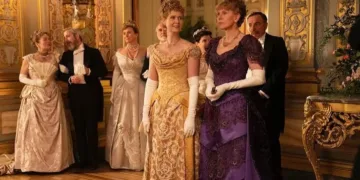
“The 13th Earl” also finds an episode structure inside its aristocratic setting. A historical gambling scene precedes present-day cards, debts, violence, and a missing Earl. The opening establishes an echo between inherited prestige and repeated behavior; the family has preserved its appetite for trouble with impressive care. The Earl’s converted-church home gives the case a memorable location, while the relatives’ competing interests supply reasons to keep revising the investigation. The period material earns its place by setting up conduct that persists into the present. The wigs have changed. The judgment remains questionable.
“Beauty Costs” works on a smaller domestic scale. Tension between salon colleagues precedes the discovery of owner Sonia Blessing’s body upstairs, and a waiting bottle of prosecco suggests a visitor she expected to welcome. That detail turns hospitality into evidence without needing an elaborate explanation. Business disagreements then compete with secrets from Sonia’s past. Alongside those suspicions, Tara Mason’s anxiety and her husband Piers’s controlling behavior give the episode a harsher register. His apparent care becomes another interaction the viewer must scrutinize, making the case’s social encounters uneasy even before their investigative relevance is settled.
There is some repetition beneath the changes of address. Both the premiere and the salon investigation redirect attention through concealed identity, revising the audience’s understanding of a person whose background seemed established. The device is functional, and the circumstances differ, but its recurrence makes the season’s mystery construction easier to recognize. Chelsea’s attractive interiors cannot supply all the variation by themselves. The most useful details are the ones that affect access and expectation: who passed a staffing check, who was invited upstairs, who can call on an old family acquaintance. Those arrangements give the detectives something to disturb.
“The Petrov Extension” makes a more substantial adjustment by carrying the investigation from a Chelsea architectural awards event to a disputed university building project in Cambridge. A further killing expands the inquiry, but the division of work is the more interesting change to the regular format. Max returns to London while Layla remains in Cambridge, working with detective relative Martha McGuire. The familiar partnership no longer occupies the same conversational space. Layla’s scenes now have a different colleague to play against. How much of her easy rhythm with Max depends on having him within interruption distance?
The Chelsea Detective Season 4 premiered on Acorn TV and BBC on August 3, 2026. Created by Peter Fincham, the hit British mystery series follows Detective Inspector Max Arnold as he solves complex murder cases across the affluent London borough of Chelsea.
Where to Watch The Chelsea Detective Season 4 Online








Full Credits
Title: The Chelsea Detective Season 4
Distributor: Acorn TV / BBC
Release date: August 3, 2026
Rating: TV-14
Running time: 88 minutes per episode
Director: Brian Kelly, Richard Signy, Audrey Cooke
Writers: Peter Fincham, Glen Laker, Liz Lake
Producers and Executive Producers: Peter Fincham, Catherine Mackin, Bea Tammer, Wolfgang Feindt, Caroline Stone, Ella Kelly, Glen Laker, Lauriel Martin, Charlotte Rutherford
Cast: Adrian Scarborough, Vanessa Emme, Peter Bankolé, Lucy Phelps, Sophie Stone, Anamaria Marinca, Frances Barber
Director of Photography (Cinematographer): Rob Kiztman, Pete Rowe, Annemarie Lean-Vercoe, Tom Hines
Editors: David Head, David Barrett, Xavier Russell, Rob Platt, David L’Anson
Composer: Ian Arber
The Review
The Chelsea Detective
The Chelsea Detective remains good company because its investigations give everyone something useful to do. Scarborough and Emme sustain the pleasure between discoveries, with workplace jokes and private awkwardness fitting neatly into the procedural rhythm. Repeated hidden identities make some plotting familiar, and Max’s bicycle metaphor arrives with instructions attached. Still, these four cases understand the entertainment value of capable people patiently checking a suspicious story.
PROS
- Practical clues and shared investigative work.
- Scarborough and Emme’s affectionate friction.
- Personal stories integrated into episode pacing.
- Cambridge changes the investigative partnership.
CONS
- Repeated concealed-identity devices.
- Overexplained bicycle metaphor.