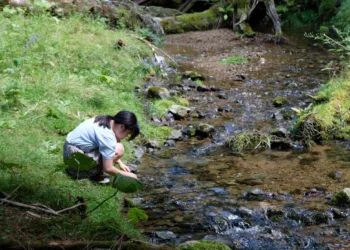















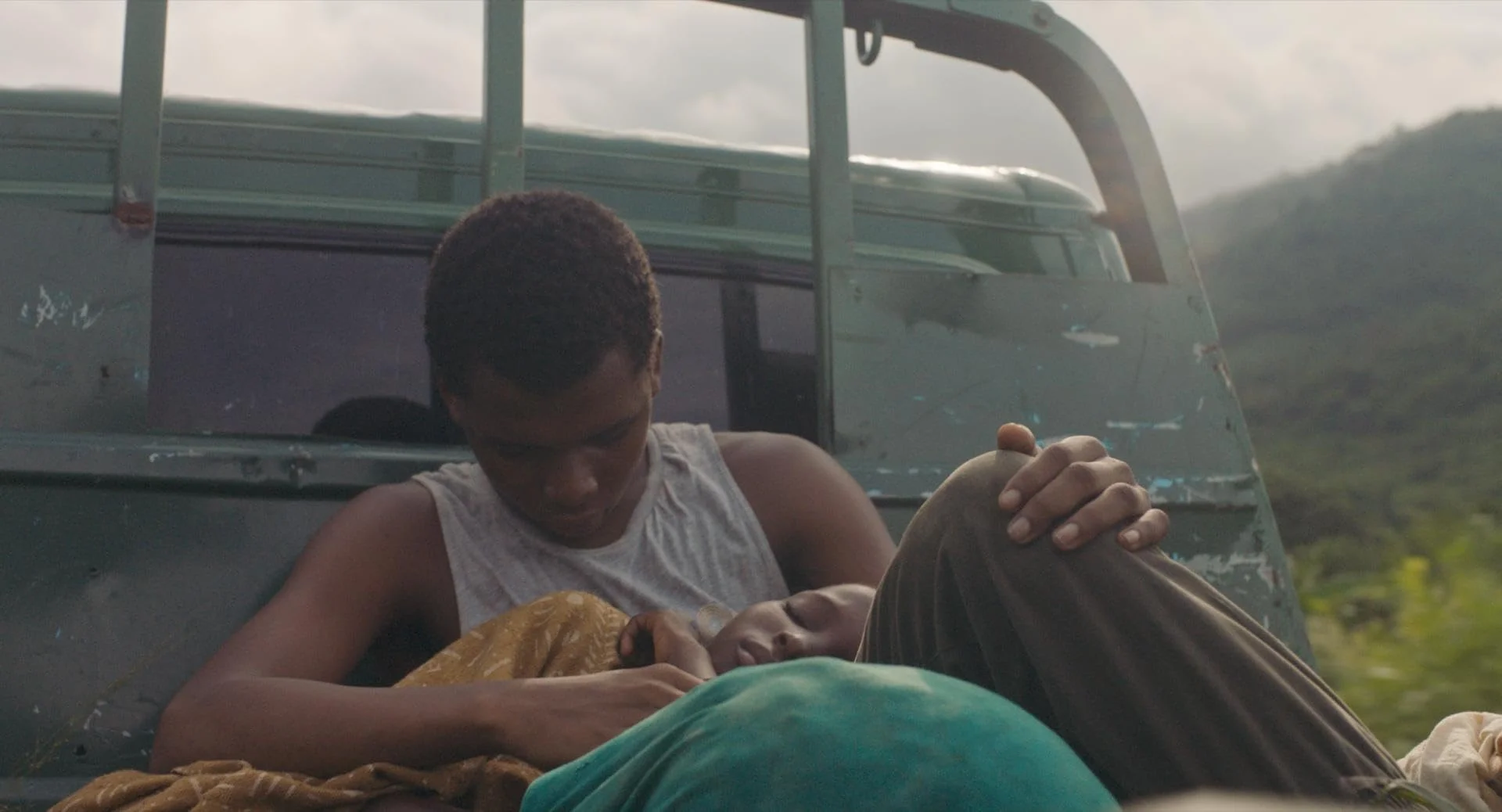

From the roof of a moving train, Owusu and Adobea can see a long way. Cinematographer John Kwame Markin puts the camera at eye level, so the view feels like one the children get to enjoy for themselves. They’ve run away from an orphanage and are headed for Accra, where fifteen-year-old Owusu hopes to find his mother. He has an old photograph to go on. A picture can tell him who he’s looking for, and the train can take him to the right city. For a little while, that feels like a plan.
Look at what happens to that plan in the market. Owusu can show the photograph to people, but the stalls and crowds give him much less room to see who’s around him. The children speak a different language from the people they’re trying to approach, and a boy named Obolo steals their belongings. The change in framing, from wide views that let us take in the countryside to crowded spaces where much of the activity is hard to read, does some of the storytelling here. The same crowd that gives Owusu plenty of people to ask for help gives Obolo cover.
Amartei Armar’s Our Time Will Come gets a lot of mileage out of a simple turn. Owusu goes after Obolo, and for a stretch the boy he can find takes precedence over the woman he can’t. The trail leads to an abandoned building and a group of children led by Ziggy (Emmanuel Wilberforce).
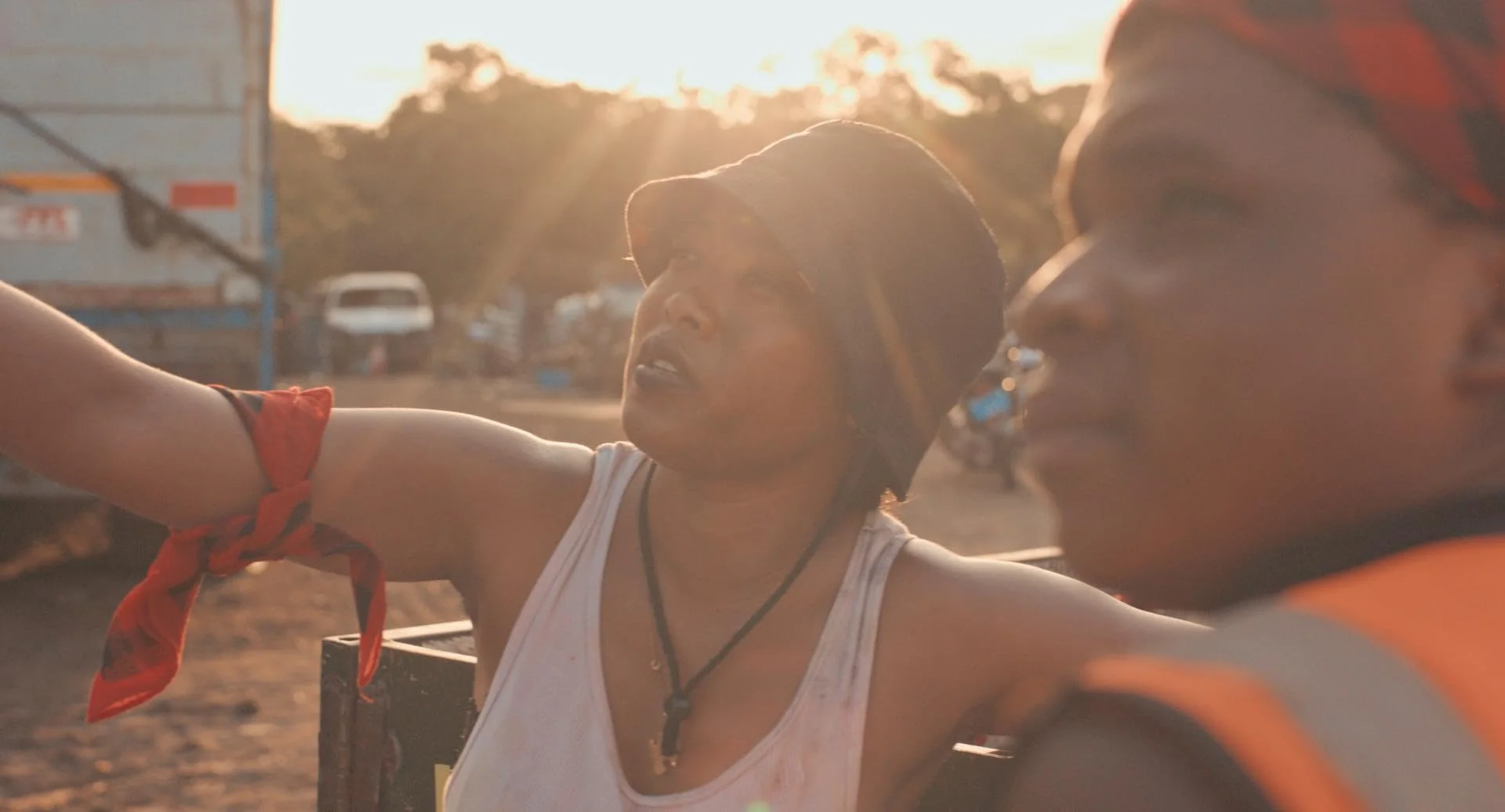
There’s a bit of Oliver Twist in the way a theft introduces a newcomer to a whole society of children. The comparison gets interesting once Ziggy tests Owusu and lets the pair stay. Armar spends time on the jobs that make the group’s hospitality possible. The children sell what they can and carry goods, and a place among them means taking a share of the work.
That shift matters especially for Adobea, who has the same blood disorder her mother had. She and Owusu have grown up as siblings, and Dorothy Adobea Tandoh makes it easy to understand why the girl treats his search as something they’re doing together. Early on, in a dark cave, we hear her calling for him. The darkness gives us very little to go on, so we listen for him with her. Later, Suga (Barbara Yong-Jin) starts looking out for Adobea.
She goes from mocking the newcomers to treating the younger girl with tenderness. I like what that change lets Idrissu Tontie Jr. do with Owusu. Some swagger comes into his performance once there’s another person willing to look after Adobea. You can see how much effort the boy has been putting into seeming older than he is by how quickly he looks fifteen again.
The film has room for that pleasure, and for the rush of its rap performances, even while the children are scraping by. The rap gives the film a beat that comes from people we can see and hear performing. The repeated music montages are less sure-footed. Cutting a stretch of activity into brief pieces and giving them a common pulse can move things along, but Armar returns to the device often enough that the rhythm starts to feel predictable.
Armar is subtler with a black billboard in the background of an Accra scene. One inscription, #ReadTheBill, points to Ghana’s anti-LGBTQ+ Family Values Bill. The other gives the film its Ghanaian Pidgin title, Ego Reach We All, roughly “it will reach us all.” The placement lets the billboard do two things at once.
It belongs to the street the children are learning to live on, and it brings a public claim about family into a film that has spent time watching young people take on its daily obligations. Putting the two inscriptions together also gives the title a different inflection from the hopeful English Our Time Will Come. The Pidgin phrase leaves open what will reach everyone. With that bill on the same sign, the prospect of something reaching you can sound as much like a warning as a promise.
Our Time Will Come premiered on the international film festival circuit in 2026. Directed by Ghanaian-American filmmaker Amartei Armar, the coming-of-age drama follows two young orphans who travel across the Ghanaian countryside to Accra to find their last living relative, only to be drawn into a street gang of youth navigating survival in the city.
Full Credits
Title: Our Time Will Come (also known as Ego Reach We All)
Distributor: MMM Film Sales / La Luna Productions
Release date: 2026 (Festival premiere)
Running time: 1 hour 45 minutes (105 minutes)
Director: Amartei Armar
Writers: Amartei Armar
Producers and Executive Producers: Yemoh Ike, Sébastien Hussenot
Cast: Idrissu Tontie Jr., Dorothy Adobea Tandoh, Emmanuel Wilberforce, Barbara Yong-Jin, Emmanuel Owusu Ofori, O’Bryan Nana Kwame Enyan, Gabriel Narh Addo
The Review
Our Time Will Come
Our Time Will Come makes the distance between a train roof and an Accra market count. From the roof, Owusu can see where he’s headed. In the crowd, finding his mother takes a back seat to finding someone he can trust. Idrissu Tontie Jr. gives that turn its warmth. The moment Owusu has help looking after Adobea, you can see him remember how to be fifteen. The music montages fall into a predictable rhythm, but Amartei Armar knows when to let a performance or a detail in the background do the talking.
PROS
- The shift from open countryside to crowded streets makes the children’s vulnerability tangible.
- Tontie’s performance shows what sharing responsibility gives back to Owusu.
- The work of selling and carrying goods makes the group’s hospitality feel earned.
- The billboard gives the title a political charge without interrupting the story.
CONS
- Repeated music montages make the pacing predictable.