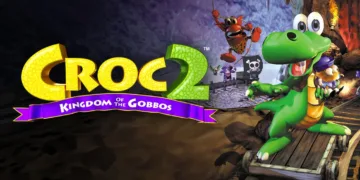

















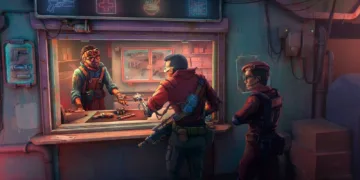
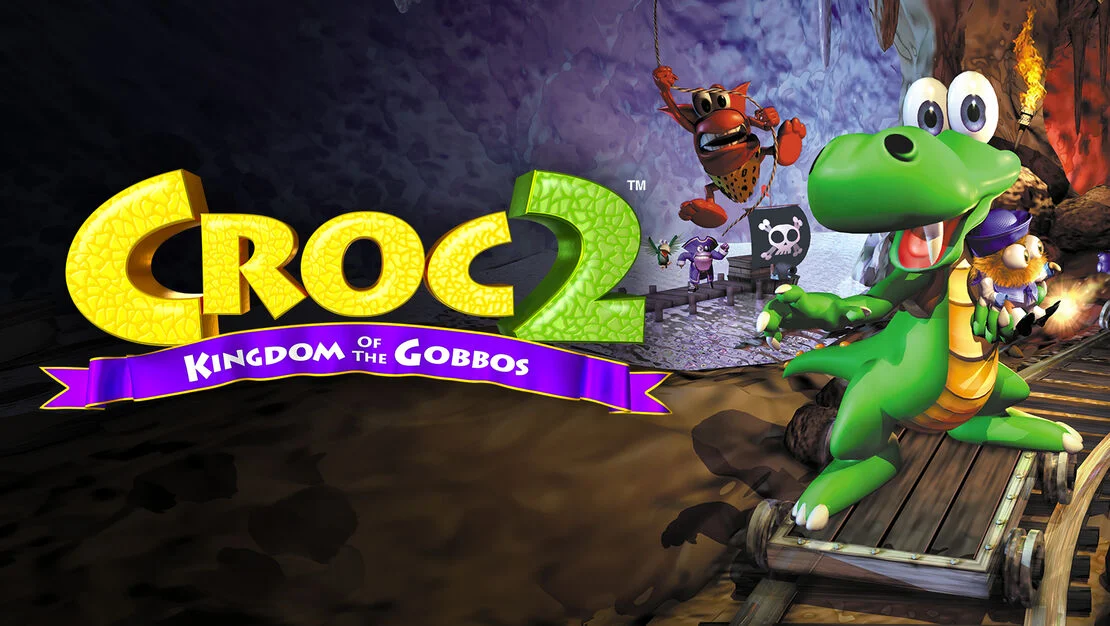

Spend your crystals on extra health in Croc 2: Kingdom of the Gobbos and you may reach the next secret without the equipment needed to collect it. Bouncing gummies and wind-up robots draw from the same funds as permanent health upgrades. The gummies provide extra height; the robots retrieve items beyond Croc’s reach. Buying protection therefore has a small consequence outside combat: an inaccessible collectible can become a reason to remember a stage and return with different supplies.
The five colored crystals hidden within each stage give those return trips a second purpose. Finding the set opens access to a Golden Gobbo, and collecting a hub’s Golden Gobbos unlocks a bonus challenge containing a jigsaw piece. Ordinary crystals keep the shop purchases moving while colored crystals feed this longer chain of rewards. It is an effective arrangement for a platformer built from compact spaces. Searching an awkward corner can replenish useful currency even when the particular secret you came for remains out of reach.
The hubs make managing that search pleasantly flexible. Each connects several standard stages that can be tackled in different orders, so an uncomfortable early challenge can wait while you try another door. Croc’s search for his parents supplies the larger motivation, with the resurrected Baron Dante and his Dantinis creating immediate problems for the Gobbos along the way. Their requests turn the doors into destinations with purposes attached. These are small settlements connecting largely linear courses, and the freedom lies chiefly in choosing your next task and deciding when to revisit an unfinished one.
Within those courses, Croc has a useful interaction between his basic movement and the environments. The ground-pound bounce sends him higher after striking the floor, allowing access to elevated areas and shortcuts through portions of some boss stages. A move initially understood as part of the jumping repertoire becomes a way to reconsider a route. That matters in a game asking players to cover familiar ground repeatedly. Returning with a purchased tool offers one kind of progress; recognizing that an existing move can shorten the trip offers another, rooted in understanding the controls.
The narrow level layouts limit how far that understanding can develop. Collapsing platforms, spikes, and icy floors create straightforward tests, with relatively little room to improvise around them. The greater variety comes from changes to the task itself. Returning baby Gobbos to their crib without making them cry asks for a different kind of care from leaning and jumping through a track section. Collecting water to extinguish fires gives traversal a simple preparatory step. These activities keep Croc occupied in different ways, even when the surrounding routes offer few meaningful branches.
Some of those diversions hold up less comfortably under close attention. Rope swinging and the snowball activity introduce awkwardness into actions that require judging momentum, while the track sections place clearer emphasis on timed inputs. The remaster’s right-stick camera is a useful aid to inspecting spaces and lining up movement, though it cannot resolve the behavior of every individual activity. Croc 2 had already abandoned its predecessor’s tank controls in its original release. The camera improvement deserves credit without attributing the sequel’s entire movement overhaul to this edition.

The Gobbos themselves expose a different problem with repeated traversal. Approaching them automatically triggers conversation, including exchanges the player has already encountered. On a first visit, their requests explain the local situation and give helping them an immediate purpose. On subsequent crossings, the same trigger interrupts a route whose purpose is already understood. The game remembers enough to build a collection chase around returning, yet its conversation behavior treats proximity as renewed interest. Their chatter becomes irritating through repetition rather than through any fundamental failure of their friendly characterization.
Optional trophies put extra pressure on that arrangement. Boss conditions can require a damage-free victory or success within the first three attack opportunities. Leaving after a failed attempt can mean passing a conversation trigger before reentering and reaching the encounter again. Those interruptions add time without helping the player practice the action that went wrong. The boat-race trophy provides a clearer example of demanding execution: leading at the end of lap one, then winning the three-lap race, makes early shortcut use essential. Learning that route has a purpose. Rehearing a nearby Gobbo has very little bearing on the next attempt.
Several remaster features show a better understanding of the cost of repetition. The Remastered gameplay preset adds automatic checkpoints and lets players revisit a stage for missing collectibles without requiring another complete run to its exit. That second change is especially valuable here. A return trip can remain focused on the unresolved secret instead of repeating everything after it. The shop’s equipment requirements still create preparation and backtracking, but the game reduces the amount of unrelated work attached to putting a previous decision right. Classic 1999 and Classic 2000 presets remain available as distinct historical gameplay configurations.

Visual customization operates separately, with enough control to avoid making the entire presentation a single preference. Updated models, textures, and draw distance can be adjusted individually, so a smoother Croc can occupy surroundings retaining older visual settings. Switching between classic and updated graphics makes the changes easy to inspect. The practical benefit is the ability to keep particular characteristics without accepting every limitation of the original presentation. Extending visibility and controlling the camera address how a space is read, while choosing an older character model can remain a matter of taste.
The Croc2pedia extends that interest in inspection beyond the finished game. Interviews and promotional material sit alongside development assets, and cut content can be examined with a 3D camera. The soundtrack collection includes music from the Game Boy Color version, giving that separate interpretation a place in the package too. Exploring unused material is particularly valuable because it permits attention at the player’s pace: a discarded space can be studied rather than glimpsed in a video montage.
Some archive material is available immediately, while further entries unlock through gameplay challenges. That creates another reward for learning routes and pursuing collectibles, carrying the main game’s completion loop into its historical material. A player interested in examining Croc’s development may therefore have to demonstrate skill in the game before examining all of it. An option to browse its contents freely would better serve someone arriving with curiosity rather than a completion checklist.
The Review
Croc 2 Kingdom of the Gobbos
Croc 2: Kingdom of the Gobbos gives collecting a practical purpose: crystals fund survival and exploration, while familiar stages reward better preparation and movement knowledge. Varied objectives and considerate replay options sustain that loop, though narrow routes, awkward diversions, and repeated Gobbo conversations limit its appeal. The customizable presentation and substantial development archive make this a thoughtful remaster, even where the underlying game remains cumbersome.
PROS
- Useful spending choices and layered collectible rewards
- Flexible stage order and varied objectives
- Improved replay options and adjustable visuals
- Extensive development archive with inspectable cut content
CONS
- Repeated proximity-triggered conversations
- Awkward rope swinging and snowball handling
- Narrow routes restrict improvisation
- Some archival material requires gameplay unlocks