




























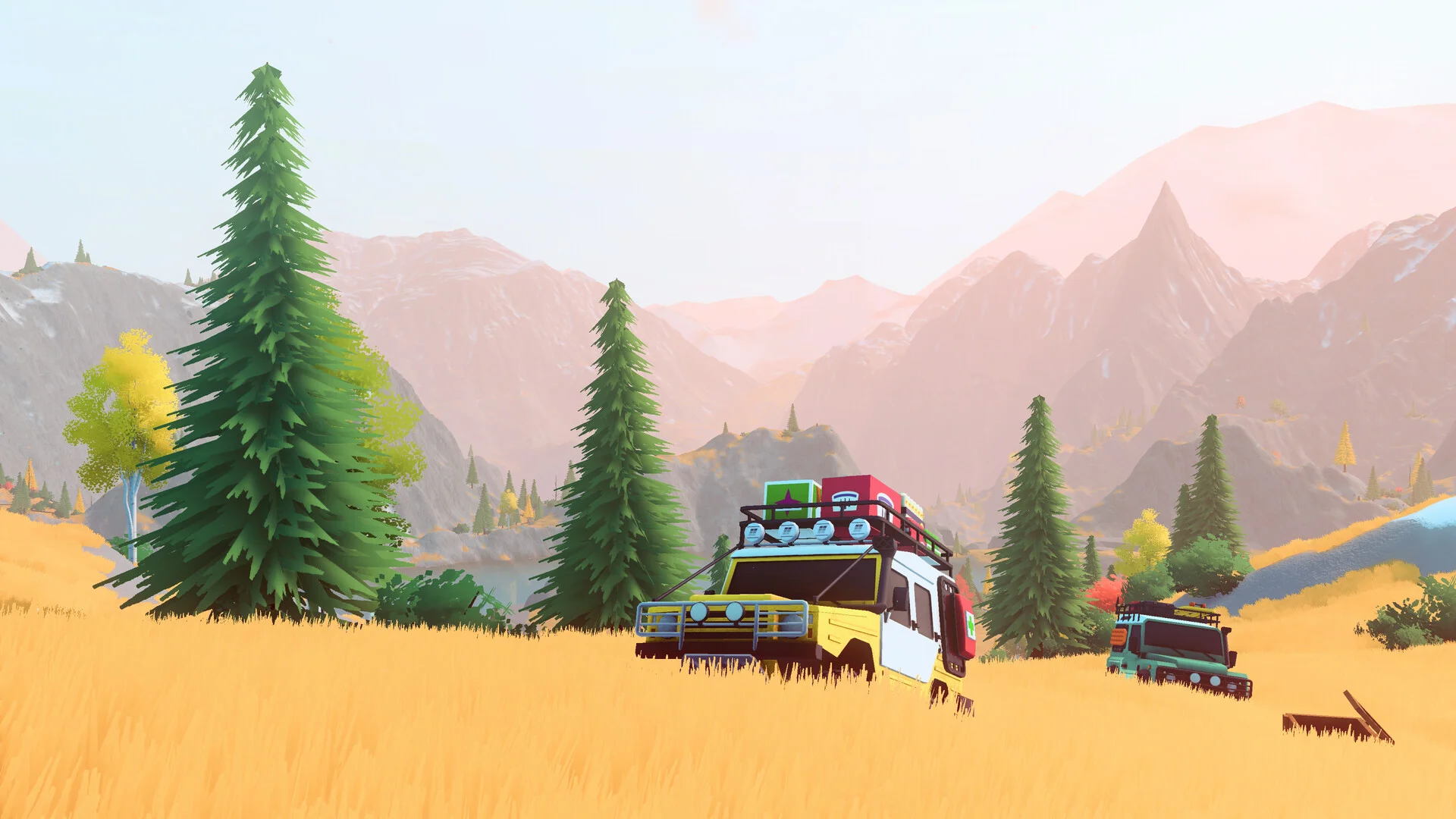

Funselektor has kept the clean shapes and soft colors of Art of Rally, then changed what a good driver is trying to achieve. Carrying speed through a stage gives way to picking an approach that will get a vintage 4×4 up a rocky slope. In over the hill, a promising shortcut can end with the vehicle wedged between trees, and pressing harder on the accelerator rarely improves the situation. There is no stage time to rescue. You can stop, examine the ground, and attempt something less ambitious.
That adjustment brings the driving closer to MudRunner and SnowRunner. Mud reduces grip, water slows progress, and low-range gearing helps tackle ground that resists a casual approach. The winch is familiar equipment for anyone coming from those games, with automatic operation for a quick attachment and manual control for a finer choice.
Yet the recovery structure keeps these problems approachable. Discovered cabins provide repairs and fast travel, so an overturned or stranded vehicle need not turn an evening into a prolonged salvage operation. The challenge lies in getting through a particular stretch, with a forgiving escape available when patience runs out.
The driving benefits from retaining enough physical resistance to make those decisions matter. Rocks unsettle the vehicle, steep inclines expose its limitations, and repeated impacts damage it. An automatic gearbox takes some work away without removing the need to choose between high and low range.
Occasionally, though, the response is harder to anticipate than it should be. A log can provoke an awkward reaction, or a winch can pull at an unexpected angle. The simplified scenery can make sheer rock and pools of water difficult to identify at first, too. Those moments interrupt the process of learning what the vehicle can reasonably handle.
Across three Canadian areas and two Algerian ones, the landscape supplies a useful spread of driving problems. Forest routes put water, stumps, and protruding rocks in the way; Algeria trades that congestion for sand and exposed rock. Weather prevents these spaces from remaining entirely familiar.
Accumulating snow makes the ground slippery and covers obstacles, changing the information available when choosing a route. Darkness gives headlights a practical purpose. Funselektor’s stylization works particularly well when changing light and weather transform those broad, uncomplicated surfaces. A snowy slope can demand renewed attention even after its location has ceased to be a discovery.
The acoustic guitar and folk-influenced soundtrack helps make that slow attention pleasant. It sits comfortably alongside engine noise and the changing sound of the tires, supporting stretches where little happens beyond steady movement. That matters because the activities scattered through the map cannot always sustain curiosity on their own.
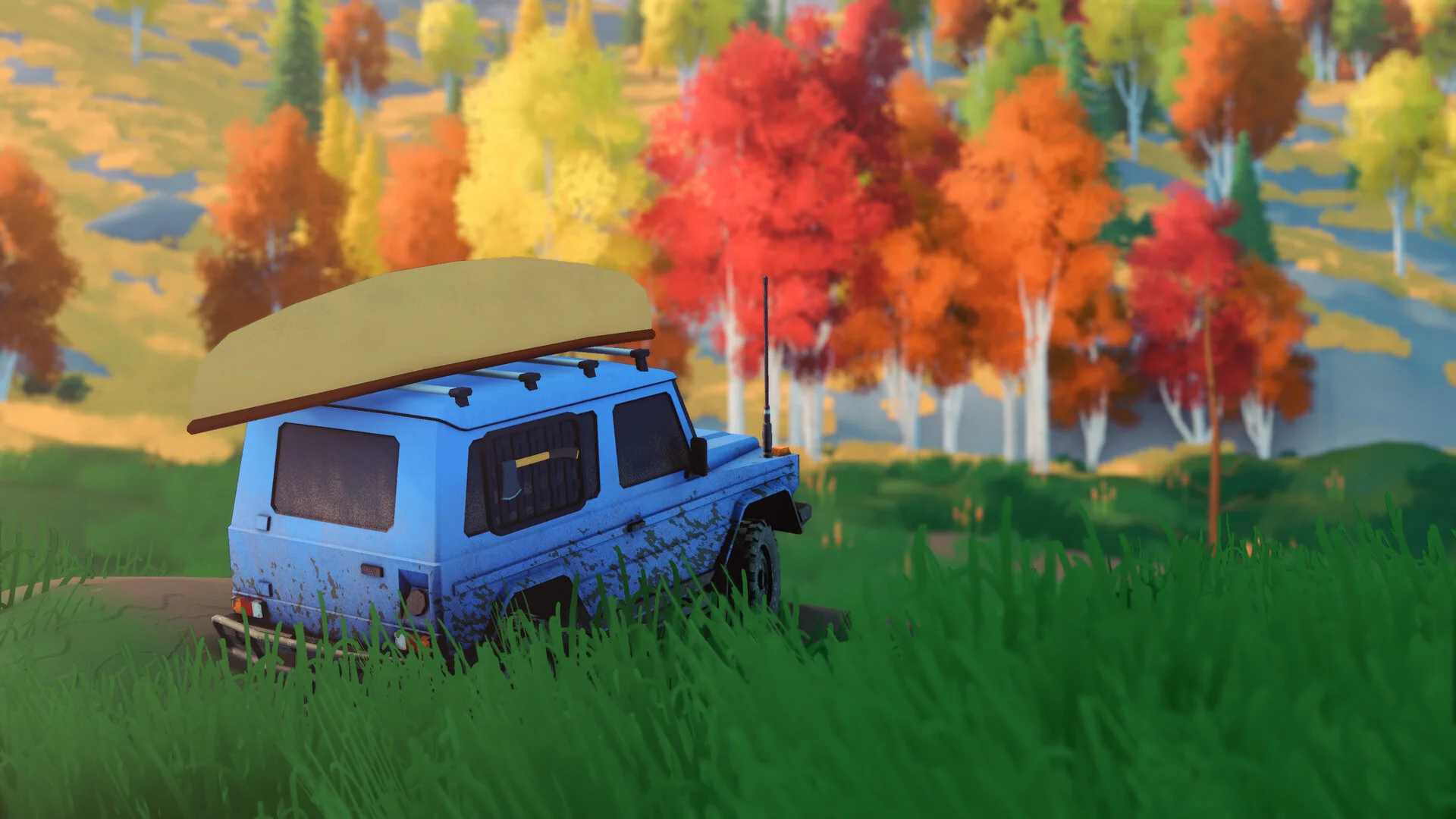
Clearing fog reveals question marks that lead to cosmetic crates, viewpoints, recovery tasks, and Challenge Trails. Photographing animals encourages a different pace of observation, while extracting a fallen meteorite gives the winch an unexpected job. There are worthwhile interruptions to the routine, although crates and scenic stops become familiar rewards quite quickly.
This is where the departure from Art of Rally becomes harder to sustain. A stage time supplies an obvious reason to revisit a route and refine a performance. Here, the attraction rests on choosing an excursion and enjoying what happens along the way. The terrain often supports that freedom better than the destinations do.
Reaching another cosmetic crate can involve an absorbing climb, yet the reward provides little fresh interest once its basic function is understood. As the remaining markers become farther apart, solitary exploration can feel thin. The problem is the limited variety at the end of those drives, especially when the road itself has stopped presenting new difficulties.
Vehicle progression could provide a stronger reason to keep experimenting. Discoveries and activities earn Pebbles for improvements to engines, tires, suspension, and winches. Planks and a jack expand the ways a difficult passage or an overturned vehicle can be handled.
These upgrades fit the driving: a slope that defeats the current setup gives a better engine or improved traction an understandable purpose. Cosmetics serve a separate pleasure, allowing a favorite off-roader to acquire a particular look. Once unlocked, those visual items can be used across vehicles, making a change of appearance straightforward.
Changing the underlying vehicle involves a slower commitment. Models have distinct characteristics, but each requires its own upgrade spending, and new vehicles and Pebbles arrive slowly enough to discourage an early switch. The Ding captures the problem neatly.
It lacks power on steep climbs and can tip, yet remains capable enough to carry a substantial stretch of exploration. Continuing to improve it can seem safer than spending limited funds on an unfamiliar replacement. For a game that encourages drivers to head in any direction, the garage gives relatively little financial room to discover which vehicle they prefer through use.
Online cooperation, supporting up to four players, gives the existing tools a stronger purpose before the garage has supplied that variety. The Challenge Trails are especially effective because they concentrate the terrain into demanding checkpoint routes.
Broken docks and deteriorating buildings require careful crossings; rocky paths and snowy slopes create opportunities for a mistake to become everyone’s concern. Conversation makes the quieter drives sociable, but these passages ask companions to watch each other and respond. They supply the shared task that a convoy collecting separate cosmetics can lack.
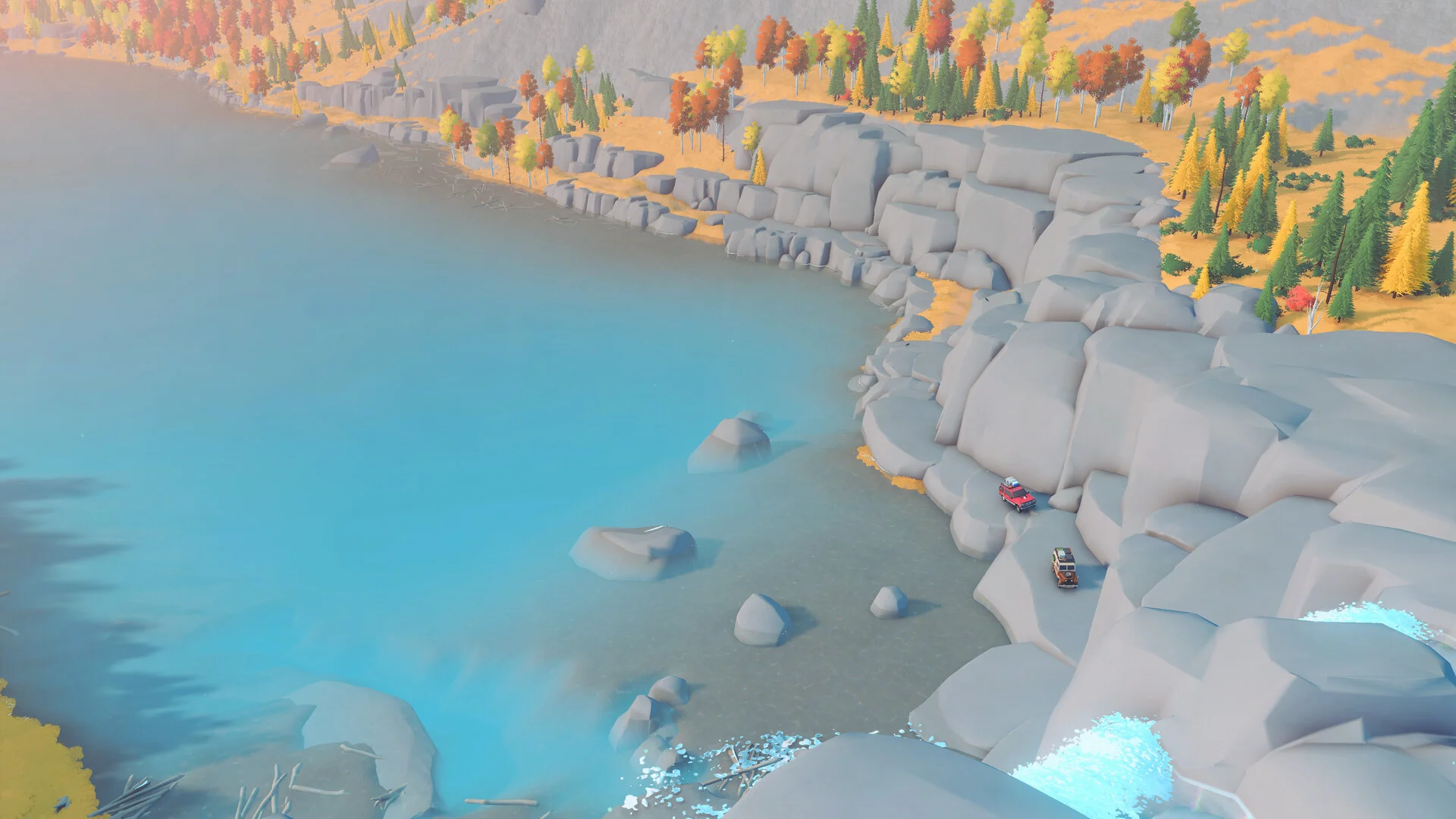
Winching changes accordingly. The recovery tool familiar from the Runner games becomes a means of dealing with another driver’s predicament, sometimes drawing several vehicles into the same precarious rescue. The equipment remains simple enough that the situation is easy to understand, even as the rescue becomes awkward.
It can support mischief just as readily: attaching a cable to someone attempting a delicate crossing offers an immediate temptation to interfere. These interactions give repeated tools fresh uses through the behavior of the group, without requiring a new reward at every destination.
Keeping that group together takes some discipline, since discovery is tracked individually. Splitting up may reveal different corners of the map, but it can leave companions with mismatched lists of completed activities. That makes cooperation slightly less spontaneous than the open landscape initially suggests. Staying close preserves the pleasure of finding and tackling a difficult route together; wandering independently can turn the next meeting into a wait for someone else to catch up.
The Review
over the hill
over the hill makes a convincing move from Art of Rally’s timed competition to patient off-roading. Its terrain gives familiar winching and traction problems an approachable form, while cooperative Challenge Trails turn recovery into lively shared work. Repetitive destinations and slow vehicle progression leave solo exploration short of sustained variety, and occasional awkward physics interrupt the pleasure of learning a route. For a convoy willing to stick together, the difficult crossings provide the strongest reason to keep driving.
PROS
- Accessible driving with satisfying terrain challenges
- Weather that changes visibility and driving conditions
- Forgiving repairs and recovery options
- Cooperative trails that reward teamwork
CONS
- Repetitive discoveries weaken solo exploration
- Slow progression discourages vehicle experimentation
- Occasional unpredictable physics
- Individual discovery tracking complicates group play







