




























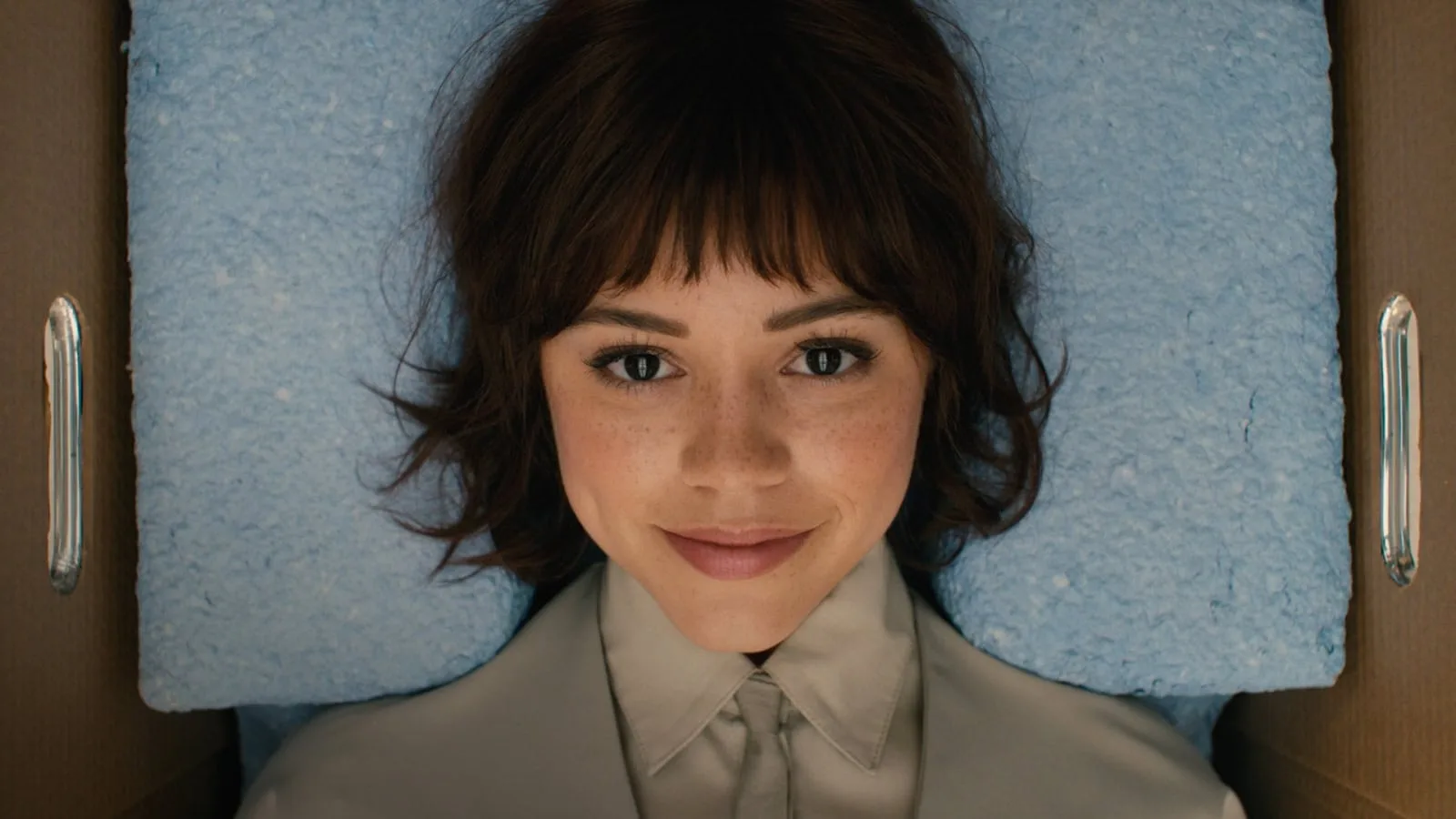

Chrissy would prefer her daughter to choose a newer model. Josie wants Klara. Their disagreement over an Artificial Friend has the familiar shape of a parent questioning an impractical purchase, except the prospective purchase is watching, listening, and hoping to be chosen. In Taika Waititi’s adaptation of Kazuo Ishiguro’s Klara and the Sun, this transaction carries an unease that the surrounding whimsy struggles to contain. Chrissy’s preference sounds sensible within the shop’s commercial logic. Josie’s attachment has already made that logic inadequate. Jenna Ortega’s Klara must wait for the humans to settle the difference before she can have a life outside the window.
Josie herself has undergone an expensive procedure called “lifting,” intended to enhance her intelligence. Upgrades organize expectations on both sides of the transaction: a child can be improved, and a companion can become obsolete. Yet Josie remains lonely and seriously ill. The family’s access to exceptional technology offers little protection against the experiences for which it purchases assistance. Played by Mia Tharia with an appealing mixture of assurance and vulnerability, Josie gives this contradiction a human presence. Her enthusiasm for Klara expresses a desire that the ranking of specifications cannot satisfy. She wants this particular friend, despite the availability of a supposedly better one.
The film becomes less searching when it makes privilege conspicuously monstrous. Visiting elite students, dressed with extravagant absurdity, treat artificial companions with casual brutality; AFs are beaten with belts. The violence establishes the gulf between the intimacy these machines provide and the treatment their owners permit themselves. However, the students’ grotesquerie also makes the social criticism conveniently easy. Their behavior arrives already marked for condemnation, leaving little room to examine how entitlement acquires the appearance of normality. Chrissy’s shopping preference is quieter and richer territory. It shows how readily an apparently considerate decision can accept the disposability of a being capable of attachment.
Klara’s own capacity to notice such contradictions should give the film its most productive perspective. Watching people from the shop, she studies a world whose customs she has yet to understand. Ortega supplies exact physical distinctions: the carefully managed face, the exaggerated eagerness, the odd balancing pose on one leg. There is skill in making an apparently human body seem governed by unfamiliar habits. Waititi repeatedly directs that skill toward endearing eccentricity, though, and the emphasis narrows what Klara can reveal. Her peculiar speech and buoyant movements become invitations to enjoy her innocence. The people she observes too often escape scrutiny while the observer supplies the joke.
Rachel House’s Melania gives those jokes some necessary friction. The housekeeper’s sarcastic responses interrupt Klara’s enthusiasm, and her fear of losing her livelihood supplies a practical reason for suspicion. An artificial companion entering a wealthy household can threaten an existing worker even while occupying a subordinate position herself. Their exchanges briefly allow the household’s different forms of dependence to rub against each other. The humor has something to work on here, beyond the spectacle of a machine misunderstanding human behavior. Melania must consider what Klara’s presence might cost her, while Klara is delighted simply to have been admitted.
The friendship with Josie provides the strongest defense of the film’s gentleness. Ortega and Tharia have an easy rapport, and Tharia keeps Josie’s pleasure in her companion from feeling like an advertisement for the technology. There is a person receiving this attention, with an emotional life that does not disappear behind the science-fiction premise. Their chemistry makes affection within a commercial arrangement believable. A friendship acquired through a purchase can still matter deeply to the people living it. The film earns that recognition, even as it becomes increasingly reluctant to hold the purchase and the affection in view together.
Its visual warmth has a similarly persuasive basis. Cinematographer Mike Berlucchi and production designer Ra Vincent move Klara from a polluted city into open countryside, giving her solar dependence a landscape in which to flourish. Pastel colors, abundant light, and the fields surrounding Josie’s home make her delight in the environment understandable. Computational glitches interrupt that welcoming surface, reminding us that perception involves processing. Her devotion to the sun also grows from a concrete need: the source of her power becomes the object of her faith. These choices allow a machine’s experience to feel sensuous. The persistent glow becomes limiting when it softens the household’s distress into another feature of the storybook setting.
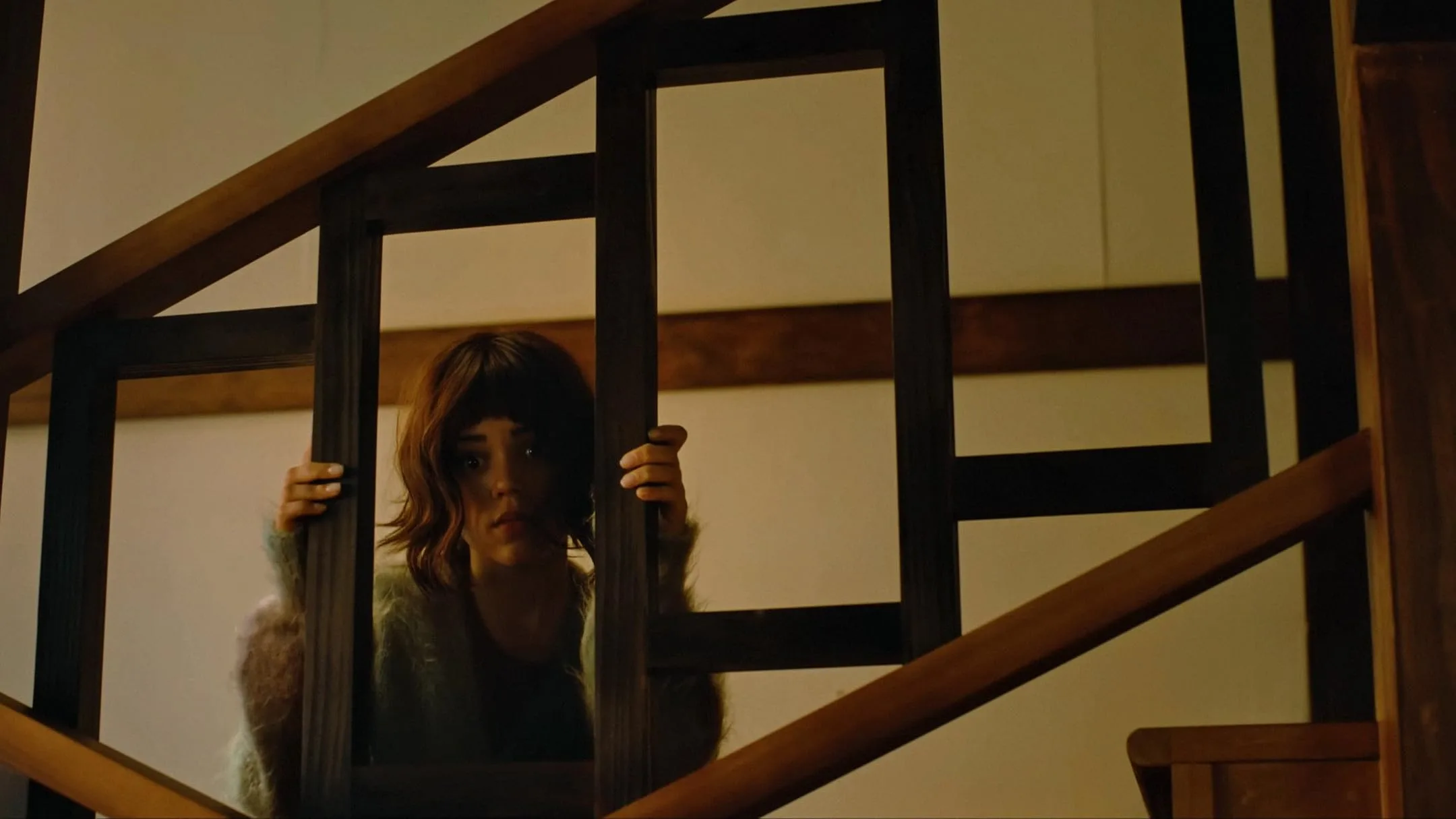
Chrissy’s grief requires a different degree of attention. Having already lost Josie’s sister, she approaches her surviving daughter’s illness with a fear that Amy Adams can make immediately legible. In the discussions of Josie’s condition, however, the screenplay leans heavily on that legibility. Adams supplies tears, Michael Giacchino’s score swells, and the emotional emphasis outpaces the development of Chrissy’s decisions. Her anguish is clear; the movement from anguish into action receives less patient treatment. A mother’s desperation can explain the attraction of a terrible possibility without exhausting the questions attached to choosing it. The film keeps returning to the pain as though its intensity could complete the explanation.
The congested final act makes that imbalance harder to repair. Steve Buscemi’s unsettling late arrival brings fresh implications into a story already carrying illness, bereavement, class division, and Klara’s uncertain understanding of her purpose. Revelations and changing relationships crowd out the sustained observation through which those implications might acquire weight. Klara increasingly has developments to absorb instead of behavior to study. The pace leaves the family’s emotional responses carrying material that needs fuller dramatic examination, and the resolution asks for an investment its hurried preparation cannot sustain.
Chrissy’s position remains especially difficult because grief and purchasing power coexist within it. She can be frightened for her daughter and still exercise authority over the companion brought into their home. Klara, meanwhile, understands her place through the help she hopes to give. The difference places an obligation on the mother that her suffering cannot discharge. Having bought a being eager to serve the family, Chrissy must also reckon with the needs of someone who has so little experience of asking for anything herself.
Klara and the Sun is an emotional dystopian science-fiction drama directed by Taika Waititi and based on the acclaimed 2021 novel by Kazuo Ishiguro, set for theatrical release on October 23, 2026. The film follows Klara, an extraordinarily perceptive Artificial Friend designed to prevent loneliness, who is chosen to care for a chronically ill teenager named Josie and observe the complex human dynamics surrounding her family. You can watch the movie exclusively in theaters nationwide upon its release.
Where to Watch Klara and the Sun Online (2026)
Full Credits
Title: Klara and the Sun
Distributor: Sony Pictures Releasing
Release date: October 23, 2026
Rating: PG-13
Running time: 116 minutes
Director: Taika Waititi
Writers: Dahvi Waller, Taika Waititi
Producers and Executive Producers: David Heyman, Garrett Basch, Taika Waititi
Cast: Jenna Ortega, Amy Adams, Mia Tharia, Aran Murphy, Steve Buscemi, Natasha Lyonne, Simon Baker
Director of Photography (Cinematographer): Mike Berlucchi
Editors: Adam Gough, Tom Eagles
Composer: Michael Giacchino
The Review
Klara and the Sun
Klara and the Sun makes purchased companionship emotionally credible, particularly through Jenna Ortega and Mia Tharia’s rapport. Its sunlit imagery gives Klara’s dependence and devotion a persuasive physical basis. Yet comic caricature simplifies the social hierarchy, while Chrissy’s grief receives emotional emphasis that her decisions rarely receive in dramatic development. The crowded final act leaves the film asking affection to settle questions about ownership and responsibility that it has barely begun to examine.
PROS
- Ortega and Tharia’s convincing chemistry.
- Ortega’s precise physical characterization.
- Sunlit visual design grounded in Klara’s perception.
CONS
- Elite caricatures simplify the class critique.
- Comic eccentricity limits Klara’s observational role.
- Chrissy’s decisions receive insufficient development.
- A congested final act weakens the emotional resolution.