




























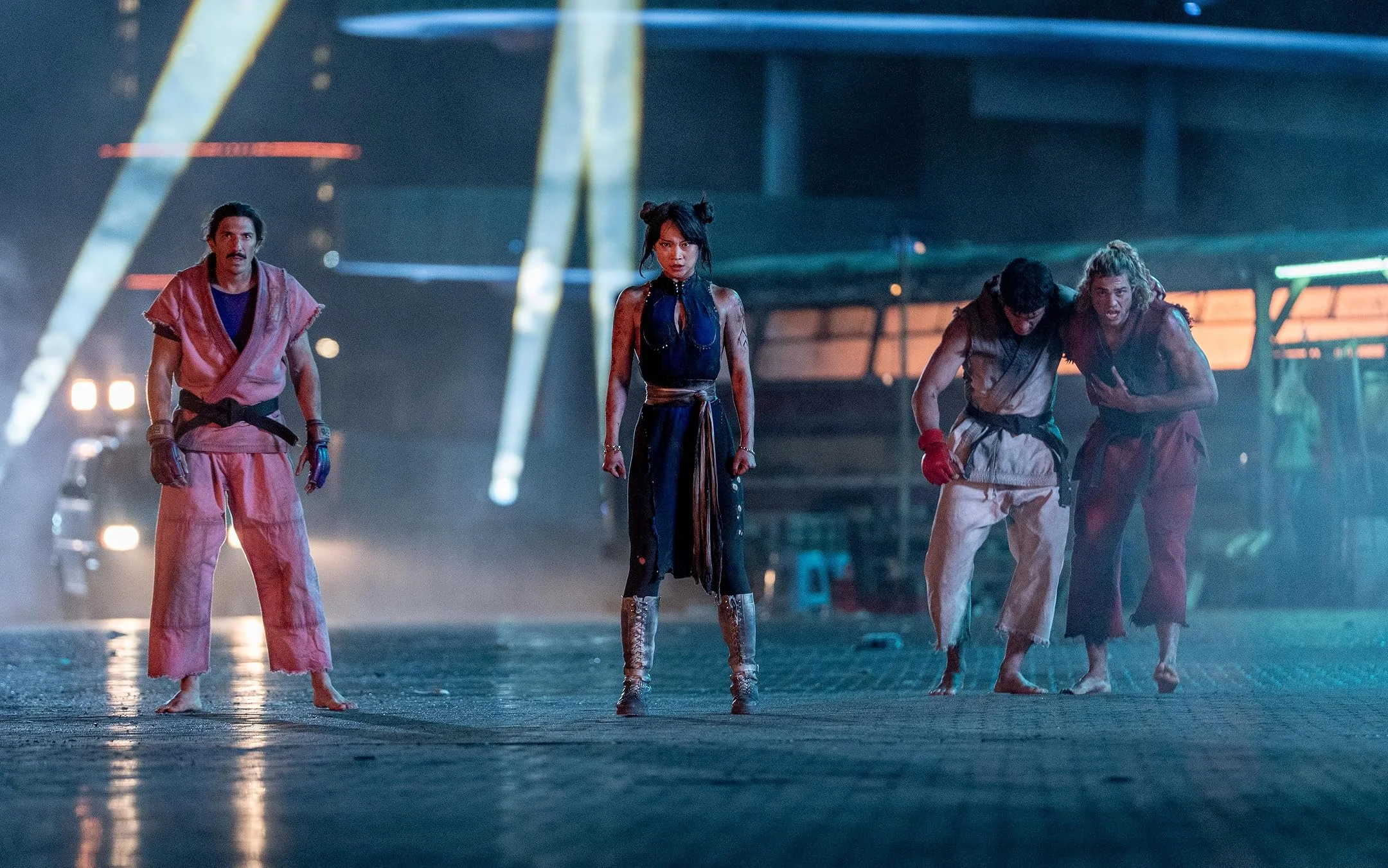
Ken attacks Ryu with the fury of a man who has spent years rehearsing this argument. Ryu keeps getting out of the way. During their hotel-room fight, he blocks with a pillow and then slips it beneath Ken’s head before Ken hits the floor. It is a tiny act of care inside a ridiculous brawl. Ken wants to hurt his old friend; Ryu still cannot quite let him get hurt. For a moment, Street Fighter trusts two bodies to say what its script spends the rest of the film trying to explain.
The animated prologue gives their shared training under Gouken a striking shape, and the flashbacks return as the film moves deeper into their estrangement. Ryu won an earlier World Warrior Tournament and withdrew from public life. Ken stayed visible, selling his fighting persona through celebrity appearances and endorsements. Andrew Koji’s stillness and Noah Centineo’s restless, wounded showmanship make that divide easy to grasp when they are together. Each return to the past makes the hotel fight seem a little rarer: a scene in which their history changes what happens now, rather than pausing the present to account for it.
Ken has found a way to keep being a fighter without having to settle who he is as one. The film’s grainy MTV-style appearances and brand deals make his fame look faintly shabby, though Centineo gives him enough enthusiasm to enjoy the attention even as he fears losing it. There is a sharp idea here about turning skill into a marketable personality. It might be giving the movie too much credit to call that its grand theory of modern life (the man is chasing endorsements, not writing a manifesto). Still, Ken’s public image gives his private competition with Ryu a cost.
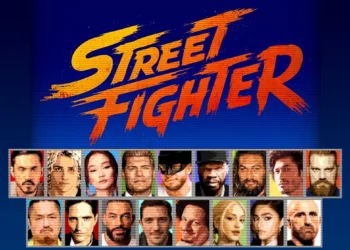
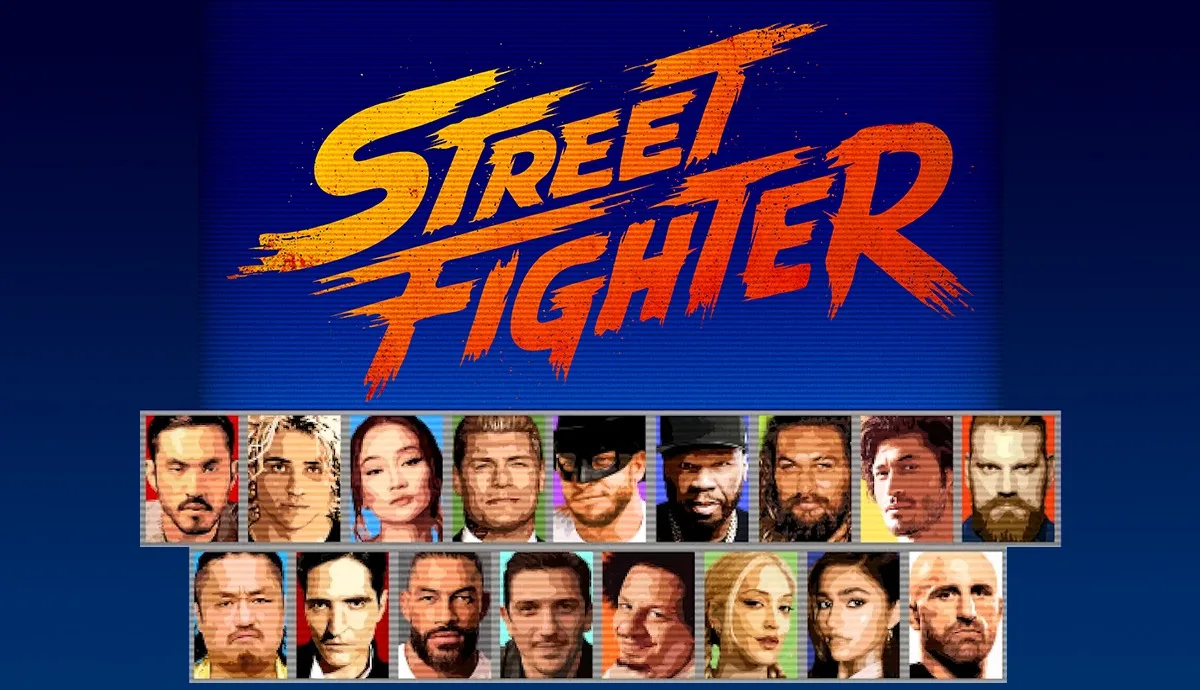
Around them, director Kitao Sakurai assembles a splendidly unruly collection of people who appear to have made the opposite calculation: be as unmistakable as possible. Guile arrives with that enormous blond hair and his theme music. Dhalsim’s limbs stretch across the screen, Blanka crackles with electricity, and the Hadouken arrives with the pleasure of a long-awaited move finally landing. The costumes, effects, and animated passages embrace the games’ absurd proportions. David Dastmalchian seems especially happy inhabiting M. Bison’s excess; a single delighted eye roll gives the villain a personality that the plot’s talk of power rarely supplies.
For a while, recognition is its own reward. Each new entrance offers the pleasure of seeing how an impossible game character will occupy physical space. Yet the film also wants these fighters to carry stories. Chun-Li pursues her mission against Bison, Guile receives a memorable introduction, and Blanka briefly offers Ryu a chance at an unexpectedly gentle exchange in a sewer. The film hurries past one thread and fills the other with jokes before the quiet can settle. A character can make an entrance in Street Fighter and still struggle to remain present.
I initially blamed the tournament. A World Warrior competition should be an ideal way to bring these personalities into contact, but significant matches end in forfeits or happen out of sight. Even the film’s constant movement cannot hide the peculiar sensation of waiting for the event that supposedly brought everyone together. Then again, perhaps I was asking a fighting game movie to behave like a sports drama. The thrill of selecting a fighter does not depend on studying a bracket.
That defense holds until the hotel fight comes back to mind. Its blows and missed blows tell us something about the people throwing them. Sakurai’s faster bouts have flashes of that invention, but quick cuts, slow motion, shouted reactions, and jokes often compete for the same instant. A matchup can work as pure spectacle. Skipping so many of them leaves the tournament with little chance to develop a rhythm or make its eventual outcomes feel earned. Guile’s imposing arrival promises a place in that competition that his limited return cannot fulfill.
Chun-Li exposes another limit to the film’s knowing humor. Callina Liang gives her physical authority in the fights and a welcome impatience with Ken and Ryu’s solemn declarations. Yet her revenge story is squeezed between their troubles and the crowded tournament, while her thigh-first introduction and a gratuitous shower scene grant her body attention that her mission rarely receives. She can call the men foolish, but she cannot talk the camera out of an old habit. The film’s affection for the games’ past becomes harder to admire at that point.
I kept enjoying the film anyway, sometimes immediately after it had tested my patience. Its animated history looks terrific, Centineo and Koji have a relationship worth watching, and the performers understand that dignity would be a strange thing to demand of this cast. Sakurai can make a fighter’s entrance feel like an event. He has a harder time allowing that event to lead anywhere. Bison’s confrontation is held back, and the ending carries on to prepare further story after offering a place to stop. The hotel fight had already shown what a little time between the spectacle could do.
Street Fighter is an explosive live-action martial arts action-comedy film that premiered in theaters on October 16, 2026. Set in the 1990s, the story follows estranged street fighters Ryu and Ken Masters who are recruited by Chun-Li to compete in the World Warrior Tournament, only to uncover a deadly conspiracy orchestrated by M. Bison. You can currently watch the film in theaters nationwide.
Where to Watch Street Fighter Online

Full Credits
Title: Street Fighter
Distributor: Paramount Pictures
Release date: October 16, 2026
Rating: PG-13
Running time: 120 minutes
Director: Kitao Sakurai
Writers: T. J. Fixman, Kitao Sakurai, Dalan Musson, Gary Dauberman
Producers and Executive Producers: Mary Parent, Cale Boyter, Jason Momoa, Takayuki Nakayama, Stefan Makhoul
Cast: Andrew Koji, Noah Centineo, Callina Liang, Joe “Roman Reigns” Anoa’i, David Dastmalchian, Cody Rhodes, Eric André, Andrew Schulz, Vidyut Jammwal, Orville Peck, Don Lee, Curtis “50 Cent” Jackson, Jason Momoa
Director of Photography (Cinematographer): Ken Seng
Editors: James Thomas, Delaney Del Vecchio
Composer: Leo Birenberg, Zach Robinson
The Review
Street Fighter
Street Fighter is most alive when fighting reveals character, as Ken and Ryu’s hotel-room brawl does with a pillow and a remarkably gentle landing. The animated flashbacks, outrageous roster, and committed cast make its excess enjoyable. Yet the tournament keeps losing its matches, its characters, and eventually its momentum. The film knows how to make an entrance. It has a harder time staying in the ring.
PROS
- Ken and Ryu’s expressive hotel-room fight
- Striking animation and recognizable special moves
- - A cast committed to the film’s absurdity
CONS
- Too many tournament matches happen offscreen
- Rapid cuts and stacked jokes crowd out quieter moments
- Chun-Li’s mission receives too little room
- The ending defers Bison’s confrontation