





















News of a Conservative leadership vacancy reaches Ben Fitzmaurice’s birthday party, and the guests begin reorganizing themselves into factions. Ben sees an opportunity. His friend Martin receives an assignment. Their old schoolmate Jarvis might run, which would be inconvenient, so Martin should have a quiet word about Jarvis’s impending property scandal. The birthday boy would like the country as well. Apparently, the house wasn’t enough.
The maneuver spreads beyond the two men. A group of women verbally dismantles Jarvis’s vulnerable wife to help frustrate his ambitions, turning a social encounter into an attack on her husband’s political prospects. It is an effective, ugly piece of ensemble writing: separate conversations acquire a shared purpose, and the gathering starts generating its own threats.
Martin’s participation carries a particular sting. He is a political journalist, currently helping a politician manage the competition. Investigative reporter Amara Baines has arrived as a plus-one, introducing the possibility that someone might treat this gathering as a story rather than a networking opportunity.
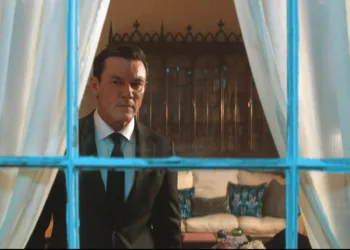
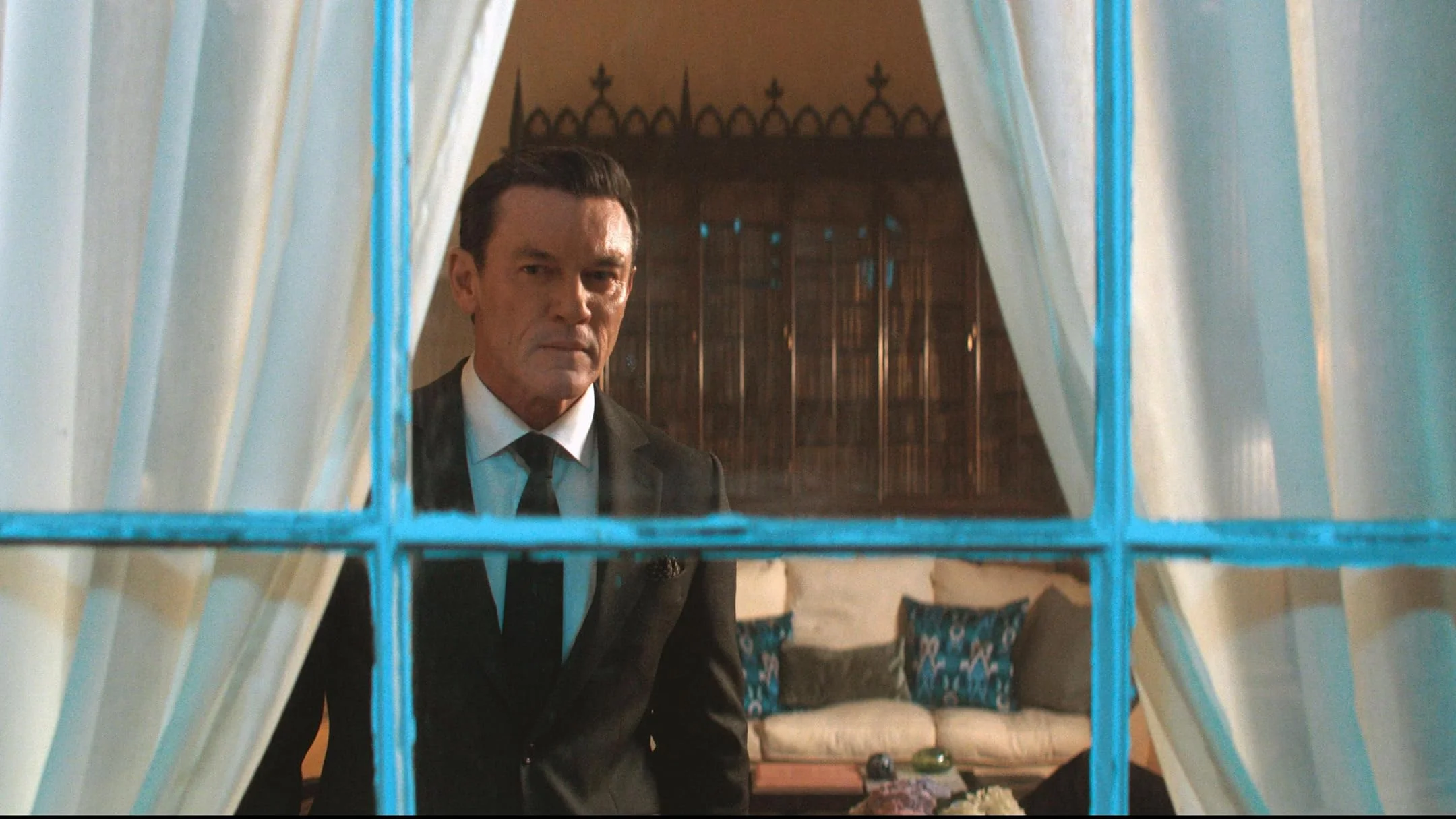
Sarah Solemani’s five-part adaptation of Elizabeth Day’s novel, The Party, has already shown us where the celebration leads. Martin, played by Luke Evans, sits under police questioning with blood on his shirt. The familiar thriller opening does its job: something terrible has happened, and the person available to explain it has plenty of reasons to be selective. Returning to the party then gives even routine favors a charge they would otherwise lack. We know the evening will end violently. We have to watch people arrange the conditions.
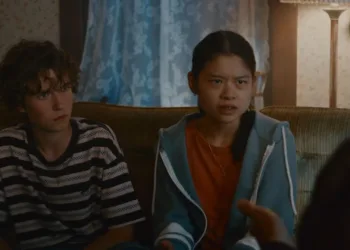
The series moves between that evening, the police interviews, and the history of Martin’s attachment to Ben. The flashbacks earn their place by explaining behavior that initially looks absurd. At boarding school in 1997, scholarship pupil Martin finds entry into a wealthy family whose warmth offers relief from his stern mother Sylvia, played by Joanna Scanlan. Ben supplies affection and access together.
Martin’s willingness to serve him grows out of that combination, making each adult errand the continuation of an old arrangement. The younger cast sometimes looks distractingly mature for the school setting, weakening the sense that these habits are forming in impressionable teenagers. Several appear ready to supervise the trip.
The school nickname “Little Shadow,” shortened to “LS,” survives into adulthood. It is a useful recurring detail because the friendship keeps giving it fresh evidence. Evans makes Martin’s loyalty feel anxious and effortful; Tom Cullen’s Ben can remain charming while assuming that help will arrive. Their imbalance is clearest when Ben asks Martin to discourage Jarvis. Cullen’s easy entitlement leaves Evans to carry the emotional work of the exchange. Martin wants to be trusted, and being trusted has become difficult to distinguish from being used.
Solemani complicates that dependence through a scene of physical closeness that abruptly changes direction. Martin and Ben wrestle, then Ben gives him a lock of Phoebe’s hair. The sequence moves from desire into unexplained history, before the men return to political calculation.
It keeps several questions alive through one encounter: what Martin wants from Ben, what Phoebe means to them, and how readily intimacy can be interrupted by another demand. The pacing is brisk because a scene’s emotional meaning can change before its mysteries are settled. Martin barely gets time to inhabit one version of the friendship before Ben supplies the next.
Director Viviane Andereggen gives the estate the polished attraction necessary to explain Martin’s fascination. The rich lighting and expansive views make its comforts visible, while the party’s “Victorian freak show” theme advertises a household accustomed to making an occasion of everything.
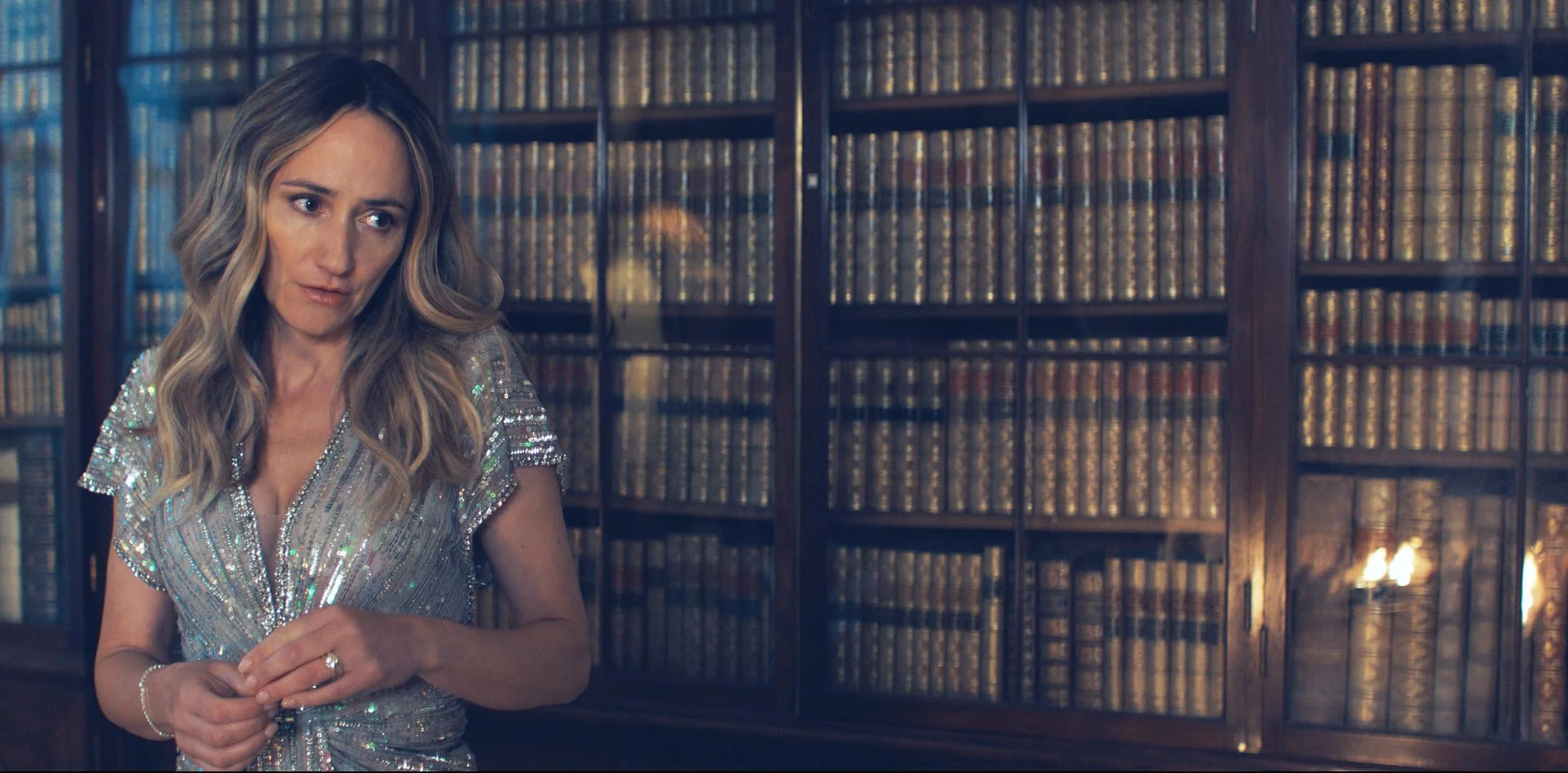
The heavily pregnant Lucy, Martin’s wife, attends this extravagance with little access to its pleasures. Solemani gives her a useful position outside the guests’ competitive vanity, although Lucy remains less developed than that position promises. Her presence establishes distance from the scheming without supplying a comparably detailed life beyond observing it.
The production’s appetite for spectacle reaches its riskiest point with a basement hologram of Phoebe singing, created by her art-college friends. Family remembrance acquires the scale of an installation. The choice pushes against the drama’s credibility, yet its extravagance belongs to this house: even absence can be given an elaborate presentation.
Lindsay Duncan, as Ben’s grieving mother, supplies the necessary resistance. Her controlled anger makes grief perceptible without competing with the display. The restraint matters because the surrounding family has such expensive ways of occupying attention.
Some of the preparation for violence is less discreet. In the earlier material, Douglas Hodge’s patriarch displays his guns and teaches pheasant shooting, furnishing the family history with weapons after the opening has promised bloodshed. The connection is conspicuous. It also makes the present-day danger feel native to the household rather than imported for a finale. Alongside the political errands and the attack on Jarvis’s wife, these scenes establish several forms of practiced aggression. The weapons receive a tour; the social methods require no instruction.
Around the midpoint, Martin’s recognition that he cannot keep absorbing Ben’s risks changes the series’ suspense. Ben expects damaging information to be buried, dismissed as fake news, or branded misinformation. He treats the journalist’s skill as a household resource. Once Martin begins resisting, the audience has to reassess the behavior it has learned to predict. A request that previously led to compliance can now threaten the entire relationship. That is a productive shift in television terms: character development changes what the next scene might do.
The finale answers the questions attached to the violent incident, but Martin’s attempt to separate from Ben gives those answers an emotional stake. His suppressed desire and years of conformity have made the friendship a place where he can remain close to someone while denying himself an independent life. Ben has enjoyed the protection of wealth throughout the same history. Martin’s refusal leaves an awkward possibility hanging over his freedom: after spending decades proving his value by solving Ben’s problems, can he recognize a life in which nobody needs him to do that?
The Party premiered on ITVX on October 11, 2026. Based on Elizabeth Day’s bestselling novel, the five-part British drama series follows two longtime friends whose divergent paths into politics and journalism explode in scandal during an explosive 40th birthday celebration.
Full Credits
Title: The Party
Distributor: ITVX, ITV Studios World Productions
Release date: October 11, 2026
Rating: TV-MA
Running time: 45 minutes per episode
Director: Viviane Andereggen
Writers: Sarah Solemani, Elizabeth Day
Producers and Executive Producers: Richard Burrell, Sarah Solemani, Elizabeth Day, Luke Evans, Simon Heath, Laura Cotton
Cast: Luke Evans, Sarah Solemani, Tom Cullen, Joanna Scanlan, Lydia Leonard, Lindsay Duncan, Douglas Hodge, Sam Troughton
The Review
The Party
The Party turns a birthday bash into a leadership contest, then lets decades of dependence complicate the bloodshed. Its shifting timelines give Martin’s obedience a history, while Luke Evans and Tom Cullen make the friendship’s unequal terms painfully clear. The school-age casting strains belief, Lucy needs fuller development, and the weapons announce their intentions early. Still, Martin’s growing resistance gives this glossy thriller a reason to care after the guests have exhausted every reason to like them.
PROS
- Flashbacks deepen the present-day suspense.
- Evans and Cullen sharpen the unequal friendship.
- Political scheming gives the ensemble shared momentum.
- Martin’s resistance changes the dramatic stakes.
CONS
- School-age characters look distractingly mature.
- Lucy remains underdeveloped.
- Weapon foreshadowing is conspicuous.