






























Serving the correct doughnut in High Times can reopen a romance, unlock a confession, or leave a customer staring at a pastry that has completely misunderstood them. Yangyang Mobile builds its dating sim around that act of interpretation. The player runs the Hotbox, a confectionery in San Mazo where glazes alter emotions and most regulars arrive carrying personal trouble.
The setup belongs to the same café-story lineage as Coffee Talk and Tavern Talk, but the player is not a neutral bartender meeting strangers. Many customers already know the protagonist. Six potential partners are former lovers, childhood connections, or people who remember the relationship differently. An opening conversation presents them as silhouettes linked to past heartbreaks, turning each route into a return rather than a first encounter.
Character creation supports that flexibility. Body type, clothing, facial features, and hairstyle are selected without a gender category, every outfit works across each build, and dialogue avoids assigning the protagonist pronouns. Every romance remains available. The game treats this freedom as part of daily life, then moves straight to the important question: which glaze does emotional damage control require?
Reading the Order
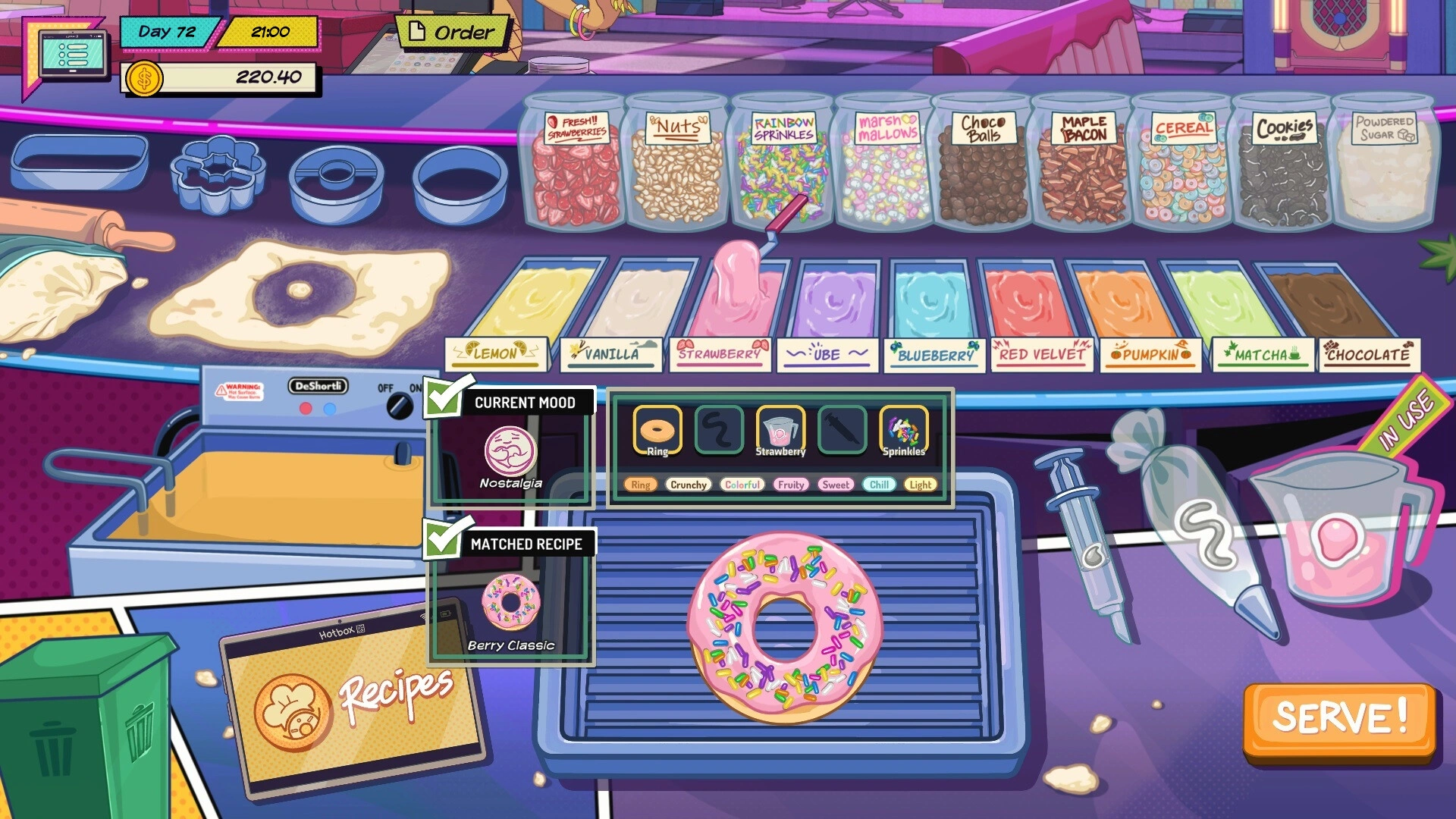
Most shifts bring three customers. Some request a named recipe. Others ask for an emotion, mention an ingredient, or describe a problem that points toward the answer. Missing family can indicate a strawberry doughnut connected to nostalgia. A request for bitterness suggests chocolate. A customer may love butterfly decorations and dislike sprinkles, so solving the order requires remembering earlier conversations rather than copying a recipe.
Preparation stays simple. The player selects or kneads the dough, drops it into the fryer, waits a few seconds, applies glaze, and adds drizzle or toppings by hand. The glaze controls the mood, with effects including happiness, sincerity, focus, inspiration, and passion. Decorative accuracy matters because customers will complain about omitted toppings or careless patterns.
This loop lacks the pressure of a traditional cooking game, yet it gives dialogue a mechanical purpose. Skipping conversations means losing information that may determine the correct order later. That distinction separates High Times from visual novels where food preparation is a decorative interruption between scenes.
The system still runs out of ideas early. Frying never grows harder, decorating does not develop into a deeper skill, and the same motions remain in place across routes that can last 15 to 20 hours. Saving only at the start of a day makes mistakes during the third visit especially irritating, since reloading means replaying the first two customers. Coffee Talk lets experimentation feel immediate. Here, one failed pastry can create paperwork.
Routes Behind the Register
The strongest dating sims ask players to manage access, attention, and limited resources. High Times returns to that older structure through its shop economy. Sales and tips fund new glazes, toppings, equipment, and decorations. Buying an ingredient automatically adds connected recipes to the book, and some character arcs stop until the player owns a particular item. Cookie toppings or a piping bag can become relationship requirements rather than cosmetic purchases.
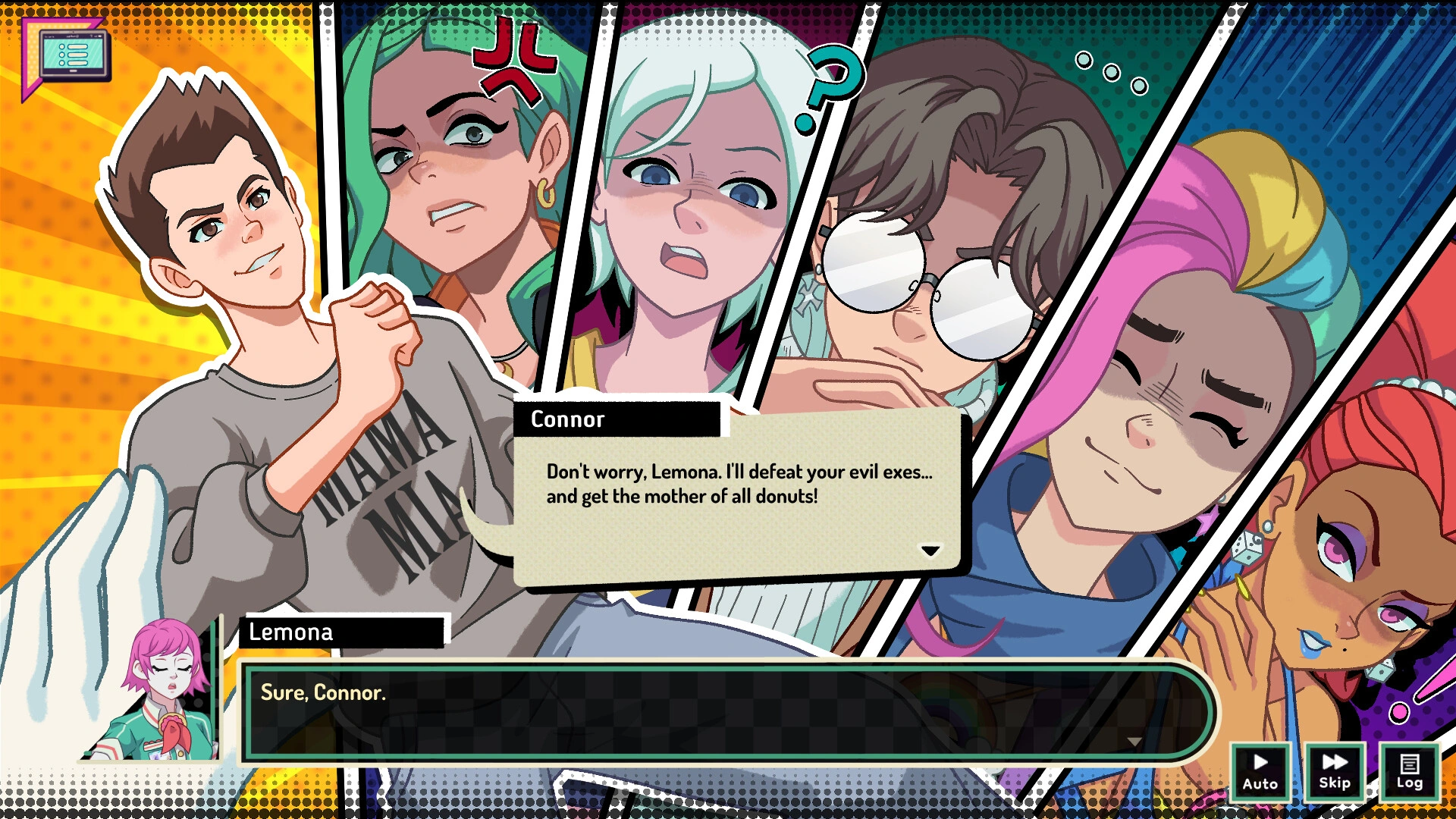
Decorations influence which customers visit. This gives furniture a practical role, letting players increase the probability of meeting someone tied to a chosen route. The idea is smart, especially compared with romance games where every character waits patiently inside a menu.
The execution becomes frustrating once the cast expands to roughly 30 customers. Even a large appearance bonus may produce a desired visitor once during an in-game week. Progress can stall because the random rotation sends Connor or another frequent regular through the door again.
Money loses pressure after the opening stretch. Bankruptcy technically ends the game, but a modest cash reserve makes that threat easy to ignore. The economy then becomes an unlock checklist, leaving customer randomness as the real obstacle.
The writing gives players reasons to endure it. Ainsley and Kolt work through an old relationship neither has settled. A punk musician sets the shop on fire. Riri arrives dressed as a chicken, though a repeated early interaction suggests a broken event flag. Social posts and text threads extend these personalities beyond the counter, and later conversations can refer back to previous answers. The game remembers enough choices to make each route feel tracked rather than reset.
An Adult Table for Everyone
The Hotbox is presented with bright neon colors, comic-panel dialogue boxes, exaggerated poses, and character designs that communicate personality within seconds. The static counter view weakens that energy during long sessions. Customers cycle through familiar expressions against the same background, and full CG illustrations appear too rarely to interrupt the visual repetition.
Voice performances supply much of the missing movement. LilyPichu, Johnny Yong Bosch, Gianni Matragrano, Michael Kovach, and the wider cast lean into the heightened personalities. Several scenes unexpectedly lose voice coverage, with Billie’s material affected often enough to notice. Typos, incorrect capitalization, formatting notes left in dialogue, and placeholder progression instructions create smaller breaks in a game built around reading carefully.
Its sexual candor will prove far less minor. Characters discuss bodies, attraction, Omegaverse fiction, ejaculation, breastfeeding, inflation fetishes, and urolagnia with the casual rhythm of friends posting in a private group chat. Lucy’s early introduction establishes that tone before the player has settled into the shop.
This language can delay emotional attachment because early scenes favor innuendo and provocation. Several relationships gain substance around Days 15 to 18, while Connor develops faster and can become an accidental first romance. Once the routes settle, the game’s openness fits its inclusive design: nobody entering the Hotbox needs to translate their identity into a safer version before ordering.
The Review
High Times
High Times gives the barista visual novel a sturdier dating-sim framework than many of its peers. Ingredient gates, shop decorations, remembered preferences, and delayed route scenes make courtship feel managed rather than merely selected from dialogue boxes. Its 50-hour scale exposes the limits of the doughnut loop, random customer rotation, static counter view, and inconsistent voice coverage. Still, the candid writing, gender-neutral character design, and sprawling cast give the Hotbox an identity few cozy café games would dare attempt.
PROS
- Strategic route progression
- Inclusive character creation
- Dialogue choices remembered
- Distinctive adult writing
- Strong voice performances
CONS
- Repetitive cooking loop
- Frustrating customer randomness
- Slow relationship development
- Sparse CG artwork
- Typos and missing voices