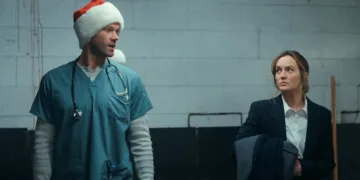






















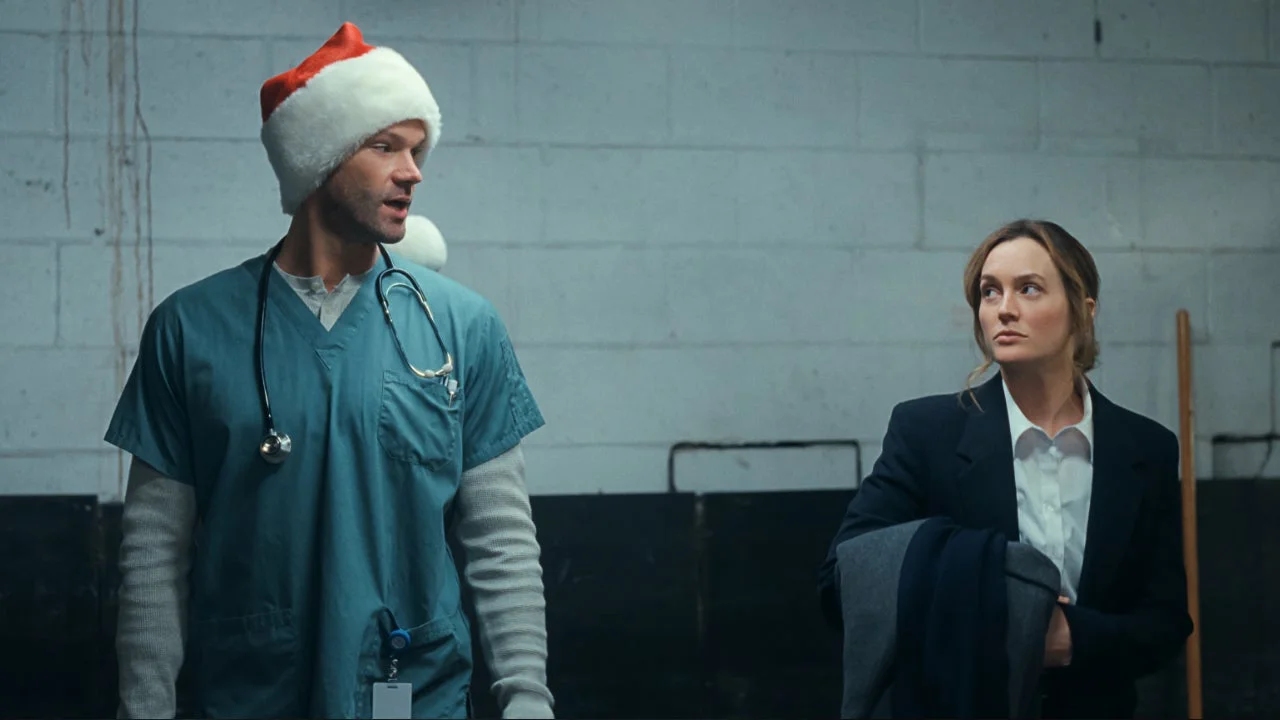

“Glen Powell could have sold it.” I laughed at that jab because the insult is so well aimed: a movie star has botched a performance, and his bodyguard knows it. Leighton Meester’s Hannah Brooks has prepared a romantic backstory for her client, Jared Padalecki’s Jack Stapleton, only for him to improvise. Her impatience gives Guarding Stars a welcome spark. She has enough work to do keeping him safe. Having to supervise his acting seems an unreasonable extra duty.
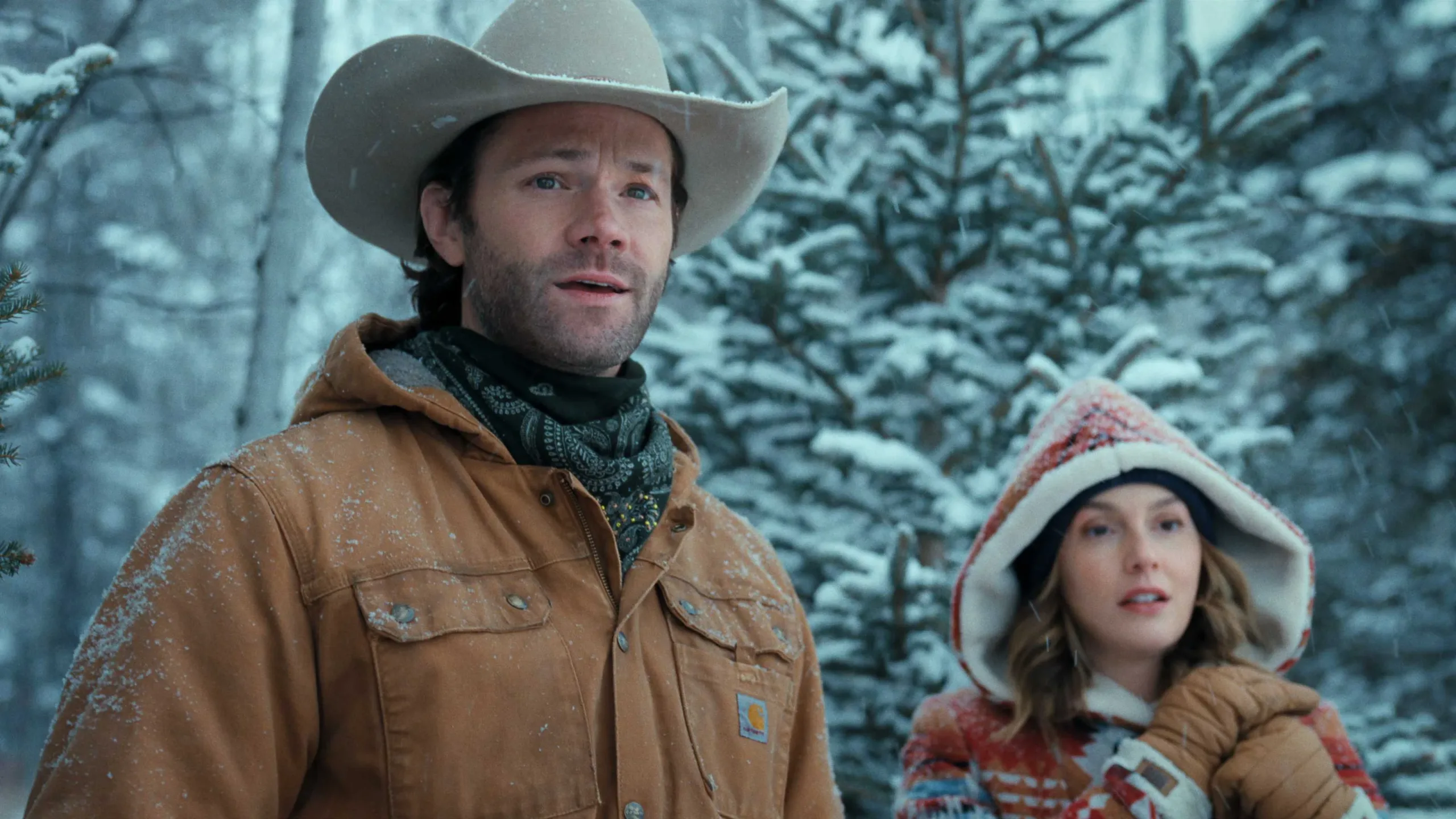
That friction makes the pairing fun before the film asks us to find it touching. Jack’s initial skepticism about Hannah’s abilities earns him a brisk introduction to the ground, courtesy of her jiujitsu. Padalecki makes his celebrity confidence something Meester can puncture; she plays Hannah’s lack of admiration as perfectly sensible. Keeping a low profile should be easy for someone who acts for a living. But when Jack’s family mistakes Hannah for his girlfriend during a visit to his sick mother in Montana, maintaining the fiction means accepting Christmas at the family ranch. Now her unimpressed manner needs an explanation too.
I’d happily recommend this to someone looking for a Christmas romance with a lively central couple. Director Elizabeth Allen Rosenbaum gets real pleasure from their unequal professional partnership. The family drama sometimes presses too hard, and the stalker plot struggles to generate convincing danger, but the attraction earns our attention early.
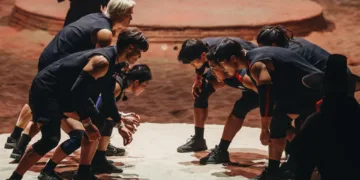
The rodeo Kiss Cam is a good example of familiar material doing useful work. We know what happens when fake lovers are asked to kiss. The pleasure comes from watching their excuse for physical closeness become harder to separate from an actual desire for it. The public setting helps: Hannah can organize a cover story, but she cannot control every demand an audience makes of the couple. Meester’s resistance to the whole performance and Padalecki’s ease with being looked at give the encounter its particular flavor. Their professional habits are still present when the situation turns romantic.
There’s another enjoyable audience in Hannah’s fellow bodyguards, who monitor the developing relationship through security cameras. Protection work briefly becomes an opportunity to watch colleagues fall for each other. I wanted the film to spend longer with that setup; it gives the supporting team something amusing to observe beyond the threat they are employed to spot.
Erin Cardillo and Richard Keith’s adaptation of Katherine Center’s The Bodyguard also gives Hannah a reason to stay busy that reaches beyond the usual romantic heroine’s devotion to her career. Her mother has died, and she refuses the time off her boss offers. An assignment supplies tasks she knows how to complete. Jack’s home presents a messier set of needs. His mother, Connie, played by Andie MacDowell, is recovering from tumor surgery, and his own prolonged absence has left him estranged from ordinary family life. The children and holiday activities put Hannah inside a household whose affection she cannot manage as efficiently as its security.
The camcorder footage used around a grief revelation is a lovely choice, and it made that part of the film land for me. Home video works differently from a conventional flashback. A flashback reconstructs the past for the audience; a recording carries the suggestion that someone wanted to keep it. Bringing that kind of footage into a story about loss gives the feeling a physical object to attach itself to. Here, recorded memory helps the family’s past feel like something the characters have not simply left behind. It gives the disclosure an emotional pull that a spoken explanation alone would struggle to supply.
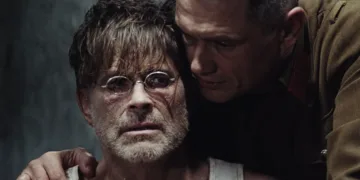
Jack carries guilt over his brother’s death in a car accident; Hannah’s experiences in Afghanistan add another source of pain. The problem is the amount of emotional explaining the film packs around those histories. After the looseness of the rodeo comedy, the heavier disclosures can feel like successive demands to take everything seriously. Padalecki commits to Jack’s distress, but the script gives the romance a substantial burden of grief to process during its holiday stay. Some of the easy rhythm between the leads gets lost in that stretch.
The children’s efforts to draw Hannah into family life are sweet, but the suggestion that her seriousness needs curing is less appealing. Her discipline has already kept people alive, and it remains useful when the protection assignment returns to the foreground.
The early Times Square sequence, with its sonic weapon and explosive, promises a fairly extravagant action comedy. Hannah moves from thwarting an attack to arguing with her ex about cuddling, so abrupt changes of subject are part of the design from the start. I enjoyed the nerve of that combination. It allows her professional competence and disappointing personal life to occupy the same stretch of film, with neither waiting politely for its own scene. But an action opening also creates an expectation that the later threat will be worth tracking.
The stalker never acquires enough credible motivation to meet that expectation. As a reason to put Hannah at the ranch, the danger is serviceable. Once it has to sustain an action climax, the exaggerated behavior leaves too little for us to believe in. A villain who exists mainly to interrupt the romance makes it harder to worry about its survival.
The Christmas parade brings the threat into the holiday celebrations, complete with a Walker Hayes performance. That is a busy setting for the story to recover its urgency, and the antagonist’s thin characterization makes the escalation feel imposed on the festivities.
Still, Hannah pursuing a stalker on horseback gives the film a welcome opportunity to put her skills back to work. After so much attention to the feelings she keeps under control, she gets to act on a problem she can actually solve. The pursuit places a useful demand on Jack’s side of the romance too: the woman being welcomed into his family is still responsible for his safety. Their cover depends on concealing her profession, but his safety now requires her to exercise that authority openly.
Guarding Stars premiered on Netflix on November 18, 2026, and is available to stream on the platform. Based on Katherine Center’s novel The Bodyguard and directed by Elizabeth Allen Rosenbaum, the romantic comedy follows an elite bodyguard hired to protect an reclusive actor from a stalker by posing as his girlfriend on his family ranch.
Where to Watch Guarding Stars (2026) Online


Full Credits
Title: Guarding Stars
Distributor: Netflix
Release date: November 18, 2026
Rating: PG-13
Running time: 1 hour 50 minutes (110 minutes)
Director: Elizabeth Allen Rosenbaum
Writers: Erin Cardillo, Richard Keith, Gina Matthews, Grant Scharbo, Katherine Center
Producers and Executive Producers: Jared Padalecki, Genevieve Padalecki, Gina Matthews, Grant Scharbo
Cast: Leighton Meester, Jared Padalecki, Noah LaLonde, Phil Brooks, Andie MacDowell, Toby Sandeman, Rachael Ancheril, Siobhan Williams, Walker Hayes, Ava Max
Director of Photography (Cinematographer): Matt Sakatani Roe
Editors: Emma E. Hickox
Composer: Robert Duncan
The Review
Guarding Stars
I had a good time watching Meester puncture Padalecki’s movie-star confidence, and their chemistry makes the familiar holiday setup worth revisiting. The camcorder footage gives the family grief a welcome emotional foothold. Heavy disclosures slow the romance, and the thinly motivated stalker cannot sustain the promised danger. Still, the playful exchanges and growing affection make this an easy recommendation for Christmas-romance fans.
PROS
- Meester and Padalecki’s lively romantic chemistry
- Comedy rooted in Hannah’s professional competence
- Affecting use of camcorder footage
- Amusing security-camera spectators
CONS
- Heavy trauma disclosures interrupt the romantic rhythm
- Thin stalker motivation weakens the suspense
- Hannah’s seriousness is too readily treated as a flaw