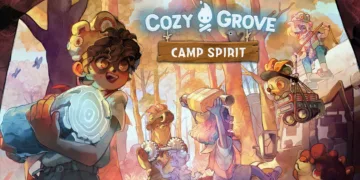



























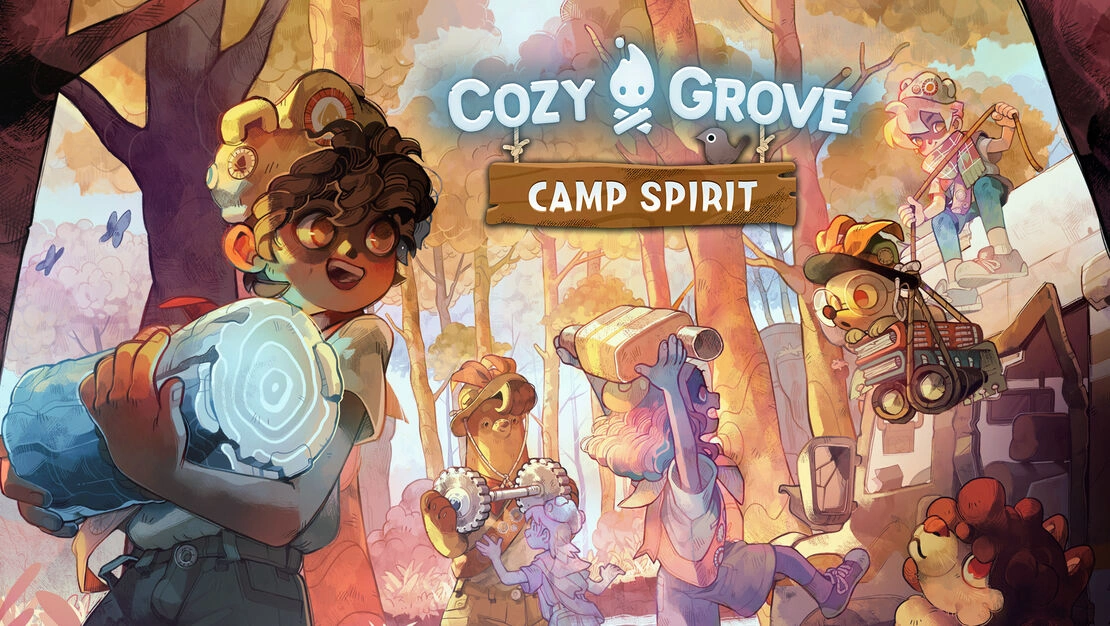

Every Spirit Log placed into Flamey converts emotional labor into physical space. The campfire brightens, another stretch of island appears, and a new bear may arrive carrying unfinished business from a life it can barely remember. Cozy Grove: Camp Spirit builds its progression around that exchange: help someone recover part of their past, then watch the world become less empty.
A bus crash leaves the player’s Spirit Scout stranded on a new island, separated from the rest of the troop and surrounded by ghostly bears. The setup requires no knowledge of the first Cozy Grove, yet the structure remains immediately recognizable. Daily requests lead into gathering, crafting, fishing, bug catching, decoration, and hidden-object searches, all governed by a real-world clock.
The sequel does not rebuild that foundation. It strengthens the connection between its systems and its stories. Quests still ask for misplaced belongings or crafting materials, but the reward is often a memory, a changed relationship, or a home that develops alongside its owner. The task matters because the bear matters.
Ghosts With Proper Homes
The first game sometimes treated its bears like charming quest dispensers waiting beside permanent landmarks. Camp Spirit gives them homes with interiors, evolving surroundings, and flashback scenes that reveal who they were before becoming spirits. That environmental progression turns friendship levels into something visible.
Completing requests earns hearts, and those hearts open later chapters across several real-world days. One bear may begin as an isolated comic figure, then reveal memories involving family or a wasted opportunity. Another storyline addresses gender identity through a non-binary character without separating that identity from the wider emotional arc. The strongest stories also connect with one another. Characters who initially appear unrelated gradually become part of the same social history.
This structure gives simple missions a useful narrative role. Finding an object hidden near a tree is mechanically basic. Finding it because a bear is struggling to reconstruct a specific moment from its past gives the search purpose. The game rarely changes what your hands are doing, but it frequently changes what the action means.
Color restoration reinforces the same idea. Large portions of the island begin in muted grey, then regain their watercolor detail when nearby spirits receive help. Restoring a section does not grant a combat advantage or a statistical bonus. It makes the environment readable again, which suits a game where emotional recovery and exploration share the same progression track.
Cleaning, Collecting, and Camp Design
The daily loop contains a broad set of low-pressure activities. Players gather fruit and flowers, mine ore, catch insects, dig for resources, fish, cook meals, craft furniture, complete collections, and earn merit badges. None carries much mechanical risk. The tension comes from deciding how to use limited resources and where to spend time before the next refresh.
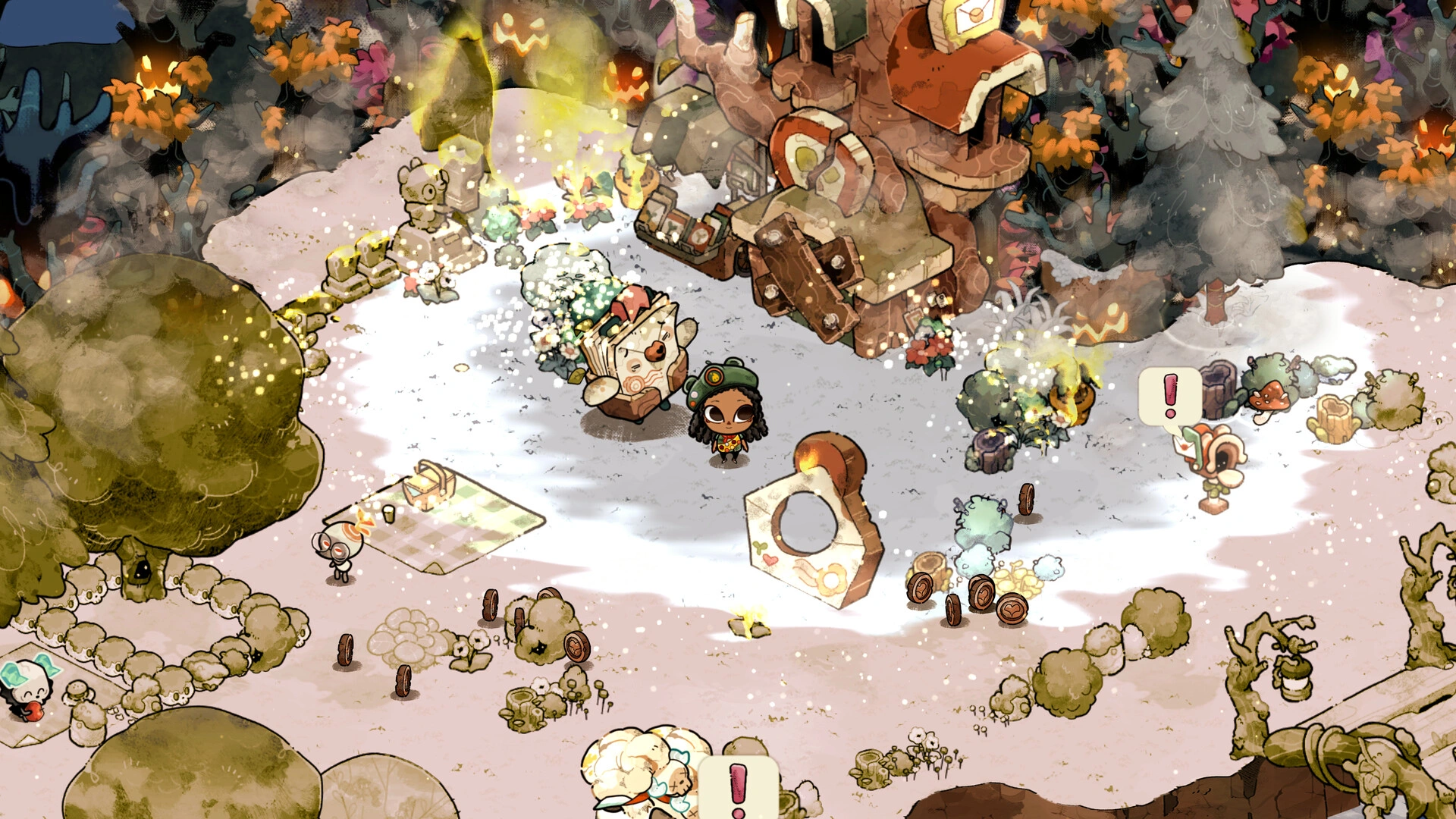
Hidden-object quests are the least reliable part of that loop. Clues direct you toward landmarks instead of placing a marker on the item, encouraging careful observation. The approach works when a shell is tucked beside a distinctive statue. It becomes irritating when a tiny object shares its color with nearby plants and furniture. Additional hints eventually narrow the location, yet the search can still interrupt the calm it was designed to preserve.
The new cleaning tool follows the game’s restoration theme. A fish-shaped power washer removes sand or dark residue from structures, producing rewards and clearing quest objectives. Its aiming can feel awkward, particularly when compared with the cleaner inputs used for gathering or decoration. The mechanic fits the island conceptually, but the controls expose the game’s mobile origins.
Customization fares better. The scout’s tent expands into a house with interior rooms, while furniture sets, clothing, flowers, trees, pets, and decorative themes create plenty of room for personal expression. Certain plants and companions respond positively to nearby objects, adding a light placement puzzle. The bonuses guide arrangement without turning the campsite into an efficiency spreadsheet.
Companions such as Craw, a small dog who joins exploration, add character without complicating the loop. Asynchronous multiplayer works in a similarly restrained fashion. Friends can exchange letters and gifts or appear through astral projections, yet the main progression never depends on direct online cooperation.
Tomorrow’s Spirit Log
Real-time gating remains the system that defines every other system. A limited number of bear requests and Spirit Logs can be completed each day. Once those tasks are exhausted, major story progress stops until the next real-world reset.
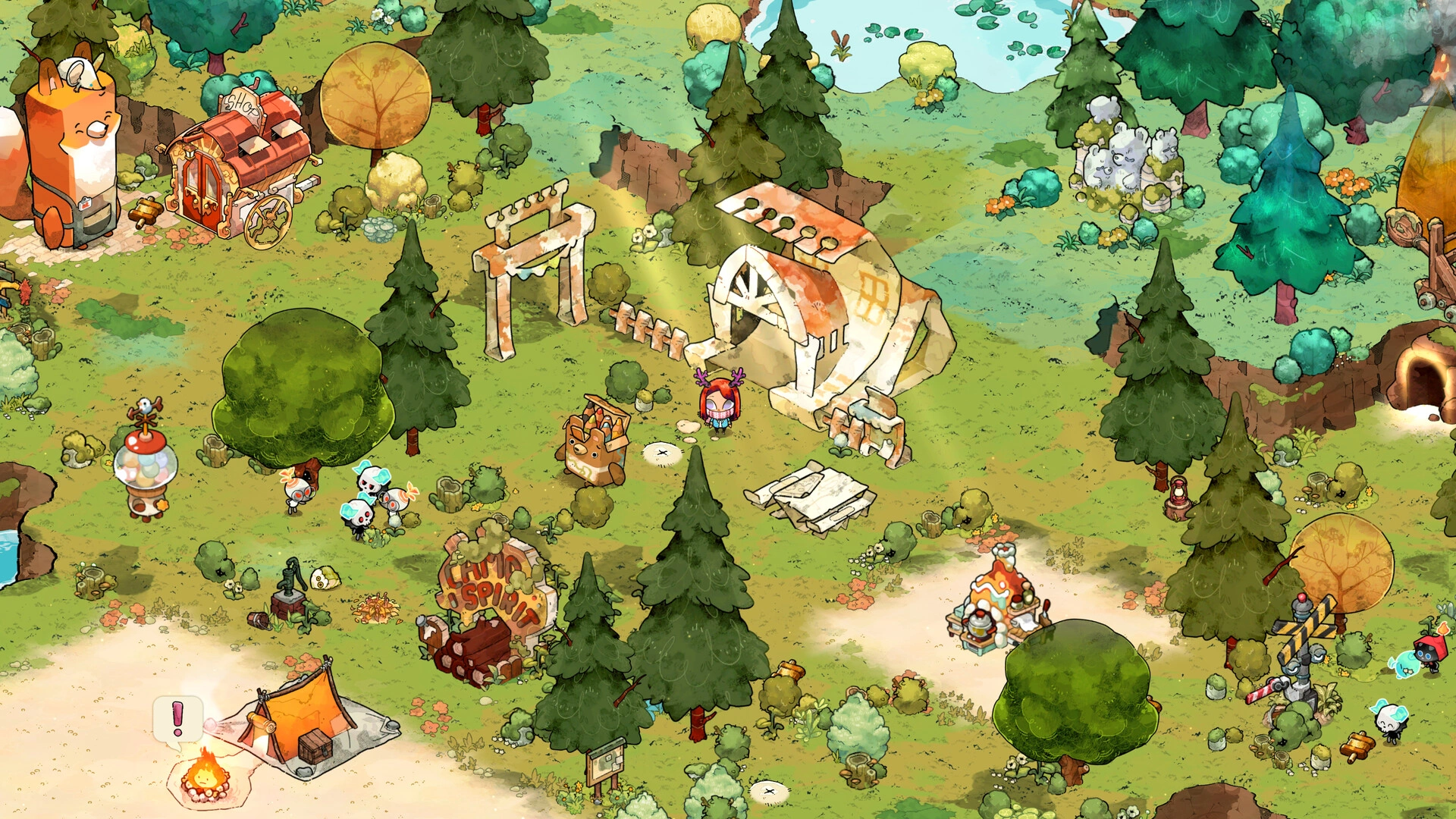
The restriction serves a clear purpose. Many life simulators invite players to optimize every minute, turning a peaceful village into a second workplace. Camp Spirit resists that pressure by limiting productive story activity. A short visit can include several quests, a new memory, a map expansion, and some decoration without creating the sense that twelve additional hours should be spent farming materials.
That same design becomes frustrating during longer sessions. Fishing, gathering, crafting, and rearranging furniture remain available after the narrative tasks disappear, but their repetition becomes harder to ignore once Flamey has no immediate use for another Spirit Log. The game technically allows continued play while withholding the part that gives most actions emotional weight.
Changing a device’s clock may bypass the wait, though the inconvenience and possible save problems make that a poor solution to a deliberate restriction. Players who prefer daily routines will find a structure that respects brief sessions. Players seeking uninterrupted access to character stories will keep running into a locked door with tomorrow’s date written on it.
The Old Grounds, improved inventory handling, interior decoration, companions, cleaning activities, connected bear stories, and softer multiplayer make this a stronger game than its predecessor. Its systems still ask for patience first. That request feels thoughtful during a twenty-minute visit and far less generous during hour three.
The Review
Cozy Grove: Camp Spirit
Cozy Grove: Camp Spirit improves the original where it matters most. Bear relationships now develop through connected memories, evolving homes, and quests that give simple gathering tasks an emotional purpose. Flamey’s Spirit Log progression, expanded decoration tools, companions, and the Old Grounds keep the daily loop rewarding. The real-time gate remains its most restrictive system, especially once story quests run dry and only routine collecting remains. For patient players, this is a warmer, smarter sequel built around care rather than optimization.
PROS
- Deeper bear storylines
- Rewarding Spirit Log progression
- Extensive campsite customization
- Beautiful color-restoration system
- Stronger quality-of-life design
CONS
- Restrictive daily time-gating
- Repetitive late-session gathering
- Hidden objects blend into scenery
- Awkward cleaning controls