

























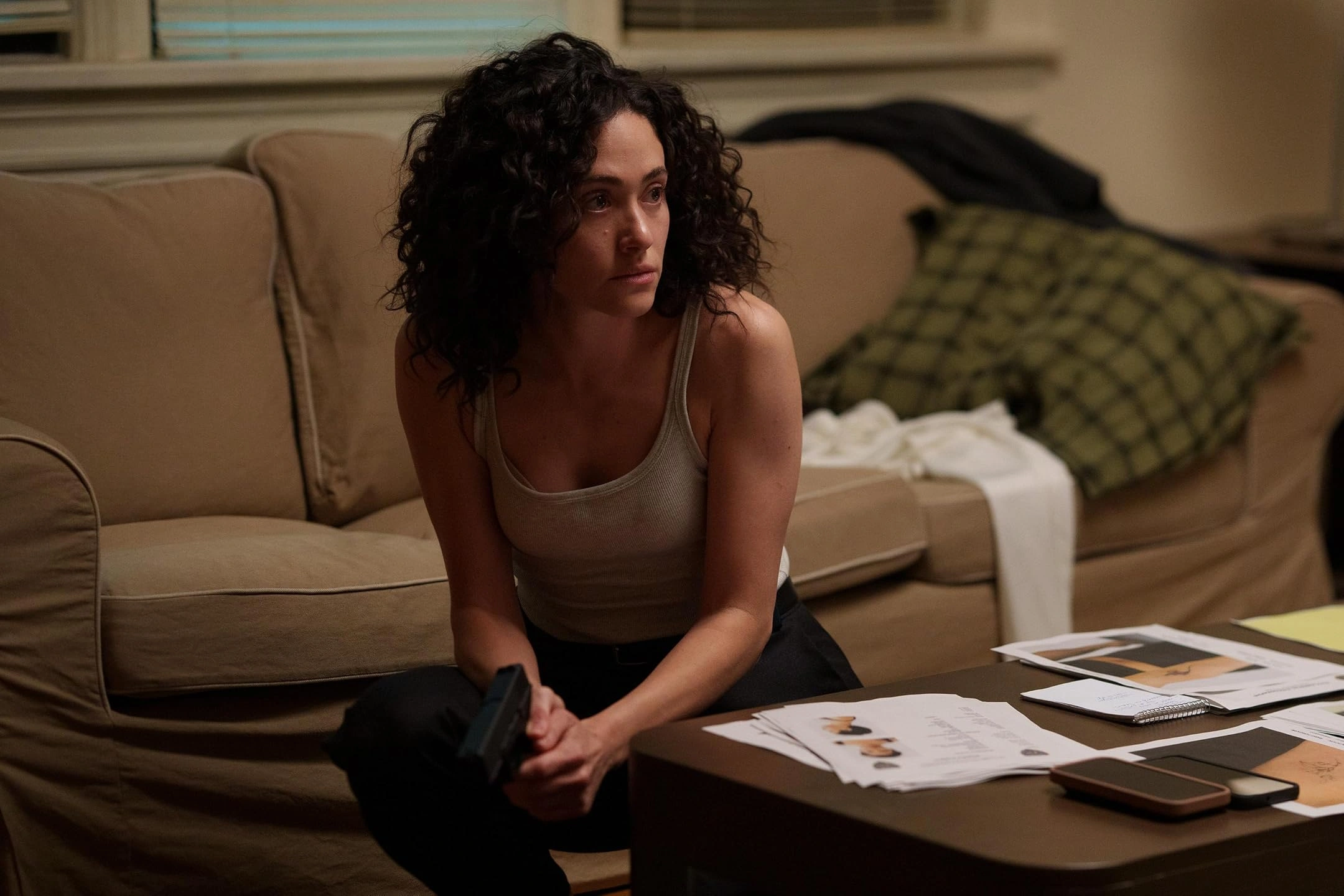
Alice Black has solved murders before, yet her new FBI position has her answering calls from people convinced their neighbors are spies. It is a professional demotion disguised as a probation period, the sort of bureaucratic joke nobody finds funny except the bureaucracy.
Elizabeth Meriwether’s eight-episode thriller Furious loosely adapts Bob Rafelson’s 1987 film Black Widow, retaining the idea of an investigator pursuing a woman connected to a string of dead men. The similarities thin out quickly. Catherine Grace, played by Lola Petticrew, does not marry wealthy men for their money. She infiltrates their lives, drugs them with fentanyl, questions them about the girls they harmed, and kills them.
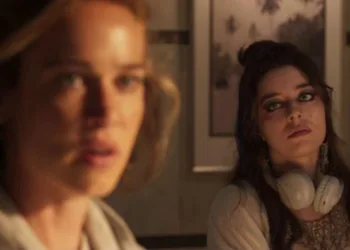
Alice, played by Emmy Rossum, first recognizes the pattern after her former NYPD partner Danny brings her into the apparent overdose of a wealthy judge. She links the death to another case and persuades the FBI to treat the incidents as the work of one killer. Catherine is already several steps ahead, moving between wigs, accents, false names, and carefully performed vulnerability.
The series does not conceal her identity for long. Its suspense rests elsewhere: how far Alice will go to catch a woman whose anger she understands far better than she wants to admit. The chase has two suspects and no innocent side.
Two Women, One Wound
Alice can manufacture intimacy with alarming ease. When she needs a witness to trust her, she invents a painful personal history, adjusts her expression, and delivers the lie with enough detail to make it feel borrowed from memory. Ask about her real past, and the shutters come down.
Rossum builds the character from that contradiction. Alice’s voice tightens whenever Marshall, her abusive former boyfriend, appears. Her posture becomes rigid at crime scenes where he is present, while her attempted smiles look rehearsed for an audience that has already left. Marshall beat her in the shower, and Alice now avoids washing. Other characters notice her smell before they understand its source, turning a detail that could have been played as grotesque comedy into evidence of a body that still expects an attack.
Her sexual behavior carries the same confused struggle for control. Alice invites strangers home, provokes them into physical aggression, then sends them away. The scenes are uncomfortable because the series refuses to package them as liberation or self-destruction. Alice knows the pattern is harming her. Knowing is not the same as stopping. Television would be considerably shorter if it were.
Catherine performs vulnerability from the opposite direction. Her youth and small stature make men underestimate her, and Petticrew uses that expectation like a concealed blade. Catherine can seem frightened, flirtatious, attentive, or helpless until the instant she gains control of the room. Then come the syringe, the questions, and occasionally an overheated curling iron. The beauty routine has had a difficult evening.
Petticrew makes these shifts frighteningly clean. Catherine does not seem to change personalities so much as select one from a private menu. A raised eyebrow or sudden stillness can reveal that a man has lost control several seconds before he notices.
Her composure fractures whenever buried memories break through the role she is playing. Those eruptions stop Catherine from becoming a sleek television assassin assembled from costumes and attitude. They also create one of the writing’s problems. Each new detail about her abuse explains another piece of her behavior until the character starts to feel over-diagnosed. The series wants her brutality to remain morally disturbing while ensuring that every act can be traced back to pain. Its sympathy occasionally arrives carrying paperwork.
Alice and Catherine share limited screen time, so their relationship is constructed through editing. A cut from Alice lying to a witness to Catherine adopting a false identity places their methods beside each other. Alice studies Catherine’s decisions and begins anticipating her next move, partly through police experience and partly through recognition. The investigator does not need to become the killer for the resemblance to hurt. Every solved clue brings Alice closer to Catherine and further from the badge.
Justice Below Ground
The FBI’s sex-crimes unit operates from a gloomy basement, a choice that turns office geography into institutional criticism. The people investigating crimes against children work underneath the officials who would prefer such cases to remain buried. Subtle? No. Effective? Absolutely.
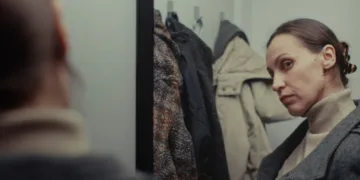
Nora, the unit’s hardened supervisor, has spent years looking at material nobody should see once. Quincy Tyler Bernstine plays her as a woman who has abandoned any interest in appearing pleasant, stable, or impressed by authority. Her line readings arrive at odd angles, sometimes weary, sometimes threatening, frequently funny. Nora can undermine a superior with one pause, then flee the resulting confrontation with the physical urgency of someone who has suddenly remembered another meeting.
Her reluctant mentorship of Alice gives the season its liveliest working relationship. Nora initially dismisses the theory of a female serial killer, then recognizes the pattern Alice has found. She offers sharp insight and terrible advice in roughly equal proportions.
During a hospital-room conversation about Medusa, Athena, and Poseidon, Nora argues that violence can make its victims colder and more calculating. The scene works because Bernstine does not deliver the thought as wisdom. It sounds like a conclusion reached after too many cases and too little sleep.
Danny occupies a gentler corner of the series. Scoot McNairy plays him as Alice’s remaining connection to her former life, though their closeness has damaged his standing among fellow officers. Their argument in a car and later conversation on a bathroom floor give Rossum space to lower Alice’s defenses without suddenly curing her. Danny listens, stays, and occasionally says the wrong thing. A radical male character concept.
The writing resists turning him into a rescuer. He contributes less to cracking the conspiracy than to reminding Alice that tenderness exists, which may be the harder assignment. His possible romance with Alice grows from accumulated gestures rather than a declaration timed for the finale.
Marshall is harder to place. Jake Lacy gives Alice’s former boyfriend a disturbing mixture of remorse and self-pity. He can admit that he hurt her while remaining unable to comprehend what that violence has done. His apologies circle his own discomfort, making contrition another demand placed on Alice. Lacy’s history of playing polished creeps gives the audience a head start, perhaps too much of one, yet his easy charm helps explain why institutions keep treating Marshall as redeemable.
Alden, played by Steve Way, offers Catherine another kind of relationship. As a wheelchair user with muscular dystrophy, he is neither a target who fits her usual pattern nor a passive symbol of goodness. Their exchanges are funny, suspicious, and unexpectedly sad. He sees through parts of her performance, and she responds with flashes of care that complicate the killer Alice has constructed in her head. The basement may be full of outcasts, but upstairs has the monsters on payroll.
The Camera Learns the Point
The early episodes look like a polished serial-killer procedural that has misplaced its restraint. Director Brian Kirk stages Catherine’s seductions and attacks with glossy menace, treating nudity, needles, and threatened bodies as hooks. The approach creates immediate tension, though it risks reproducing the voyeurism the story later criticizes.
That friction may be deliberate. Crime television has spent decades turning violence against women into opening-act decoration, then congratulating its detectives for caring by minute forty-two. Furious initially adopts that grammar before challenging it. Recognition does not erase discomfort. A camera can understand its mistake and still have filmed it.
The fourth episode, directed by Karena Evans, changes the rhythm. Scenes stay longer with Alice and Nora after the procedural business has ended. Catherine’s victims become part of a network of wealthy men protected by lawyers, cops, and social standing. The deaths remain shocking, yet the series becomes less interested in the mechanics of killing than in the machinery that made revenge appear reasonable.
Alternating between Alice and Catherine keeps the chase moving without pretending the killer’s identity is a mystery. Alice finds a connection; Catherine changes her name. Alice secures jurisdiction; Catherine adopts another accent. The editing lets each woman answer the other without placing them in the same room.
The score is less restrained. Pumped-up instrumental cues push discoveries toward thriller excitement, while vocalized female groans drag the suffering beneath the plot back into earshot. The effect can be blunt, especially when the script has already made the emotional point, but it prevents a clean separation between suspense and pain.
Several twists are easy to predict, largely because the season is structured around recognition rather than revelation. What matters is the moment Alice accepts what the audience has seen for episodes: Catherine’s reasoning is coherent, her targets are guilty, and her methods remain indefensible.
Those ideas refuse to line up neatly. Good. By episode eight, the conflict reaches a decisive stopping point without reserving an obvious escape hatch for another season. Television has discovered closure. Please keep the sample refrigerated.
Who Gets to Be an Imperfect Victim?
Victims in crime dramas are often granted sympathy on strict behavioral conditions. They must remain honest, frightened, grateful, and preferably dead before the first commercial break. Alice and Catherine fail the audition.
Alice lies, lashes out, rejects help, neglects herself, and seeks violence in situations she believes she can control. Catherine seduces, manipulates, tortures, and kills. Nora drinks, antagonizes colleagues, and has lost patience with the respectable performance expected from women inside federal institutions. Their damage does not make them morally interchangeable, but it does prevent the series from sorting them into clean categories.
Catherine’s campaign belongs to a modern strain of female-revenge stories, sharing DNA with Killing Eve, Promising Young Woman, and Sweet/Vicious. Furious directs much of its anger beyond individual predators toward the people who protect them. Judges, lawyers, wealthy families, police officers, and federal officials form a system capable of identifying exploitation while declining to interrupt it. Catherine’s victims did not hide in darkness. They operated beneath expensive lighting.
The show risks reviving another ugly idea while dismantling the passive-victim myth: that severe abuse inevitably creates dangerous women. Catherine’s expanding history can make every murder feel psychologically pre-approved, softening the horror of what she chooses to do. Petticrew resists that simplification. She allows Catherine flashes of pleasure, cruelty, care, panic, and calculation that cannot be filed under one diagnosis.
Alice’s pursuit becomes morally unstable for the same reason. Arresting Catherine would stop a killer. It would also return power to institutions that ignored the crimes motivating her. Allowing Catherine to continue would transform empathy into complicity. Alice has a badge, Catherine has a syringe, and neither object answers the question. Medusa was punished, weaponized, and remembered as the monster. Furious asks who handled the casting.
This explosive action film follows a grieving father who goes on a relentless rampage to rescue his kidnapped daughter with the help of a journalist. Viewers can experience the intense martial arts choreography and high-stakes pursuit through theatrical screenings and digital release platforms.
Where to Watch Furious Online


Full Credits
Title: Furious
Distributor: Hulu
Release date: July 23, 2026
Rating: TV-MA
Running time: 45 minutes per episode
Director: Elizabeth Meriwether
Writers: Elizabeth Meriwether
Producers and Executive Producers: Elizabeth Meriwether, Katherine Pope
Cast: Emmy Rossum, Lola Petticrew, Quincy Tyler Bernstine, Scoot McNairy, Jake Lacy, Steve Way, Rob Delaney, Hope Davis, Campbell Scott
The Review
Furious
Furious takes a familiar serial-killer chase and gives it teeth, bruises, and a nasty institutional memory. Emmy Rossum and Lola Petticrew make Alice and Catherine feel dangerously connected, while Quincy Tyler Bernstine steals scenes from a basement the FBI would clearly prefer to forget exists. The early episodes flirt too eagerly with the voyeurism the series later condemns, and Catherine’s backstory occasionally explains her into submission. Once the moral lines begin to smear, though, the thriller becomes gripping, angry television. Justice arrives wearing a badge and carrying fentanyl. Neither looks especially trustworthy.
PROS
- Rossum and Petticrew’s mirrored performances
- Bernstine’s darkly funny authority
- Sharp critique of institutional protection
- Strong late-season moral tension
- Satisfying eight-episode structure
CONS
- Voyeuristic early direction
- Overloaded trauma explanations
- Several foreseeable twists
- Male characters lack comparable complexity