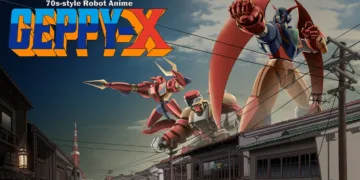























Geppy-X sells shampoo between battles against the Space Demon Empire, and the commercial break may be its strongest design choice. One moment, three young pilots are combining their vehicles into a giant robot. Minutes later, a grinning spokesman is advertising some ridiculous Geppy-X product while warning viewers against pouring it into their eyes.
This 1999 PlayStation shoot ’em up was never released outside Japan, yet it behaves like a television series that has been waiting decades for its international broadcast. Each stage arrives as a complete episode, with an opening song, title card, animated setup, mid-episode eyecatch, fake advertisements, closing credits, and a preview of the next battle.
The structure changes how the short shooting stages feel. A boss encounter is no longer a level endpoint. It becomes the dramatic confrontation promised by the episode title. The exaggerated speeches, sudden sacrifices, sports-anime references, and attacks shouted at maximum volume create a rhythm that feels closer to scheduled television than an arcade campaign.
The parody carries real affection. Geppy-X borrows heavily from super robot shows such as Getter Robo and Mazinger Z, yet its jokes rarely treat the genre as disposable. The three-pilot team, combining vehicles, alien empire, dramatic upgrade to Geppy-XX, and endlessly reusable theme songs are recreated with the enthusiasm of people who know exactly why these conventions endure.
Three Forms, One Favorite
The shooting underneath the presentation is much less remarkable. Geppy-X moves through compact side-scrolling stages, clearing enemy formations before facing one of the game’s frequent bosses. Its three forms can be switched during combat, each carrying a distinct primary weapon, secondary attack, charged versions, and a screen-filling special move.
X1 is the safest choice, firing a spread of bullets and piercing cutters. X2 uses a direct laser and mines that cover the lower part of the screen. X3 trades distance for force, striking nearby targets with a chop that can repel certain projectiles before launching a rocket punch across the stage.
The forms sound like answers to different tactical problems, yet the level design rarely forces the player to use them that way. Once one loadout feels effective, there is little pressure to abandon it. X2’s lingering explosions can erase enemies before they become dangerous, while X3’s melee attack offers protection that the other forms cannot match. Preference soon replaces adaptation.
Transforming still carries value because Geppy-X becomes briefly invulnerable during the animation. That turns the switch command into an emergency dodge during crowded boss patterns, giving the system a defensive purpose that the enemy layouts rarely create on their own.
The robot’s weight is harder to forgive. Turning around to attack enemies from behind feels slow, especially when a charged shot must finish before the command will register. Damage feedback is similarly soft. Enemies absorb attacks without enough visual response, making battles feel less forceful than the screaming vocals suggest.
An Anime Season You Control
The campaign’s emotional pull comes from the way play and presentation keep feeding each other. A theme song continues during combat, transforming an ordinary wave of enemies into the climax of an episode. A boss defeated under certain conditions can trigger a special animated finishing sequence. The mid-season arrival of Geppy-XX brings stronger weapons, then opens three narrative routes through the later stages.

Those branches reuse familiar locations, yet the altered story context gives repeated battles a new charge. One route may steer the pilots toward failure, another toward a cleaner victory. Completing them unlocks side episodes built around other machines, including Wild John, Fairy, Star Geppys, R-64, and the absurdly powerful Atlanger.
A single campaign can be cleared quickly, but the game keeps finding reasons to return. Alternate routes reveal different scenes. Bonus campaigns change the available weapons and armor. The Movie mode strings the bosses together into a dedicated challenge. Special animations reward specific finishing conditions, giving familiar encounters a small layer of theatrical experimentation.
Repeated cutscenes can slow later runs, especially when the player already knows the joke or character beat waiting ahead. Yet skipping every sequence would drain the game of its pulse. Geppy-X works because combat feels like the playable portion of a fictional broadcast, complete with interruptions that would seem intrusive anywhere else.
Restoring the Strange Parts
The remaster treats that fictional broadcast with remarkable care. Over 8,000 hand-drawn frames were recovered from Betacam material and restored at 24 frames per second. The cleaned footage looks sharp and fluid, while the gameplay retains the sprites, crude polygonal models, and low-resolution assets of the PlayStation original.
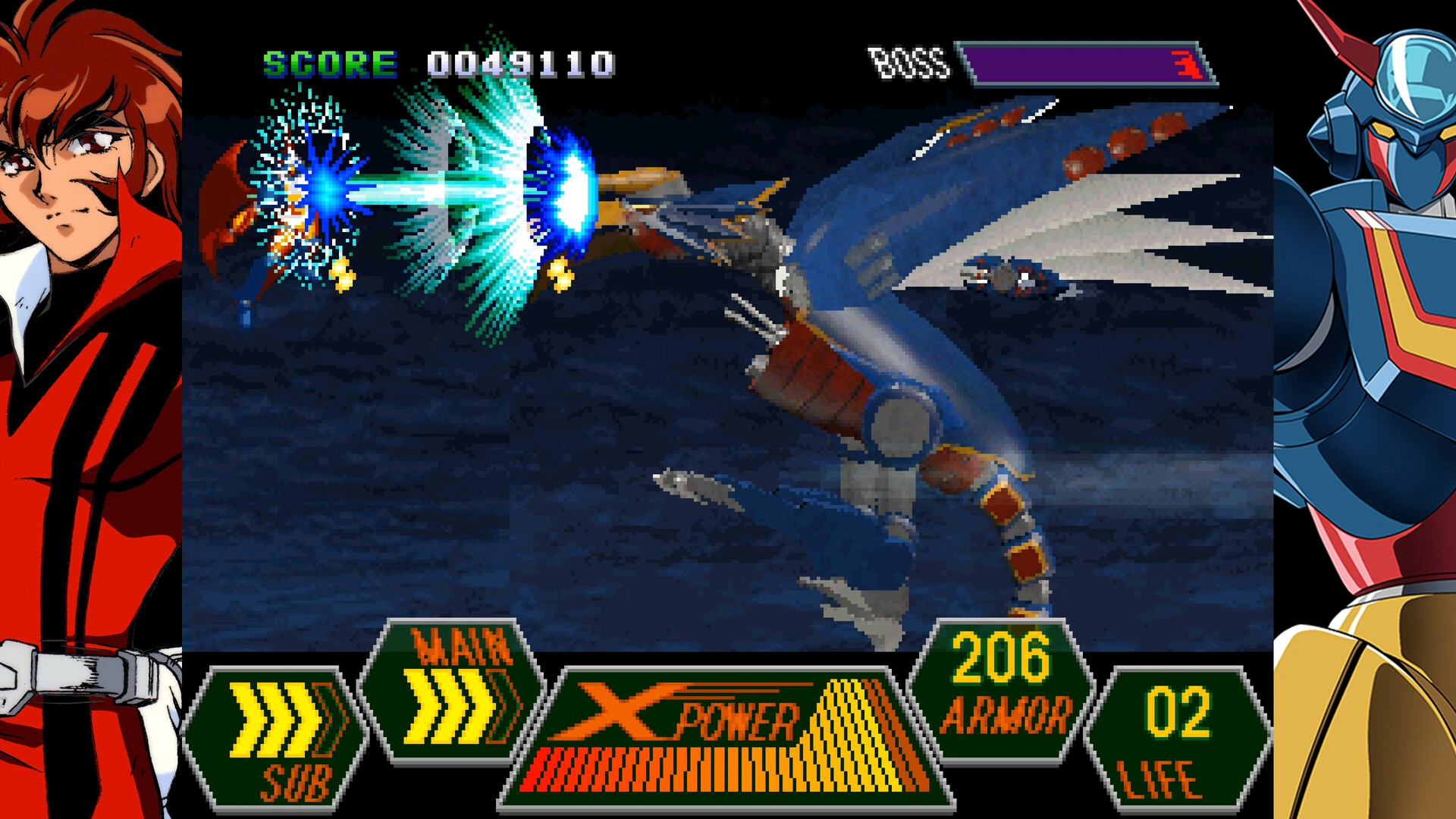
The contrast can be jarring. A polished animated sequence may cut directly to a chunky robot model drifting across a flat background. Yet smoothing that divide would erase part of the game’s identity. Geppy-X belongs to a period when lavish video footage and limited real-time graphics could share four discs without ever appearing to inhabit the same machine.
Players can switch the animation back to its original compressed presentation. CRT filters add scanlines, curvature, and side panels around the 4:3 image. Rewind, quick saves, instant loading, and continuous-fire controls soften frustrations without rewriting the combat. The English subtitles finally make the plot, commercials, genre references, and branching routes accessible beyond Japan.
That localization matters because Geppy-X was never valuable solely as an old shooter. It is valuable as evidence of how far a studio could take one ridiculous idea: create an anime that never aired, turn every episode into a game level, hire legendary singers to perform its themes, then pause the battle to advertise salad dressing. Few preservation projects trust the oddity of what they save this completely.
The Review
70s-Style Robot Anime Geppy-X
70s-Style Robot Anime Geppy-X survives on feeling. Its sluggish turning, soft damage feedback, and limited demand for form-switching keep the shooting from matching the spectacle around it. Yet every opening theme, fake shampoo commercial, mid-episode eyecatch, and lovingly restored cutscene makes the player feel as though a forgotten anime season has started broadcasting again. Rewind, quick saves, alternate routes, and extra machines make the dated design easier to embrace. Better shooters exist. Few carry this much personality, affection, and historical texture.
PROS
- Brilliant episodic anime presentation
- Beautifully restored hand-drawn footage
- Infectious songs and voice work
- Generous routes and bonus campaigns
- Excellent preservation features
CONS
- Sluggish turning mechanic
- Weak combat feedback
- Forms lack tactical necessity
- Repeated cutscenes slow replays