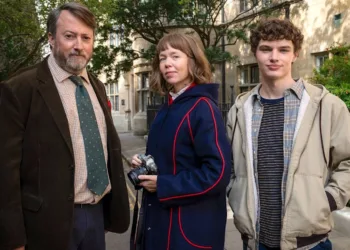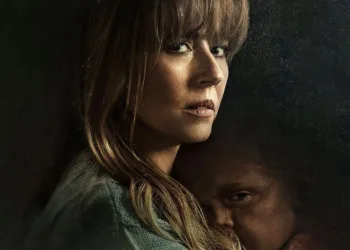















A murder victim sitting underground with his severed head in his lap is a fairly decisive invitation to investigate. The trouble is that Nulla, the fictional opal-mining town at the centre of Treasure & Dirt, treats decapitation with the weary practicality other places reserve for a burst water pipe.
Adapted from Chris Hammer’s 2021 novel by Matt Cameron and Kate Mulvany, this six-part crime drama sends homicide detective Ivan Lucic into a remote settlement where unofficial law carries greater authority than the badge pinned to his jacket. Director Madeleine Gottlieb takes the familiar Australian small-town mystery and bends its reality until every police interview, mine shaft, and local custom feels faintly wrong.
Ivan’s first lead comes from the anonymous “ratter” who reported the body. Rookie detective Nell Buchanan explains that ratters crawl into mines at night and steal opals while their owners sleep. Somewhere, a tooth fairy has hired a criminal solicitor.
The investigation begins with robbery as the obvious motive. Jonas, the dead miner, was rumoured to have found a valuable black opal. His head then disappears from the crime scene, which complicates the paperwork and suggests Nulla’s residents are interested in controlling the evidence rather than helping the visiting detective collect it. The central mystery is solidly constructed, yet the murder quickly becomes a passport into the town. Nulla is the real case.
Local Law, Local Lunacy
Senior Sergeant Pat Richter, played with wonderfully exhausted authority by Sarah Peirse, describes Nulla as a backward, violent, inbred settlement where the parking is free. She delivers the line after taking a nap behind her desk, which appears to be the local police force’s preferred form of strategic planning.
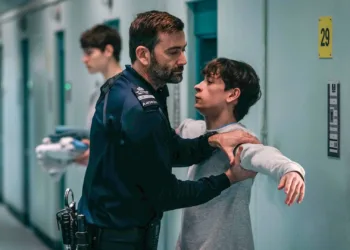
Pat advocates “self-policing,” a phrase that sounds reassuring until local officers drag suspects into an underground fighting ring and treat physical punishment as an evidentiary shortcut. The police station may carry the symbols of official order, but its officers operate through habit, intimidation, and alliances formed long before Ivan arrived.
The town’s criminal customs are matched by its social hierarchy. Mark Mitchinson’s self-proclaimed Mayor first appears marinating in an outdoor spa, wearing rainbow-coloured bathers and drinking a piña colada. He could have become a single extended joke. Gottlieb directs him with complete seriousness, allowing the humor to come from his confidence that everyone else understands his authority.
That approach protects the supporting cast from becoming a parade of quirky suspects. Nathan Jones plays Jonas’s mute companion, known as the Giant or Man Mountain, as a looming presence whose silence gradually reads as loyalty rather than menace. Dean O’Gorman’s opal dealer, the Irishman, understands the trade and its hidden arrangements. Elsie, Jonas’s estranged daughter, arrives with a sick child and an expectation that her father left behind something valuable.
Then come the people who see value on a larger scale. An established mining magnate represents the old economy, while Eamon Farren’s tech billionaire Robby Inglis wants rare-earth resources beneath Nulla. The town may look abandoned by modern Australia, yet the ground under it is tied to technology, corporate extraction, and fortunes large enough to make a missing opal seem quaint.
A town-wide celebration eventually turns drinking, resentment, and local performance into a pressure valve. It is the kind of community event where everyone has fun, nobody relaxes, and the detective should probably keep his shoes on.
Partners and Suspects
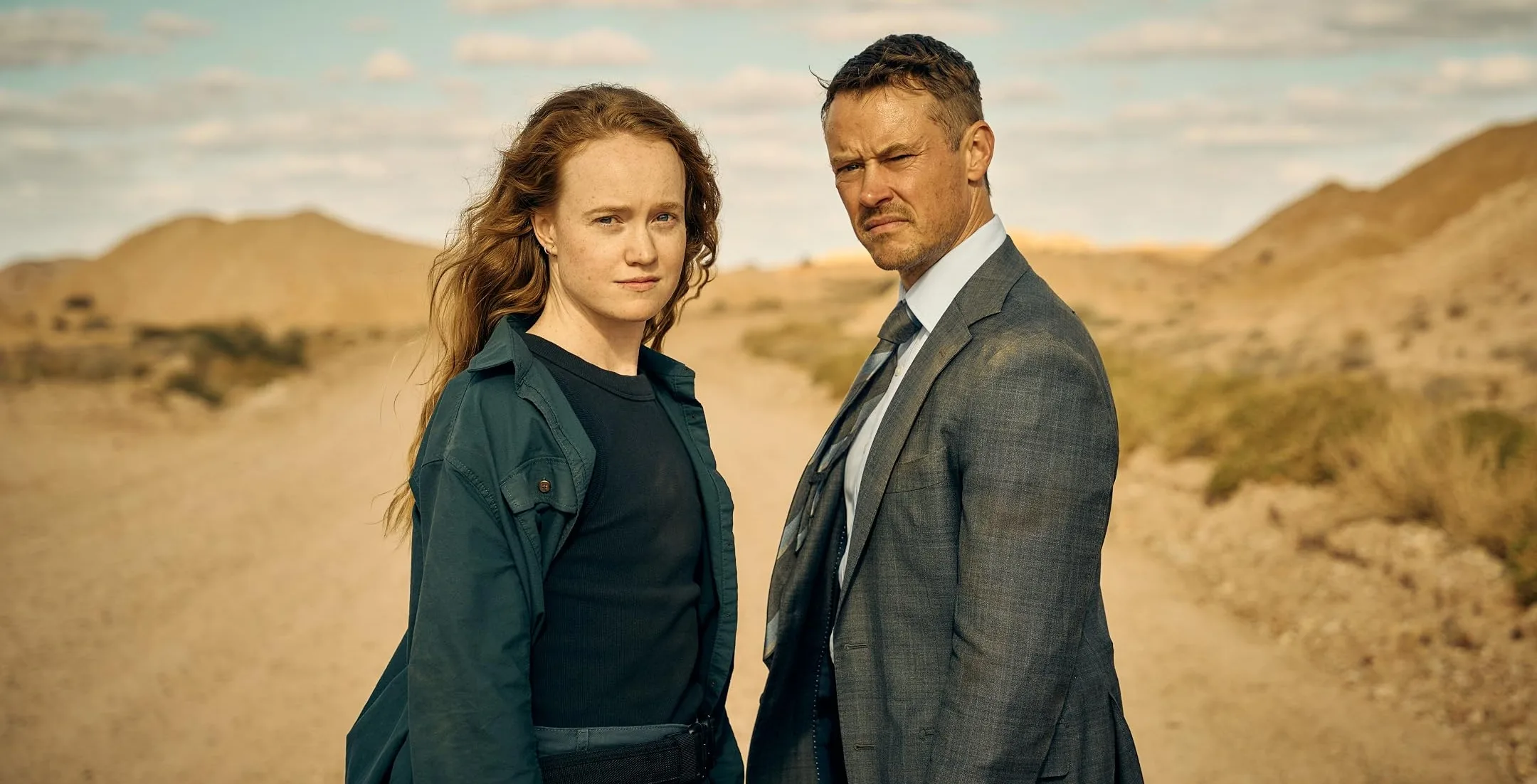
Michael Dorman’s Ivan arrives in a suit jacket that seems personally offended by the heat. His posture is rigid, his questions are clipped, and his patience can disappear between one sentence and the next. He assumes Jonas’s murder will be open and shut. Nulla takes that confidence, places it underground, and begins hitting it with mining equipment.

Ivan sleeps with his holster nearby, suffers nightmares, and carries a violent streak that makes his authority difficult to separate from his instability. Dorman is particularly effective when Ivan appears calm. A tightened jaw or a pause before responding can turn an ordinary exchange into a warning.
The series keeps Ivan’s past vague enough to make every outburst matter. Is he an experienced detective losing control, or has control always been a carefully managed appearance? The script does not hurry to answer, and Dorman gives both possibilities room to breathe.
Liv Hewson’s Nell has previously worked in Nulla and knows exactly how badly the case can go. She returns without Ivan’s illusions, but her knowledge comes with its own problem: many locals already dislike her, and the police culture expects obedience to its unwritten rules.
Hewson makes Nell’s discomfort physical. Her shoulders stiffen around former colleagues. Her replies become sharper when locals treat corruption as tradition. She can explain the town’s behavior to Ivan without accepting it, a distinction the performance keeps clear.
Internal Affairs then contacts Nell and asks her to observe her new partner during her first homicide investigation. She needs Ivan’s experience, suspects his behavior could endanger the case, and knows that reporting him may destroy their working relationship before it has formed.
Their partnership gains energy from that imbalance. Ivan presses witnesses directly. Nell reads the silence around each answer. He treats local customs as obstacles; she knows they are part of the evidence. Some of their emotional development remains thinner than the mystery requires, particularly once new suspects and corporate interests enter the story, yet their mutual suspicion keeps even routine conversations unsettled.
Bessie Holland’s forensic specialist Carole offers welcome relief, listening to “sapphic fairy smut” while she works. It is a tiny character detail, yet it gives the station a pulse beyond suspicion and gloom. Every grim procedural needs someone who can examine a severed head and maintain a reading list.
Empty Space, Crowded Minds
Cinematographer Edward Goldner repeatedly places people against wide desert landscapes, weathered industrial buildings, and vacant interiors. The images do not make the characters look free. They make them look misplaced.
Even the police station feels too large for its purpose. Characters sit in rooms with empty space stretching behind them, as though the institution has lost people, authority, or both. Gottlieb often steadies the camera and lets a figure remain small within the frame. The shot gives the viewer time to notice how exposed everyone is.
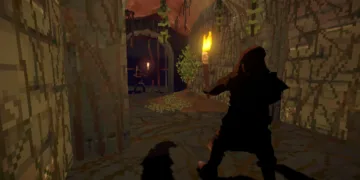
Below ground, the grammar changes. Mine shafts, tunnels, the fighting ring, and the hidden religious community compress the frame. Nulla offers endless sky, yet its residents keep moving downward to find money, punishment, belief, or privacy. The town’s true architecture runs beneath its visible streets.
Tyson Williams’s editing preserves pauses that a faster crime series would trim away. Conversations at the burger truck are allowed to settle. A desert monument holds the camera long enough to become mournful rather than picturesque. Silent reactions remain after the useful dialogue has ended, leaving the suspicion hanging in the room.
This patience does create slow patches. The middle stretch introduces several suspects and competing interests while the central case advances in small increments. The series sometimes seems so pleased with Nulla that it forgets a detective is waiting for the next clue.
Still, the measured rhythm supports the town’s dream logic. Characters behave strangely without the show underlining their strangeness. The Mayor does not know he is comic relief. Pat does not think her policing methods require explanation. The Giant does not perform mystery for the audience. These people live here. Ivan is the odd one.
The lighting may prove divisive, especially for readers expecting the harsh brightness associated with Hammer’s grounded novel. Gottlieb and Goldner use faded colour, shadow, and dim interiors to create psychological enclosure. It is less interested in meteorological accuracy than emotional weather. The outback is bright. Nulla has decided otherwise.
Faith Underground
Thomas M. Wright brings quiet menace to David, known as the Seer, leader of a Christian sect housed beneath the earth. Jonas had been expelled from the group, making David both a suspect and a keeper of information the investigation cannot easily reach.
Wright rarely raises his voice. His stillness carries the threat. In his exchanges with Ivan, David speaks like a man who believes he has already judged the detective and is waiting for Ivan to notice.
Their scenes sharpen the series’ interest in faith. Elsie believes her father left something behind. The Giant remains loyal to a man almost everyone else dismisses. Nell must decide how much trust Ivan deserves. Ivan continues to rely on his own methods while evidence of his instability accumulates. Mining companies treat the land as a promise waiting to be converted into ownership.
David’s sect gives that idea a literal home underground, yet Nulla already runs on belief systems. The police believe local custom excuses violence. The Mayor believes declaring himself Mayor is sufficient electoral procedure. Rich outsiders believe buried resources belong to whoever can acquire the paperwork.
The murder plot follows recognizable steps: missing evidence, family claims, rival mining interests, corrupt officers, hidden communities, and a victim whose past keeps widening the suspect list. Cameron’s scripts handle those mechanics cleanly. The series earns its strongest moments when the investigation stops asking who killed Jonas and begins asking what kind of place could absorb his death so easily.
Readers attached to the novel’s restraint may reject the amplified performances, Ivan’s volatility, and the noir-inflected visuals. The adaptation keeps Hammer’s characters and broad mystery while changing the temperature of the material. It is a legitimate objection. It is also difficult to imagine this version of the Mayor surviving a restrained approach, and television would be poorer for losing the piña colada.
Treasure & Dirt keeps digging through opal, evidence, family loyalty, corporate hunger, and religious conviction. Every hole reveals another system operating beneath the official one. In Nulla, the ground is unstable, the law is negotiable, and the dead cannot even rely on keeping their heads.
This Australian crime drama series premiered on ABC and ABC iview on July 19, 2026. Set in a dying desert opal-mining town, the story follows a detective and a local officer who investigate a grim discovery in the mines, unearthing deep-seated corruption among the inhabitants.
Full Credits
Title: Treasure & Dirt
Distributor: ABC Television, ABC iview
Release date: July 19, 2026
Rating: TV-MA
Running time: 60 minutes per episode
Director: Madeleine Gottlieb
Writers: Chris Hammer, Matt Cameron, Kate Mulvany
Producers and Executive Producers: Matt Cameron, Ian Collie, Rob Gibson, Rebecca Summerton, Rachel Okine
Cast: Michael Dorman, Liv Hewson, Sarah Peirse, Kris McQuade, Bessie Holland, Glenda Linscott
Director of Photography (Cinematographer): Edward Goldner
Editors: Tyson Williams
Composer: Julia Webster
The Review
Treasure & Dirt
Treasure & Dirt takes a familiar outback murder setup and buries it beneath eccentric local law, corporate greed, damaged faith, and one deeply unsettling Mayor in rainbow bathers. Madeleine Gottlieb’s direction makes Nulla feel geographically real and spiritually misplaced, while Michael Dorman and Liv Hewson give the investigation a tense, unstable pulse. A few relationships remain thin, and readers loyal to Chris Hammer’s restrained novel may reject the heightened approach. Taken on its own terms, though, this is a crime drama with dirt under its nails and something strange moving below ground.
PROS
- Nulla’s vivid, uncanny atmosphere
- Strong direction and cinematography
- Dorman and Hewson’s tense partnership
- Memorable supporting characters
- Effective underground imagery
CONS
- Occasional pacing dips
- Some underdeveloped relationships
- Major tonal changes from the novel