




















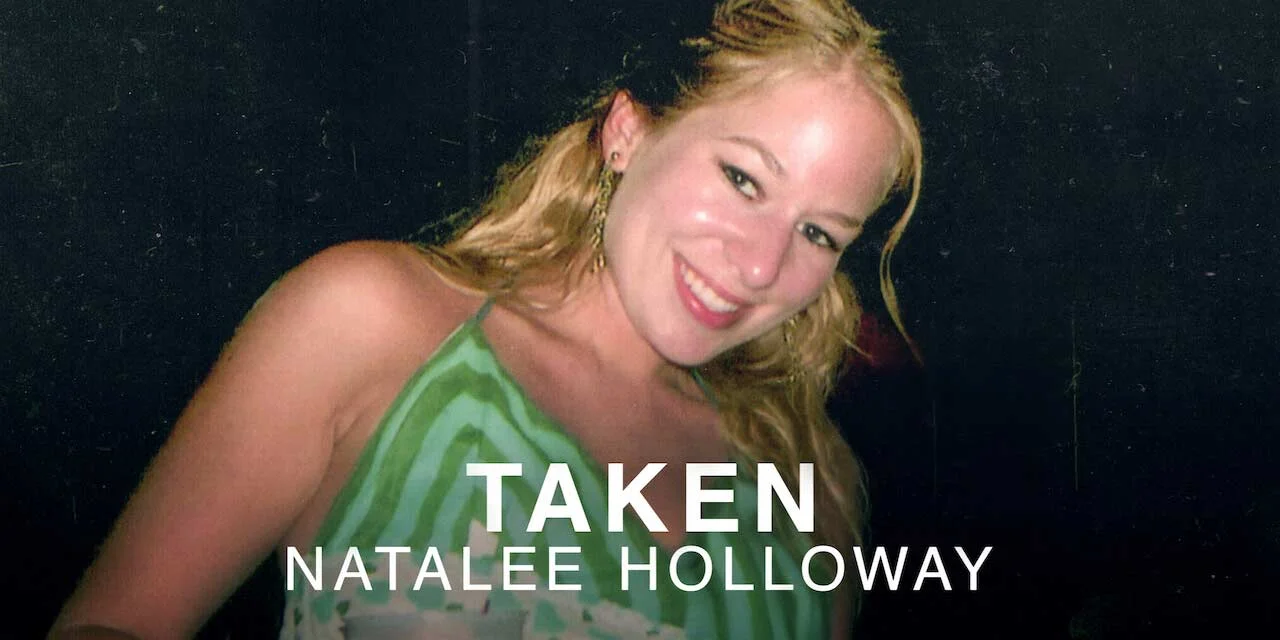

Beth Holloway reads a letter to the man who admitted killing her daughter. The admission arrives before the investigation has been retraced, denying Taken: Natalee Holloway the conventional destination of a true crime mystery. Directors Danielle Sloane and Matthew Galkin establish immediately that Joran van der Sloot confessed in 2023, eighteen years after Natalee disappeared during a graduation trip to Aruba.
Across three episodes, the question becomes how someone suspected so early could keep controlling the supply of answers. Beginning with Beth speaking to him gives that question a personal direction: the series must account for the years between her suspicion and his admission.
An early investigative detour gives those years a specific cost. Van der Sloot claims that Natalee was returned to her hotel, directing police attention toward two security guards. That account collapses, and archival footage shows one of the cleared guards demanding an apology.
The sequence matters because it traces a lie beyond the person telling it. Investigators pursue the wrong people, innocent men face public suspicion, and Beth remains without her daughter. It also establishes a useful distinction for the episodes ahead: confidence about a suspect and evidence capable of securing accountability develop at different speeds.
The documentary becomes less decisive when it assembles competing explanations for the early police response. Beth recalls waiting to speak with officers and criticizes the handling of questioning and forensic evidence. Former deputy chief Dompig, interviewed off camera, defends an investigation he says began without the usual waiting period. Aruban journalist Dilma Arends Geerman contests the American portrayal of an inactive island while acknowledging concern about delayed questioning.
These accounts widen the record, but placing them together cannot settle every disputed decision. Testimony about residents leaving work to search establishes community effort. It does little to answer a complaint about evidence collection. The series supplies enough distinction to complicate Beth’s account, though its rapid chronology sometimes leaves the viewer to sort out which defense answers which accusation.
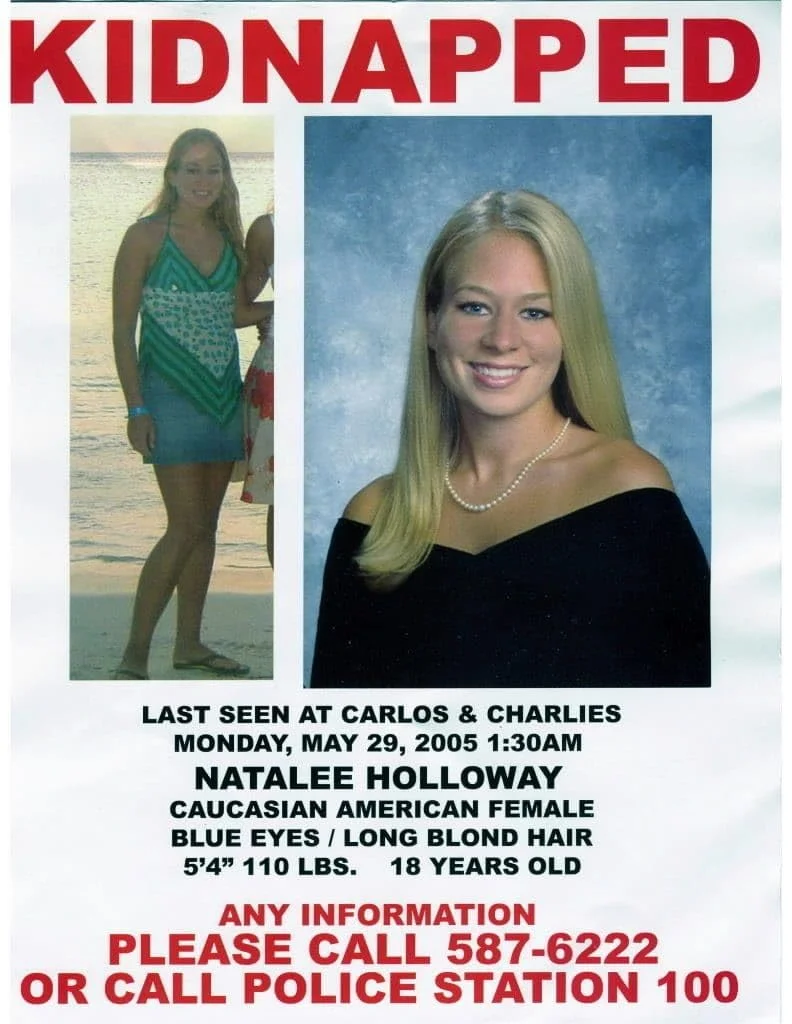
Beth’s prominence gives this procedural material continuity, with a corresponding limit on how fully Natalee emerges independently of the search. Friends Madison Greer and Claire Fierman describe a determined, academically focused young woman with friendships and ambitions. Home videos and a calendar filled with social plans provide something less formal than the familiar senior portrait.
The calendar is especially effective because its entries belong to ordinary expectations, made before anyone knew they would become evidence of a stolen future. Yet these glimpses remain brief beside the sustained attention to Beth’s pursuit and van der Sloot’s evasions. The mother receives a developing story; the daughter is established largely through affectionate recollection and interrupted plans.
The news archive explains how Beth acquired some power within that story. Her press conferences and television appearances repeatedly return Natalee’s disappearance to public attention. Footage of Beth and Greta Van Susteren outside the van der Sloot family home shows reporting becoming part of the pursuit itself, bringing access and pressure to a mother confronting institutions in another country.
The documentary can draw on those images now because the search was conducted so publicly then. They preserve Beth acting under uncertainty, allowing her present-day recollections to be tested against the urgency of her earlier appearances.
That public record also contains evidence of what the coverage demanded from everyone around her. News camera operator Tony Zumbado describes pressure from editors to produce developments. A live interview with one of Natalee’s friends shows the effect with uncomfortable precision: asked why the friends failed to call Natalee’s mobile, she explains that it was in the hotel room.
The accusation precedes the basic reporting needed to support it. By retaining the exchange, the documentary gives the archive a purpose beyond marking the passage of time. It lets the viewer examine how a missing teenager’s friends could become answerable for a broadcaster’s incomplete knowledge, while van der Sloot continued receiving opportunities to circulate changing accounts.
The supposed discovery of Natalee’s clothing exposes another demand created by prolonged uncertainty. Beth describes an apparent lead that testing reveals to be fraudulent. Its narrative value lies in the renewed commitment it requires from her: information must be considered because dismissing it could mean losing the answer she has spent years seeking.
This incident earns its place without needing to function as another surprise. Alongside the television material, it shows how the search generates opportunities for people who can offer a claim and leave Beth to bear the consequences of taking it seriously.
Repeated deception could easily flatten the middle episode into a succession of temporary breakthroughs. The stronger passages distinguish what each recording actually changes. Hidden-camera material from a Dutch television investigation makes van der Sloot’s statements public and produces outrage, without delivering the legal outcome Beth seeks.
Later, his solicitation of money for information about Natalee’s remains gives her attorney, John Q. Kelly, a reason to involve the FBI. The information proves false, but the transaction creates evidence for a different case. These are separate developments, and the series maintains momentum when it explains their different uses rather than treating every recorded statement as an interchangeable step toward confession.
The third episode introduces a change that no pacing argument can make tidy: van der Sloot’s murder of Stephany Flores Ramírez in Peru. Her death belongs to another family’s history, even as it becomes part of the chronology leading toward his eventual admission concerning Natalee.
The compact running time keeps the account moving, but it also concentrates the narrative around what brings Beth closer to an answer. Her expression of sympathy for Flores’s family is necessary here. It makes room for another bereavement within a structure otherwise organized around her own pursuit.
Beth’s reported relief gives the final stretch its emotional development. Receiving an account of Natalee’s death changes what she has been waiting for, while leaving distinct legal and physical absences. Van der Sloot’s Peruvian murder conviction concerns Flores; his American convictions concern extortion and wire fraud.
His admission to killing Natalee is not a murder conviction in her case, and her remains have not been recovered. Beth can describe the release of finally knowing without those facts becoming interchangeable. Her recognition of Flores’s family extends that moment beyond the answer she received, toward people whose loss continues alongside hers.
Taken: Natalee Holloway premiered globally on Netflix on November 4, 2026. Directed by Dani Sloane and Matthew Galkin, the three-part true-crime docuseries examines the mysterious 2005 disappearance of 18-year-old Natalee Holloway in Aruba and traces her mother Beth’s relentless, decades-long search for justice and answers.
Where to Watch Taken: Natalee Holloway Online


Full Credits
Title: Taken: Natalee Holloway
Distributor: Netflix
Release date: November 4, 2026
Rating: TV-MA
Running time: 36–39 minutes per episode (3 episodes)
Director: Dani Sloane, Matthew Galkin
Producers and Executive Producers: Dani Sloane, Matthew Galkin, Liz Garbus, Dan Cogan, Jon Bardin, Tommy Coriale
Cast: Beth Holloway, Joran van der Sloot, Dave Holloway
The Review
Taken Natalee Holloway
Revealing the confession immediately gives Taken: Natalee Holloway a useful structural task: explaining why suspicion took eighteen years to become an answer. Its strongest sequences trace the consequences of false accounts and examine news coverage through its own archive. Beth’s pursuit provides continuity and emotional force, though Natalee receives less sustained attention, and competing accounts of police conduct need clearer adjudication. The three episodes earn their pace by distinguishing public revelations from usable evidence, while preserving the distance between Beth’s relief and legal accountability.
PROS
- Early disclosure redirects attention toward the prolonged search.
- News archives expose specific failures in reporting.
- Investigative recordings serve distinct narrative and evidentiary purposes.
CONS
- Natalee’s personal portrait remains comparatively limited.
- Competing accounts of police decisions lack sufficient clarification.