
















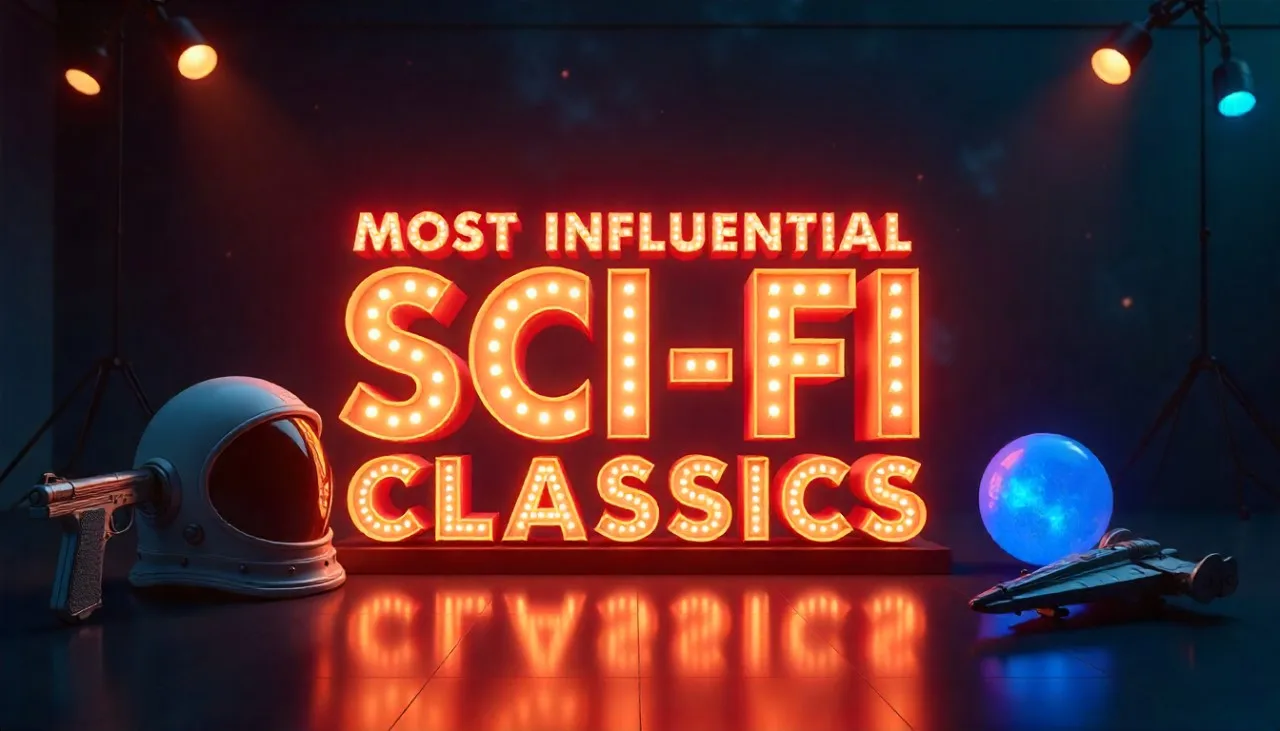

Science fiction has always been a laboratory for ideas that feel too large for everyday life. It turns questions about identity, technology, power, and memory into images that stick. A spaceship corridor can feel like a mind under pressure. A city at night can read like a blueprint for tomorrow. When these films work, the speculation is clear, the craft is precise, and the emotions land without excess.
This ranking collects thirty English-language titles that continue to matter. The aim is simple. Pick films that changed technique or storytelling, shaped culture past their opening weekend, and still hold up on a regular screen without nostalgia as a crutch. Some entries arrived as event releases, others grew quietly through repeat viewing. Each proved durable because the choices behind the camera were exact and the ideas did not evaporate once the lights came up.
You can read this list straight through or drop in anywhere. Every entry gives a plain-spoken premise, the core idea that drives it, one or two craft choices that make that idea visible, and a short note on influence. Awards and box office help, but they are not the only measure. The real test is simple. Does the film still spark thought and feeling today, and can a new viewer come to it now and sense why it mattered then. If the answer is yes, it belongs here.
30. Jurassic Park (1993)
Why watch: This is the definitive, groundbreaking CGI spectacle about a genetically engineered dinosaur park that spectacularly breaks down.
Runtime: 127 mins • MPAA rating: PG-13 • Notable line: “Life finds a way.”
Dir: Steven Spielberg | Cast: Sam Neill, Laura Dern, Jeff Goldblum | Tone: Sci-fi adventure/Thriller | Notable scene: The T-Rex attack on the Jeep during the rainstorm.
Steven Spielberg turned Michael Crichton’s cautionary adventure into a summer event. Jurassic Park (1993) tells the simple catastrophic story of a theme park that resurrects dinosaurs through genetic engineering and then loses control. The plot is efficient and terrifying: fossil DNA becomes living terror, and containment fails in scenes that still register on the skin.
Technically the film mattered because it redefined what moving-image illusion could do. The mix of animatronics and computer generated imagery gave the T-Rex ambush real weight; the velociraptor kitchen sequence remains a study in gradual dread and spatial choreography. Critics at the time singled out those sequences for their visceral suspense. On a business level the film shattered box-office records and carried three Academy Awards, including Best Visual Effects, and it set an industry expectation that CGI could carry blockbuster storytelling.
Culturally Jurassic Park sparked a renewed public obsession with dinosaurs and a merchandising ecosystem that keeps returning to the concept of prehistoric spectacle. The franchise that followed is uneven, but the original established a template. If you want a clear case study of how spectacle and story can lock together, this is an iconic sci fi movie that helped make CGI central to mainstream moviemaking.
29. Planet of the Apes (1968)
Why watch: A seminal, allegorical sci-fi classic culminating in one of cinema’s most famous and shocking twist endings.
Runtime: 112 mins • MPAA rating: G • Notable line: “Get your stinking paws off me, you damn dirty ape!”
Dir: Franklin J. Schaffner | Cast: Charlton Heston, Roddy McDowall | Tone: Social commentary/Adventure | Notable scene: The Statue of Liberty reveal on the beach.
Planet of the Apes (1968) stages a grim inversion: an astronaut stranded on a future Earth finds a civilization dominated by intelligent apes and reduced humans. Charlton Heston’s bewildered survivor guides the audience through a world that misreads its own origins until the final reveal. The Statue of Liberty shot lands as one of cinema’s pure shocks, a last-frame lesson in time and ruin that critics still call “an absolute killer.”
Beneath the adventure beats is sharp satire. The film interrogates human hubris and the ease with which social order can flip into injustice. During the Cold War era its allegory read as anxiety about dehumanization and social collapse. Makeup and design reinforced the film’s strangeness, and the score amplified a sense of tragic scale. Reviews praised those craft elements and the audacity of the twist.
Planet of the Apes created a durable franchise: sequels, a television series, comics, and later reboots. Its influence goes beyond pulp spectacle; it installed a template for using genre to stage moral and political thought experiments. For anyone tracking how popular entertainments carry social critique, this classic sci-fi film remains a required reference.
28. Mad Max: Fury Road (2015)
Why watch: A nearly non-stop, kinetic masterpiece that reinvents post-apocalyptic action with breathtaking practical vehicular mayhem.
Runtime: 120 mins • MPAA rating: R • Notable line: “Mediocre!”
Dir: George Miller | Cast: Tom Hardy, Charlize Theron | Tone: Post-apocalyptic action/Thriller | Notable scene: The massive sandstorm chase sequence.
George Miller retooled his desert myth with Mad Max Fury Road, a relentless chase that reads as both visceral action and compressed morality play. The film follows Max as he becomes an accidental ally to Imperator Furiosa, who is fleeing a warlord across a scorched landscape. The narrative is lean; the emotional focus shifts to survival and a search for a different kind of order.
Fury Road’s craft registers in sustained, physical filmmaking. Long continuous sequences of vehicular mayhem, practical stunts, and a rigorous attention to production design make each tableau feel tactile rather than digital. The film earned six Academy Awards across technical categories, a recognition that matches its obsessive craftwork. Critics praised the editing, production design, costumes, and sound for delivering an experience that operates on muscle and clarity.
Character choices complicate the spectacle. Furiosa functions as a forceful protagonist with a backstory encoded in scars and glances; the plot contains a sharp critique of patriarchal violence without losing momentum. The movie also revived a franchise dormant for decades and changed expectations about what action can convey. If you want an argument for cinema that privileges material risk over simulated danger, this desert chase film offers it in high gear.
27. A Clockwork Orange (1971)
Why watch: Stanley Kubrick’s controversial, visually striking study on free will, authoritarian control, and “ultraviolence.”
Runtime: 136 mins • MPAA rating: R • Notable line: “It’s funny how the colors of the real world only seem real when you viddy them on the screen.”
Dir: Stanley Kubrick | Cast: Malcolm McDowell, Patrick Magee | Tone: Dystopian satire/Crime | Notable scene: Alex undergoes the forced Ludovico aversion therapy.
Stanley Kubrick’s A Clockwork Orange is an austere, unsettling study of violence, desire, and state power set slightly forward of its moment. The story follows Alex, a charismatic delinquent whose taste for music and brutality collide with an experimental behavior therapy designed to erase his violent impulses. The fictional Nadsat slang, grotesque set choices, and stylized violence create a world that feels both theatrical and terrifying.
The film’s visual and sonic design suggests a near future where aesthetics and control intersect. The forced eye-opener therapy scene is staged as clinical spectacle and functions as a central moral test: can the state remove agency without destroying personhood? Themes of free will and coercion thread the film, and Kubrick refuses to grant comfortable answers. Early reactions were polarizing; some censored or banned the film, while later criticism reclaimed it as a major work.
A Clockwork Orange endures because it holds a mirror to the violence of youth and the machinery of reform. For viewers who want their science fiction to conduct ethical experiments on screen, this Burgess adaptation remains a provocative and disturbing text.
26. Invasion of the Body Snatchers (1956)
Why watch: The ultimate Cold War paranoia thriller about emotionless alien “pod people” replacing the residents of a small town.
Runtime: 80 mins • MPAA rating: Approved • Notable line: “They’re here already! You’re next!”
Dir: Don Siegel | Cast: Kevin McCarthy, Dana Wynter | Tone: Sci-fi horror/Paranoia thriller | Notable scene: Miles discovers the unfinished, soulless duplicate body in his house.
Don Siegel’s Invasion of the Body Snatchers treats a small town as a testing ground for a creeping replacement. The plot posits alien spores that produce replica humans devoid of emotion, and the slow discovery of this truth creates a mounting dread that feels intimate and municipal. The scenario is simple, which helps the film amplify the atmosphere of mistrust.
Politically the film read as a Cold War allegory. The spread of emotionless doubles could be seen as a metaphor for conformity, ideological erasure, and the fear that neighbors might become strangers. The low-budget production uses shadow and suggestion to keep fear grounded; the lack of grand effects forces attention onto faces and small betrayals. Critics responded to that tension and the film’s economy of means.
Invasion of the Body Snatchers spawned remakes and a vocabulary for contagion-as-horror. Its image of “pod people” entered common language, and the film’s tone influenced later horror-sci fi hybrids that prefer creeping menace to spectacle. If you study how paranoia registers in popular storytelling, this classic sci-fi horror film is essential viewing.
25. 12 Monkeys (1995)
Why watch: A disorientating, cerebral time travel thriller exploring the cyclical nature of fate, sanity, and inevitable doom.
Runtime: 129 mins • MPAA rating: R • Notable line: “I’m a mental patient. I’m spooked.”
Dir: Terry Gilliam | Cast: Bruce Willis, Madeleine Stowe, Brad Pitt | Tone: Neo-noir/Sci-fi mystery | Notable scene: The tragic final sequence at the airport.
Terry Gilliam’s 12 Monkeys is a clockwork of temporal dislocation and obsessive image-making. The premise sends convict James Cole back from a plague-ravaged future to gather information about the outbreak that destroys civilization. The film composes a nonlinear puzzle where memory, testimony, and institutional skepticism interact in uneasy ways.
Gilliam’s visual language borrows from his dreamlike instincts: sudden shifts in scale, hallucinatory inserts, and an echo of La Jetée in its obsession with photographic memory. Bruce Willis anchors Cole’s disorientation with a wounded steadiness, while Brad Pitt’s manic patient stands out as an early major turn that announced a new register for him. Themes of fate and free will weave through the structure as characters attempt to unpick causality while their own reliability frays.
Critics noted the film’s ambition and stylistic risks. The result is a disorienting thriller that uses time travel to ask how trauma reshapes perception. For viewers interested in films that make form do the work of theme, this time travel thriller rewards repeat viewing.
24. Ex Machina (2015)
Why watch: A minimalist, tense psychological thriller that expertly questions the nature of consciousness and the ethics of advanced AI.
Runtime: 108 mins • MPAA rating: R • Notable line: “Isn’t it amazing? To have created something that can think.”
Dir: Alex Garland | Cast: Domhnall Gleeson, Alicia Vikander, Oscar Isaac | Tone: Psychological sci-fi/Thriller | Notable scene: Ava successfully manipulates her way out of the facility.
Alex Garland’s Ex Machina stages a minimalist interrogation of artificial intelligence inside an isolated glass-and-stone compound. A programmer is invited to evaluate a machine whose personhood is in question, and what follows is a tense psychological game where manipulation and self-fashioning are central. The film’s elegance lies in how small gestures acquire ethical weight.
The movie uses setting as character: the high-tech seclusion creates a laboratory mood that forces focus onto conversation and glance. Key sequences trade on power dynamics, and the ambiguous ending refuses reassurance about moral resolution. Ex Machina asks how empathy and desire can be engineered, and how the image of personhood might be co-opted by design. Critics praised Garland’s script and the performances for rendering complex ideas within a spare cinematic frame.
As an artificial intelligence film, Ex Machina owes its strength to precision. It avoids spectacle in favor of staged encounters, and in that restraint it isolates the ethical stakes clearly. For anyone keeping track of how cinema examines AI as a mirror for human behavior, this is essential.
23. A.I. Artificial Intelligence (2001)
Why watch: A complex, philosophical Spielberg drama about a robot child programmed to love and his search for acceptance.
Runtime: 146 mins • MPAA rating: PG-13 • Notable line: “I am sometimes frightened, David. I’m afraid of dying.”
Dir: Steven Spielberg | Cast: Haley Joel Osment, Jude Law, Frances O’Connor | Tone: Sci-fi drama/Melodrama | Notable scene: David’s desperate, repeated plea to the Blue Fairy statue.
Steven Spielberg’s A.I. Artificial Intelligence begins as a near-future domestic drama about a robotic child programmed to love, and then widens into an odyssey that asks what it means to belong. The protagonist, a boylike android, pursues a simple wish: to be acknowledged as real. The film’s tonal oscillation derives from its dual pedigree; the project originated with Stanley Kubrick, and Spielberg frames the material with both wonder and melancholic distance.
Narratively the movie blends intimate family scenes with speculative set pieces. It stages questions about attachment, abandonment, and the ethics of creating beings for emotional labor. The future New York and certain ruined, watery images give a sense of environmental shift, which adds a layer of climate-suggestive melancholy to the story. Performances humanize the concept, and the production design supports a world where the future is textured rather than purely sleek.
Critical response was mixed at release, in part because the film resists tidy categorization. Over time it acquired a renewed appreciation for the risks it takes. If you want a science fiction film that asks sentimental questions under hard technical skin, A.I. Artificial Intelligence offers a strange, affecting experience.
22. Eternal Sunshine of the Spotless Mind (2004)
Why watch: A deeply moving romantic sci-fi story that uses memory erasure to explore the pain and necessity of love and regret.
Runtime: 108 mins • MPAA rating: R • Notable line: “How happy is the blameless vestal’s lot! The world forgetting, by the world forgot.”
Dir: Michel Gondry | Cast: Jim Carrey, Kate Winslet | Tone: Romantic sci-fi/Surreal drama | Notable scene: Joel attempts to hide Clementine in his forgotten childhood memories.
Eternal Sunshine of the Spotless Mind treats speculative technology as a lens for feeling. After a painful breakup, two lovers undergo a procedure to erase memories of each other. Jim Carrey and Kate Winslet play through the collapse and salvage of recollection, and director Michel Gondry stages interior sequences as literalized memory rooms that fragment and reform.
The film’s inventiveness lies in how mechanics of the erasure process reveal character. Memory becomes cinema within cinema; scenes are stitched and then unraveled to show the architecture of attachment. The result is both tender and unsettling: technology operates as an accelerant for grief, and the form refuses to sacralize forgetfulness as cure. Critics praised the screenplay and the visual approach for using speculative means to sharpen emotional truth.
Eternal Sunshine occupies a curious place at the intersection of romance and science fiction. It reframes a breakup as an ethical problem about identity and the costs of emotional erasure. For viewers who want the genre to make feeling strange again, this romantic sci-fi drama repays close attention.
21. Back to the Future (1985)
Why watch: A beloved, perfectly calibrated time travel comedy that uses a DeLorean to explore a deep-seated desire to understand one’s parents.
Runtime: 116 mins • MPAA rating: PG • Notable line: “Roads? Where we’re going, we don’t need roads.”
Dir: Robert Zemeckis | Cast: Michael J. Fox, Christopher Lloyd | Tone: Sci-fi adventure/Comedy | Notable scene: Marty plays “Johnny B. Goode” at the Enchantment Under the Sea dance.
Back to the Future is an exuberant specimen of time travel comedy that mixes tight plotting with playful affection for small-town America. Marty McFly hops back to 1955 in Doc Brown’s DeLorean and faces the paradoxical work of ensuring his own existence while trying to return home. The movie keeps a light hand on paradoxes and builds set pieces around recognizable emotional stakes.
The film’s pleasures are entirely cinematic: a propulsive score, an iconic clock tower sequence, and a DeLorean that became a cultural emblem. Michael J. Fox’s spirited performance gives the story its buoyant center, while the film’s precise pacing turns complex causal knots into pure entertainment. Its themes about identity and growing up are simple, but the film’s execution makes them feel fresh.
Back to the Future set a standard for how to make speculative mechanics feel friendly and urgent. It spawned sequels and entered the popular imagination as a model of mainstream genre filmmaking. For anyone assembling a list of greatest science fiction movies that also reward repeated viewings, this classic adventure film remains a joyful touchstone.
20. Forbidden Planet (1956)
Why watch: An early cinematic benchmark that introduced high-tech alien civilizations, electronic music, and the iconic Robby the Robot.
Runtime: 98 mins • MPAA rating: G • Notable line: “My father is trying to protect me from the Krell.”
Dir: Fred M. Wilcox | Cast: Walter Pidgeon, Anne Francis, Leslie Nielsen | Tone: Classic sci-fi/Adventure | Notable scene: The arrival of the crew at the vast, mysterious Krell underground machine.
Forbidden Planet (1956) arrives early in the genre and carries an audacious imagination. A starship crew investigates the fate of a vanished colony on Altair IV and finds technology far beyond human design. The plot traces contact, curiosity, and the consequences of power that humans cannot fully comprehend. Its loose borrowing from Shakespeare’s The Tempest gives the drama a noble lineage, with echoes of Prospero’s control refracted into futuristic motifs.
Technically the film made moves that later filmmakers borrowed without apology. It introduced Robby the Robot as a humanoid figure who became a merchandising and design touchstone. The score, produced with electronic instruments, sounds like a prophecy of later science fiction soundscapes. Effects and production design still hold up under scrutiny; the film manages spectacle on a restrained budget. Critics and historians credit its influence on the visual grammar of space-set storytelling.
On a cultural level Forbidden Planet shaped how the field imagined alien civility and machine companions (Camp/Altair IV became shorthand in some circles). It reads now as a bridge between pulp adventure and speculative mythmaking, a classic science fiction text that rewards attention for its ideas and its early technical daring.
19. The Fly (1986)
Why watch: David Cronenberg’s landmark of visceral body horror and operatic tragedy about a scientist merging with a housefly.
Runtime: 96 mins • MPAA rating: R • Notable line: “Be afraid. Be very afraid.”
Dir: David Cronenberg | Cast: Jeff Goldblum, Geena Davis | Tone: Body horror/Sci-fi tragedy | Notable scene: Seth Brundle’s agonizing, final transformation into the Brundlefly monster.
David Cronenberg’s The Fly is a tragic experiment in bodily betrayal. Scientist Seth Brundle infects his own flesh through a teleportation mishap and then transforms across grotesque thresholds as biology rewrites itself. The film stages that physical unraveling with effects work that forces the viewer into an intimate horror of change. Transformation scenes are famously visceral; they refuse to let you admire the mechanics from a safe distance.
Beneath the squirm and gore, the movie examines aging, decay, and attachment. Brundle’s decline functions as an allegory for mortality and for the erosion of self in the face of inexorable processes. Jeff Goldblum’s performance carries both comic charm and deepening tragedy, which makes the metamorphosis feel heartbreakingly human. The Academy recognized the achievement with Best Makeup, a necessary nod to how craft can embody theme.
Cronenberg’s film helped define modern body horror as a site for philosophical and psychological inquiry. The Fly remains a touchstone when genre storytellers want to fuse physical transformation with emotional consequence. It is a landmark that reshaped expectations for what science fiction could wrench from the body.
18. Children of Men (2006)
Why watch: A stunning, technically brilliant dystopian thriller set in a future facing collapse due to global human infertility.
Runtime: 109 mins • MPAA rating: R • Notable line: “The world has collapsed. Only Britain is still trying to function.”
Dir: Alfonso Cuarón | Cast: Clive Owen, Julianne Moore, Chiwetel Ejiofor | Tone: Dystopian thriller/Drama | Notable scene: The flawless, continuous single-shot car ambush sequence.
Children of Men imagines a near future where infertility breaks social bonds and political order. Alfonso Cuarón stages a Britain in collapse and follows a man thrust into the care of a woman who might spring a new future. The premise is grim, but the film’s virtue lies in how it renders desperation with documentary clarity. Long single-shot scenes compress time and amplify risk; the car ambush and the refugee camp attack are choreography that forces moral attention.
Cuarón uses realism to expose larger questions: how do societies treat the last young, and what gestures count as resistance when systems have calcified? The cinematography produces immersive urgency. Camera movement and mise-en-scène make the world feel inhabited and fragile. Critics pointed to the film’s emotional pitch and technical daring, and audiences praised its capacity to make the political intimate.
Culturally the film offered a template for dystopia that privileges human detail over spectacle. It pressed viewers to consider responsibility, exile, and the value of future generations. For many, Children of Men remains an urgent mirror for debates about migration, state violence, and hope under duress.
17. Dune (1984)
Why watch: David Lynch’s bizarre, visually baroque adaptation of Frank Herbert’s epic novel of intergalactic feudal politics and messianic power.
Runtime: 137 mins • MPAA rating: PG-13 • Notable line: “The spice must flow.”
Dir: David Lynch | Cast: Kyle MacLachlan, Patrick Stewart, Sting | Tone: Epic fantasy/Sci-fi opera | Notable scene: Paul Atreides survives the Gom Jabbar test.
David Lynch’s Dune translates Frank Herbert’s layered novel into a baroque cinematic dream. Paul Atreides emerges at the heart of an interstellar contest for Arrakis and its spice melange, a substance that structures empire and consciousness alike. The film embraces epic scale, lavish production design, and a baroque sense of destiny; the result is densely atmospheric and frequently strange.
Thematically Dune tests the interplay of ecology and myth. Arrakis becomes a character whose deserts shape politics and prophecy. Lynch leans into messianic imagery and into the language of ritual, which amplifies the novel’s concerns about charismatic leadership and environmental limits. Reviews at release were mixed; audiences split between admiration for the world-building and frustration at narrative compression. That ambivalence helped push Dune into cult status, where fans argue passionately about its textures and missed connections.
The film’s imaginative reach influenced later adaptations and world-building in the genre. For viewers who like desert science fiction with an appetite for myth and excess, Lynch’s Dune rewards patience. It remains a work whose ambition outstrips tidy reception and that keeps returning in cultural conversation.
16. Terminator 2: Judgment Day (1991)
Why watch: The monumental action sequel that set a new standard for CGI with the liquid metal T-1000 and perfected the futuristic action film.
Runtime: 137 mins • MPAA rating: R • Notable line: “Hasta la vista, baby.”
Dir: James Cameron | Cast: Arnold Schwarzenegger, Linda Hamilton, Edward Furlong | Tone: Action/Cyberpunk thriller | Notable scene: The T-1000 melts and reforms in the steel mill.
Terminator 2 (1991) refines the first film’s premise and expands it into a sweeping action parable. A reprogrammed Terminator protects young John Connor from a liquid-metal antagonist while the larger threat of an automated future looms. The T-1000’s liquid-metal effects represented a leap in CGI and still register as a landmark moment in visual effects history.
James Cameron organizes jaw-dropping action around an unexpectedly tender core. The Terminator’s developing sense of mission and reflexive care produces an emotional counterweight to the film’s mechanical menace. The action sequences are rigorous in construction and edit, turning spectacle into narrative argument. Critics and awards bodies recognized the achievement with multiple Oscars for effects and technical craft, and audiences rewarded the film with box-office success.
The movie also contributed to how science fiction addresses machine personhood and responsibility. It asked what attachment looks like across metal and flesh and how futures are shaped by present choices. For many viewers, Terminator 2 remains the blueprint for futuristic action that combines high stakes with surprising heart.
15. Moon (2009)
Why watch: A quietly profound, intimate psychological thriller about an astronaut’s lonely mining mission and a devastating corporate clone reveal.
Runtime: 97 mins • MPAA rating: R • Notable line: “We’re not programmed. We’re employees.”
Dir: Duncan Jones | Cast: Sam Rockwell, Kevin Spacey (Voice) | Tone: Psychological sci-fi/Mystery | Notable scene: Sam meets his younger self/the new clone for the first time.
Moon keeps its scope tight and its questions large. Duncan Jones places Sam Bell at the end of a solitary three-year stint mining helium-3 on the lunar surface. The setup foregrounds isolation and labor; the film then turns inward as identity fractures and replication appears. Sam Rockwell’s performance carries the film through tonal shifts, making interior crisis both sympathetic and strange.
The production embraces minimalism. Sparse sets, careful sound design, and focused cinematography create a claustrophobic intelligence. The clone revelation rewrites the narrative and forces ethical reassessment of corporate extraction and the disposability of workers. Critics lauded the film for accomplishing thoughtful science fiction on a small budget, and the sound editing recognition underscored how auditory design bolsters thematic weight.
Moon matters because it shows how small-scale filmmaking can produce philosophical returns. It is a lunar base thriller that rewards patience and thought, a film that proves introspection and speculative invention can coexist in tight quarters.
14. The Matrix (1999)
Why watch: A seismic cultural event that blended Eastern philosophy, wire-fu action, and groundbreaking “bullet time” effects.
Runtime: 136 mins • MPAA rating: R • Notable line: “There is no spoon.”
Dir: The Wachowskis | Cast: Keanu Reeves, Laurence Fishburne, Carrie-Anne Moss | Tone: Cyberpunk action/Philosophical thriller | Notable scene: Neo dodges bullets in the slow-motion “bullet time” sequence.
The Matrix introduced a visual and philosophical shock to mainstream cinema. The Wachowskis present a world where reality can be simulated and where humans sleep inside an engineered construct. Neo’s arc from hacker to awakened agent of change folds in questions about freedom, perception, and authority. Visually, bullet time and choreography rewired expectations for action aesthetics.
Philosophy courses met pop culture in this film: questions about the nature of reality, the politics of control, and the ethics of rebellion appear alongside martial-arts spectacle. The film’s production design and costuming created an iconography that spread across fashion and media. Critics celebrated its combination of brisk storytelling and philosophical heft, and audiences embraced its mythic qualities.
As science fiction cyberpunk, The Matrix proved how genre can carry dense ideas while remaining viscerally entertaining. Its influence on special effects and narrative archetypes endures, and its simulated world remains eerily resonant with contemporary conversations about mediated experience.
13. The Thing (1982)
Why watch: John Carpenter’s claustrophobic masterpiece of paranoia and disgust about a shape-shifting alien in an Antarctic research station.
Runtime: 109 mins • MPAA rating: R • Notable line: “Why don’t we just wait here for a little while… see what happens.”
Dir: John Carpenter | Cast: Kurt Russell, Wilford Brimley | Tone: Sci-fi horror/Paranoia thriller | Notable scene: MacReady administers the tense, terrifying blood-test sequence.
John Carpenter’s The Thing converts Antarctic isolation into a laboratory for paranoia and survival. An alien organism capable of perfectly imitating its host forces the crew into suspicion and violence. Carpenter stages a claustrophobic ensemble drama where trust becomes the rarest commodity.
The movie’s practical creature effects remain horrifically inventive. Each transformation sequence reads as biological imagination pushed to extremes, and the film’s tonal rigor sustains dread through tightened performances and stark lighting. Initial critical response was mixed, but later reassessments labeled it a masterpiece of atmospheric horror with a bleak moral logic.
Themes of mistrust and the fragility of social bonds give the story continued relevance. In times when communal confidence frays, The Thing feels uncannily prescient about how collective survival depends on fragile honesty. For students of genre that like fear to grow slowly and then erupt, this Antarctic horror film remains indispensable.
12. E.T. the Extra-Terrestrial (1982)
Why watch: Steven Spielberg’s timeless, heartwarming family film about a gentle alien stranded on Earth and his friendship with a young boy.
Runtime: 115 mins • MPAA rating: PG • Notable line: “E.T. phone home.”
Dir: Steven Spielberg | Cast: Henry Thomas, Drew Barrymore | Tone: Family sci-fi/Adventure | Notable scene: Elliott and E.T. fly across the moon on a bicycle.
E.T. the Extra-Terrestrial is Spielberg’s sympathetic alien tale that privileges childlike wonder and private loyalty. A gentle extraterrestrial and a boy named Elliott form a bond that compels covert protection and ultimately, a painful goodbye. The film simplifies cosmic difference into emotional terms, making alien contact an intimate encounter.
Spielberg stages unforgettable imagery: a bicycle lifted against moonlight becomes shorthand for the film’s capacity to translate feeling into a single tableau. The movie’s emotional clarity made it enormously popular, and it became the highest-grossing film at the time. Critics and audiences responded to its sincerity and to the director’s gift for balancing domestic detail with speculative wonder.
E.T. helped define family-oriented science fiction and opened space for genre stories that center attachment over spectacle. It remains a classic family film that reminds viewers how the smallest gestures can register as cinematic miracles.
11. Star Wars: The Empire Strikes Back (1980)
Why watch: The defining, darker sequel that deepened the mythology and delivered one of the most famous and devastating twists in cinema history.
Runtime: 124 mins • MPAA rating: PG • Notable line: “No. I am your father.”
Dir: Irvin Kershner | Cast: Mark Hamill, Harrison Ford, Carrie Fisher | Tone: Space opera/Adventure | Notable scene: Darth Vader’s famous paternal revelation on Cloud City.
The Empire Strikes Back deepens the original saga and shifts tone toward complexity and risk. Training on Dagobah, a brutal retreat on Hoth, and betrayals in cloud cities move the story into darker emotional registers. The film builds character through hardship and leaves audiences suspended by a cliffhanger whose revelation reconfigured franchise stakes.
The sequel expands lore and moral texture. Luke’s confrontation with Vader and the later disclosure alter the hero’s arc and recast previous events with tragic irony. Production design, special effects, and John Williams’s score reinforce the film’s larger tragic sweep. Critics praised the movie for maturing the series and for transforming spectacle into emotional heft.
As a 1980s space opera, the film shaped sequels as opportunities for deepening rather than repeating. Its balance of world-building and character complication set a template for franchise storytelling that remains influential in contemporary blockbusters.
10. The Terminator (1984)
Why watch: James Cameron’s lean, relentless low-budget debut that launched a franchise and defined the aesthetic of the time-travel action thriller.
Runtime: 107 mins • MPAA rating: R • Notable line: “I’ll be back.”
Dir: James Cameron | Cast: Arnold Schwarzenegger, Linda Hamilton, Michael Biehn | Tone: Sci-fi action/Thriller | Notable scene: The chrome T-800 skeleton pursues Sarah and Kyle in the factory.
James Cameron’s debut cut a lean scar through eighties excess. The Terminator (1984) sets a simple, brutal clock: a cyborg assassin arrives from the future to eliminate Sarah Connor, the woman who will mother the resistance. The plot moves with hydraulic precision; pacing is spare and remorseless, which keeps menace immediate and the stakes crystalline (Cameron famously described a dream of a chrome skeleton that became the film’s core image).
Budget constraints sharpened the film’s inventiveness. Low-cost practical effects and a tight frame allowed atmosphere to do heavy lifting. Arnold Schwarzenegger’s blank, monolithic presence turned the machine into an emblem of technological inevitability and pop menace at once. Critics noticed the way the film married pulp mechanics to mythic urgency, and audiences rewarded the blend with cult fascination that launched a major career.
Culturally The Terminator shaped how action and science fiction could intersect around a single premise. It popularized a vision of time travel as a tool for violence and made the cyborg a shorthand for anxieties about automation. For fans and scholars tracing genre influence, this time travel thriller remains an early and efficient model of high concept filmmaking.
9. Blade Runner (1982)
Why watch: A visionary, atmospheric neon-noir that defined the cyberpunk aesthetic while brooding over profound questions of life, memory, and humanity.
Runtime: 117 mins (Final Cut) • MPAA rating: R • Notable line: “All those moments will be lost in time… like tears in rain.”
Dir: Ridley Scott | Cast: Harrison Ford, Rutger Hauer, Sean Young | Tone: Cyberpunk neo-noir/Philosophical sci-fi | Notable scene: Roy Batty’s iconic “Tears in Rain” monologue.
Ridley Scott’s Blade Runner trades neon for loneliness and builds a future that feels lived in down to its rain-slick gutters. The film follows Rick Deckard as he hunts bioengineered replicants who seek lengthened lives and disputed personhood. The narrative unfolds like noir refracted through holograms; shadows and reflected light map the uncertainty of identity.
Production design and soundscape invent a city that seems both ancient and overdue. The replicants raise questions about memory, mortality, and moral responsibility, and Deckard’s pursuit becomes an interrogation of what qualifies as truly human. Reviews at release found the film obscure, but subsequent re-edits and scholarship repositioned it as a meditation on ethics and memory. Its ambiguity, intentionally maintained, turned the film into a site for repeated interpretation.
Blade Runner influenced subsequent dystopian aesthetics across cinema and design. Neon noir became shorthand for futures where corporations and technology carve private gods. For anyone compiling the top science fiction films, this title is unavoidable: it reframed stylistic possibility and expanded the genre’s emotional register.
8. Brazil (1985)
Why watch: Terry Gilliam’s wildly inventive, absurdist dystopian satire that skewers overwhelming bureaucracy and totalitarian society.
Runtime: 132 mins • MPAA rating: R • Notable line: “Don’t struggle, Mr. Lowry. Enjoy the operation.”
Dir: Terry Gilliam | Cast: Jonathan Pryce, Robert De Niro | Tone: Absurdist satire/Dystopian comedy | Notable scene: Sam Lowry’s fantasy sequences of flying freedom.
Terry Gilliam’s Brazil offers satire that smarts and scenery that recoils. Sam Lowry, a timid bureaucrat, retreats into elaborate dreams to escape an absurd, mechanical state. The plot stitches Kafkaesque mishap and surreal fantasy into a critique of administrative dehumanization. Gilliam’s retro-futuristic sets feel patched from consumerist leftovers and propaganda posters, which gives the film a comic cruelty that bites.
Visually the movie delights in grotesque machinery and congested offices; the film’s tone alternates between whimsy and dread (an odd mix that becomes its signature). The satire is precise: by amplifying petty procedures into monstrous apparatus, Brazil shows how bureaucracy can grind human meaning into noise. Critics and viewers argued over Gilliam’s preferred cut, and that fight itself reflected the film’s theme about control over narrative.
As a dystopian satire, Brazil contributed a vocabulary for imagining administrative nightmares. Its influence appears in later works that treat paperwork as weapon and efficiency as a species of coercion. The film rewards viewers who enjoy anger with an ornate face.
7. Star Wars (1977)
Why watch: The essential space opera that launched a global phenomenon by blending mythology with groundbreaking special effects and memorable characters.
Runtime: 121 mins • MPAA rating: PG • Notable line: “May the Force be with you.”
Dir: George Lucas | Cast: Mark Hamill, Harrison Ford, Carrie Fisher | Tone: Space opera/Adventure | Notable scene: The climactic attack on the massive Death Star.
George Lucas’s Star Wars opened a gate onto myth framed as rocket science. A New Hope follows Luke Skywalker from farm boy to participant in a rebellion against a vast Galactic Empire. The film’s success rests on a mythic skeleton draped in practical effects and a tactile production design that made spaceships feel domestic rather than clinical.
Lucas fused fairy tale structure with industrial spectacle. Iconic characters—Luke, Leia, Vader—operate as archetypes and as properties for cultural investment. Special effects innovations, from motion control to model work, remade expectations for blockbuster ambition. Critics at the time noticed the film’s referential pleasures, and audiences transformed that pleasure into an unprecedented fan ecology: toys, fan clubs, costumes, expansive mythmaking.
Star Wars changed how the industry sells stories and how culture keeps them alive. It demonstrated that space opera can be emotionally direct and commercially pervasive, and it invited generations to imagine themselves within a popular cosmos. For anyone surveying the greatest science fiction movies, the film is an origin for modern franchise thinking.
6. Aliens (1986)
Why watch: James Cameron’s intense, highly praised sequel that trades horror for pulse-pounding military action and deepens the heroine’s character arc.
Runtime: 137 mins • MPAA rating: R • Notable line: “Get away from her, you BITCH!”
Dir: James Cameron | Cast: Sigourney Weaver, Michael Biehn | Tone: Action thriller/Sci-fi horror | Notable scene: Ripley fights the massive Alien Queen in the power loader.
James Cameron’s Aliens intensifies Ridley Scott’s original terror into a military-grade opera. Ellen Ripley returns to confront a hive of xenomorphs with a squad of marines, and the film trades existential dread for tactical escalation. The narrative foregrounds group dynamics under pressure and the shock of maternal intensity that Ripley brings to the fight.
Cameron stages action with formal clarity; set pieces are disciplined and brutally efficient. The film balances suspense with kinetic invention, and Sigourney Weaver’s performance anchors both fear and fierce protectiveness. Thematically, Aliens explores trauma, responsibility, and how institutions respond to catastrophe. Critics applauded its craft and its capacity to expand character through extreme circumstance.
As a reworking of horror into an action template, Aliens set a standard for sequels that elevate stakes while honoring original tone. It influenced filmmakers who wanted genre thrills with emotional ballast and remains highly rewatchable for its structural confidence and narrative momentum.
5. Close Encounters of the Third Kind (1977)
Why watch: Steven Spielberg’s optimistic, reverent film about first contact, emphasizing awe, wonder, and profound human curiosity.
Runtime: 135 mins (Special Edition) • MPAA rating: PG • Notable line: [Five-tone musical phrase]
Dir: Steven Spielberg | Cast: Richard Dreyfuss, Melinda Dillon, François Truffaut | Tone: First contact/Sci-fi drama | Notable scene: The massive Mother Ship descends over Devil’s Tower.
Steven Spielberg’s Close Encounters frames alien contact as encounter with the exquisite and the communal. Ordinary people across the globe experience inexplicable signals and are drawn toward Wyoming’s Devil’s Tower. The film privileges curiosity and communal wonder over fear; its central communication scene converts sound into ritual.
Spielberg composes the movie with affectionate detail: domestic disruption, obsessive creation of models, and the strain of secrets on family life. The musical exchange between humans and visitors functions as an argument for shared language and for art as bridge. Critics admired the film’s balance of intimate character work and cosmic spectacle, and audiences responded to its gentle insistence that contact might open channels to creativity rather than catastrophe.
Close Encounters inserted a model of optimistic first contact into popular discourse. It argued that aliens could catalyze human connection and that wonder could be cinematic instrument. For viewers seeking top science fiction films that emphasize awe over alarm, this film remains a touchstone.
4. Alien (1979)
Why watch: Ridley Scott’s groundbreaking “haunted house in space” masterclass that weaponized claustrophobic suspense and H.R. Giger’s design.
Runtime: 117 mins • MPAA rating: R • Notable line: “In space, no one can hear you scream.”
Dir: Ridley Scott | Cast: Sigourney Weaver, Tom Skerritt | Tone: Sci-fi horror/Survival thriller | Notable scene: The horrifying “chestburster” scene at the dinner table.
Ridley Scott’s Alien converts a routine salvage mission into a sequence of escalating dread and biological horror. The Nostromo crew answers a distress call and encounters a creature whose lifecycle reads like a nightmare engineered for survival. The ship’s corridors become labyrinths of suspense, and H.R. Giger’s creature design gives the xenomorph a chilling, eroticized logic.
The film builds atmosphere through slow accrual and disciplined restraint. Sigourney Weaver’s Ripley emerges from ensemble shadows into a figure of resourceful endurance. Production design and sound work combine to make the spaceship feel claustrophobic and believable, which amplifies each shock. Critics appreciated the film’s ability to transform sci-fi into horror with a human center.
Alien reshaped genre boundaries and inaugurated a franchise that would explore motherhood, corporate amorality, and monstrosity. It remains a masterclass in tension and design, essential for any collection of influential science fiction horror.
3. Inception (2010)
Why watch: Christopher Nolan’s spectacular, mind-bending thriller built on complex, multi-layered dream logic and stunning reality-defying visuals.
Runtime: 148 mins • MPAA rating: PG-13 • Notable line: “Dreams feel real while we’re in them. It’s only when we wake up that we realize something was actually strange.”
Dir: Christopher Nolan | Cast: Leonardo DiCaprio, Joseph Gordon-Levitt, Elliot Page | Tone: Psychological thriller/Action | Notable scene: The hallway fight where gravity completely shifts.
Christopher Nolan’s Inception constructs a heist inside layered dreamscapes where each level negotiates time and meaning. A team enters people’s subconscious to extract or plant ideas, and the film’s architecture becomes both playground and battlefield. Visually arresting sequences, such as the folding Paris, make mechanics of cognition visible.
Nolan treats narrative complexity as ethical instrument. Questions about reality, guilt, and creative theft thread through the action. Leonardo DiCaprio’s performance anchors a grief that the film literalizes through layered mise-en-scène. Critics lauded the film for its ambition and for crafting spectacle that riffs on philosophical puzzles without losing velocity. Awards for cinematography and effects recognized how formal invention deepens theme.
Inception influenced how filmmakers stage internal worlds and how audiences accept conceptual spectacle. It stands among the most discussed recent entries in lists of greatest science fiction movies because it presses genre into psychological interrogation while remaining viscerally entertaining.
2. Interstellar (2014)
Why watch: A vast, ambitious Nolan space epic that blends complex scientific concepts (black holes) with a core story about a father’s enduring love.
Runtime: 169 mins • MPAA rating: PG-13 • Notable line: “Do not go gentle into that good night.”
Dir: Christopher Nolan | Cast: Matthew McConaughey, Anne Hathaway, Jessica Chastain | Tone: Epic sci-fi/Adventure drama | Notable scene: Cooper piloting the ship near the black hole, experiencing time dilation.
Christopher Nolan aims for cosmic scale in Interstellar, an expedition that crosses wormholes and moral registers in search of a future for humankind. Facing environmental collapse, a team of astronauts pursues a possible refuge while a father and daughter contend with time as an emotional creditor. The film blends rigorous astrophysical ideas with melodramatic weight.
Nolan’s visual ambition—IMAX framing, black hole rendering, and relativistic time effects—creates awe and vertigo. Scientific consultants helped the film translate complex theory into striking imagery, especially around gravitational time dilation. Matthew McConaughey anchors the emotional center with a performance that balances stoic measurement and aching longing. Critics debated the film’s sentiment, but many recognized its attempt to unite speculative science and familial obligation.
Interstellar expanded modern expectations for space travel films, placing technical fidelity alongside operatic feeling. Its place among modern sci-fi classics rests on the scale of its questions and the force of its images, which continue to invite discussion about science, sacrifice, and stewardship.
1. 2001: A Space Odyssey (1968)
Why watch: Stanley Kubrick’s magisterial, profoundly open-ended opus on human evolution, artificial intelligence, and humanity’s cosmic fate.
Runtime: 149 mins • MPAA rating: G • Notable line: “I’m sorry, Dave. I’m afraid I can’t do that.”
Dir: Stanley Kubrick | Cast: Keir Dullea, Gary Lockwood | Tone: Philosophical sci-fi/Epic drama | Notable scene: The Star Gate sequence, or the final confrontation with HAL 9000.
Stanley Kubrick’s 2001: A Space Odyssey stages a vast choreography between human emergence and machine intelligence. From the dawn of tool use to a voyage toward Jupiter guided by HAL 9000, the film unfolds with ritual precision and visual rigor. Kubrick and Arthur C. Clarke aligned cinematic spectacle and speculative thought to produce sequences that demand contemplation rather than mere consumption.
The film’s effects established a new standard for realism in space imagery, and its pacing insists on attention. Themes of evolution, artificial intelligence, and contact with the inscrutable recur without tidy resolution; the monoliths function as enigmatic thresholds rather than explanations. HAL’s calm voice and moral unraveling probe trust in systems that appear infallible. Critics were divided at first; with time the film accrued reverence for its formal daring.
2001: A Space Odyssey occupies a rare place as both a technical milestone and a philosophical exercise. For viewers compiling must-watch sci-fi classics, its influence extends across cinematography, sound design, and narrative ambition, and its questions about intelligence and destiny remain provocatively open.