



















James Baldwin enters Paris in the back seat of a vintage taxi, surrounded by modern traffic the film makes no effort to hide. The driver says he has always wanted to visit New York. Baldwin replies that he has always wanted to leave. In two lines, Jimmy establishes the pressure behind his voluntary exile, then spends most of its 67 minutes avoiding dialogue entirely.
Yashaddai Owens’s feature debut imagines Baldwin at 24, long before televised debates and literary fame fixed him in the public imagination. Benny O. Arthur plays him as a curious young writer moving through Istanbul and Paris, buying a typewriter, filling notebooks, meeting strangers, and testing freedoms unavailable to him at home.
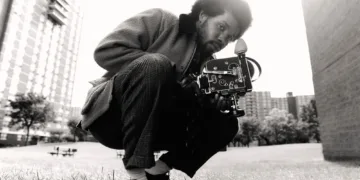
Owens shoots on black-and-white 16mm and structures the film as a loose collection of sensations rather than a conventional biographical drama. That decision gives Baldwin room to exist outside his legacy. It also removes much of the dramatic structure that might have shown how Jimmy became James.
A Camera Without a Map
The Istanbul sequence arrives before Baldwin does. Owens watches stray cats, ferry passengers, gulls, buildings, and a man holding out a tray of coffee. The camera whips between faces and architecture, sometimes holding a clear composition, sometimes losing its subject in blur or glare. Nothing identifies the location’s connection to Baldwin. The sequence functions as an instruction manual for how the film expects to be watched: observe first, organize later.
Once Jimmy reaches Paris, the same visual grammar attaches itself to him. He gazes through the taxi window at the Arc de Triomphe, wanders through markets, sits over a croissant, and balances his suitcase on his head. Owens photographs these actions with the curiosity of someone documenting an unfamiliar species, which is affectionate, though occasionally peculiar. Jimmy is always being discovered, rarely understood.
The contemporary Paris setting produces a productive tension at first. Jimmy wears period clothing and rides in an older car while hybrid vehicles pass outside. Pedestrians carry phones. Owens cannot reconstruct 1948, so he lets Baldwin’s past occupy the present city like an apparition.
Also Read






The idea is stronger than its execution. The modern details appear without developing into a sustained argument about Baldwin’s relevance to the present. After the taxi ride, the temporal collision becomes background noise. A limitation has been promoted to a motif, then left without duties. Cinema has certainly employed stranger staff.
Paco Andreo’s score supplies the structure the images resist. Percussion accelerates under bicycle rides, horns curl around Jimmy’s quieter observations, and shifting jazz rhythms give momentum to edits that might otherwise feel arbitrary. The music rarely stops, turning Paris into a composition Jimmy is learning to move through.
Freedom in Motion
Arthur’s performance depends on posture, gesture, and rhythm. Owens denies him the verbal force associated with Baldwin, so Arthur builds the character through watchfulness. His heavy-lidded gaze registers the Arc de Triomphe, a café table, and a crowded street with the same careful attention. He seems to be collecting details for later use.
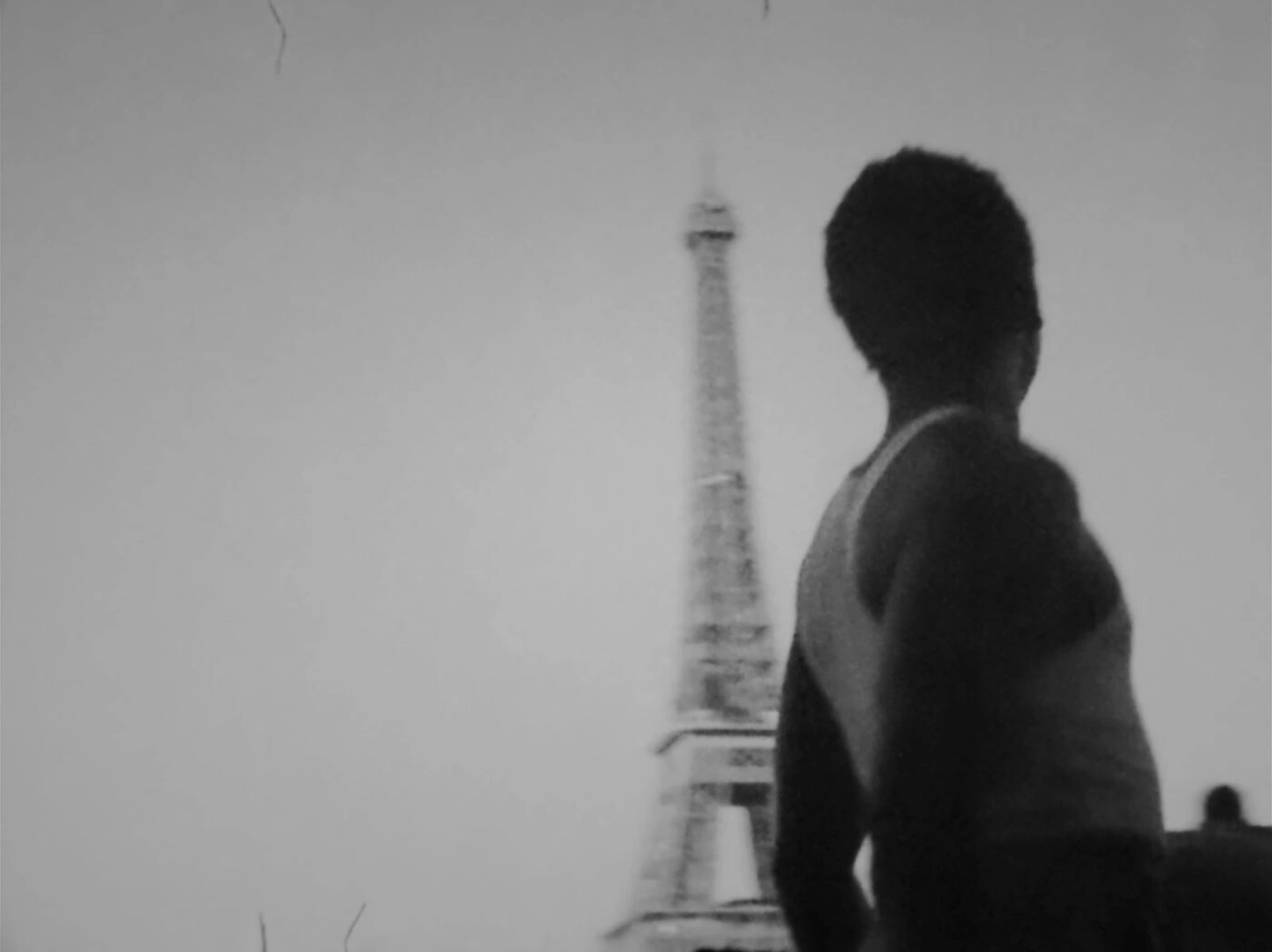
The film becomes warmer when that observation gives way to play. Jimmy rides a bicycle through Paris, holds a picnic, shuffles along a boulevard, and dances alone in his room. Arthur moves with an awkward grace that keeps the scenes from becoming polished imitation. His Jimmy is still learning what confidence looks like on his own body.
Owens applies the same attention to queer intimacy. A young man approaches Jimmy at a café, follows him home, and joins him in a series of muted exchanges. They play through corridors, smoke together, and have sex beneath a headboard carved with a male and female couple. The sculpture quietly places a prescribed image of desire above Jimmy while the scene beneath it pursues another.
Their encounter has no explanatory dialogue and little conventional buildup. Owens treats it as a rush of possibility, matching Jimmy’s emotional release with quickened movement and cigarette haze. The lack of speech works here because Arthur’s body carries a clear progression: caution, curiosity, invitation, ease.
The film is less precise about Jimmy’s relationship with writing. He purchases or uses a portable typewriter, takes notes, and sits at desks, yet these actions remain accessories to the portrait. We see the writer’s hands. We receive little sense of the thoughts guiding them.
The Missing Development
A late passage from No Name in the Street finally allows Baldwin’s language into the film. Jimmy types while his voice reflects on racial oppression in France and the United States. The words arrive with force, partly because Owens has withheld them for so long. They also expose the distance between the mind heard in the passage and the young man presented during the previous hour.
The film has shown Jimmy observing racial difference, finding queer companionship, and experiencing the relief of anonymity. It has not built clear links between those experiences and the political or literary intelligence expressed in the voiceover. The scene supplies an intellectual destination without dramatizing the route.
This structural gap becomes harder to ignore once the film reaches its midpoint. Café visits, cigarettes, cycling, dancing, and solitary walks repeat with limited variation. Owens creates movement inside each sequence, but the character arc remains nearly static. Jimmy arrives curious, discovers pleasure, and continues being curious. A portrait can reject plot without rejecting development.
The 16mm photography creates its own complications. Halation produces glowing edges around Jimmy, giving certain close-ups the texture of recovered memory. Other shots are washed out or soft enough to obscure Arthur’s face. For a film built around reading small physical reactions, losing those reactions to the chosen stock is a costly trade.
Owens’s strongest choice remains his refusal to treat Baldwin as a completed historical figure. Jimmy can grin, flirt, smoke, wander, and dance before public significance claims every gesture. Arthur makes that private existence persuasive. The film protects the young man from the burden of explaining his future, then protects him so thoroughly that part of his interior life never reaches the screen.
Jimmy is a biographical drama film that premiered at the Telluride Film Festival on August 30, 2024. The film follows a young James Baldwin as he freshly arrives in Paris in 1948, capturing his initial experiences abroad before writing his debut novel. Viewers can watch the film through select festival screenings and independent theater releases.
Full Credits
Title: Jimmy
Release date: August 30, 2024
Running time: 67 minutes
Director: Yashaddai Owens
Writers: Yashaddai Owens
Producers and Executive Producers: Ava Woo Kaufman, Yashaddai Owens
Cast: Benny O. Arthur
Composer: Paco Andreo
The Review
Jimmy
Jimmy has a clear structural gamble: replace James Baldwin’s public intellect with the private rhythms of a young man discovering Paris, sex, movement, and artistic freedom. Benny O. Arthur’s physical performance and Paco Andreo’s jazz score sustain that gamble through bicycle rides, hotel-room dancing, and near-silent intimacy. The film begins to stall once wandering becomes its default dramatic action. Owens captures Baldwin’s awakening with striking texture, yet withholds too much of the mind being awakened. A beautiful portrait, then, with part of its subject missing from the frame.
PROS
- Expressive physical performance
- Rich 16mm texture
- Dynamic jazz score
- Intimate queer perspective
- Bold anti-biopic structure
CONS
- Thin dramatic progression
- Baldwin’s intellect remains distant
- Repetitive wandering sequences
- Distracting modern anachronisms
- Soft focus obscures expressions