






















Adela carries recordings of her family through Peru while struggling to reach them in Mexico. The voices on tape have survived the journey; the living voices arrive through an unreliable internet connection, across a distance that her equipment cannot shorten. Her grandmother Toni is 98 and growing frail. Adela, a Mexican sound artist living in Vienna, has spent much of her life elsewhere, and Meritxell Colell Aparicio’s Far From the Trees lets that elsewhere become an emotional condition: she can listen closely to the world around her while home remains difficult to hear.
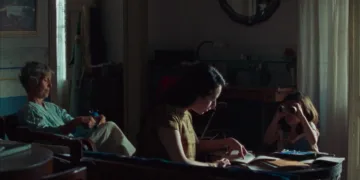
The film gives her another way back. Eight-year-old Adelita looks toward the camera from the warm light of her grandparents’ study, and an edit brings us to the adult Adela’s face. The years disappear from the screen without disappearing from the person. There is something quietly merciless in the simplicity of this passage, in how little effort cinema needs to place two ages beside each other. Adela can inhabit both. She cannot move freely between them. The film’s excursions into childhood carry that ache beneath their tenderness, a sense that recollection grants access while withholding any possibility of return.
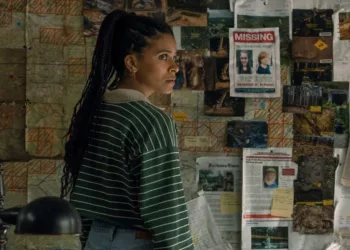
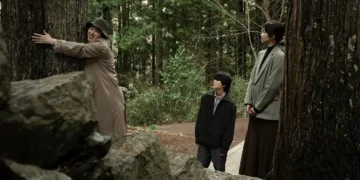
Her physical journey takes her from the Amazon toward the Andes with Lucho, her guide and translator, collecting endangered Indigenous languages and the sounds of the places where they are spoken. Microphones attend even to trees. Voices, songs, and environmental sound pass into one another, and the distinction between listening to speech and listening to music becomes less secure. A language such as Harakmbut reaches the ear with a life exceeding whatever the visitor understands of it. Aparicio gives that encounter time. The pleasure of listening comes with an awareness of how much remains outside Adela’s comprehension, and ours.

Angélica Castelló, herself a composer and sound artist, makes Adela’s concentration feel like a practiced way of occupying the world. Her stillness has weight. Watching her in the grey-blue light beside a river, looking toward restricted territory inhabited by uncontacted people, one feels the solitude of someone whose curiosity repeatedly brings her to the edge of other lives. Yet the performance allows warmth into this reserve. When she and Lucho, played by José Luis López Cama, share music in the car, companionship takes shape through the ordinary pleasure of offering somebody a song. The film breathes more easily around them.
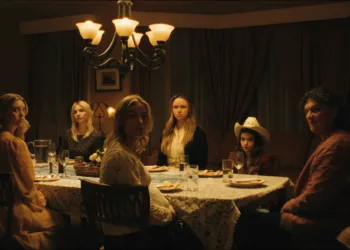
The childhood passages have a different atmosphere, as though the remembered house retained a climate of its own. Julián Elizalde’s Super16mm images give light a grain and softness distinct from the digital present. The warmth is persuasive precisely because it belongs to somebody’s recollection; its beauty tells us how Adela needs to remember. Anna Auquer’s crowded interiors deepen that subjectivity. Objects occupy the rooms with the density of things whose significance has accumulated privately, over years. We enter a home already saturated with associations we can only partly share.
Within it, affection follows several paths. Toni and Emili, Adela’s grandparents, are researchers working with sound, Catalan Republicans whose exile brought them to Mexico. Paula, the Indigenous housekeeper and nanny played by Teresita Sánchez, supplies an emotional closeness that young Adela’s embrace makes immediately legible. For a while, she appears to be the child’s mother. That initial impression matters: the bodily certainty of their attachment precedes our knowledge of the household’s arrangements. Love is understood before employment is named, although the naming will eventually complicate what we have seen.
Archival images of anti-Franco exiles leaving Spain open a historical wound beneath these domestic memories. The family’s displacement and the suppression of Catalan give Adela’s recordings a personal urgency. She has inherited some knowledge of what can be broken when people are separated from the language in which their lives took shape. The connection with threatened Indigenous languages is resonant, though the histories remain distinct. Aparicio is most convincing when she allows that resonance to pass through voices and remembered relationships. Her sound world gives cultural loss an intimate scale without making the family’s experience sufficient to explain everyone else’s.
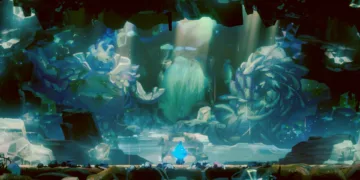
Occasionally, the desire to give memory a visible body becomes less assured. A late dreamlike montage drifts toward an accumulation of lyrical effects, loosening the emotional concentration established by faces, voices, and rooms. The image of Toni and young Adela on a bed covered with vines and grasses is extraordinary, however: childhood and old age lie together inside a growth that makes the familiar suddenly strange. I am less certain that the surrounding passage enlarges this image’s feeling. Its beauty invites us to linger, while the montage’s movement makes the grief more diffuse.
The more persistent unease concerns Adela’s attention. The calls home are hindered by the connection, but also by her absorption in work and remembrance. Her sensitivity has limits that a microphone cannot expose for her. Paula’s continuing care for Toni places a particular pressure on the warmth of the childhood scenes: the person who made Adela feel held is now caring for her grandmother. Aparicio acknowledges that relationship without fully pursuing the imbalance within it. The remembered refuge remains so enveloping that the labor sustaining it can recede into its glow.
Adela’s dependence on Lucho’s translation and local knowledge introduces a related question, tempered by the genuine exchange between them. Their friendship need not be dismissed to notice how much of her journey depends on somebody else making a place intelligible. Aparicio declines to furnish Adela with a clarifying confession, and that restraint preserves something credible in Castelló’s silence. People do not reliably understand the arrangements that sustain their freedom. Still, the film sometimes leaves uncertain whether its tenderness accommodates this blindness or shares it.
That uncertainty belongs beside the film’s considerable emotional force. Toni’s approaching death makes Adela’s effort to gather and preserve voices painfully understandable, and the recordings give her a way to remain in relation to the family she fears losing. Paula’s position gives that effort a further, unresolved obligation. She is present with Toni while Adela remembers being cared for, and her continuing work asks something of Adela that the preservation of their shared past cannot answer on its own.
Far From the Trees premiered at the Locarno Film Festival on August 13, 2026. Directed by Meritxell Colell Aparicio, the contemplative drama follows a Mexican sound artist tracing her grandfather’s path through the Peruvian Andes to map endangered languages while confronting deep personal memories.
Full Credits
Title: Far From the Trees (Original title: Lejos de los árboles)
Distributor: Sideral Cinema
Release date: August 13, 2026 (Locarno Film Festival), December 11, 2026 (Spain theatrical)
Running time: 2 hours (120 minutes)
Director: Meritxell Colell Aparicio
Writers: Meritxell Colell Aparicio
Producers and Executive Producers: Mayca Sanz L-Higueras, Iris Martín-Peralta, Carolina Denegri
Cast: Angélica Castelló, Jose Luis López Cama, Teresita Sánchez, Caterina Ramirez Guallar
Director of Photography (Cinematographer): Julián Elizalde
Editors: Ana Pfaff, Meritxell Colell Aparicio
Composer: Angélica Castelló
The Review
Far From the Trees
Far From the Trees makes listening feel like an intimate response to loss. Its voices, textured memories, and Castelló’s quietly absorbing presence give grief a palpable atmosphere. The late montage sometimes disperses that feeling, while the tenderness surrounding Adela’s childhood leaves its unequal arrangements insufficiently examined. Yet the distance between preserving a voice and caring for its speaker gives this beautiful, unsettled film a lasting ache.
PROS
- Rich sound design connects language, landscape, and memory.
- Castelló gives Adela’s solitude and curiosity persuasive weight.
- Editing makes the distance between childhood and adulthood palpable.
- Super16mm photography and detailed interiors lend memory emotional texture.
CONS
- The late dreamlike montage weakens emotional concentration.
- Nostalgia softens scrutiny of the unequal care sustaining Adela’s childhood.