


















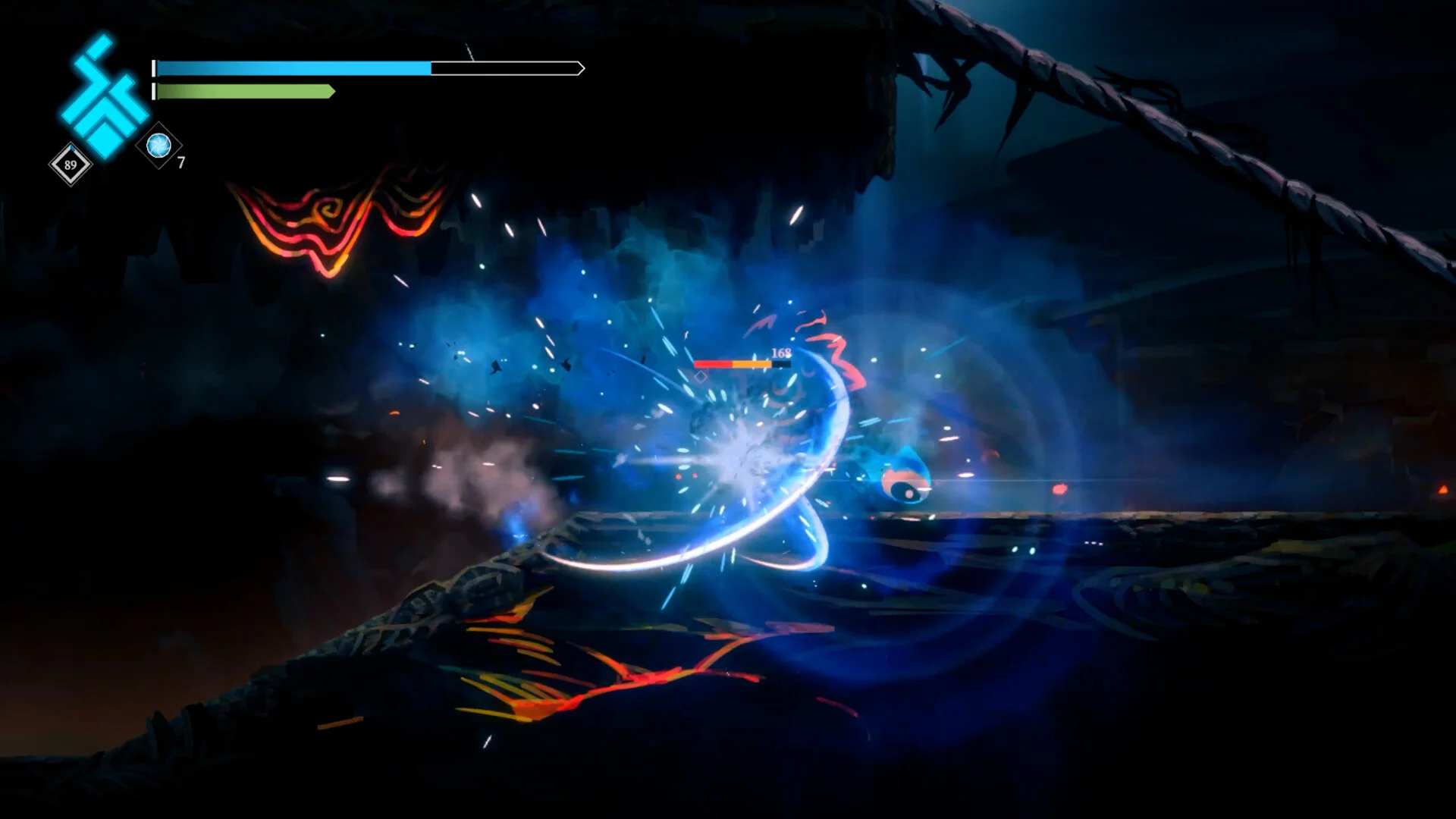
Tott’s parry produces a rounded effect that misleadingly suggests protection from every direction. Try answering an attack from behind, however, and the mistake becomes clear: Solateria requires its little fire warrior to face the blow. Dashing through an enemy can therefore solve one problem while creating another, particularly if that enemy turns to strike again. Familiarity with Metroidvania movement gets you across the opponent; learning this game means remembering which way you are looking when you arrive.
That emphasis helps distinguish Studio Doodal’s game from the Hollow Knight resemblance suggested by its hand-drawn world. The two floating blades controlled by Tott’s Pyron Wristband allow quick combinations, but parrying gives exchanges their strongest rhythm.
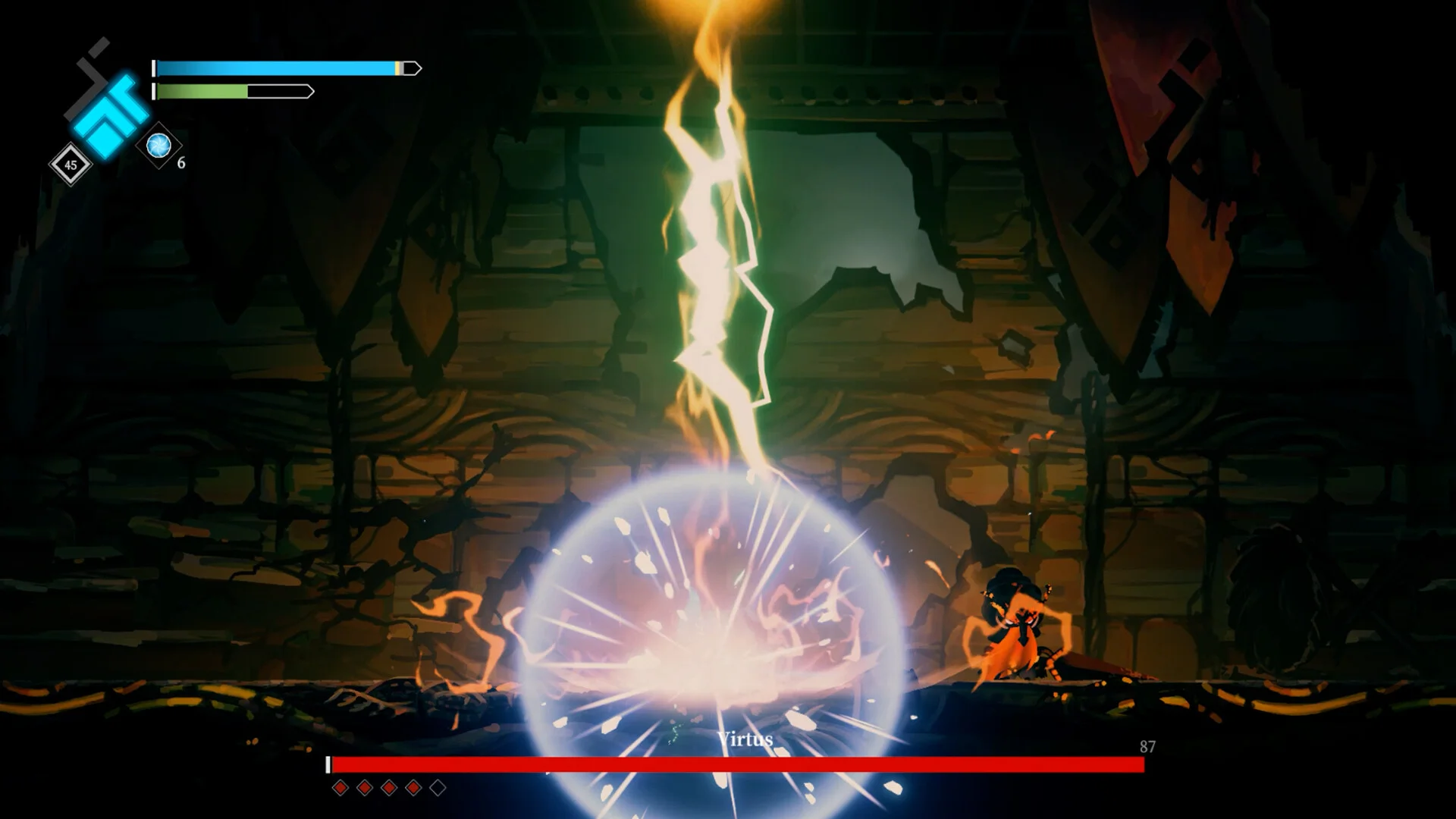
A successful defense opens a multi-hit counter, while staggering an opponent creates an opportunity for a powerful special attack. The sharp parry sound makes the connection satisfying before the damage has finished registering. Bosses build on that pleasure through attack patterns that require separate study, giving the defensive emphasis enough variety to sustain repeated attempts.
Tott’s situation supplies a recognizable setting for that struggle. An amnesiac Pyron warrior searching for a missing king, Tott crosses a kingdom devastated by the Shadow Plague, which has killed inhabitants or damaged their minds. Experienced players will recognize the narrative arrangement almost immediately.
The character begins with limited knowledge, and exploring the world gradually explains its collapse. Solateria places a considerable collection of combat and progression systems inside that familiar framework, though it introduces them with less patience than their eventual usefulness deserves.
Stat increases, permanent benefits from prepared food, and equippable Core Stones all provide ways to prepare for difficult encounters. Certain stones make imperfect parrying less punishing, giving their upgrades a direct relationship with the game’s central demand.
Special abilities have another restriction: Heat Core uses are limited and replenished through resting. These are understandable tools once their roles become clear. The difficulty is their arrival close together, while the player is still absorbing the speed of ordinary combat. Early learning becomes crowded by several forms of preparation competing for attention.
There is value in having those alternatives available. Repeatedly fighting enemies for Inflare can fund improvements, while changing Core Stones offers another response to a troublesome encounter. Neither establishes that farming is compulsory or that stronger statistics can replace learning a boss.
Death also drops carried Inflare, sending you back through dangerous territory to recover resources that might otherwise help the next attempt. This familiar retrieval structure adds pressure to preparation: the means of becoming stronger may be waiting beyond enemies that have already proved dangerous. Difficulty sliders provide adjustment, though the underlying demands remain substantial.
Exploration is less distinctive than combat, but its conventional structure is competently supported by the environments. Air dash and double-jump abilities reopen routes that were previously inaccessible, continuing the familiar process of remembering an obstruction and returning with the means to pass it.
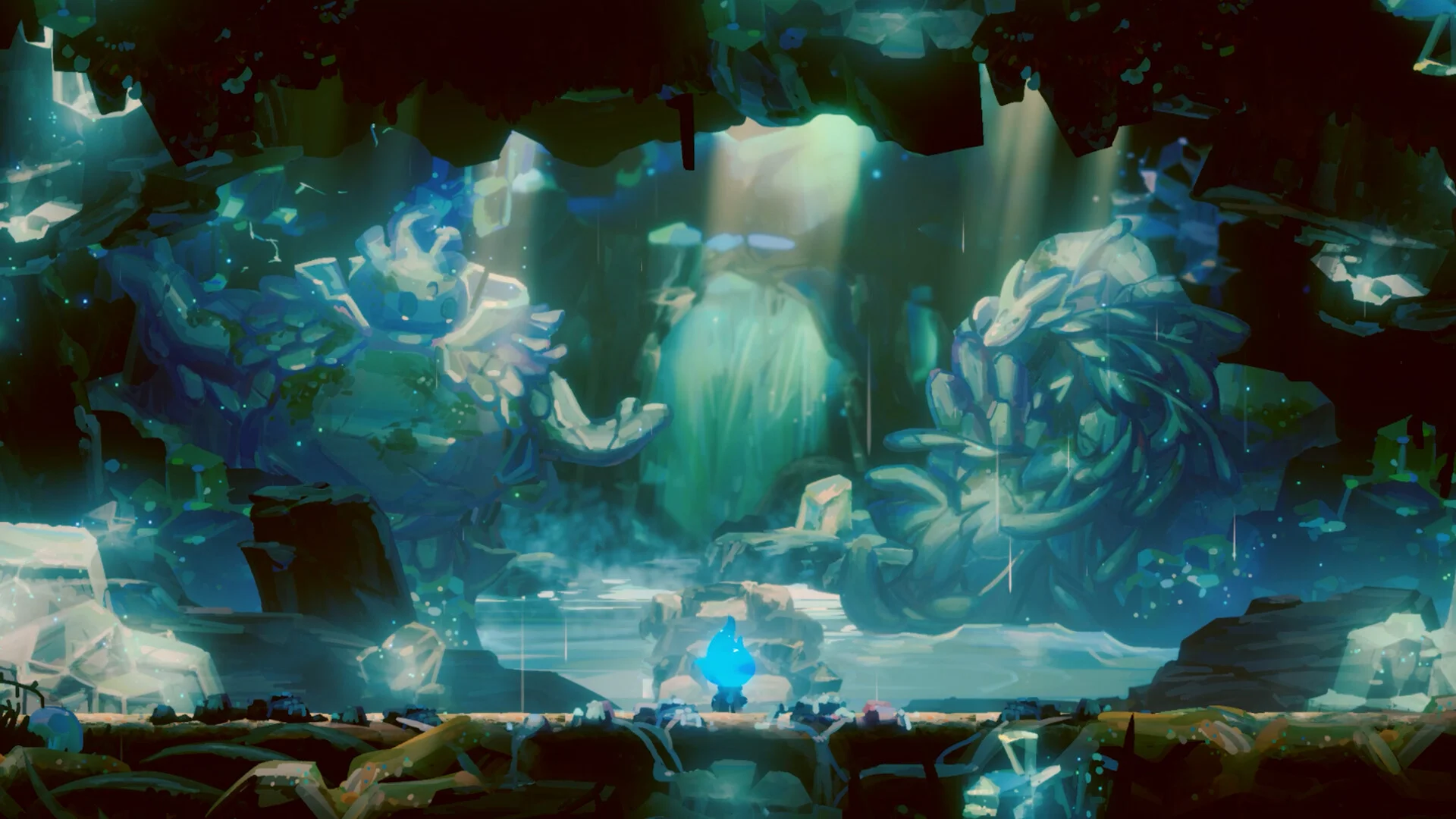
Against the Hollow Knight reference point, Solateria’s attraction lies in the particular places containing those routes. Cutting through vines to uncover a cave makes the secret belong to its surroundings. Flowers respond to Tott’s movement or blades, and branches become climbing surfaces. Searching a room involves attending to its vegetation.
The greenery of Terradin Greenhouse and the volcanic surroundings of Ashen Hills give that searching a pleasing range of settings. Their hand-drawn detail rewards looking beyond the immediate route, while calmer exploration music leaves space between the more forceful boss encounters.
Water gives the scenery a sharper mechanical role. Being soaked hampers Tott’s movement, and dashing clears the effect. A water-based boss brings that vulnerability into an encounter where keeping mobile already matters. The flame-headed character design gains a practical consequence, connecting what Tott is to the conditions under which Tott can fight effectively.
The larger mythology is less immediately inviting. Unfamiliar names and terms arrive quickly, adding another kind of early information load. Stone tablets, hidden records, and conversations gradually supply context, while the menu archive helps preserve what has been discovered.
Having somewhere to revisit that information is useful, especially when it explains the histories behind encountered bosses. It cannot entirely undo the initial congestion. The strongest narrative material works at a smaller scale, where a recognizable behavior or changing relationship provides a way into the kingdom’s losses.
Cor offers a good example. His initial dismissal of Tott establishes distance, and later meetings reveal how extensively witnessing death has affected him. The progression matters because the game returns to the same character rather than relying on his first appearance to communicate everything.
Within a genre populated by scattered survivors dispensing guidance, Cor benefits from the difference between an early impression and a later understanding. His weariness becomes specific through that change in the relationship, giving the plague consequences beyond ruined scenery and historical explanations.
Cardamime makes an equally familiar encounter carry a different burden. She is a merchant because her father died from the plague and she needs to support herself. Among her goods are two of his personal documents, placing something intimate inside the ordinary process of inspecting a shop’s stock.
The usual question of an item’s usefulness becomes awkward here. These papers matter through their connection to the person selling them, and their presence complicates the straightforward exchange of currency for practical benefit. Looking through Cardamime’s wares means encountering the belongings she has been left to sell.
The Review
Solateria
Solateria gives the familiar Metroidvania framework a satisfying defensive rhythm. Directional parries, forceful counters, and varied boss patterns reward careful learning, while responsive environments and characters such as Cor and Cardamime give its damaged kingdom personality. The parry effect communicates its protection poorly, and the early rush of upgrade systems and unfamiliar terminology makes entry harder than necessary. Its exploration follows established routes, but the combat and individual encounters provide good reasons to follow them again.
PROS
- Satisfying parries and powerful counterattacks.
- Boss patterns reward observation and practice.
- Detailed environments integrate secrets into the scenery.
- Supporting characters give familiar encounters emotional weight.
CONS
- Parry visuals misleadingly suggest protection from behind.
- Progression systems arrive too close together.
- Early terminology crowds the story’s introduction.