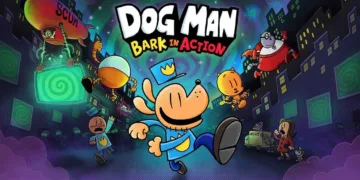






















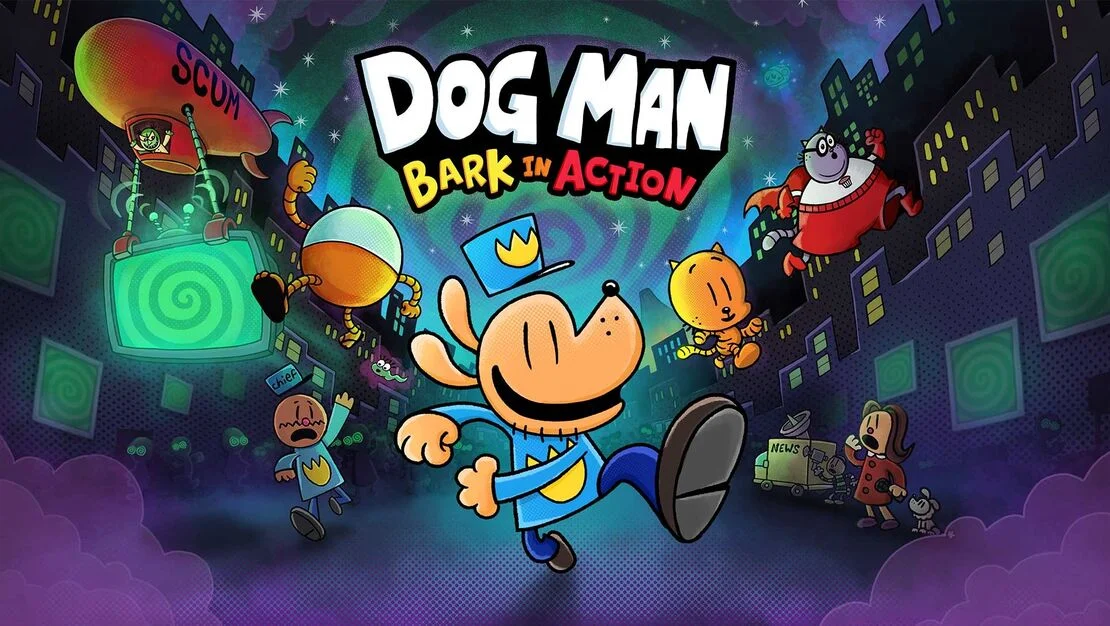

Players coming from Dog Man: Mission Impawsable can carry their basic habits straight into Dog Man: Bark in Action. Running, jumping, punching and throwing bones remain the foundation, with new stage layouts and unlocks supplying the main reasons to return. This is a sequel built around extending a familiar activity. Its strongest case rests on how pleasant those actions remain, while its weaker stretches expose the difference between adding things to collect and giving players fresh reasons to use them.
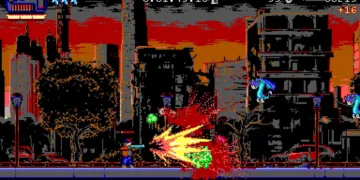
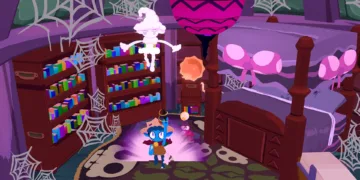
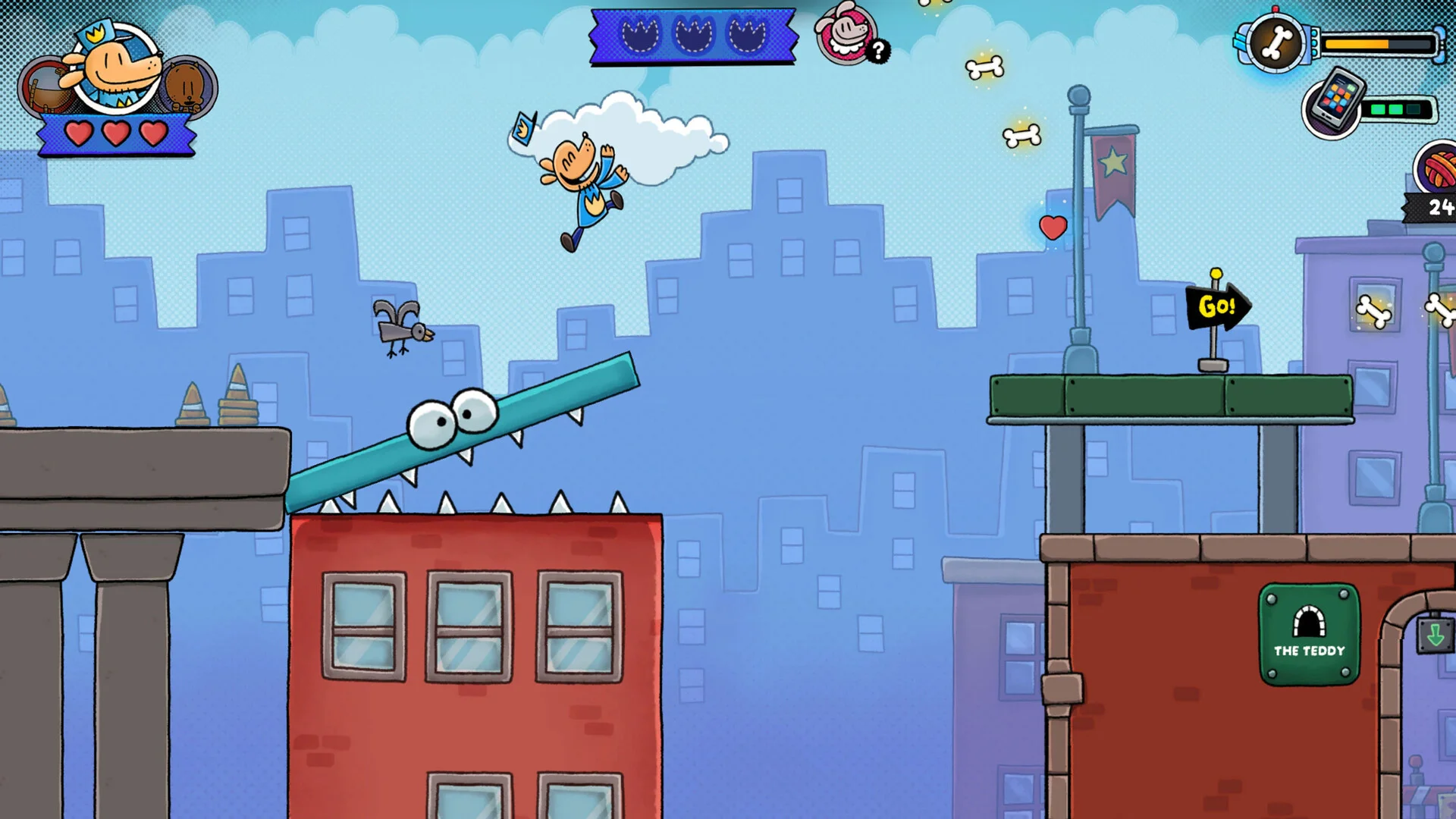
The connection to Dav Pilkey’s books provides a second kind of continuity. Simple character shapes, exaggerated expressions and enemies such as toilets with shark teeth preserve the comics’ cheerful absurdity. Comic-style text accompanying defeated enemies makes combat feel like another part of that drawn world. The presentation also serves the platforming: characters remain distinct against colorful backgrounds, and platforms are easy to identify. Familiarity helps a reader recognize Dog Man; clear visual separation helps a player work out where to send him next. The adaptation earns its appeal through both functions.
Dr. Scum supplies the immediate reason for all this activity, using Hypno Screens to control the city’s inhabitants. Dog Man, Li’l Petey and 80-HD set out to stop him. The premise gives the cast an easily understood task without requiring extensive knowledge of the books, leaving the stages to carry the experience. Keeping the action in two dimensions suits that approach. Players can concentrate on distance, timing and enemies without managing a camera, and the uncomplicated presentation leaves room for the sillier character designs to register during play.
Within that framework, switching characters is straightforward. A trigger moves between the main heroes, whose different actions provide ways through obstacles and encounters. Jumping between platforms, throwing bones and searching for collectibles gives the retained formula a satisfying rhythm.
For returning players, the attraction lies in putting familiar actions through different arrangements. For newcomers, the small set of immediate tasks makes the game approachable without reducing every screen to a walk toward the exit. There is enough timing involved to require attention, even if the game rarely demands sustained precision.
The summoned helpers complicate that promising foundation less consistently. Unlocked friends can be called through a phone interface to perform particular jobs, including flying across gaps, hacking computers and demolishing walls. This gives the cast a practical presence beyond appearing in dialogue or as collectibles.
It also makes progress easy to understand: identify the obstruction, then bring in the appropriate assistance. The limitation is that these encounters often emphasize recognizing the required ability. Calling the right helper can become a small interruption in the platforming rather than an opportunity to approach the space differently.
That limitation becomes clearer across the roster. The flying moth and computer-hacking cat receive recurring uses, while several other helpers have comparatively little to do. Their presence enlarges the collection without creating an equally substantial range of recurring decisions.
This matters particularly in a sequel whose changes lean on fresh unlocks. An additional character needs useful situations if acquiring them is going to alter the experience. The bone-unlocked Supa suit has a related problem: it provides an extra power-up, but the ordinary challenges give little reason to depend on it. The reward arrives without a strong accompanying demand.
Time Challenges, Mystery Levels and bonus stages offer a better argument for extending the familiar structure. They change the immediate task and give collectible hunting somewhere to sit alongside straightforward progress.
Costumes and drawings also provide reasons to keep searching for players who enjoy clearing out a stage’s rewards. These activities suit a game whose basic movement is enjoyable, and they need not reinvent it to justify their inclusion. Still, their value depends on enjoying that foundation already. The extra objectives broaden the available activity without resolving the uneven usefulness of the tools unlocked along the way.
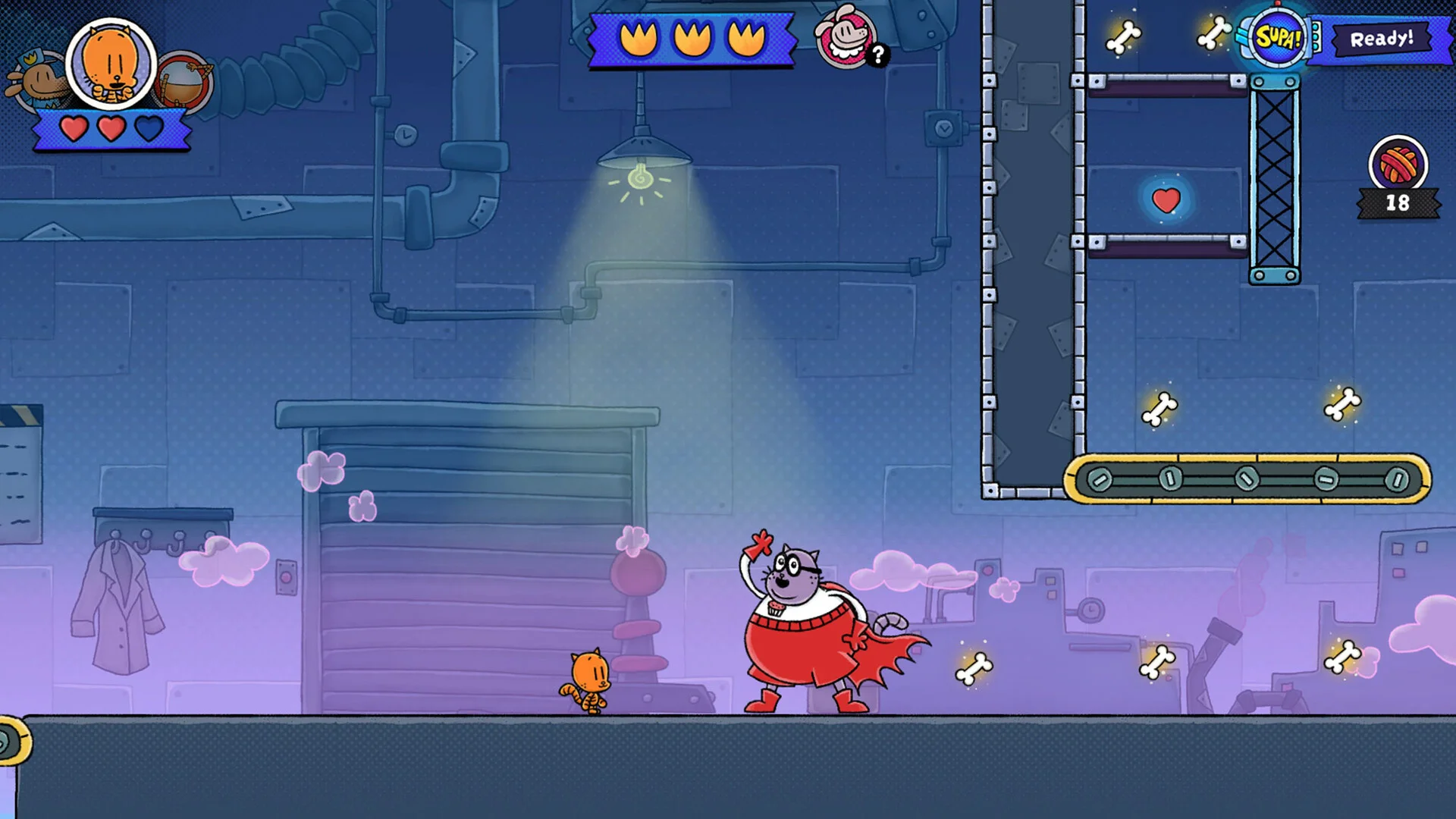
Difficulty produces a similar mixture of sensible accommodation and missed development. Plentiful hearts and lenient checkpoints keep mistakes from carrying a heavy cost, which is appropriate for players still learning platforming timing. Recovering quickly lets them try again without repeating large stretches.
The less successful choice is the relatively flat demand between occasional harsher passages. Those spikes can feel disconnected from the preceding play, giving the player a sudden obstacle without the satisfaction of a steadily developing test. Forgiveness makes the interruption manageable, but it cannot supply the missing progression.
Boss fights reveal the cost of that approach most clearly. Their attacks differ, and recognizable patterns offer something to observe, yet punching or throwing bones does much of the work. Frequent health pickups reduce the pressure to respond accurately. A player can understand an attack, mistime the response and still make comfortable progress toward emptying the boss’s health bar.
That leaves a useful opening for beginners, but returning players have fewer reasons to refine habits carried over from Mission Impawsable. The encounter may introduce a new pattern while allowing the old approach to remain sufficient. With the expanded cast already waiting for useful assignments, these fights would have been a natural place to make familiar players think harder about the abilities at their disposal.
The Review
Dog Man: Bark In Action
Dog Man: Bark in Action gives returning players a comfortable extension of Mission Impawsable, with enjoyable movement, readable comic-book artwork and extra activities that suit the familiar foundation. The expanded toolkit makes a weaker case for the sequel: several helpers lack recurring uses, and forgiving bosses rarely encourage players to rethink their approach. Newcomers get an approachable platformer with recognizable personality; experienced players get fresh stages without much pressure to develop fresh habits.
PROS
- Enjoyable movement and collectible hunting.
- Faithful comic-book designs with clear platform visibility.
- Straightforward character switching.
- Bonus stages and challenges extend the familiar play.
CONS
- Uneven usefulness across helpers and power-ups.
- Abrupt difficulty spikes interrupt a largely flat learning curve.
- Generous boss health pickups weaken the incentive for precision.