























The trees around Niscemi have to share the air with a sound that seems incapable of rest. In Francesca Scalisi’s Valentina e i MUOStri, droning noise and radio interference trouble the Sicilian landscape, making its open spaces feel strangely unavailable.
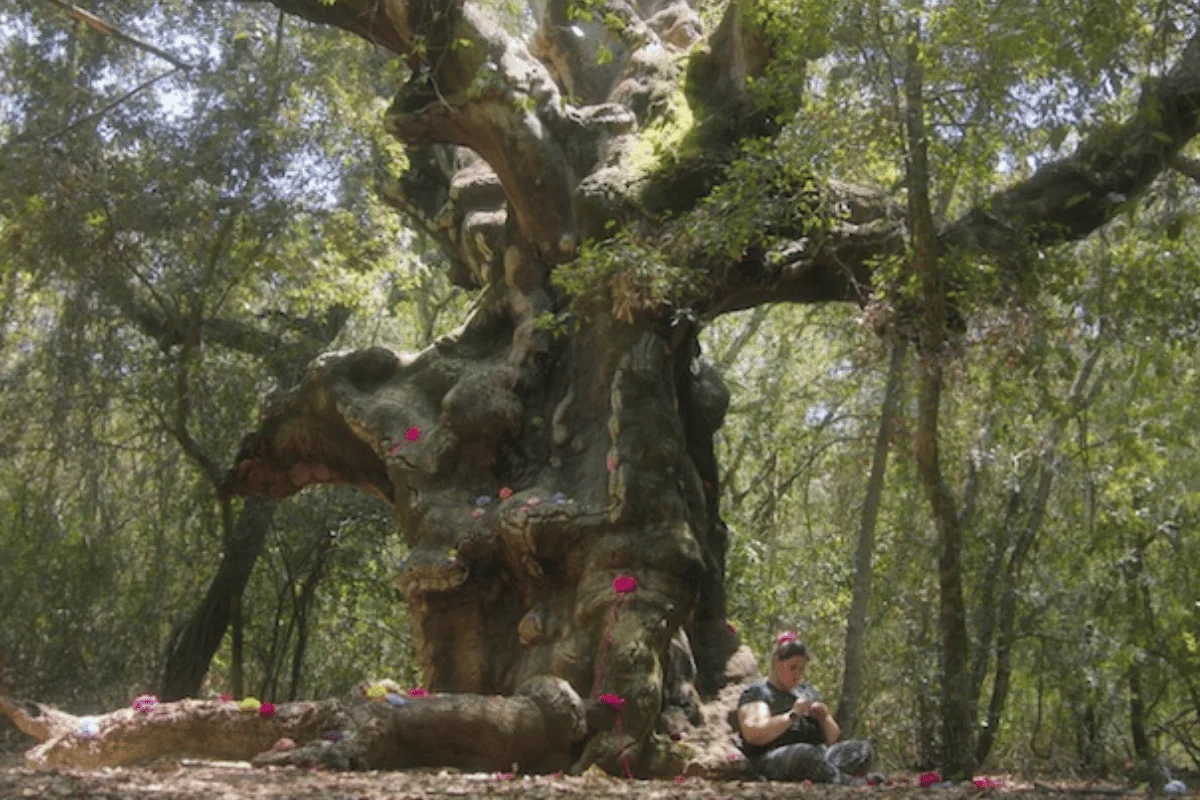
Valentina walks among old oaks and presses herself against their trunks. These are gestures of trust, of knowing where to put one’s body when the human world offers little reassurance. Olga Kokcharova’s soundtrack unsettles that intimacy. The woodland remains somewhere Valentina can go, though the film allows little sense that she can withdraw completely into it.
The white satellite antennas of the nearby US military installation stand at an unnerving distance from this physical affection. Valentina can touch the trees; the structures occupying the horizon belong to a power she cannot approach on equal terms. Military stops during the family’s car trips bring that distance abruptly close.
A familiar road becomes somewhere she must explain her presence. Stefania Bona’s 4:3 images keep returning attention to Valentina’s body and immediate surroundings, giving her a visible place within a landscape whose use is being determined elsewhere. The frame shelters her presence without making her secure.
In her late twenties, Valentina lives with her parents near the Sugherata di Niscemi nature reserve, without paid work and with little confidence in her ability to establish a separate life. Learning to drive acquires an uncomfortable urgency because her father, Salvatore, can no longer do so.
He was a driving instructor; heart problems have made him dependent on the daughter whose efforts he repeatedly belittles. Their lessons carry the sadness of authority surviving its practical usefulness. He needs her to become capable, yet his manner preserves the frightened child he seems to expect. Every correction reaches beyond the task she is trying to perform.
Scalisi lets the material conditions of this dependence remain visible. Valentina’s mother has back problems, cannot readily return to work, and has never learned to drive. The family lives on Salvatore’s pension. Leaving would require Valentina to separate herself from people whose needs are real, even when their treatment of her is hurtful.
Her older sister, established elsewhere, encourages her to consider her own desires, but the permission cannot simply be accepted and acted upon. Valentina wants work, including the possibility of cooking professionally. She must imagine herself doing it while continuing to hear the household’s account of her inadequacy.
The movement toward independence is familiar, and the accumulation of parental criticism sometimes makes its direction too easy to anticipate. Once the driving lessons and the sister’s encouragement have established the conflict, further evidence of Valentina’s diminished confidence offers less discovery.
The film is stronger when it permits incompatible feelings to occupy the same encounter: Salvatore needing her help while making that help difficult, Valentina caring for him while wanting distance. Those scenes resist the tidiness of a story in which leaving home merely requires someone to recognize her own worth. There are other bodies to worry about. They are getting older.
The installation enters this household through several channels, each carrying a different uncertainty. A doctor raises concern about possible interference with Salvatore’s pacemaker. Television reports connect the base to the war in Ukraine, and the family fears that their home could become a target.
Protesters place Sicily alongside other territories marked by military power. These fragments make the outside world feel both immense and oppressively domestic: a distant conflict arrives through the television, then settles beside an existing fear about a father’s heart. Valentina’s family has little control over either conversation, though both concern the continuation of their lives.
Here the documentary’s intimacy becomes a limitation. It provides little independent explanation with which to assess the medical concerns or distinguish the family’s fears from established risks. Kokcharova’s sound makes apprehension physically persuasive, but an atmosphere of danger cannot establish its cause.
The same drone that gives the film its troubled texture can lend uncertain claims a weight the investigation has not earned. Scalisi need not abandon Valentina for a technical inquiry; some firmer distinction between testimony and corroboration would make this closeness less restrictive. We understand how it feels to live under the antennas better than we understand what the installation is demonstrably doing.
Yet the film’s most painful encounter with a damaged environment requires no speculative connection. After fire has ravaged part of the reserve, Valentina and Salvatore visit the affected woodland. She cries, and he embraces her as they remember their attachment to the place.
His tenderness does not erase the driving lessons. It reveals something those lessons cannot contain: a shared history in which he, too, knows how to care for her. The trees have held memories that neither can preserve by force of affection. For a moment, his declining body and her uncertain adulthood stand together before a loss that has already happened.
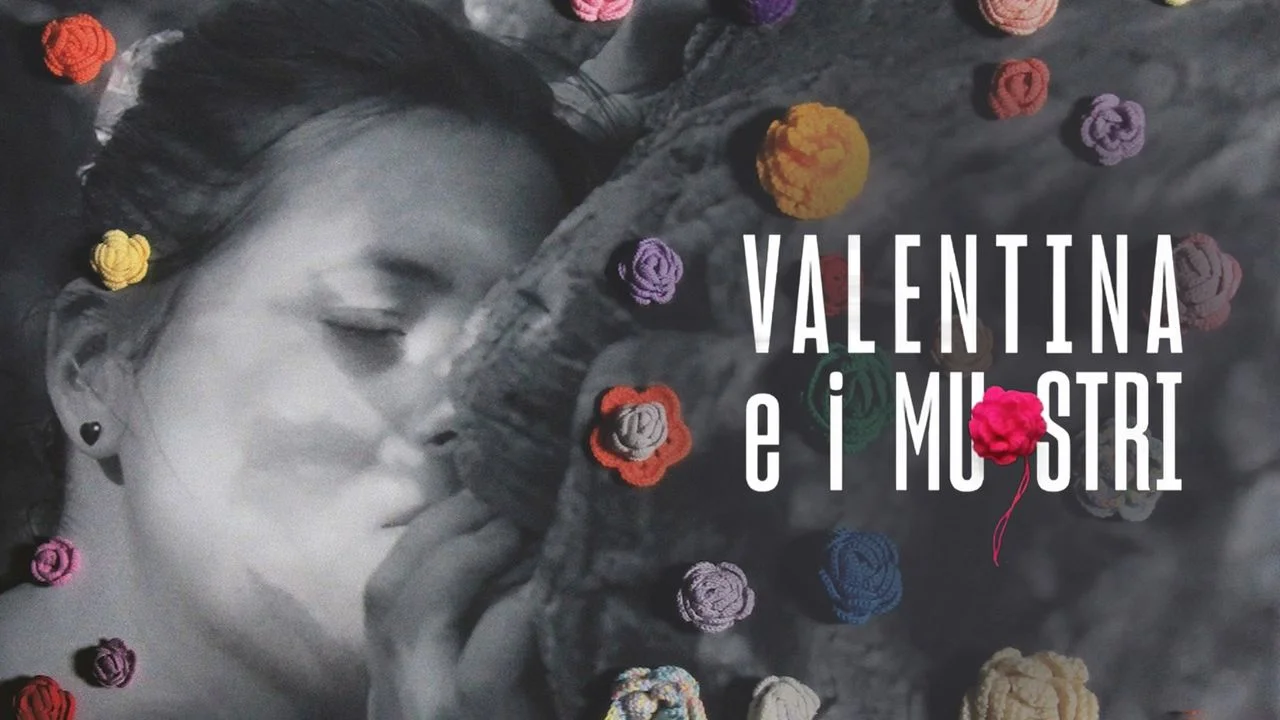
Valentina’s crocheting gives that threatened attachment a small, deliberate form. The wool flowers are evidence of patience and skill in a woman so often addressed as incapable. Their making belongs to the quiet life she has maintained at home, yet their later placement carries that private activity outward.
Flowers remain among her father’s plants, beside cherished trees, and on the military fence as she prepares to leave. The gesture allows affection, grief, and protest to share a material without making them interchangeable. Each location asks something different of the same careful work.
Her departure offers no assurance that she will find work or that the family’s habits will soften in her absence. What it changes is her willingness to remain entirely available to them. Scalisi gives this movement its emotional difficulty by preserving the attachments that make it necessary and painful at once. The flowers on the fence are especially uneasy remnants: soft objects fastened to a structure that continues to regulate access. Valentina can go elsewhere. What she has made stays exposed beside the place she could neither stop loving nor make safe.
Valentina e i MUOStri premiered at the Visions du Réel International Film Festival on April 12, 2024, before screening widely across international film festivals and select European theatrical circuits via Lightdox. Directed by Francesca Scalisi and Marzia Mete, the documentary follows a young woman nearing thirty in rural Sicily who must navigate personal emancipation and care for her ailing father amidst a landscape overshadowed by controversial military communication antennae.
Full Credits
Title: Valentina e i MUOStri (English: Valentina and the MUOSters)
Distributor: Lightdox, Articolture, RTS
Release date: April 12, 2024 (Visions du Réel)
Rating: Not Rated / Unrated
Running time: 1 hour 20 minutes (80 minutes)
Director: Francesca Scalisi, Marzia Mete
Writers: Francesca Scalisi
Producers and Executive Producers: Mark Olexa
Cast: Valentina, Family members
Director of Photography (Cinematographer): Stefania Bona
Editors: Marzia Mete
Composer: Olga Kokcharova
The Review
Valentina e i MUOStri
Scalisi gives the wish to leave home a painful physical weight: a father who needs driving, trees that cannot survive affection, a landscape humming with distant power. The family portrait is tender without excusing its cruelties, though the familiar emancipation arc offers few surprises. Its political atmosphere sometimes carries claims the documentary leaves insufficiently examined. Valentina’s small acts of care remain its richest expression of freedom, allowing her to leave without pretending she has ceased to belong.
PROS
- Sound design makes unease almost tangible.
- Intimate framing preserves Valentina’s presence.
- Family affection and belittlement coexist convincingly.
- The fire scene gives shared grief emotional complexity.
CONS
- The path toward independence becomes predictable.
- Consequential health and military concerns receive limited scrutiny.