






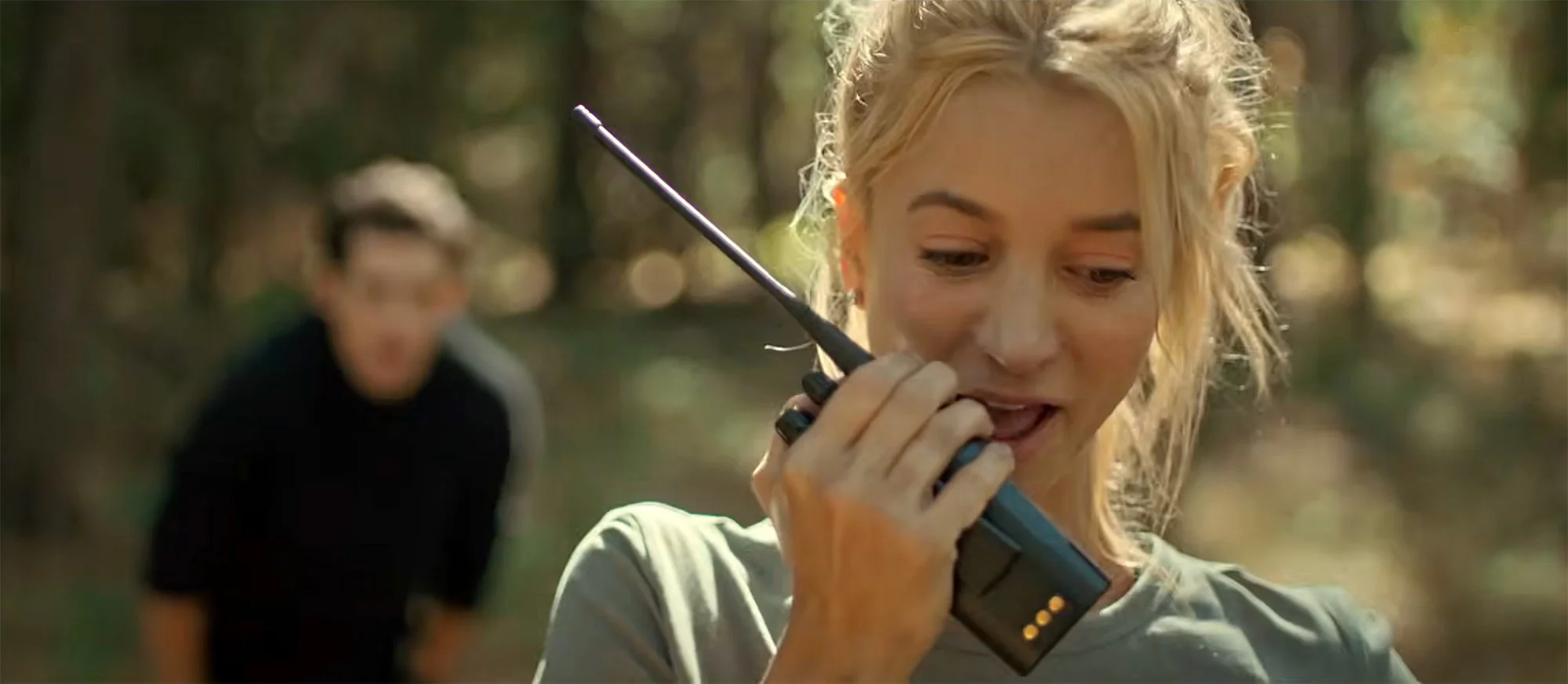
The birthday girl gets a rough deal before anyone has to worry about surviving the weekend. Two boyfriends turn up uninvited to a camping trip planned for the women, and the first evening’s campfire conversation becomes an opportunity to pick her apart. Watching this, I wanted someone to remember whose celebration they were attending. That small protective feeling gives Wrong Side of Dead something useful to build on. There is discomfort here that has nothing to do with a murderer in the woods: the embarrassment of being mistreated by people who presumably came because they care about you.
The difficulty is that the scene gives us a clearer sense of the group’s hostility than of its attachments. Friends can be cruel, and horror has plenty of room for people we would never invite camping. Still, their friction needs some emotional history if we are going to feel the damage when trust breaks down. Here, the birthday gathering establishes irritation without making its relationships especially persuasive. When a local ranger visits the campsite, his position offers an apparent source of reassurance. Yet the group has supplied so little comfort of its own that his arrival adds another person to watch suspiciously, without much security left to disturb.
Writer-director Mike Stahl builds the surrounding mystery around Amber, a behavioral science student played by Sabina Gadecki, investigating murders connected to Capps Crossing. The film has already introduced uncertainty through a hospital sequence involving an injured woman, conflicting accounts, and a mother arguing with her son about repeatedly getting him out of trouble. A jump forward of one year separates that confusion from the camping portion. It is a workable invitation to pay attention: people disagree about what happened, and someone’s account will shape how we understand the danger.
Amber’s background promises a particular kind of involvement. We have a protagonist whose interest in human behavior should give the suspicion a direction, someone trying to make sense of people while we attempt the same thing. Following Amber’s attempts to read the people around her gives the investigation a human foothold. The writing, though, gets limited dramatic value from the gap between studying behavior and facing people who may be manipulating you. Amber’s qualification establishes an expectation of psychological insight that the accumulating secrets do not consistently satisfy.
The family connection involving the ranger, his son David, and David’s mother Sandra, played by Beverly D’Angelo, offers the film its richest emotional possibility. That hospital argument suggests an exhausting pattern: a parent has been called upon to rescue a son before, and resentment has entered the relationship. It gives suspicion a personal cost. Helping someone can carry anger, obligation, and fear of what happens if you stop.
Stahl leaves too much of that tension underdeveloped, however. The family becomes a source of concealed information without acquiring enough weight as a relationship. Some revelations briefly change our understanding of events, but the pleasure of being surprised fades quickly when the people involved remain difficult to feel close to.
The hospital opening also pushes its distress hard through sound. Ambulance noise and forceful music arrive together, insisting on urgency while the conflicting stories are still taking shape. I found myself listening for information through an emotional instruction already being delivered at full volume.
The argument between mother and son offers a more troubling invitation because it lets us sense a history we do not yet understand. Giving that discomfort room could have made the scene’s uncertainty linger. The musical pressure makes the immediate emergency unmistakable, while narrowing the space in which suspicion can grow.
Later, the uneven pacing creates a related problem. The quieter stretch before the chases has time to deepen the birthday group’s relationships or make the hospital’s unresolved accounts increasingly troubling. Neither develops enough to turn the wait into sustained apprehension.
Once pursuit and confrontations take over, the film gains activity, but it has to work against the emotional distance established earlier. I was curious about how the secrets would fit together without feeling much urgency about getting these particular people through the night. The distinction matters for a film trying to combine a slasher’s immediate danger with a mystery’s shifting loyalties.
The forest gives Stahl firmer material. Trees interrupt visibility, shadows make the space difficult to read, and the isolation puts uncomfortable distance between these people and ordinary help. These are modest resources used toward a clear feeling, and they deserve credit.
The locations sometimes hold my attention when the interpersonal mystery loosens its grip. Restricted sightlines invite a simple, active response: looking past the person in front of us, searching the gaps between trunks. During those stretches, the film gives the viewer something uneasy to do while waiting for its characters to understand the danger.
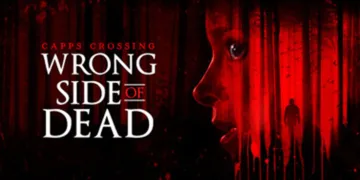
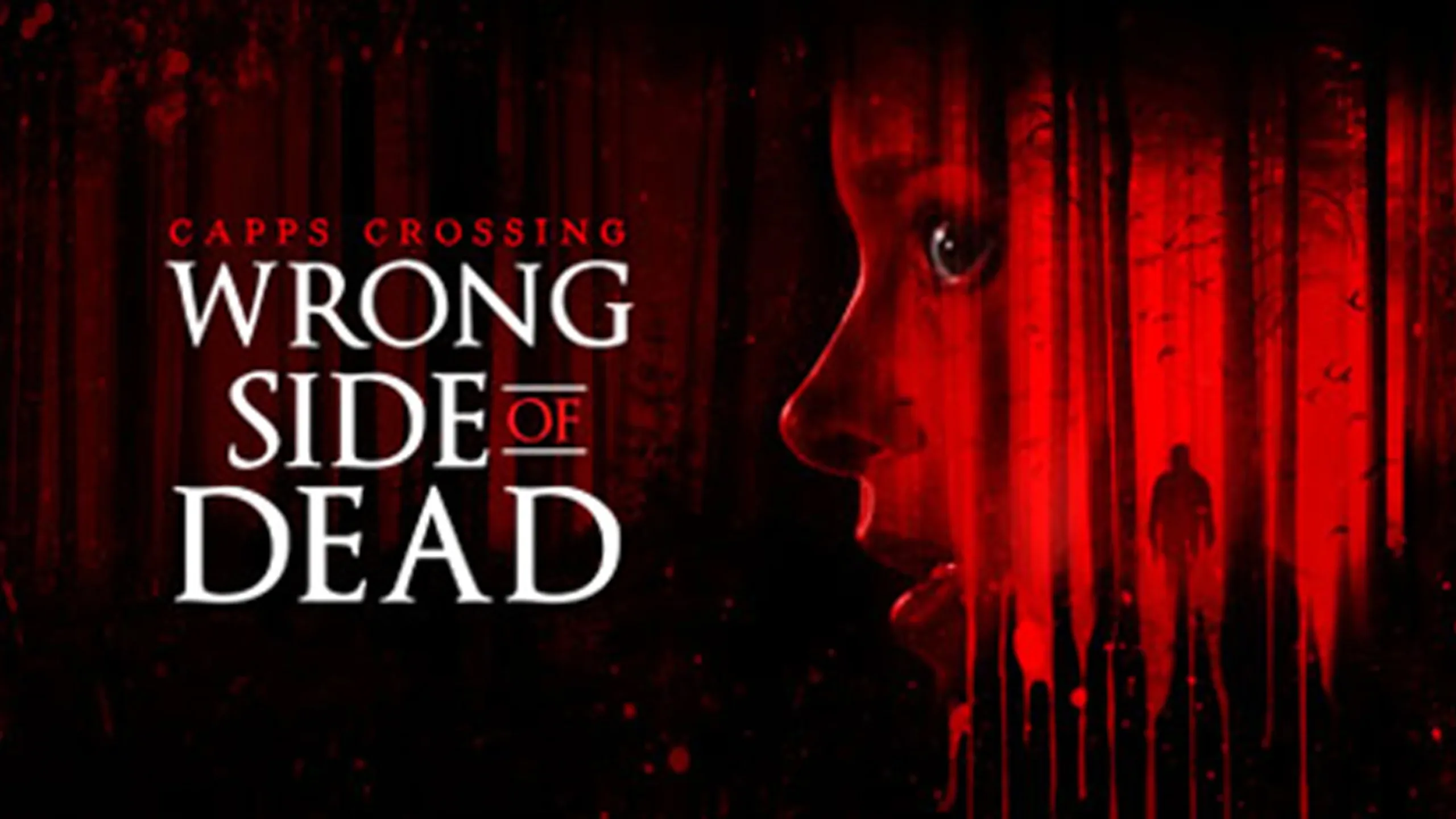
Wrong Side of Dead was released on demand and digital platforms by Lionsgate on July 28, 2026. Written and directed by Mike Stahl, the psychological thriller follows a young woman whose celebratory weekend camping trip in the remote woods takes a deadly turn when she and her friends are hunted by a deranged park ranger.
Where to Watch Wrong Side of Dead (2026) Online






Full Credits
Title: Wrong Side of Dead (also known as Capps Crossing)
Distributor: Lionsgate
Release date: July 28, 2026
Rating: R
Running time: 1 hour 36 minutes (96 minutes)
Director: Mike Stahl
Writers: Mike Stahl
Producers and Executive Producers: Phillip B. Goldfine, Mark David, Joaquin Camilo, Mike Stahl, Gabrielle Almagor, Shannon Makhanian
Cast: Sabina Gadecki, Garrett C. Phillips, Beverly D’Angelo, Gary Cooney, Sarah Elizabeth Withers, Mattie Maderos, Shawna Della-Ricca, John Ryan McLaughlin
Director of Photography (Cinematographer): Mark David
Editors: Mark David, Mike Stahl
Composer: Greg Shields
The Review
Wrong Side of Dead
Wrong Side of Dead kept me curious about its secrets without making me especially anxious for the people carrying them. The birthday group’s hostility and the family’s troubled history offer emotional possibilities that the writing barely develops. Amber provides someone to follow, and the forest’s obstructed views occasionally generate real apprehension. Uneven pacing and insistent opening music make that tension difficult to sustain across the investigation.
PROS
- Forest locations create isolation and visual uncertainty.
- Amber gives the investigation a human foothold.
- The hospital argument introduces unsettling family tension.
CONS
- Underdeveloped relationships limit emotional investment.
- Amber’s behavioral science background yields little psychological insight.
- Uneven pacing weakens sustained suspense.
- Forceful opening music crowds the uncertainty.