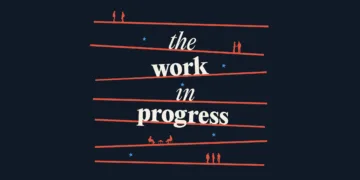








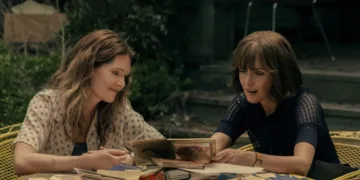














The older white woman keeps offering encouragement while the younger Black woman explains the obstacles racism places in her working life. In Ian Cheney’s documentary The Work in Progress, this is an uncomfortable way for reassurance to function. The advice asks the younger woman to believe in her strength, yet leaves little room for what she is saying about the conditions under which that strength must operate. Her account of discrimination keeps meeting an answer about attitude. Both women are speaking civilly, but the exchange exposes how easily good intentions can become a refusal to accept someone else’s description of the world.
The younger woman persists, even addressing her counterpart as “girlfriend.” The familiarity keeps a route open through the disagreement without withdrawing its substance. Eventually, the older woman acknowledges the limits of her experience: she has not lived as a Black person and cannot claim that knowledge.
The relief is real, and Cheney allows it to register. Yet the labor that produces it belongs disproportionately to the woman explaining racism. She must describe the obstacle, withstand its dismissal, and keep the conversation hospitable enough for recognition to arrive. The scene’s warmth carries the strain of that arrangement.
Such encounters give weight to an experiment that could easily have settled for agreeable statements about dialogue. Inspired by former Labor Secretary Robert Reich, who devised its questions and appears intermittently, the film brings strangers together across the United States, with an emphasis on people around thirty and eighty.
Participants draw cards from a pool of fifty questions and discuss what America means to them. Reich’s observation that uninterrupted listening is exhausting supplies a useful correction to the apparent simplicity of the exercise. The women’s exchange demonstrates the effort involved, including the effort required to persuade someone that listening is necessary.
The generational arrangement becomes especially fruitful when a younger white man objects to the stereotypes attached to Alabama. He wants his home understood beyond assumptions about racism. The older Black man speaking with him remembers being afraid while traveling through Birmingham. He also recalls being at Ebenezer Baptist Church when Martin Luther King Jr. learned of the 1963 Birmingham church bombing that killed four girls.
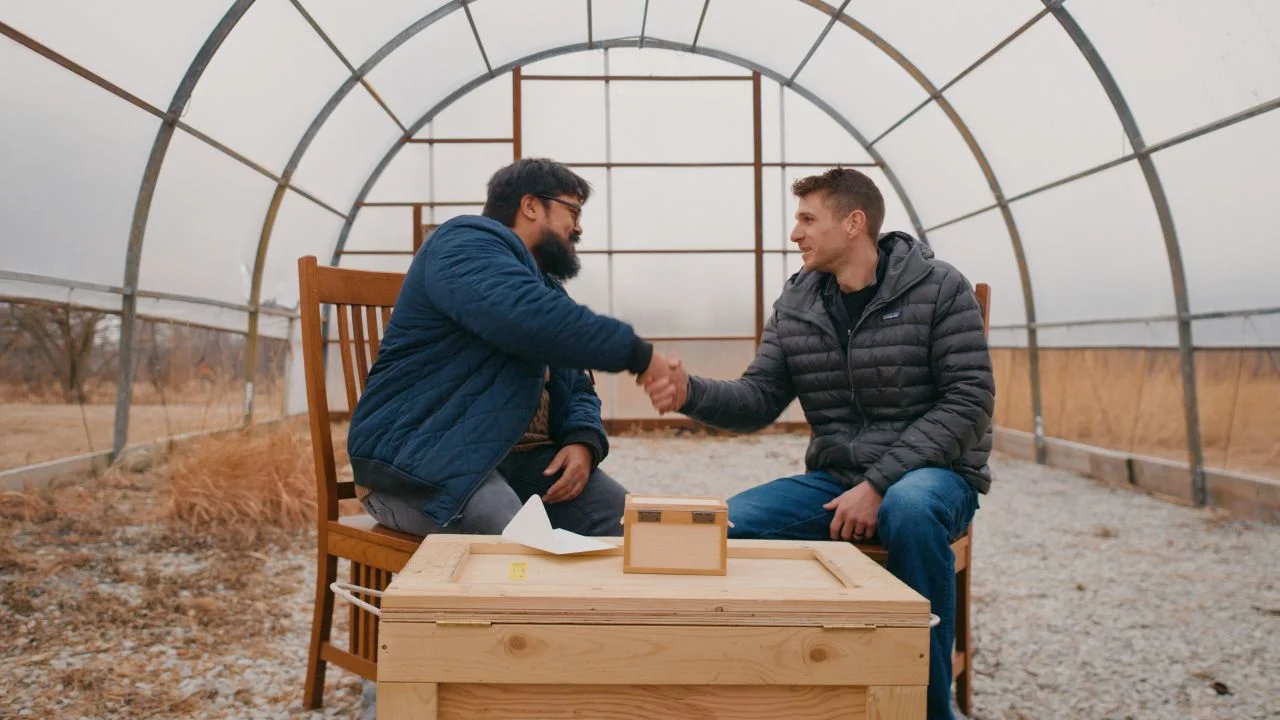
A complaint about reputation meets a memory of terror. The older man’s calm delivery leaves the younger man space to receive the account; his concentrated face and trembling throat make that reception visible. The history has reached him before he can formulate a response.
Cheney finds genuine drama in that interval. The younger man’s wish to be understood remains intelligible, while the testimony changes what understanding Alabama requires. Regional affection must make room for histories that complicate its preferred self-image.
His reaction cannot certify a permanent change of mind, but demanding that the scene prove one would miss its immediate achievement: he allows another person’s memory to interrupt his own account. Alongside the women’s disagreement, this encounter also unsettles any convenient division between a knowing younger generation and an obstructive older one. Age supplies different experiences without reliably assigning wisdom.
The decision to leave photographs and brief biographies until the credits supports this receptivity. Viewers hear people before receiving the credentials that might determine how seriously to take them. It is a generous adjustment to the usual documentary hierarchy of expertise, particularly in a project whose recognizable public figure largely leaves the conversations to others.
Social position remains visible, of course. Race, age, and surroundings continue to shape expectations. The delayed introductions allow participants some freedom from a prefabricated identity, while the racism exchanges show why freedom from labels cannot mean freedom from the histories a person brings into the room.
The cards create a similarly productive tension between openness and design. Asking for one word to describe America makes participation easy, compressing a potentially unwieldy subject into an approachable task. Asking what people owe one another demands a different kind of thinking, with responsibility entering the discussion alongside self-description.
Chance selects among these invitations, but Reich and the filmmakers have established the available terms. That framework gives strangers something to work with. It also makes the selection and repetition of questions important: the film’s understanding of the country depends partly on which conversations it permits viewers to place beside one another.
Here the documentary becomes less satisfying. Its range, extending to incarcerated men, a deaf family, and religious figures, creates curiosity faster than the editing can develop it. Brief extracts and shifting prompts provide too few opportunities to follow the same question across different places. Differences in outlook become difficult to separate from differences in what people have been asked.
The two exchanges about racism hold attention because the participants’ responses alter the conversation as it unfolds. Elsewhere, the succession of encounters gives individual remarks less room to acquire that force. A smaller selection of questions, revisited with greater patience, could have made the film’s geographic reach more revealing.
Hawai‘i gives place a stronger identity, with several generations of Hawaiians making it difficult to regard location as interchangeable scenery for a national discussion. That specificity deserves further attention, especially beside the brief appearance of a Native American woman elsewhere in the film. For Indigenous participants, an invitation to speak about America opens questions of belonging that a generational frame alone cannot address. Her brief appearance leaves too little room to examine what the nation owes her, alongside the question of what Americans owe one another.
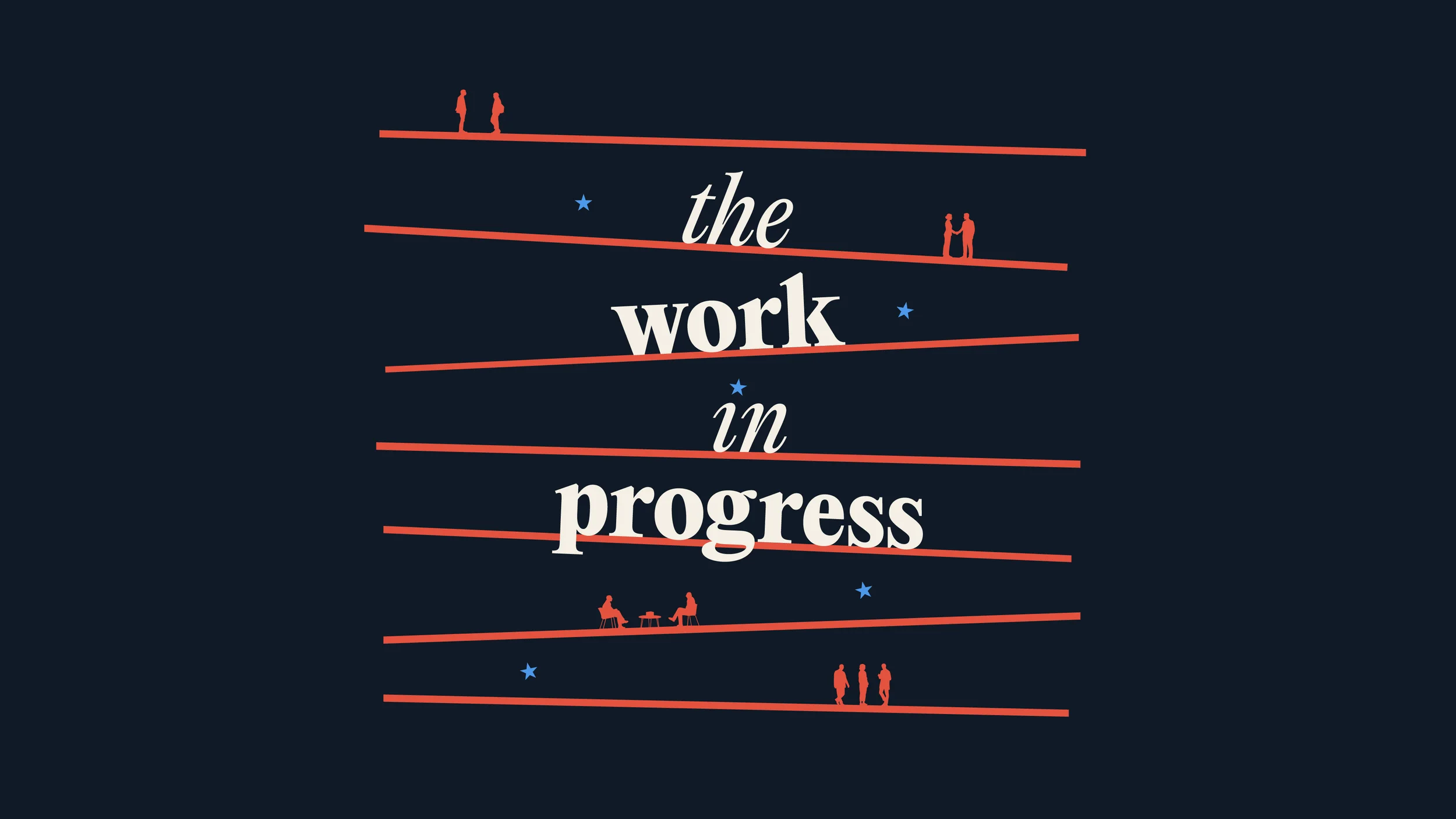
The Work in Progress was released in select theaters on September 4, 2026, through Abramorama. Directed by Ian Cheney and inspired by former U.S. Secretary of Labor Robert Reich, the documentary follows over 100 Americans across multiple states as they engage in deep face-to-face conversations to bridge political, cultural, and generational divides.
Where to Watch The Work in Progress (2026) Online
Full Credits
Title: The Work in Progress
Distributor: Abramorama
Release date: September 4, 2026
Running time: 1 hour 30 minutes (90 minutes)
Director: Ian Cheney
Producers and Executive Producers: Meredith DeSalazar, Heather Kinlaw Lofthouse, Elliot Kirschner, Brandon Yadegari Moreno, Robert Reich
Cast: Robert Reich
Director of Photography (Cinematographer): Ezra Wolfinger, Brandon Yadegari Moreno, Ian Cheney, Taylor Gentry, Daniel Quintanilla
Editors: Josh Melrod, Sam Peisner, Natasha Bedu
Composer: Simon Beins, Ben Fries
The Review
The Work in Progress
The Work in Progress earns its faith in dialogue through encounters that expose the unequal effort recognition demands. Its exchanges about racism are moving because someone’s understanding changes under pressure. Cheney’s national portrait is less searching: shifting prompts weaken regional comparison, brief extracts restrict development, and Indigenous belonging receives insufficient attention. The strongest conversations deserve the patience the film cannot consistently give its participants.
PROS
- Racism discussions reveal the effort behind genuine recognition.
- Generational encounters resist easy stereotypes about age and wisdom.
- Delayed biographies encourage attention before credentials.
CONS
- Shifting questions limit meaningful comparison across regions.
- Brief extracts curtail the development of individual conversations.
- Indigenous experiences receive insufficient space within the national portrait.