









The prison calls arrive before the account of how anyone got there. Rich Felgate places conversations with his partner, Just Stop Oil co-founder Indigo Rumbelow, at both ends of We, the Hated, giving the documentary a consequence to work back from. Arrest cannot function as a distant possibility once we have heard from someone already incarcerated. Each subsequent decision to enter a road or remain seated before approaching police carries that knowledge. The structure also gives a movement dispersed across separate actions a continuing relationship through which to measure their cost.
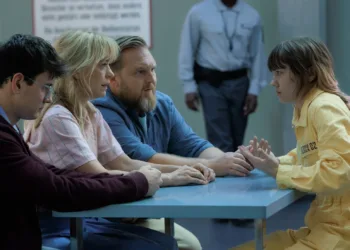
Felgate complicates that arrangement himself. At their shared home, he tells Rumbelow to ignore the camera, describing himself as a fly on the wall. Yet the person recording her is also the person receiving those prison calls. His involvement is built into the story’s construction. Domestic access allows the film to connect public commitment with the life that must accommodate it, while making its sympathies easy to locate. The useful question becomes how much that closeness helps Felgate examine his subjects, and where affection makes him less inclined to press them.
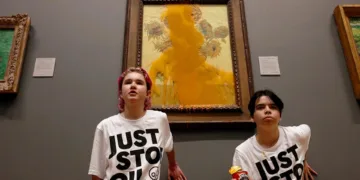
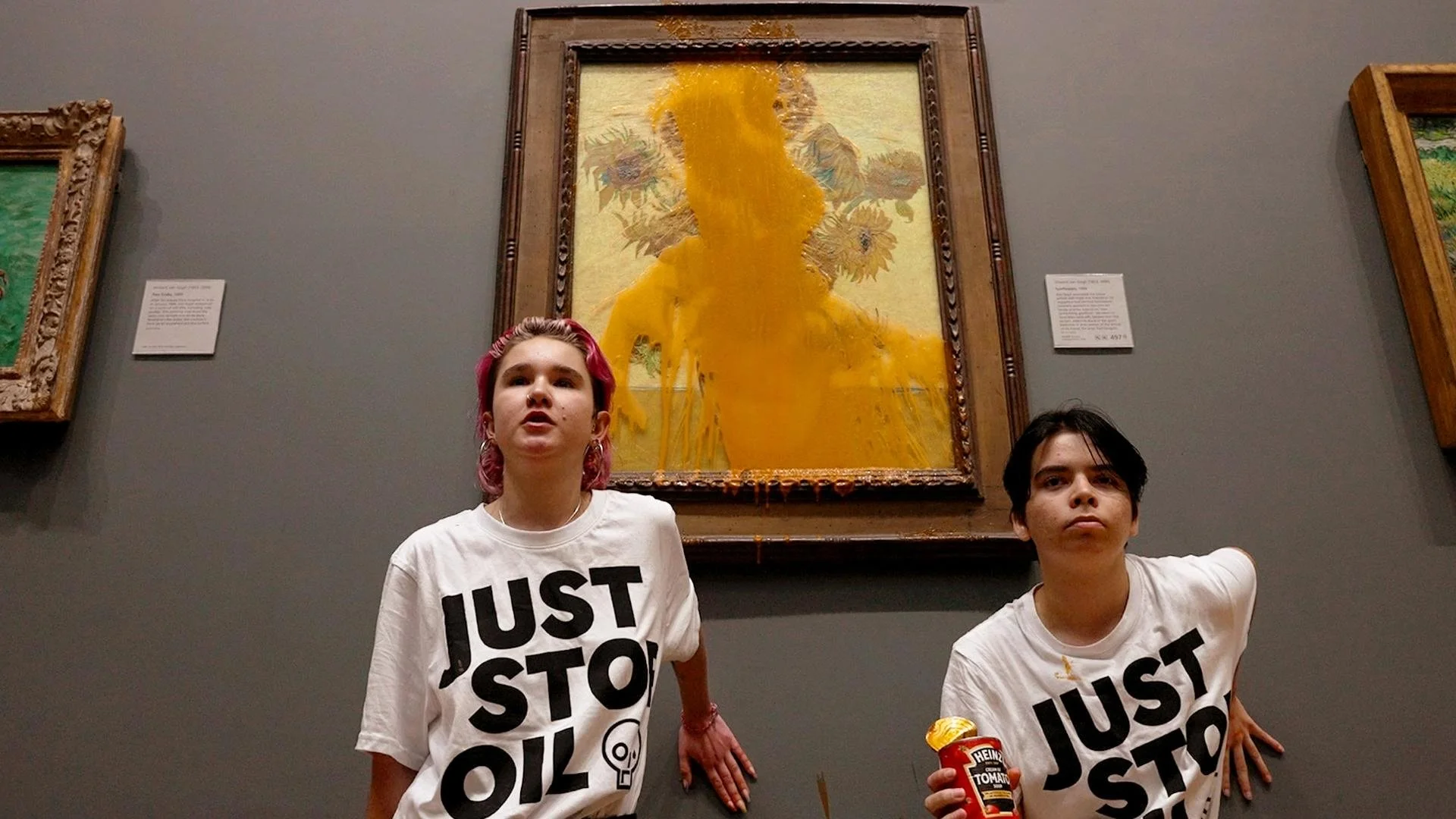
Just Stop Oil’s demand supplies a clear organizing purpose: opposition to new UK fossil-fuel licences and production agreements. Its tactics create a less straightforward narrative. Roadblocks, glue, bicycle locks fastened around necks, and the tomato-soup action against Van Gogh’s Sunflowers are designed to make the group difficult to ignore. Felgate assembles material filmed inside the movement alongside media and police footage. That range lets him restore personal circumstances to actions often encountered as isolated news images. The film becomes particularly effective when a practical detail interrupts the ready-made identity of “protester.”
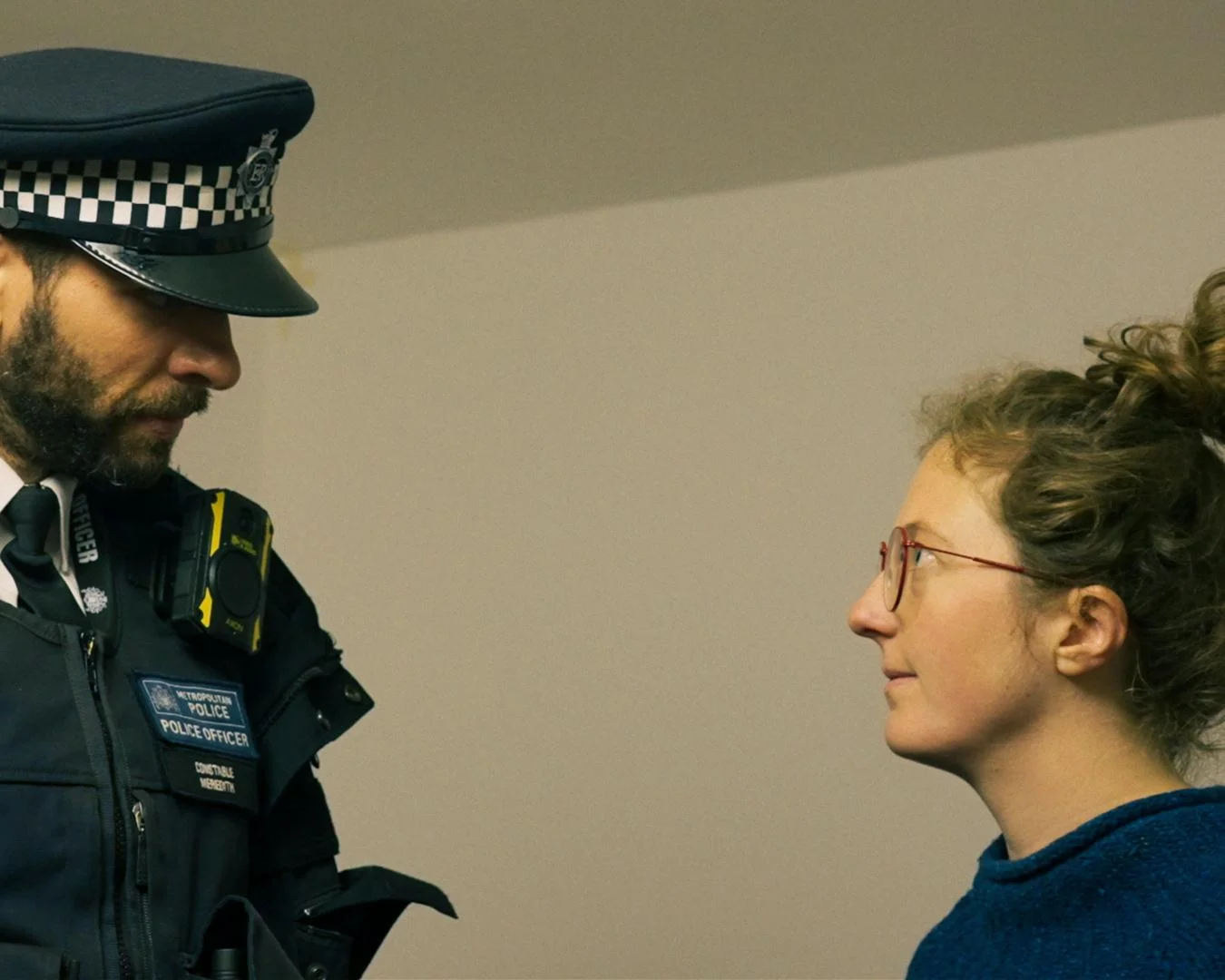
Mark, a vicar with Parkinson’s, takes his medication before being handcuffed. The action is brief, but it changes the meaning of his remaining in place. His body has requirements that an arrest will complicate, and he attends to them while accepting what comes next.
His description of the polite silence he receives within the church introduces another pressure: a moral commitment can leave someone isolated within an institution that might have been expected to understand it. Felgate gets substantial characterization from these details without needing to supply a dramatic conversion or a reassuring resolution.
Jane’s concern for her blind husband gives the documentary a different kind of resistance. She wants to act, and she worries about the distress her participation causes at home. Her determination does not make that responsibility disappear. This is stronger material than a straightforward declaration of courage because it leaves competing obligations active within the same person. Felgate’s access earns its place here. The film allows commitment to include discomfort about the consequences for someone else, rather than reducing every personal sacrifice to further evidence that the cause is right.
The street footage places those decisions under immediate pressure. Protesters are dragged, kicked, and punched; one man walks along a seated line pouring water over their heads. A van appears to be driven toward them. These encounters give physical meaning to the hostility announced by the title.
They also distinguish an inconvenient demonstration from the response it receives. Anger at a blocked road can be understood without accepting aggression against the people sitting on it. Occasional support from pedestrians and cyclists prevents public reaction from becoming entirely uniform, though hostility supplies the sharper dramatic encounters.
The strategic argument needs a separate examination. The group wants attention directed toward fossil-fuel policy, yet television exchanges repeatedly return to the methods used to obtain it. Interviews involving Piers Morgan make that conflict explicit: the activists describe an emergency, while their tactics become the subject under discussion. Felgate captures a campaign caught in a difficult chain of events. Disruption produces coverage; coverage produces arguments about disruption. The film explains the participants’ willingness to endure this process with greater assurance than it establishes what the process achieves.
Phoebe Plummer’s admission that she was unprepared for the media storm following the Sunflowers action brings that gap into focus. Seeking public attention and being ready for personal scrutiny are different things. Her surprise is understandable, especially once coverage turns toward the activists’ private lives, but it also invites a closer look at the campaign’s expectations. What response had been anticipated? How was the publicity supposed to serve the demand? The documentary gives Plummer’s exposure emotional weight while leaving the planning behind such exposure less developed. Its account of conviction would gain from a firmer account of calculation.
That limitation matters when the activists claim a victory around Labour’s 2024 election pledge against new oil and gas licences. The claim belongs in their story: it shows what they regard as evidence that their actions mattered. It remains a claim about causation that the sequence of protest and political announcement cannot settle by itself. Felgate is on firmer narrative ground tracing arrests and imprisonment, because these consequences can be followed into particular lives. Political achievement is harder to attribute, and the film’s sympathy sometimes allows those two kinds of evidence to sit too comfortably together.
The return to Rumbelow’s prison call gives the documentary a definite stopping point without supplying a comparable resolution to the campaign. We have now seen the choices, encounters, and domestic obligations that lie behind the conversation.
Felgate’s position changes the call’s function: the filmmaker who could accompany an action and record life at home must now receive his partner’s account from a place he cannot share. The closing frame leaves their relationship continuing under that restriction, beyond the duration of the public event that brought it about.
We, the Hated premiered at the Sheffield DocFest in June 2026 before expanding to cinemas via Firebreak Films. Directed by Rich Felgate, the riveting documentary turns an intimate lens on the individuals behind Just Stop Oil, capturing the human realities, tensions, and personal stakes driving one of modern history’s most polarizing climate protest movements.
Full Credits
Title: We, the Hated
Distributor: Firebreak Films, Passion Planet
Release date: June 10, 2026 (Sheffield DocFest), November 13, 2026 (UK theatrical)
Rating: 15 / 18
Running time: 1 hour 29 minutes (89 minutes)
Director: Rich Felgate
Producers and Executive Producers: Rich Felgate, Gaby Bastyra, David Allen, Hugh Hartford
Cast: Activists and members of Just Stop Oil
Director of Photography (Cinematographer): Rich Felgate
Editors: Rachel Roberts, Shane McCormack
Composer: Lindsay Wright
The Review
We, the Hated
We, the Hated gives its protest footage a coherent human story through Felgate’s relationship with Rumbelow and the prison calls framing their separation. Mark’s medication and Jane’s concern for her husband make commitment tangible without simplifying its costs. The documentary examines those costs with greater precision than the planning and political achievements of the campaign. Its intimacy earns sympathy; its strategic argument needs firmer scrutiny.
PROS
- Felgate’s visible involvement clarifies his relationship to the material.
- Street footage makes the activists’ physical vulnerability tangible.
- Specific personal details establish distinct participants.
- Prison-call framing gives the documentary a clear narrative spine.
CONS
- Claimed political influence receives insufficient evidentiary scrutiny.
- Planning behind publicity-seeking actions remains underexamined.