




























Agnes van Rhijn has a president coming to dinner and a sister who controls the money. The second arrangement considerably complicates the first. Hosting Grover Cleveland promises to restore Agnes’s social standing after her son Oscar’s financial disaster, provided Ada will fund the restoration.
Around this awkward dependency, The Gilded Age’s fourth season builds an extended comic suspense story out of invitations, menus, clothes, and people who would prefer certain other people to eat elsewhere. There are several ways for the evening to go wrong, and Agnes possesses the temperament to discover additional ones.
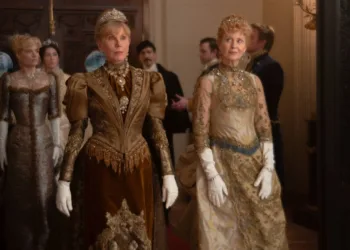
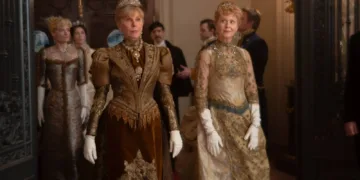
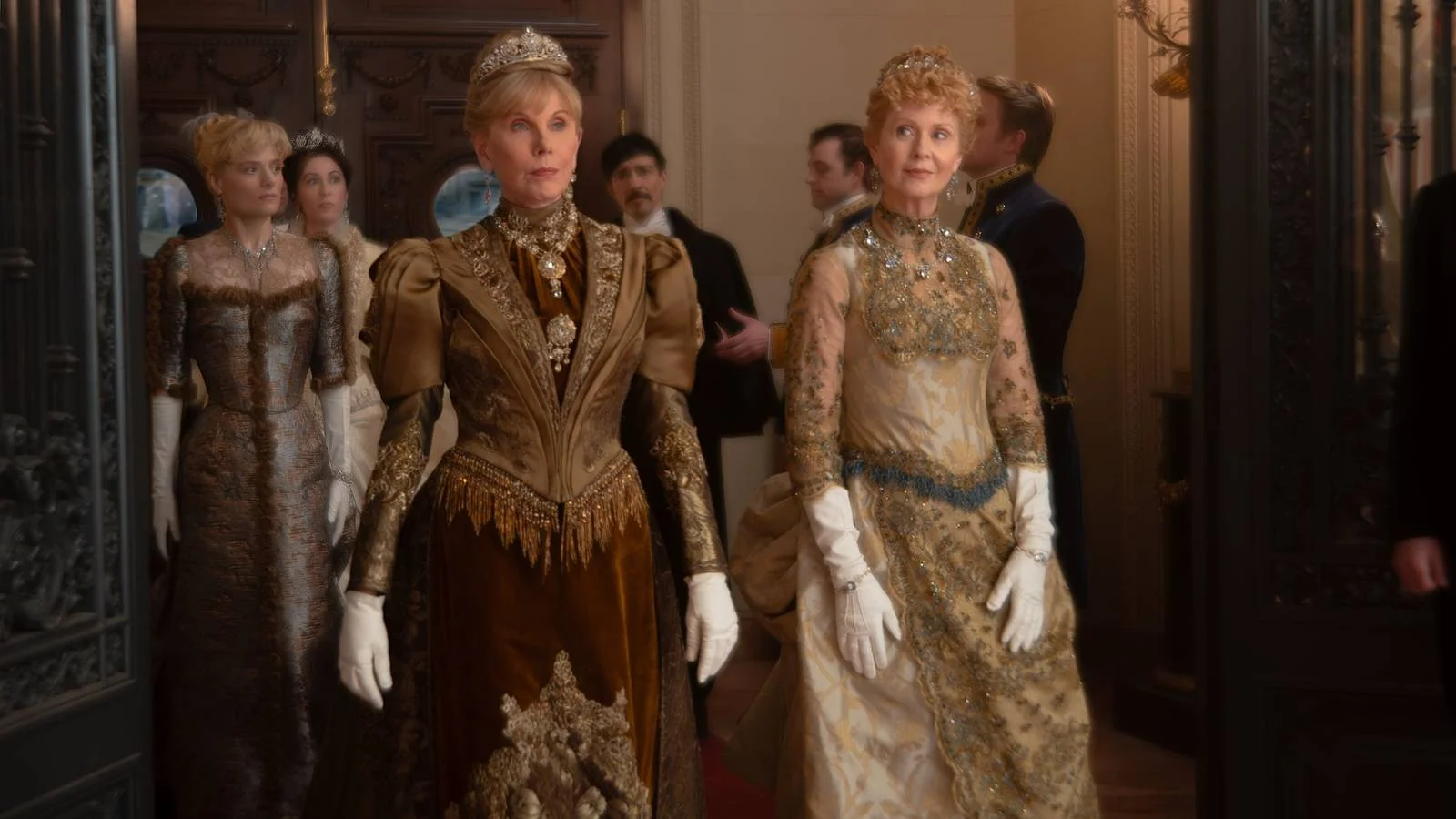
Christine Baranski makes the preparations especially entertaining because Agnes’s authority still sounds absolute. Her financial circumstances have yet to reach her vocal cords. Cynthia Nixon gives Ada’s gentleness sufficient resistance to keep their exchanges from becoming an exhibition of expensive insults: she may indulge her sister, but indulgence now requires her consent. Each demand tests how far that consent extends. Their scenes develop a familiar relationship through a changed practical arrangement, allowing the dialogue to move quickly without leaving the underlying disagreement behind.
Julian Fellowes and Sonja Warfield understand how useful this occasion is to their sprawling ensemble. Bertha Russell’s interest widens the competition, while questions about attendance give several stories a shared destination. The lavish clothes and interiors help make these distinctions readable: everyone has dressed to demonstrate precisely where they belong. Across this version of 1880s New York, access remains a renewable source of drama. Agnes can invite the president into her home; asking her sister to pay for the privilege requires rather more diplomacy.
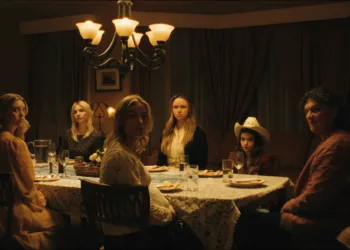
Across the street, the Russells have a problem that cannot be solved by assembling the right guests. Bertha is with her pregnant daughter Gladys in Britain early in the season, while George remains estranged in New York. Arranging Gladys’s marriage to the Duke of Buckingham advanced the family’s standing and damaged Bertha’s own marriage. That consequence survives the season break. Carrie Coon gives Bertha’s determination a different dramatic purpose: a woman accustomed to securing admission now needs someone who already loves her to let her back in.
George’s survival of last season’s shooting has also failed to restore his former equilibrium. The search for his attacker feeds a volatility that spreads into his business and his treatment of Larry. Morgan Spector’s commanding voice becomes an instrument of pressure, particularly when George’s son is trying to earn approval from a father increasingly ill-equipped to grant it. Business difficulties further reduce George’s room to maneuver, with Neal Huff’s John D. Rockefeller providing the rare opponent who cannot be dispatched through superior force of personality. George has finally encountered someone immune to the Morgan Spector baritone.
These pressures give the marriage story movement even while the couple remain apart. George’s distress makes his behavior intelligible without making everyone around him responsible for accommodating it, and Coon preserves Bertha’s forcefulness as she pursues reconciliation.
Oscar and Enid Winterton provide a brisk comic counterpoint. Blake Ritson and Kelley Curran enjoy the mutual calculation of an alliance that exchanges her fortune for his family name, with further scheming available as a shared recreational activity. Their scenes benefit from a clarity the Russells have lost: both parties can identify what they expect to receive.

Peggy Scott and Dr. William Kirkland face a more practical negotiation. Peggy’s first novel is published, a book tour beckons, and William receives a professional opportunity in Washington. Their engagement therefore produces a question with consequences beyond the wedding: how can two advancing careers fit inside the life they are preparing to share? Denée Benton has something substantial to play because Peggy’s writing remains a commitment that organizes her decisions. Jordan Donica gives William ambitions of his own, making the conflict harder to settle through a simple demonstration of devotion.
The family friction develops around those choices. Phylicia Rashad’s Elizabeth Kirkland can be formidable without remaining permanently fixed in disapproval; her growing respect for Peggy’s ambition allows their relationship to change. This Black professional and literary world has its own expectations, opportunities, and competing loyalties, giving Peggy’s story enough substance to sustain its separate orbit. The engagement keeps generating drama because affection leaves an important decision unanswered: whose work will determine where their shared life happens?
Marian and Larry’s relationship has less reliable forward motion. A carriage encounter renews the attraction after their broken engagement, but renewed attraction is familiar territory for these two. Louisa Jacobson gives Marian’s distress conviction, and Harry Richardson benefits from Larry’s parallel struggle for his father’s professional respect.
Even so, the courtship spends too much time returning to hesitation. Marian’s charitable volunteering offers the possibility of another organizing purpose, only for romantic uncertainty to keep reclaiming the center. Potential scandal increases the pressure without entirely disguising how often the relationship has asked viewers to wait.
That distinction matters in a season whose comparatively lean episodes otherwise move with considerable ease. Quick dialogue and efficient scenes keep the ensemble lively, but a briskly delivered delay remains a delay. The later developments can reward patience while leaving some of the earlier circling open to question. None of this requires the series to abandon its cheerful theatricality or start punishing beloved characters to prove its seriousness.
Jack Trotter supplies a smaller, underdeveloped variation on that idea. His alarm-clock fortune has bought him a new position without providing the manners required to occupy it, so his former fellow servants become his etiquette instructors.
Ben Ahlers is charming amid this reversal, and the difficulty of selling his next invention usefully complicates the assumption that success will now reproduce itself. There is room for more of both. He can afford the house, the clothes, and the entertaining. His former colleagues already know how to make a wealthy man look as though he belongs.
The Gilded Age Season 4 premieres on HBO on November 1, 2026. Created by Julian Fellowes, the lavish historical drama continues to chronicle the intense social and economic clashes between old-money New York traditions and the ambitious newcomers of the late 19th century.
Where to Watch The Gilded Age Season 4 Online







Full Credits
Title: The Gilded Age Season 4
Distributor: HBO, Universal Television
Release date: November 1, 2026
Rating: TV-MA
Running time: 60 minutes per episode
Director: Michael Engler, Salli Richardson-Whitfield, Deborah Kampmeier, Crystle Roberson
Writers: Julian Fellowes, Sonja Warfield
Producers and Executive Producers: Julian Fellowes, Gareth Neame, David Crockett, Salli Richardson-Whitfield, Sonja Warfield, Bob Greenblatt, Claire Shanley
Cast: Carrie Coon, Morgan Spector, Louisa Jacobson, Denée Benton, Taissa Farmiga, Harry Richardson, Cynthia Nixon, Christine Baranski
- Composer: Harry Gregson-Williams, Rupert Gregson-Williams
The Review
The Gilded Age Season 4
The Gilded Age’s fourth season turns a guest list into suspense and a household budget into comedy. Baranski and Nixon make the presidential preparations a delight, while the Russells’ estrangement and Peggy’s competing ambitions give the bustle emotional purpose. Marian and Larry spend too long circling familiar territory, and Jack deserves more room, but the ensemble keeps the social maneuvering lively. Agnes’s greatest hosting challenge remains the woman paying for dinner.
PROS
- Baranski and Nixon’s sharply played household tensions
- Presidential preparations that connect the ensemble
- Lasting consequences for the Russells’ marriage
- Peggy’s credible conflict between love and career
CONS
- Limited development of Jack’s promising new circumstances
- Repetitive hesitation in Marian and Larry’s romance