
























Karl, the psychiatric nurse played by Rory Culkin, has room in his sympathies for a serial killer and rather less for a woman with schizophrenia. His resentment of his superiors and professed hostility toward the rich suggest a man alert to unequal power. His conduct suggests that he notices it selectively.
In Apple TV’s Nocturne, the patient who knows how to make a caregiver feel appreciated can secure consideration unavailable to someone whose distress is harder to accommodate. The hospital’s most troubling failure of care emerges through this ordinary vanity.
Casting Stephen Graham as Jurek Walter gives that failure an unusually persuasive beneficiary. He softens his voice, offers compliments, and makes apparent helplessness a means of control. The tenderness Graham brought to Adolescence has become dangerous without becoming unrecognizable.
His performance invites us to register the appeal that Karl feels, even after the opening sequence establishes Jurek’s capacity to induce another patient’s suicide. The production gets considerable mileage from this double awareness: we know what the gentleness conceals, but we can still hear why someone wants to believe it.
Outside the institution, a boy named Michael reappears years after his abduction, raising the possibility that his missing sister remains alive. Jurek is confined, yet the evidence points back toward him. Retired detective Jonah Lynn, who helped put him away, returns to an investigation now concerned with how far the prisoner’s influence extends and who might be assisting him. This assessment covers the first seven episodes of the ten-episode season, leaving its eventual explanations and resolution open.
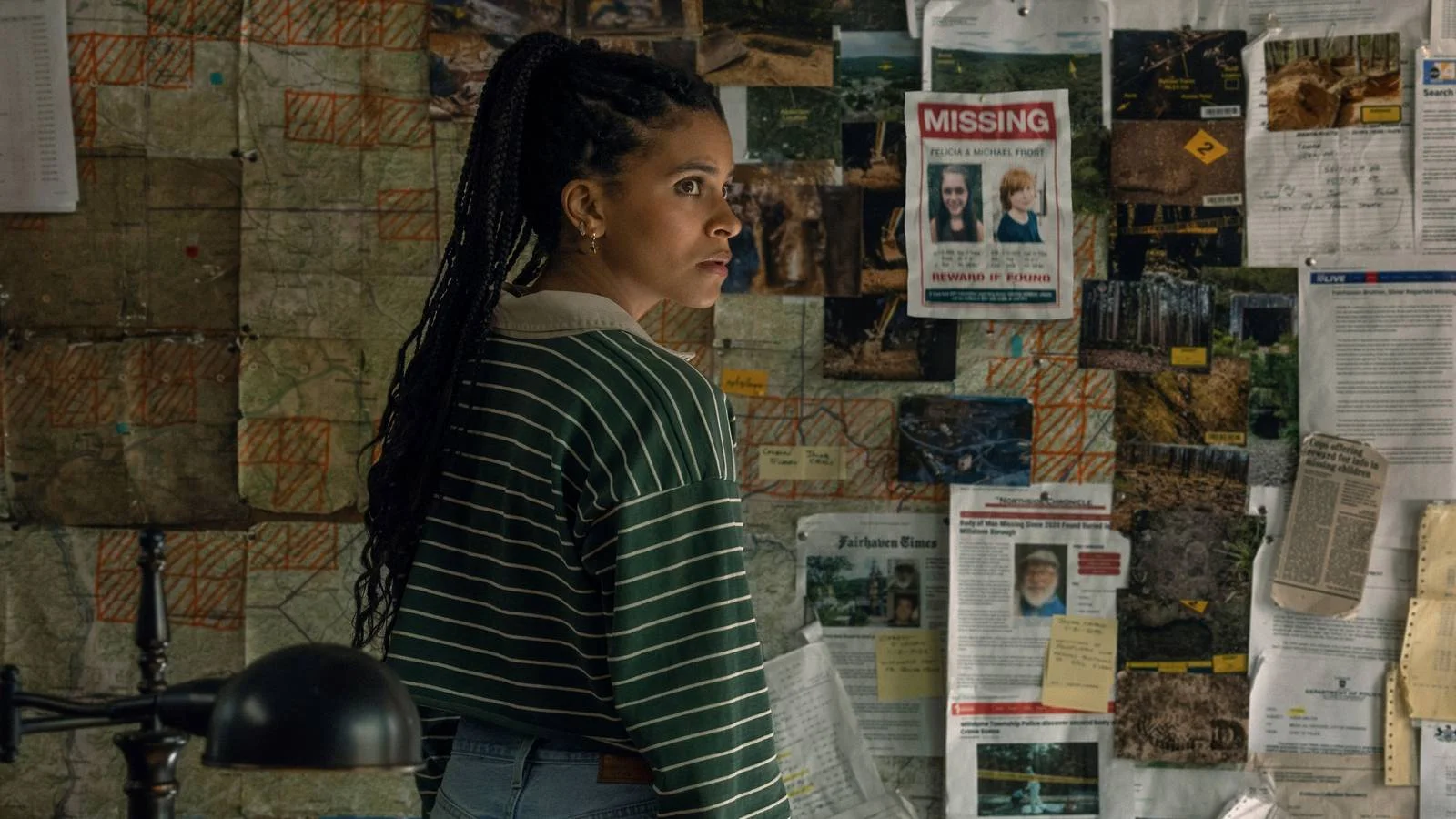
The hospital operation gives those questions their strongest dramatic form. FBI agent Saga Bauer enters posing as a patient, and Zazie Beetz makes the assumed personality a demanding piece of work in its own right. Playfulness can tip toward volatility; apparent vulnerability coexists with a watchful investigator’s calculations.
Once Saga is placed near Jurek, the encounters among her, Graham, and Culkin acquire a tension that the external search cannot consistently match. Three people are reading one another, with very different understandings of what constitutes a successful exchange.
Saga’s competence also complicates the institution’s distribution of authority. She can exploit expectations attached to her patient identity while remaining subject to how others interpret it. Karl’s selective understanding becomes more consequential in that company: his professional position gives his misjudgments practical force.
Yet the writing sometimes asks Graham’s persuasiveness to cover too much. Karl’s resentment and hunger for recognition establish susceptibility; the ease with which Jurek continues to bend professional judgment strains the relationship’s credibility. A performance can make manipulation compelling without making every concession plausible.

Liev Schreiber supplies another kind of persuasion as Jonah. Grief has settled into his bearing, and his reluctance gives the familiar obsessive detective a welcome heaviness. Saga is his goddaughter, the daughter of his late partner, so their shared involvement carries obligations beyond the current search. Schreiber communicates how exhausting those obligations have become without turning each exchange into a declaration of suffering. He lends Jonah a weariness the script can otherwise be too quick to treat as sufficient characterization.
The partnership with FBI agent Alexandra Quinn offers a useful corrective. Poorna Jagannathan gives procedural authority a credible human presence, and their dependence runs both ways: Jonah knows Jurek’s history; Quinn has the resources to pursue the investigation.
But the recurring pattern of Jonah meeting resistance and subsequently demonstrating his special insight narrows their disagreements. Repeated vindication gives the series an easy way to bypass the question of whether his methods expose others to unreasonable risk. Quinn’s objections deserve consideration beyond their usefulness as obstacles he can overcome.
That limitation becomes more noticeable as the series withholds parts of Jonah’s history. Intermittent flashbacks promise an explanation for the man we are watching, while delaying some of the context needed to judge his choices. There is plenty happening across the parallel investigations, and the movement between them can maintain urgency. Character development is less consistent. Another lead or confrontation can advance the search while leaving our understanding of Jonah roughly where it was before.
Rowan Joffé’s adaptation of Lars Kepler’s The Sandman and Lazarus brings the confined-killer encounter familiar from The Silence of the Lambs into an extended television investigation. The combination has obvious pleasures, especially with performers this capable of making familiar material feel inhabited.
It also raises a practical question about the chosen format: what is the additional time buying? Ten episodes offer room to examine the consequences of exceptional policing and the lives surrounding a case. Nocturne sometimes spends that room keeping the detective’s biography under seal. The prestige credentials are assembled more promptly than Jonah’s characterization.
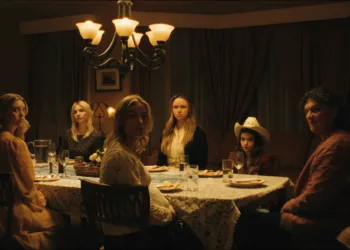
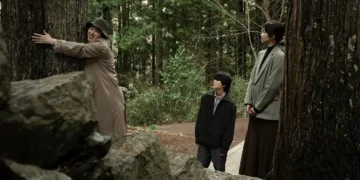
The Pennsylvania setting makes a related promise. Regional accents, woods, unexplained symbols, and Michael’s references to “the Sandman” give the investigation a menacing local texture. They establish a place to fear more securely than a community to understand. The comparison with Mare of Easttown is useful chiefly because that series allowed everyday relationships to keep making demands on its characters. Here, the case more thoroughly determines what people are permitted to be concerned with, even when their suffering suggests lives that ought to exceed it.
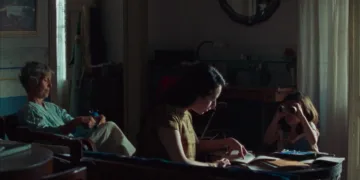
Chrissy Metz’s Ida, reunited with one child while fearing for the other, bears the cost of that emphasis. Metz gives the circumstances emotional weight, but the writing grants the mother’s experience less sustained attention than the work of solving what happened to her children. Michael himself briefly changes that balance.
Landon Valentin’s limited speech and altered physical bearing make captivity’s aftermath present without an explanatory account. During his first outing in public after returning home, the ordinary world becomes a difficult place to enter. Following him requires the series to attend to a task no investigator can complete on his behalf. Finding a child can conclude a search; learning how to live outside captivity requires a different measure of time.
Nocturne premieres globally on Apple TV on October 30, 2026. Developed by John Hlavin and based on the best-selling novels by Lars Kepler, the intense crime thriller follows a detective and an operative who must cross ethical lines to track down a dangerous, elusive killer.
Where to Watch Nocturne Online
Full Credits
Title: Nocturne
Distributor: Apple TV
Release date: October 30, 2026
Rating: TV-MA
Running time: 60 minutes per episode
Director: Tim Van Patten, Allen Coulter, Logan Kibens, Anu Menon, Joe Chappelle
Writers: Rowan Joffé, John Hlavin, Dorothy Fortenberry, Lee Edward Colston II, Matthew Newman, Jenina Kibuka
Producers and Executive Producers: Rowan Joffé, John Hlavin, Tim Van Patten, Liev Schreiber, Zazie Beetz, Lars Kepler, Øystein Karlsen, David Rysdahl, Dorothy Fortenberry, Niclas Salomonsson, Barry Jossen, Tana Jamieson, Heather Kadin, Peter Micelli, Jack Whigham
Cast: Liev Schreiber, Zazie Beetz, Stephen Graham, Bill Camp, Rory Culkin, Chrissy Metz, Gary Carr, Poorna Jagannathan
- Composer: Toydrum
The Review
Nocturne
Across its first seven episodes, Nocturne puts a formidable cast to work on familiar crime machinery. Graham and Beetz make the hospital encounters compelling, with sharp implications for whose distress receives care. Outside, withheld backstory substitutes too often for development, while the victims’ lives struggle for space around the investigation. The production knows how to keep its killer fascinating; its portrait of the people surviving him remains less assured.
PROS
- Graham’s chilling use of apparent tenderness.
- Beetz’s layered undercover performance.
- Tense hospital encounters.
- Valentin’s affecting portrayal of survival.
CONS
- Karl’s susceptibility strains professional credibility.
- Withheld backstory limits Jonah’s development.
- Victims and community receive uneven dramatic attention.