












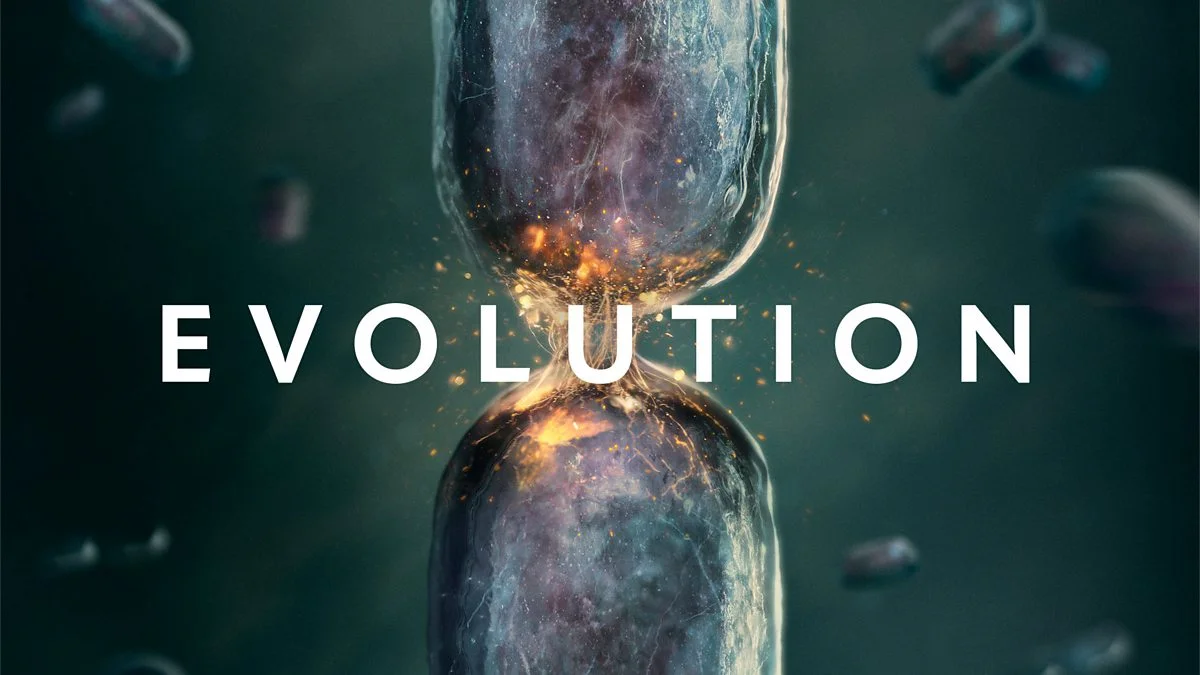

Chris Packham refuses to give the elephant’s trunk a short answer. Watching African savanna elephants at a Kenyan watering hole, he takes the question of how this animal came to exist back through the history of life, until CGI has replaced the elephant with a cell. The trunk will have to wait.
What keeps this enormous excursion manageable is the animal we have already seen: however unfamiliar the territory becomes, there remains something specific to explain. Moving between living animals and reconstructed ancestors, Evolution lets us understand the elephant’s body as an accumulation of changes without having to retain every intervening organism. Its nose is a surprisingly effective bookmark.
Across five episodes, the BBC series gives each animal a different explanatory task: elephants introduce complexity, ostriches reproduction, bats feeding, dolphins intelligence and horses movement. This arrangement lets the episodes explore distinct biological pressures without attempting five exhaustive family trees.
It also creates a delicate storytelling problem. Start with an elephant and work backwards, and everything can appear to have been heading towards an elephant. Packham explicitly rejects a predetermined blueprint, an important qualification to a format that supplies the past with such an appealing destination. The elephant gets top billing; it wasn’t promised the part.
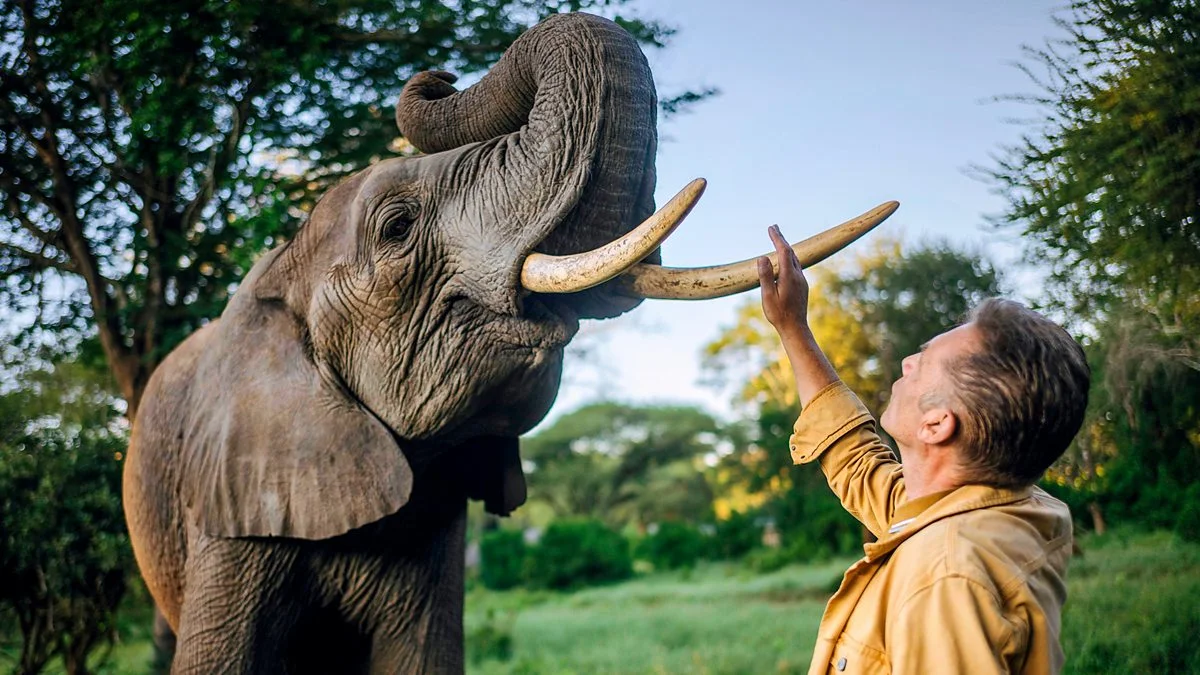
Packham is particularly good at making an explanation feel like an investigation with something available to inspect. When he opens a termite mound to reveal the fungus cultivated inside, symbiosis becomes a visible relationship. There is an object, a discovery and then a widening account of how organisms depend on one another. The progression gives the information somewhere to land. We have been shown a reason to ask the next question before being handed its answer.
His enthusiasm helps sustain that progression. Packham sounds absorbed by what he is describing, and his pleasure in an unexpected connection gives technical information a conversational momentum. The feeding episode can make room for bums because digestive anatomy is both biologically consequential and reliably funny. There is no requirement to choose. His accessibility comes from treating curiosity as something adults retain, including the part that still finds rear ends amusing.
The reconstructions work within that same explanatory rhythm. Brief visits to extinct creatures and an Ediacaran environment put images to forms of life that a wildlife camera cannot recover. Their brevity suits their purpose: they illustrate stages in the development of bodies and biological features, then let the explanation move on. Anyone expecting the extended prehistoric animal dramas of Walking with Dinosaurs may need to adjust their viewing appetite. These creatures have been brought back to help with the lesson. They haven’t all been given character arcs.
The intelligence episode shows how much unfamiliar material this approach can carry. Its account connects ancient viral contributions with myelin around nerve cells and faster signalling, building a sequence in which changes at a microscopic scale acquire consequences for bodies and brains. Packham’s verbal energy helps keep the links in view. The fascination comes from following the connection, with the CGI giving an otherwise remote account a visible form. At its best, the series makes the explanation itself the thing you want to watch.
That fluency also produces its most interesting weakness. In the elephant episode, LUCA, the last universal common ancestor, becomes “the cell that started everything.” It is an excellent piece of narrative casting: a vast history acquires a tiny protagonist. Packham also acknowledges that LUCA was not the first cell and existed alongside others. Those statements ask the audience to hold a more complicated account than the memorable billing suggests. The qualification is present, but the little star has the better publicity.
The episode does offer evidence, pointing to shared DNA and the genetic code while acknowledging that there are no LUCA fossils. That matters. The problem is the relative force of the explanation and the story wrapped around it. A shared ancestor and the origin of life are different questions; the narration’s sweep can make the passage between them sound smoother than its own qualifications allow. Once LUCA has been given the role of the cell that started everything, viewers must do some work to remember what “everything” excludes.
The imagery introduces a related compression. LUCA appears as a simple bag-like form containing a few internal shapes, while Packham describes the extraordinary complexity of cells. A simplified image is useful for establishing scale and recognisability, but it gives the viewer little purchase on the complexity the words announce. The distant creature has become visible; the difficult part of understanding it remains largely verbal. Here, an opportunity for animation to explain has been used chiefly to depict.
There is a similar tension in the language of invention and hardware upgrades. Such phrases make biological change briskly legible, especially in the intelligence episode. They also lend a sense of intention to a process Packham describes as unguided. The metaphors earn their place through the connections they make accessible, though they occasionally seem to be running an evolutionary product launch. Somewhere between the upgrade and the innovation, the audience can acquire the impression of a planning department.
These are places where the programme could trust its viewers with another distinction, just as it trusts them with an unfamiliar organism or a complicated relationship. Packham’s termite discovery demonstrates how readily curiosity can survive an explanation that grows more intricate as it proceeds. That confidence could extend to the joins between observation, reconstruction and inference. A viewer drawn into this history will eventually encounter competing reconstructions and unanswered questions. Teaching them to recognise those joins would give their newly awakened curiosity something sturdier to work with.
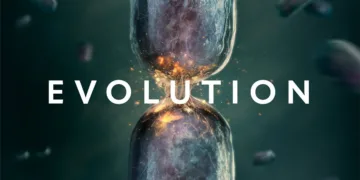
Evolution premiered on BBC Two and BBC iPlayer on July 13, 2026. Presented by Chris Packham, the five-part natural history documentary series explores four billion years of evolutionary history through focused investigations of five remarkable animals.
Full Credits
Title: Evolution
Distributor: BBC Two, BBC iPlayer
Release date: July 13, 2026
Rating: TV-PG
Running time: 58 minutes per episode
Director: Tom Hewitson, Laura Mulholland, Fleur Bone, Ross Kirby, Clementine Cheetham
Producers and Executive Producers: Andrew Cohen, Rob Liddell, Julia Cort, Chris Schmidt, Alice Jones, Sarah-Jane Walsh, Tom Hewitson, Niall Strawson, Laura Mulholland, Mairead Maclean, Fleur Bone, Ross Kirby, George Shankar, Clementine Cheetham
Cast: Chris Packham
Director of Photography (Cinematographer): Tom Hayward, Will Edwards, Duncan Brake
Editors: Ben Lavington Martin, Sam Billinge, Joseph Tims, Louise Salkow
Composer: Paul Saunderson
The Review
Evolution
Chris Packham makes an elephant’s nose a convincing reason to revisit the history of life. Evolution combines engaging presentation, purposeful CGI and clever episode design to make complex relationships understandable. Its storytelling occasionally gets ahead of its qualifications, especially when LUCA receives the publicity campaign of a founding celebrity. Greater clarity about inference and uncertainty would strengthen an already absorbing science series.
PROS
- Animal-led episodes give vast evolutionary histories a clear focus.
- Packham’s enthusiasm and humour sustain technical explanations.
- Physical discoveries make biological relationships tangible.
- Brief CGI reconstructions serve the scientific storytelling.
CONS
- LUCA’s narrative framing blurs ancestry with life’s origins.
- Cellular imagery conveys less complexity than the narration describes.
- Metaphors of invention can imply evolutionary intention.