
























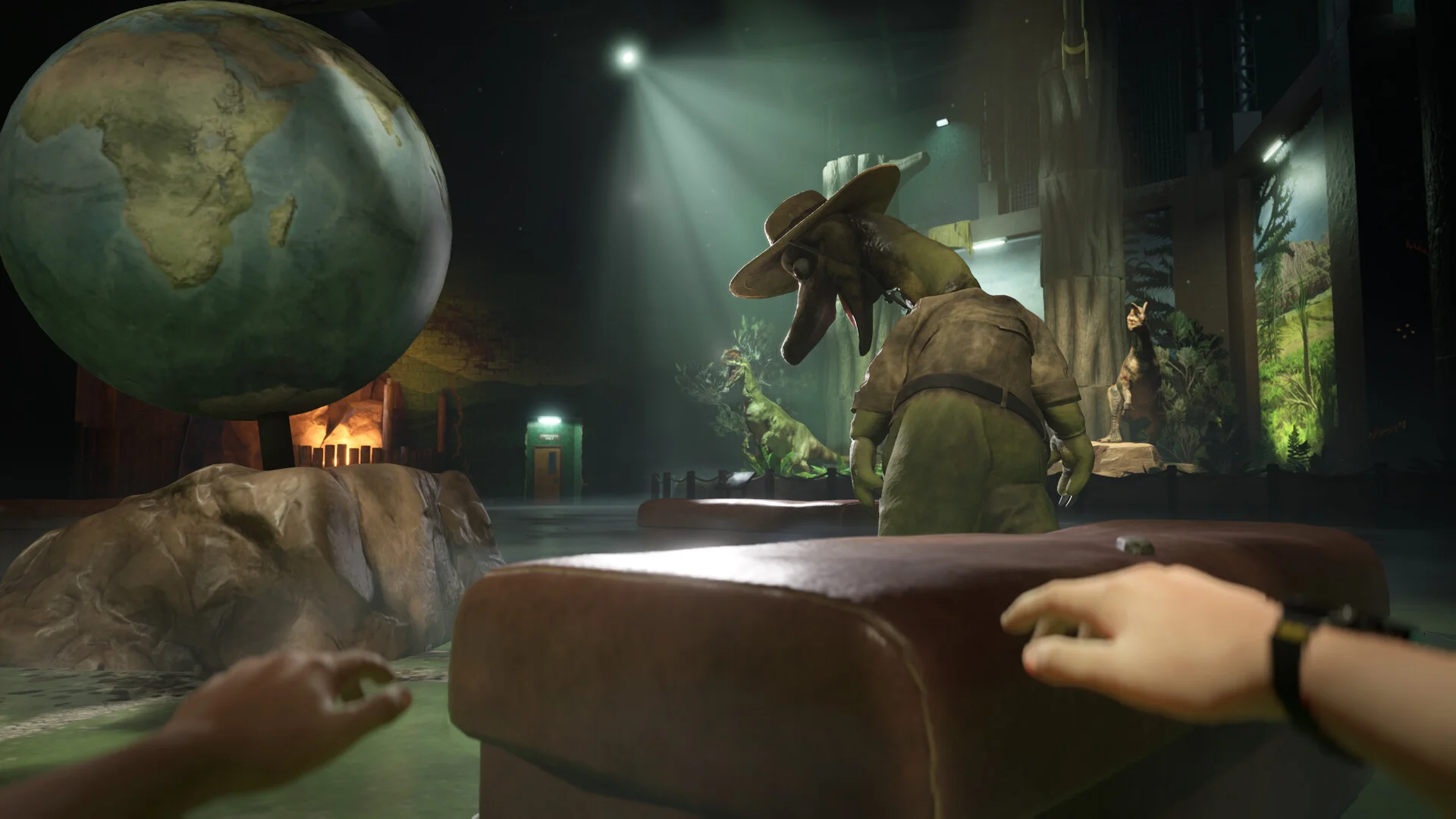

You can afford to study the mutated brontosaurus from the gift-shop rafters. Its distorted body looks a little ridiculous once there is some distance between you and its mouth. Down below, it is a reason to panic. Up here, it belongs to the same strange attraction that sells dinosaur souvenirs. Terrible Lizards lets both responses exist, with your position in the room deciding which takes priority.
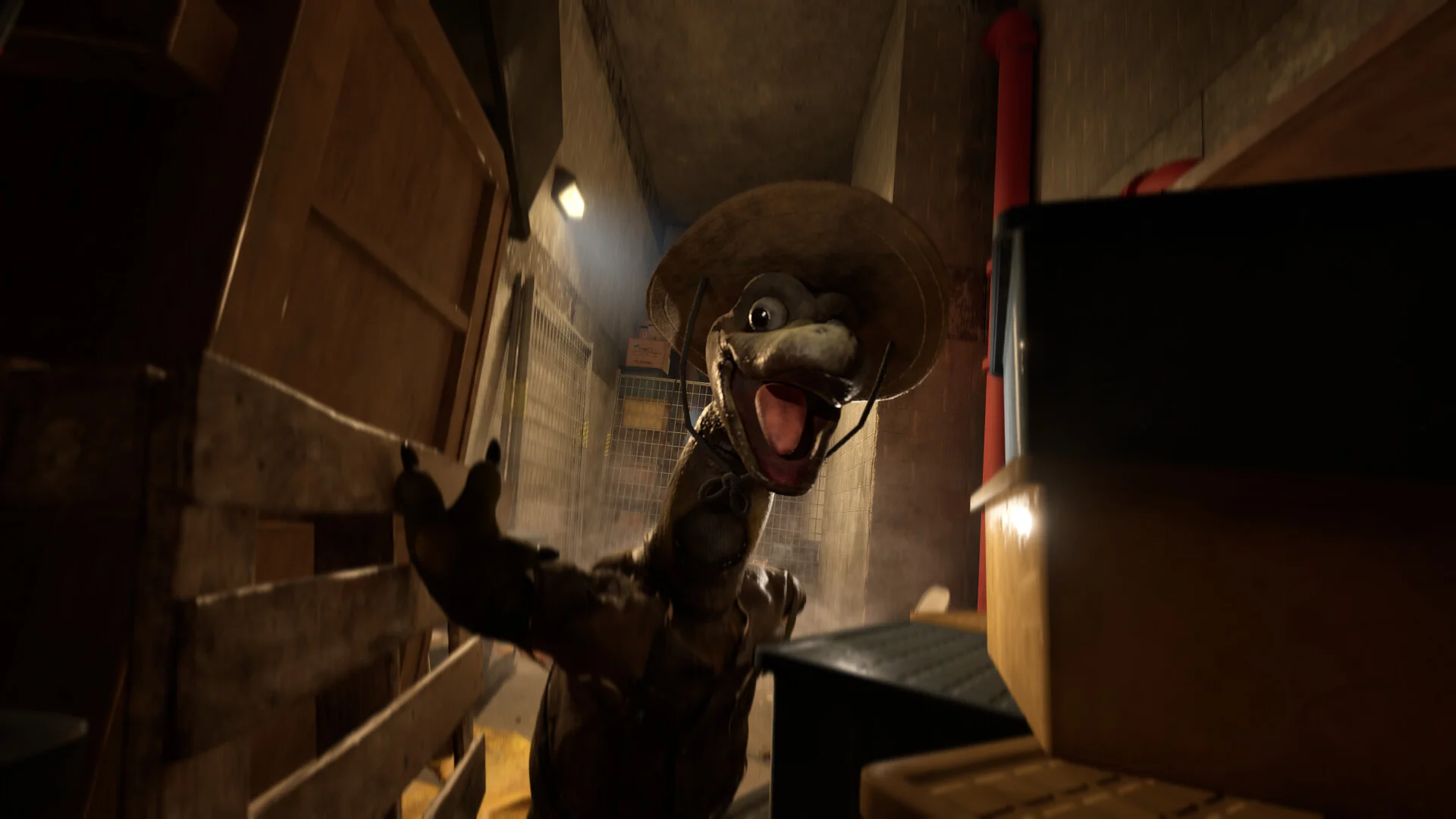
Eventually, of course, you have to leave the rafters. Jordan accelerates into a sprint almost immediately, and generous control in the air lets you adjust a jump instead of helplessly watching it go wrong. Fear becomes something you can act on: find the next ledge, slide through the opening, keep the route going. There is pleasure in discovering that your body can answer the threat. A dinosaur chasing you gives that pleasure an urgency an empty obstacle course would struggle to supply.
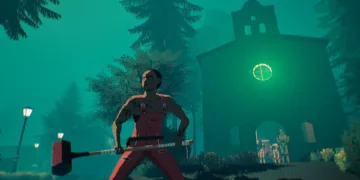
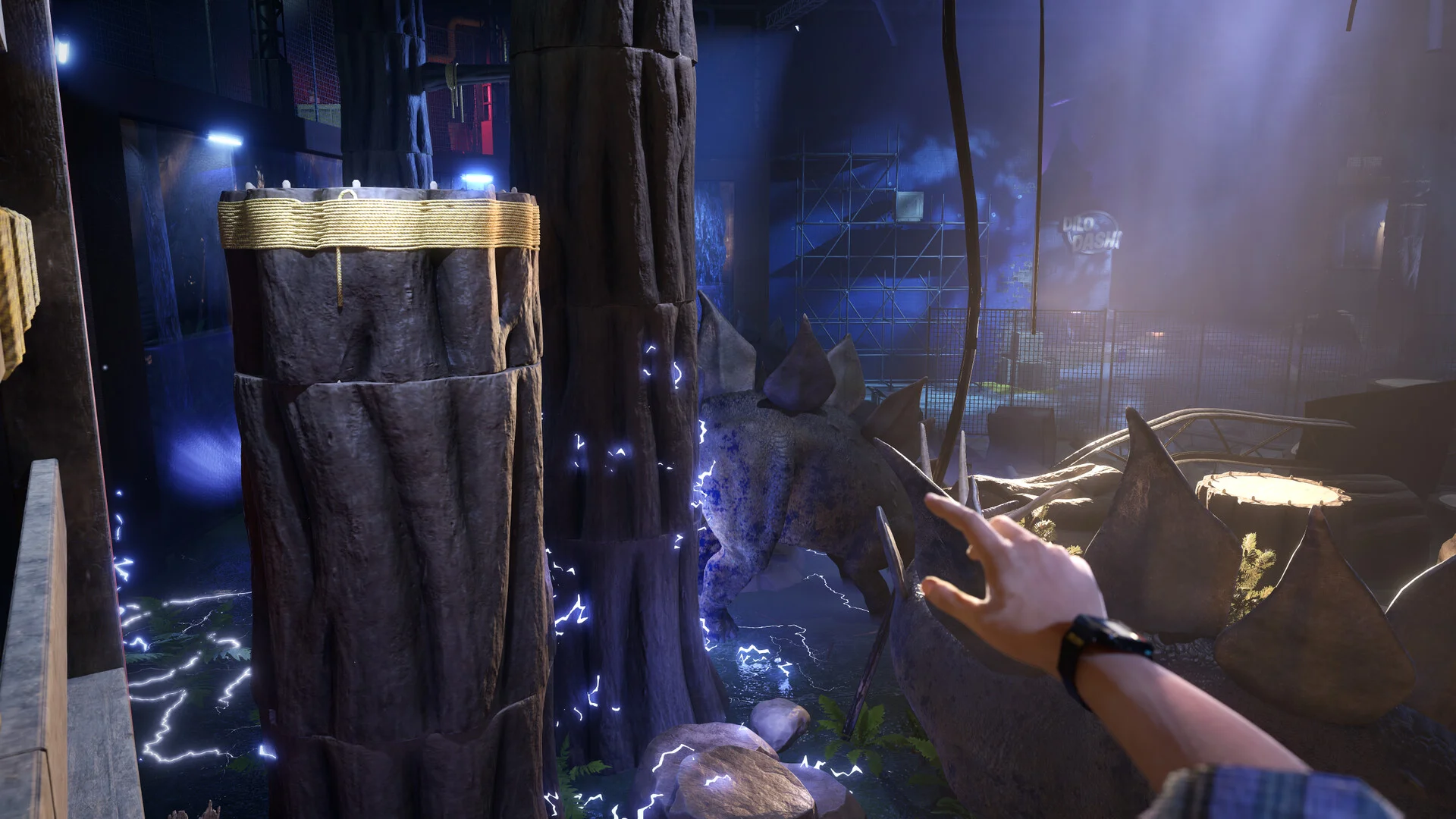
Jordan is a college track-and-field athlete whose car trouble on Route 66 brings him to Dalton’s Dinos in 1992. WDR Studios sends him through roughly six hours of first-person parkour, with a considerable debt to Mirror’s Edge. There is no combat to interrupt the movement. Later, springy surfaces and wall-running extend what he can do, giving escape routes longer, more satisfying combinations. Yellow ladders, pipes, and handholds make those routes readable at speed. When something is gaining on you, being able to recognize the next jump quickly helps you commit to it.
The quieter stretches make room for simple retrieval and activation puzzles, and their breaks from pursuit help the dinosaurs retain some impact. Open spaces threaded with low gaps and elevated paths can advertise an encounter before it happens, though. You start recognizing the preparations for a chase. That limits surprise, but there is still excitement in putting the route together under pressure. The game’s scares and its athletic thrills do different jobs, and the latter carry much of its appeal.
Dalton’s Dinos also gives you reasons to slow down. Huge models loom over educational plaques; mascot buttons dispense facts and rules; Dalton and his wife introduce their attraction through a cheerfully earnest live-action presentation. The dinosaur-shaped flashlight growls when switched on, casting teeth around its beam. That little souvenir keeps doing its silly job after the place has become dangerous. Such touches make the attraction worth exploring beyond the obligation to find another switch.
Its best uses go further than decoration. An extinction exhibit becomes a timed traversal sequence when Jordan activates its moving meteor, then races across obstacles to squeeze past before it retracts into the wall. The museum’s attempt to entertain visitors becomes entertainment of a considerably less responsible kind. It is a lovely fit between setting and activity, and a glimpse of how much personality this premise can lend to familiar jumping and climbing.
The performances make a similar commitment. Dalton’s recorded search for his son DJ gives the live-action diaries an emotional purpose within the camp presentation. Notes and audio logs widen the picture to troubled research, worried workers, and a family caught up in something beyond its understanding.
The son’s imaginary friend supplies an unsettling thread worth following. Meanwhile, scientist Stella’s phone calls give Jordan a recurring human presence amid the isolation. Familiar horror ingredients gain appeal through people who seem invested in their increasingly bizarre predicament. The recordings invite a different kind of attention from the chases, giving the pauses a purpose beyond resetting your nerves.
That investment becomes harder to sustain as the adventure moves underground. Caves, mines, and the excavation network provide tighter parkour spaces than parts of the opening attraction. Springboard surfaces and wall-running benefit from the freedom to arrange terrain around movement. Yet the setting loses some of its personality as the routes improve. Lighting lends the caverns character, and mascots return to recite workplace rules in friendly corporate voices, but those reminders cannot quite replace the pleasure of climbing through a place built for visitors.
Escape itself also becomes predictable. An elevator is destroyed; a ladder apparently leading toward the surface brings another dinosaur interruption. Each reversal can produce an exciting sequence, but together they teach you to discount the next apparent way out.
Across four long levels, several exceeding an hour, delayed relief begins to feel like another requirement. Jordan’s frustration helps briefly. His refusal of one of Stella’s requests acknowledges how exhausting this has become, creating a moment of solidarity that his later agreement to another tedious task struggles to preserve. New movement possibilities keep arriving while the desire to see the ordeal advance starts wearing thin.
Technical failures put a more damaging strain on that desire. Collision problems can deny a ledge grab even when the jump appears correct. The most severe reported failures concern a PS5 pre-release build, including a respawn above the gift shop that left Jordan unable to jump. Reloading meant returning to an earlier save and repeating the basement fuse and switch sequence. That combination matters: a broken action becomes lost progress, and an encounter previously enjoyed becomes work to recover ground.
Other reported failures include a dinosaur stuck on the ceiling, preventing a chase event from triggering. A creature caught walking into scenery does something different, removing the threat from an area meant to sustain tension. Performance hitches and scripting failures were also reported on a Steam Machine, though the extent of disruption differs between accounts. These problems deserve more weight than incidental animation clipping because they interfere with the player’s ability to participate. Fast movement needs dependable responses, especially when the game asks for a decision in a fraction of a second.
That uncertainty travels into encounters that do work. You start remembering the distance to the last save, holding back some of the attention that should belong to the chase. A successful jump ought to encourage you to commit to the next one. After enough interruptions, it can leave you waiting to discover whether the game will let the run continue.
The Review
Terrible Lizards
Jordan’s agility makes being chased exhilarating, and Dalton’s Dinos has enough goofy warmth to make you want to linger. The live-action mystery gives that curiosity something to follow. Repeated escape reversals and less distinctive caverns gradually wear down the enthusiasm, while reported collision and scripting failures undermine the trust its parkour needs. There is plenty here worth enjoying, provided you can tolerate interruptions that turn the pleasure of escape into the chore of recovering progress.
PROS
- Agile parkour makes pursuits exhilarating.
- Playful attraction design rewards exploration.
- Committed live-action storytelling sustains curiosity.
CONS
- Repeated escape reversals drain urgency.
- Caverns lose the attraction’s distinctive charm.
- Reported movement and scripting failures can force replays.