




















Sandra promises her friends a party at her new place before she has even viewed it. The address is in the Hollywood Hills, the rent is $300 a month, and there is a pool. For an eighteen-year-old waitress trying to leave her mother’s house, this is enough to begin imagining a different life. The Teenage Vampire finds its most persuasive temptation in that premature invitation: Sandra has already pictured the freedom the property will give her.
Her mother’s insistence on household rules makes moving out seem like the decisive step into American adulthood. Yet Sandra’s independence depends on finding an owner willing to accommodate her limited income. The older sister who has already left provides an example she can follow; the rental listing supplies the means. Beneath the supernatural setup is a recognizable mismatch between the life a young person feels ready to lead and the life her wages can support. The bargain works because she needs it to.
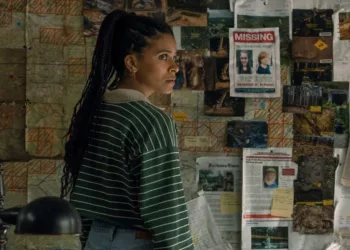
Director Frank Mora, who co-wrote the screenplay with Asif Akbar, gives this departure a little emotional weight. Sandra’s mother is upset at losing her daughter’s company as well as her authority. Fallon Shaya plays the concern rather stagily, but the writing allows a parent’s difficulty accepting change to register. Jazlyn Nicolette Sward brings a more natural presence to Sandra, whose enthusiasm remains personable even when her judgment is poor. Kelly Lynn Reiter’s lively Beth, helping with the move and sharing the excitement, makes the prospect of freedom seem sociable and appealing. There is enough warmth here to establish something the horror could threaten.
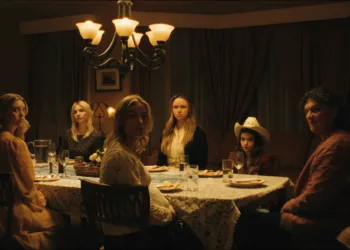
The owners have their own use for Sandra’s hospitality. Viktor and Isabelle intend to feed on her party guests, turning the young tenant’s social ambitions into a convenient delivery service. This is a promising relocation of the vampire household into the geography of Los Angeles aspiration: the grand address remains desirable even when Sandra can afford only the backhouse. Leaving parental supervision has brought her under another older couple’s control. The film needs no elaborate social allegory to make that arrangement uncomfortable.
Unfortunately, the property does much more seductive work than its owners. James Chalke’s Viktor and Spice Williams-Crosby’s Isabelle lean heavily on conspicuous menace, with hissing and growling substituting for much of their personality. Viktor appears at night and vanishes after speaking with Sandra.
Their behavior advertises danger so insistently that there is little room for suspicion to develop. Fright Night is a useful comparison here because its dangerous-neighbor premise depends on the relationship between attraction and alarm. Mora’s film has a convincing reason for Sandra to want the accommodation, but offers considerably less reason to enjoy watching the people who own it.
Jordan, a former school acquaintance now working at his father’s antique store, offers another route into that relationship. Played by Luke Gregory Crosby, he reconnects with Sandra and exchanges numbers with her. Present-day flirtation then encounters an older image: Beth finds a photograph containing Viktor, someone resembling Jordan, and a young woman resembling Sandra.
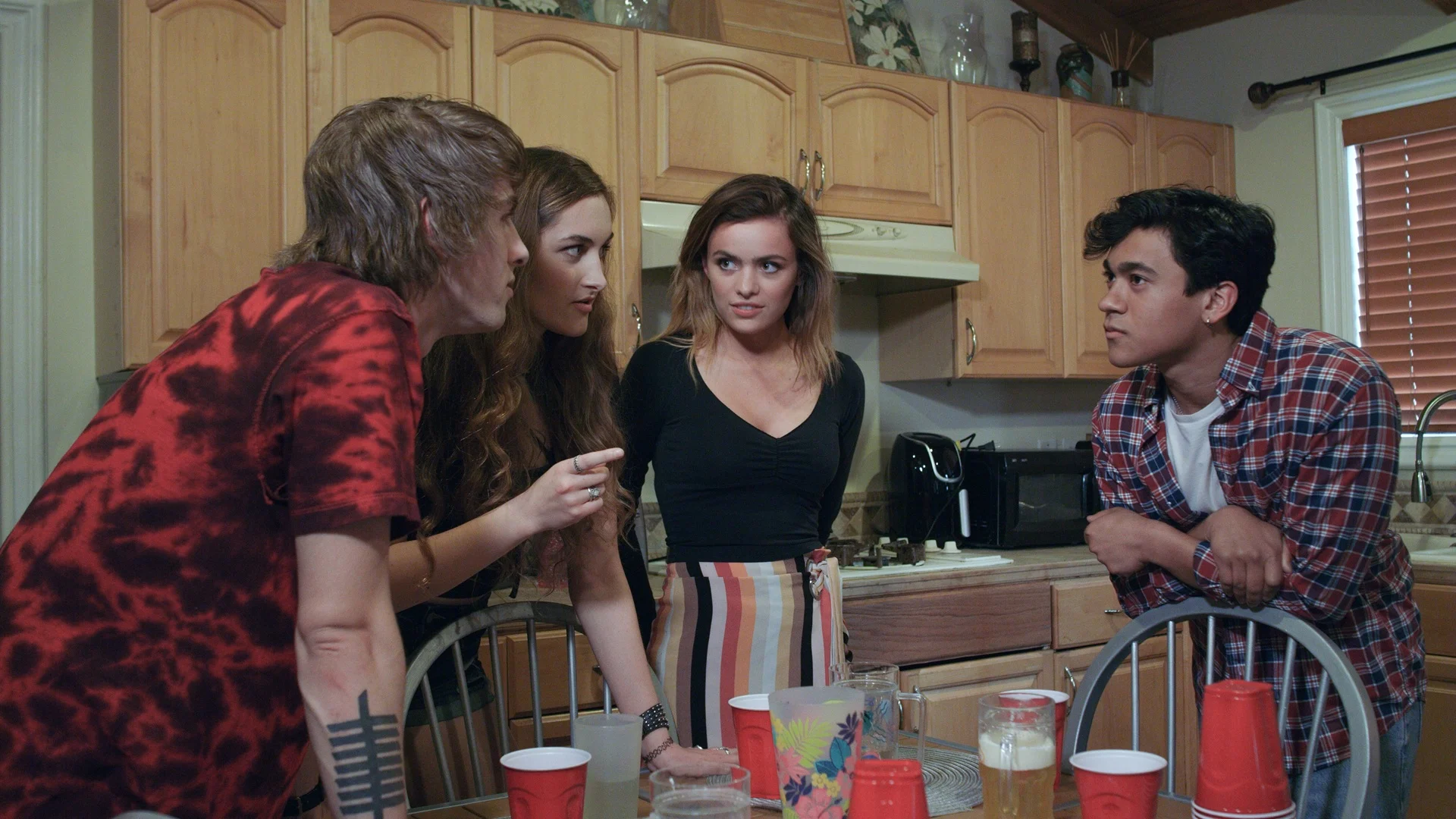
The possibility that Sandra’s new life has been anticipated by an unfamiliar past could complicate her pursuit of independence. Instead, the photograph raises questions that the subsequent revelations never organize into a satisfying account of who these people are to one another.
This is where the thin mythology becomes a dramatic problem. A modest vampire comedy need not explain every supernatural rule, but the suggested personal connection requires enough clarity for us to understand why Sandra matters. The film leaves the implications of recognition, resemblance, and shared history inadequately developed. Its vampires can also disappear and take on other people’s appearances, abilities with obvious potential for mischief. Those tricks briefly suggest a more deceptive film than the one dominated by openly threatening landlords.
The competing tones further weaken the invitation. Family arguments and teenage flirtation rub against attempted erotic menace, while the villains behave as though the whole enterprise is already a joke. These modes could coexist, but the transitions rarely let one feeling establish itself before another demands attention. The mild horror supplies little sustained fear, and the performances do not share a sufficiently assured comic register to make exaggeration the main pleasure. Sward and Reiter’s everyday energy becomes stranded between domestic drama and theatrical villainy.
The pacing is similarly uncertain about what deserves time. Sandra’s sister tries to dissuade her from leaving, immediately followed by her mother making the same effort. The second objection adds little to an understood conflict. Later, a prolonged scene with two peripheral characters in a car holds up the central situation without making their presence more consequential. Meanwhile, awkward cuts interrupt conversations and developing threats, and conspicuous fade-outs reinforce the television-like presentation. The film can linger on an unproductive exchange yet struggle to sustain the rhythm within an important one.
Even the mismatched false fangs might have contributed to the fun if the surrounding scenes had greater comic confidence. Camp can accommodate visible artifice; it still needs timing. Repeated hissing becomes wearying because the performances return to the gesture without finding a fresh effect.
A late twist does introduce some welcome playfulness, and the vampires’ closing mugging toward the camera suggests an unexpectedly sociable view of these predators. That turn toward grotesque domestic comedy opens another possibility for a story so concerned with leaving home: belonging might itself be part of the temptation. The relationships remain too indistinct for that possibility to acquire much emotional force.
The Teenage Vampire was released on streaming platforms on October 27, 2026. Directed by Frank Mora, the horror feature follows a young woman moving into a Hollywood Hills bungalow, only to discover her landlords are ancient vampires hosting a bloody massacre.
Where to Watch The Teenage Vampire (2026) Online






Full Credits
Title: The Teenage Vampire
Distributor: Amazon Prime Video
Release date: October 27, 2026
Rating: Not Rated
Running time: 1 hour 25 minutes (85 minutes)
Director: Frank Mora
Writers: Asif Akbar
Producers and Executive Producers: Not publicly specified
Cast: Jazlyn Nicolette Sward, Kelly Lynn Reiter, James Chalke, Spice Williams-Crosby, Luke Gregory Crosby, Courtney Akbar
The Review
The Teenage Vampire
The Teenage Vampire finds a promising Los Angeles variation on vampire seduction in a rental Sandra can scarcely afford to question. Sward and Reiter supply some warmth, but the landlords’ theatrics, confused personal connections, and halting rhythm leave the bargain doing most of the dramatic work. A playful late turn earns a little affection without giving the film a coherent comic identity.
PROS
- The rental trap gives the premise a convincing Los Angeles setting.
- Sward and Reiter bring warmth and energy.
- The late twist provides some welcome playfulness.
CONS
- Personal connections and motivations remain unclear.
- The vampires offer little menace or fascination.
- Clashing tones undermine the comedy and horror.
- Repetitive scenes and disruptive editing weaken momentum.