


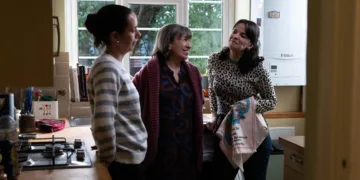

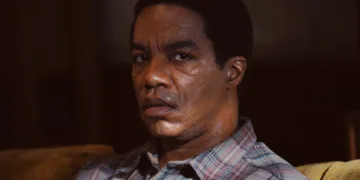

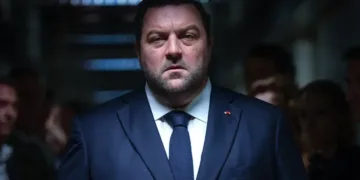






Wales reaches 42°C before the plot has decided what kind of emergency it wants. The temperature appears on screen, billboards warn that extreme heat kills, and people continue through work, traffic, therapy, and family grievance with the glazed endurance of a country treating catastrophe as an administrative inconvenience. British drama trusts the premise only after adding a murder, a cult, an oil company, militant activists, a damaged journalist, and one suspiciously polished man.
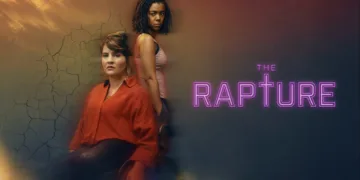
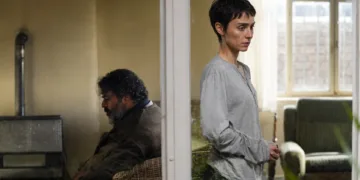
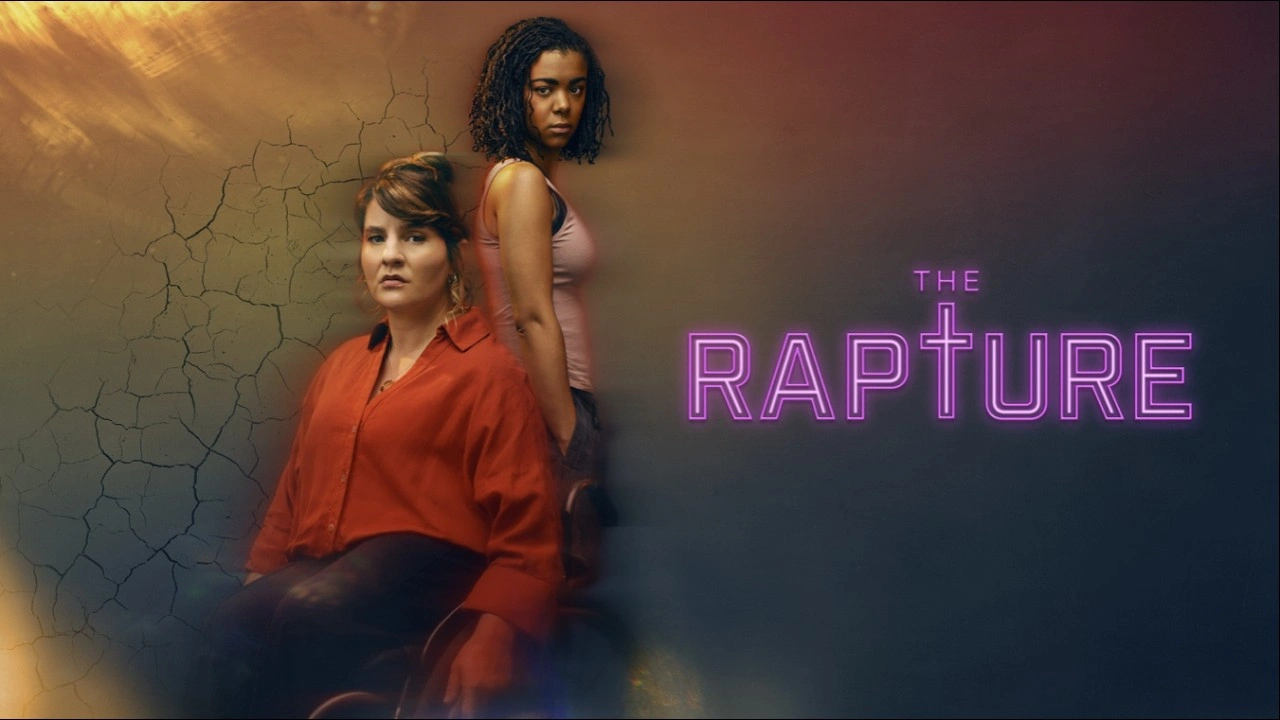
Adapted from Liz Jensen’s novel, The Rapture places clinical psychotherapist Dr Gabrielle “Gabs” Fox where private disaster meets planetary fear. Two years earlier, a car crash killed her husband and left her paralysed from the waist down. Ruth Madeley plays Gabs as someone rebuilding authority before certainty. During therapy, Gabs says work once made her feel alive. Madeley gives the line the precision of a person trying to convert survival into a plan.
Her first case at Oxsmith’s secure adolescent unit is Bethany Krall, a 17-year-old convicted of killing her mother, Carys, with a screwdriver. Bethany was found covered in blood. She had drawn the murder before it happened. She remembers none of it. The series has its cleanest dramatic engine right there. Television, naturally, starts shopping for accessories.
The Girl Who Draws Tomorrow
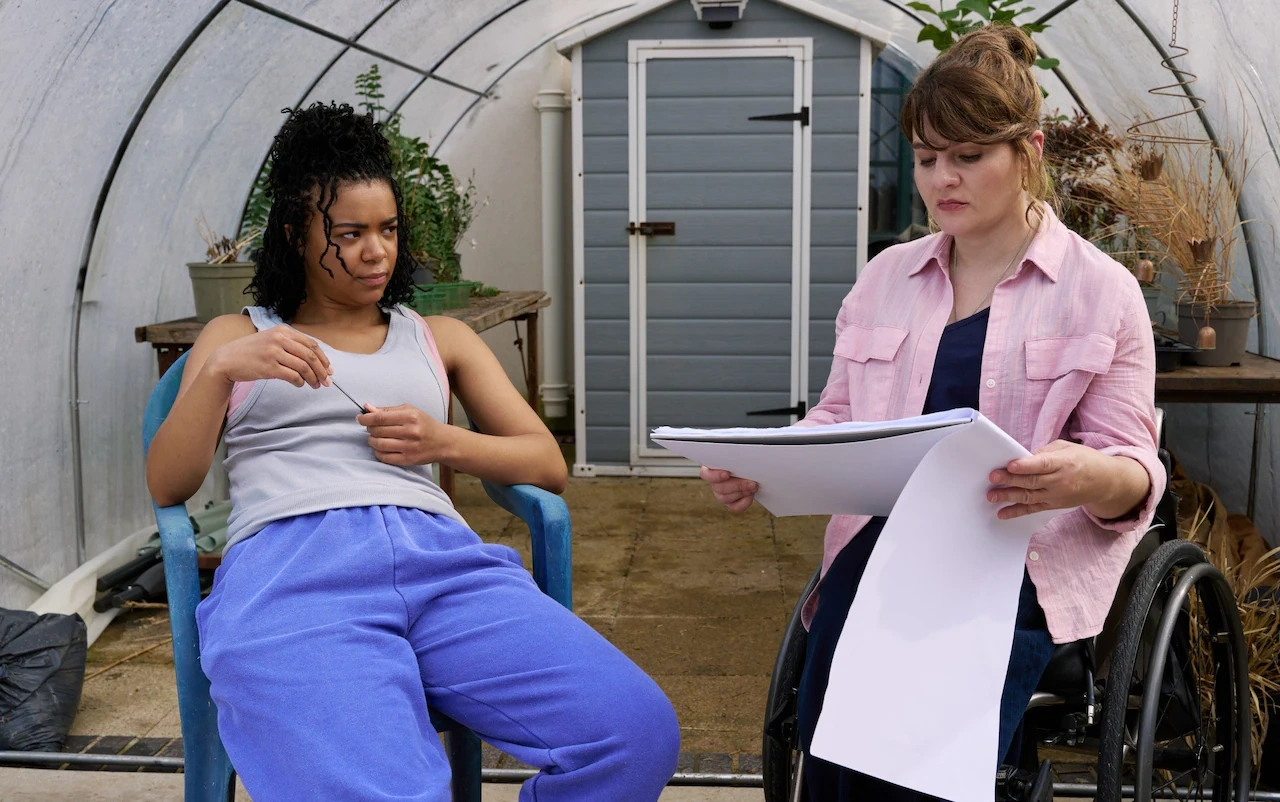
Bethany’s sessions with Gabs carry the psychological detail the wider conspiracy keeps misplacing. India Amarteifio first presents Bethany through clipped insults, sudden threats, contempt for medication, and a practiced refusal to let adults define her.
The performance deepens when that hostility fractures. In the scene where Bethany’s certainty about her innocence falters, Amarteifio lets fear arrive through hesitation rather than tears. Her face asks what happens when a defended identity depends on a memory she cannot access.
Bethany claims her drawings are visions. She stands barefoot on grass, closes her eyes, and sketches death or destruction. Her nurse Rafiq believes the pictures predict real events. Gabs treats the ritual as evidence, not revelation. Bethany has already been turned into a symbol. The hospital sees a dangerous patient. Rafiq sees a prophet. Her father sees an instrument for his religious movement. Gabs tries to see a girl.
That attempt becomes ethically unstable once Bethany reveals private details about Gabs’ accident and produces a drawing that appears to show her before their first meeting. Gabs moves from therapist to investigator with alarming speed, crossing professional limits while telling herself she is pursuing truth. The script recognizes the problem, then rewards her for it. Prime-time television loves a specialist who abandons training whenever the plot needs a locked room opened.
Madeley and Amarteifio resist instant trust. Their strongest exchanges are built from pauses, failed eye contact, and shifts in control. Gabs asks clinical questions, Bethany redirects them, then Gabs catches the fear beneath the performance. Each session changes the balance by a few inches. The series is at its most observant when those inches matter.
Hope as Branding
Bethany’s father, Leonard Krall, leads Faith Way, a polished spiritual movement built around the slogan “Choose Hope.” Sam Hazeldine plays him with the smooth composure of a man who understands that contemporary religion needs good lighting, disciplined messaging, and a platform strategy. His sermons argue that young people are fed endless doom about the planet. Every generation deserves hope, he insists. The demand beneath it is less reasonable: stop naming the disaster because the truth hurts morale.
Gabs’ visit to the Faith Way centre shows Leonard’s method. He performs paternal concern and frames himself as a loving father blocked by hostile institutions. Bethany’s refusal to see him tells another story. She believes he used Carys, then tried to use her, in his performance of Christian virtue. When Leonard calls Gabs “damaged,” the movement’s therapeutic language drops away. Hope has terms and conditions.
Faith Way resembles a wellness brand, a political campaign, and an influencer network sharing one office. Leonard sells emotional relief while dismissing the conditions producing fear. Neutral interiors, gentle slogans, controlled access: menace arrives in tasteful beige.
The writing becomes less exact once Leonard is placed beside every other institution. Climate Front, led by Anika Drake, represents militant environmental action. Max Leland embodies corporate greenwashing through a fossil fuel company promoting a Welsh wind farm.
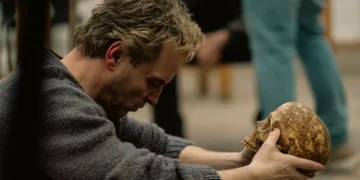
Dick Carwyn, a journalist whose work on Faith Way wrecked his career, supplies information while drinking himself toward collapse. Frasier Melville, the charming geologist entering Gabs’ life, makes romance feel like another potential trap. Each element has dramatic use. Together, they resemble a panel discussion interrupted by a chase scene.
A Body Television Usually Avoids
The most significant choice in The Rapture has little to do with prophecy. Gabs is a wheelchair user whose disability shapes her life without swallowing the character whole. Madeley, who also serves as an executive producer, brings practical specificity to scenes television frequently reduces to inspirational shorthand.
Gabs transfers her chair in and out of her car, judges entrances and surfaces, and manages a catheter. Her wheelchair affects how she enters rooms, reaches evidence, and responds to danger. None of this pauses the story for applause. That should count as ordinary craft. Television still presents it as exceptional.
Representation comes through action. The production builds Gabs’ body into blocking, pacing, intimacy, and suspense. A corridor changes meaning when speed and access are uneven. The thriller acknowledges architecture, which may be the closest British television gets to admitting that buildings have politics.
Her relationship with Frasier receives similar care. Gabs is considering sex, companionship, grief, and the fear that desire might feel like betrayal. Jack Farthing plays Frasier with warmth and enough smoothness to keep suspicion alive. Their conversations let Madeley show caution through timing and posture. Gabs is neither a lesson in resilience nor a device for someone else’s moral education. She is allowed appetite, poor judgment, professional arrogance, and loneliness.
Mel, played by Ruth Jones, helps establish that complexity, then the series leaves her underused. This is a familiar television economy: hire an actor capable of deepening the emotional architecture, give her several precise scenes, then hurry back to the conspiracy corkboard.
Crisis, Packaged for Sunday Night
The Rapture connects personal guilt with collective guilt. Gabs cannot escape responsibility for the crash, while institutions evade responsibility for environmental collapse through sermons, public relations, secrecy, and denial. The parallel is visible. The dialogue keeps highlighting it with a fluorescent marker.
“I’ve been focused on saving myself rather than the planet,” Gabs says. Anika declares that people must change the system, not the climate. These lines explain the argument, yet shrink the characters delivering them. The series trusts viewers to track prophetic drawings, corporate crime, religious influence, political interests, and technology, then worries they may miss the theme unless someone announces it in a complete sentence.
The politics suffer from the same broadness. Activists are angry and righteous. Oil executives are elegant and corrupt. Faith leaders sell false comfort. Journalists stagger toward truth with alcohol in hand. These types flatten the social forces the drama claims to examine. Climate anxiety becomes fuel for the same machine that produces conspiracies about ministers and men with expensive coats.
Broadcasters increasingly want socially relevant drama that never interrupts momentum. The crisis must be legible, urgent, and severe, provided it can still be divided into five episodes with a twist near the end of each one. The Rapture obeys that demand with professional energy. Its heatwave provides atmosphere. Its murder provides propulsion. Its institutions provide suspects. The planet provides branding.
The Welsh setting retains physical texture. Sweat shines on faces, public warnings occupy the streets, and the landscape appears beautiful and hostile. Yet a country enduring 42°C often behaves like the Britain of any other thriller. The heat affects makeup, graphics, and mood far more consistently than housing, labour, infrastructure, or public behaviour. Catastrophe is visible everywhere and reorganizes almost nothing. That may be accidental. It may also be the sharpest thing the series says.
Too Many Endings Approaching
Across five episodes, the story expands from a disputed murder into a network involving Faith Way, Climate Front, corporate interests, hidden witnesses, digital influence, and Bethany’s visions. The revelations keep the series watchable while reducing time for consequences. Gabs crosses a line, discovers a clue, faces a threat, then moves on before the decision has settled.
Iwan Rheon gives Dick a brittle momentum that survives some unforgiving plot-delivery dialogue. His drinking scenes work because he plays professional collapse as maintenance rather than spectacle. Dick is always trying to remain useful for one conversation longer. Naby Dakhli gives Rafiq’s belief in Bethany a grounded source, suggesting a man persuaded by what he thinks he witnessed rather than a convenient fool assigned to supernatural exposition.
The final stretch ties its strands together with increasing melodrama. The mystery receives answers, and the machinery of disclosure offers satisfaction. Yet the larger the conspiracy becomes, the smaller the series’ social imagination feels. Systems are translated into villains because villains can be exposed before the credits.
Gabs and Bethany resist that reduction. One woman is rebuilding a life after a body-changing loss. One girl is trying to determine if her mind can be trusted. Their scenes understand that institutions do harm through diagnosis, disbelief, appropriation, and control long before anyone unveils a secret plan. Whenever the series returns to them, its ideas regain human scale. Then another suspicious organisation enters the room.
The Rapture is a psychological thriller television series that premiered on BBC One and BBC iPlayer yesterday, July 26, 2026. Set during a severe heatwave, the series follows forensic psychologist Gabs Fox as she evaluates a teenager who claims she is innocent of murdering her mother, a situation that leads to an exploration of justice and faith. Currently, viewers can watch all five episodes of the series directly on the BBC iPlayer streaming platform.
Full Credits
Title: The Rapture
Distributor: BBC One, BBC iPlayer
Release date: July 26, 2026
Rating: 15
Running time: 57 minutes
Director: Eva Sigurđardóttir, Jennifer Perrott
Writers: Bryony Kimmings, Rebecca Manley
Producers and Executive Producers: Betsan Morris Evans, Joanna Crow, Robyn Paiba, Rebecca Durbin, Tom Leggett, Ruth Madeley, Damien Timmer, Danielle Scott Haughton
Cast: Ruth Madeley, India Amarteifio, Sam Hazeldine, Jack Farthing, Iwan Rheon, Simon Armstrong, Stephen Campbell Moore, Naby Dakhli, Ruth Jones, Richard Elis, Siena Kelly
Director of Photography (Cinematographer): Birgit Dierken
Editors: Matthew Tucker
Composer: Dominik Scherrer
The Review
The Rapture
The Rapture gives Ruth Madeley a rare television lead whose disability shapes work, desire, danger, and movement without becoming her sole defining trait. Her scenes with India Amarteifio carry psychological detail that the sprawling conspiracy repeatedly sacrifices for another villain, slogan, or revelation. The climate politics arrive in broad strokes, turning institutions into tidy thriller archetypes while the planet supposedly burns outside. It remains brisk and watchable, yet its sharpest social insight concerns the kind of protagonist television still treats as exceptional.
PROS
- Ruth Madeley’s grounded lead performance
- Specific, unsentimental disability representation
- Strong chemistry between Gabs and Bethany
- Effective heatwave atmosphere
- Brisk five-episode pacing
CONS
- Blunt environmental messaging
- Overloaded conspiracy plot
- Institutions reduced to archetypes
- Clunky explanatory dialogue
- Underused supporting performers